

A daily practice of energy clearing is a simple ritual for releasing stagnant, heavy, or unwanted energy from your body and home. To do it, first ground yourself with breath and presence. Then state a clear intention, such as “I release what does not belong here and welcome peace.” Clear your own energy before clearing the room. Move through the space from the center or most-used area toward a door or window, using sound, prayer, smoke, water, breath, or another safe tool. Refresh your ancestor altar or sacred area, then seal the space with gratitude, protection, and a closing action. Keep the practice short enough to repeat every day.
When the whole room needs more attention, a fuller energetic clearing of your space can help you move with more care and order.
Before You Begin: What Daily Energy Clearing Is Meant to Do
Daily energy clearing is not about making your home spiritually “perfect.” It is a maintenance practice, like sweeping the floor or opening a window. The goal is to release what feels stale, tense, chaotic, or intrusive, then restore a sense of calm presence.
This practice can support prayer, ancestor veneration, meditation, rest, and emotional reset. It does not replace cleaning, communication, medical care, or practical boundaries. Energy clearing works best when paired with ordinary care for your body, home, and relationships.
Prerequisites: Prepare the Space, Your Body, and Your Intention
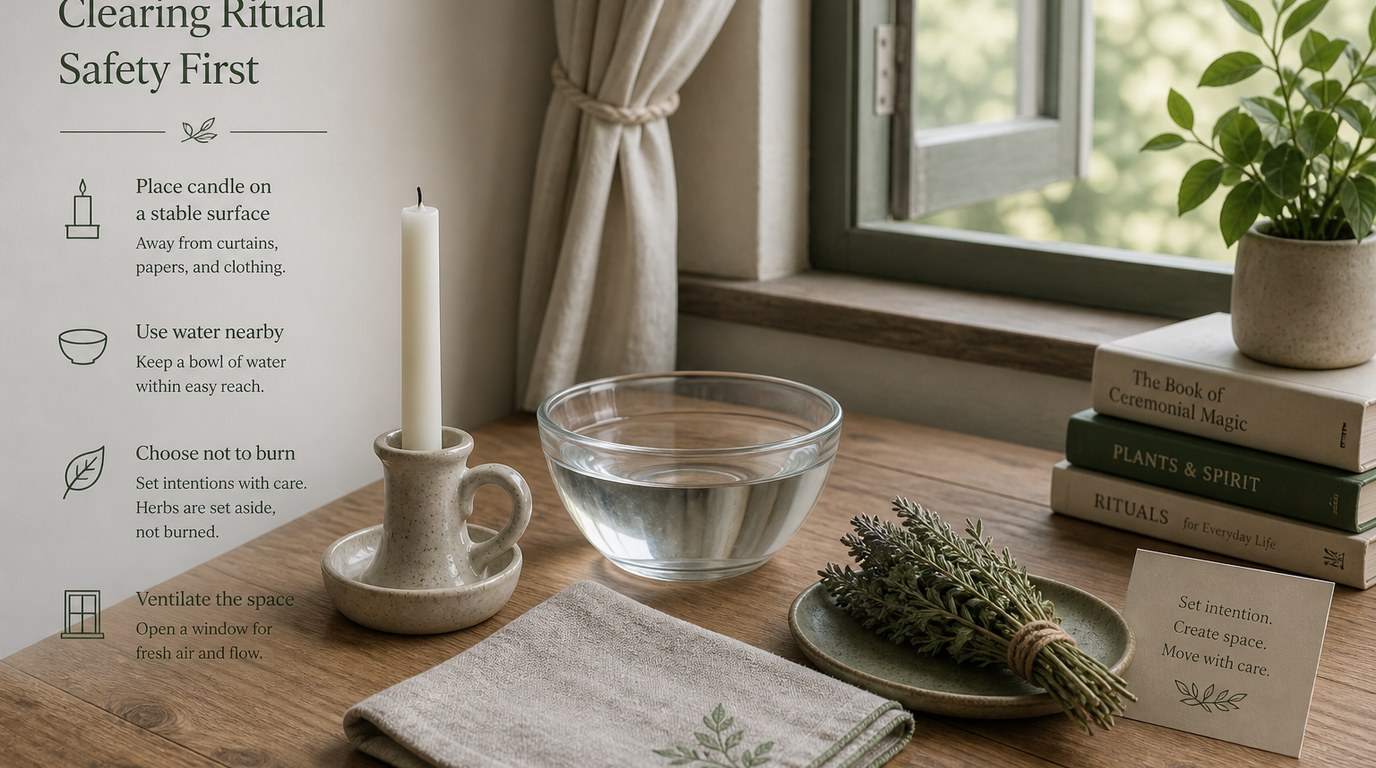
Before you begin, make the space physically safe. Put away clutter where you will walk, check that candles or incense can be used safely, and open a window or door if you are using smoke, sprays, or strong scents.
Prepare your body by pausing for a moment. Drink water if needed. If you are upset, rushing, or overwhelmed, take a few breaths before beginning. You do not need to feel perfectly calm, but you should be present enough to move with care.
Finally, choose one intention. Do not try to clear every problem in your life at once. A clear daily intention might be peace, protection, rest, gratitude, or release.
Simple Tools for a Daily Energy Clearing Practice
You do not need rare, expensive, or culturally specific items to clear energy. Choose tools that fit your home, health needs, and spiritual tradition.
| Tool | How to Use It | Practical Caution |
|---|---|---|
| Breath | Exhale slowly while imagining heaviness leaving | Best for smoke-free homes |
| Bell or chime | Ring in corners, near doors, or around your body | Keep volume respectful |
| Bowl of water | Place nearby to absorb heaviness, then discard | Do not drink after ritual use |
| Candle | Light while praying or setting intention | Never leave unattended |
| Incense or herbs | Waft gently through the space | Ventilate; avoid if unsafe for pets, children, or lungs |
| Prayer or spoken words | Speak release and blessing aloud | Be specific and grounded |
Use what you have. Consistency matters more than dramatic tools.
Step 1: Ground Yourself Before Clearing Anything

Stand or sit with both feet supported. Let your shoulders drop. Take three slow breaths. On each inhale, imagine steadiness rising through your body. On each exhale, let your jaw, chest, and stomach soften.
You can place one hand on your heart and one on your lower belly. Say quietly, “I am here. I am steady. I act with respect.” Grounding prevents the practice from becoming frantic or fear-based. It also helps you notice what actually shifts during the clearing.
Step 2: State Your Intention Out Loud
Speak your intention clearly before you use any tool. Your words give direction to the ritual.
You might say:
“Only what is loving, truthful, and aligned with peace may remain here. I release heaviness, confusion, and anything that does not belong to this home.”
Or keep it very simple:
“I clear this space with respect. I welcome peace, protection, and blessing.”
Avoid vague wording such as “Get rid of everything bad.” Instead, name what you are releasing and what you are inviting in.
Step 3: Clear Your Own Energy First
Begin with your body before you clear the room. This keeps you from carrying your own stress into every corner.
If using sound, ring a bell around your head, shoulders, chest, back, hands, and feet. If using smoke or scent, pass it near your body without inhaling deeply or touching flame to clothing. If using breath, sweep your hands from your head down toward your feet, exhaling as you go.
Pay attention to the heart, belly, hands, and back of the neck. These areas often hold tension. End by shaking out your hands or washing them.
Step 4: Clear the Room from the Inside Toward an Exit
Choose one room for your daily practice, especially if you are short on time. Start near the center, altar, bed, desk, or wherever the energy feels most concentrated.
Move slowly around the room. Clear corners, doorways, windows, mirrors, under the bed if accessible, and any area where arguments, stress, or heavy thoughts tend to gather. Use your chosen tool while repeating your intention.
Work from the inside of the room toward an exit: a door, window, or threshold. As you move, imagine the stagnant energy loosening and leaving. When you reach the exit, open it briefly if practical and say, “This is released. This space is restored.”
Step 5: Refresh the Ancestor Altar or Sacred Area
If you keep an ancestor altar or sacred space, give it gentle daily attention after clearing the room. This does not need to be elaborate.
Straighten photos, wipe dust, refresh a water glass, remove old offerings, or light a candle if it is safe to do so. Speak to your ancestors with respect: “May this space remain clear, honored, and protected. May my well ancestors guide this home in peace.”
Do not place spiritual pressure on the altar to “fix” everything. Treat it as a relationship, not a tool of control.
Step 6: Seal the Space After Clearing
After releasing energy, seal the space so the ritual feels complete. This step helps you stop clearing and begin resting in the new atmosphere.
You can seal the room by tracing a small cross, circle, spiral, or other meaningful symbol near the door. You can clap once, ring a bell, say a prayer, or place your hand over your heart.
Use words such as: “This home is blessed, protected, and at peace. Only what supports life, love, and truth is welcome here.”
Then stop. Do not keep checking anxiously.
Step 7: Make It a Daily Practice That Actually Lasts
A daily energy clearing practice should be sustainable. Five minutes every day is better than one exhausting ritual once a month.
Attach the practice to something you already do: after making the bed, before evening prayer, after work, or before lighting your ancestor altar candle. Keep tools visible but safe. If you miss a day, simply begin again the next day.
You can also choose a “minimum practice”: one breath, one sentence, one bell ring, and one moment of gratitude. This keeps the relationship alive without making ritual feel like a burden.
How to Know the Energy Clearing Worked
You may notice the room feels lighter, quieter, warmer, or easier to breathe in. Your body may soften. You may feel less scattered, more present, or ready to rest. Sometimes the shift is subtle: a small sense of order, relief, or emotional space.
Result verification is not about forcing a dramatic sign. Ask yourself: “Does this room feel more settled than before?” and “Do I feel more connected to my intention?” If yes, the clearing did its work.
If nothing changes, review your physical space, emotional state, and consistency before assuming something is spiritually wrong.
Common Mistakes and Troubleshooting
One common mistake is clearing while frightened. Fear can make the practice feel bigger and heavier than it needs to be. Ground first, speak calmly, and keep the ritual simple.
Another mistake is using unsafe tools. Do not burn herbs near curtains, leave candles unattended, use smoke around vulnerable lungs, or use essential oils around pets without checking safety.
If the space still feels heavy, try physical cleaning first: take out trash, wash dishes, change bedding, open windows, and remove old offerings. Then repeat a short clearing.
If one area repeatedly feels tense, consider practical causes: conflict, clutter, poor sleep, old grief, or lack of boundaries. Energy clearing can support change, but it should not replace action.
If you feel emotionally overwhelmed after clearing, stop, drink water, eat something grounding, and rest.
FAQ
How Long Should a Daily Energy Clearing Practice Take?
A daily practice can take three to ten minutes. Keep it short enough that you will actually repeat it. On difficult days, use a minimum version: ground yourself, state one intention, clear your body, clear the doorway, and close with gratitude.
Do I Need Sage or Special Herbs to Clear Energy?
No. You can clear energy with breath, prayer, sound, water, light, sweeping gestures, or a simple spoken blessing. If you use herbs, choose them respectfully, safely, and in alignment with your own tradition. The power of the practice comes from presence and consistency.
Can I Do Energy Clearing at My Ancestor Altar Every Day?
Yes, if you do it respectfully and without turning the altar into a place of anxiety. Refresh water, tidy offerings, speak gratitude, and ask your well ancestors for peace and protection. Keep the daily action simple so the altar remains a place of relationship.
What Should I Say While Clearing Energy?
Use clear, direct words. For example: “I release what is heavy, stagnant, or not mine to carry. I welcome peace, protection, clarity, and blessing.” You can adapt the wording to your faith, ancestors, and household, but avoid vague or fear-driven language.
What If the Room Still Feels Heavy After Clearing?
First check practical causes: clutter, stale air, old food, conflict, exhaustion, or grief. Clean physically, open a window, and repeat a brief clearing. If the heaviness is emotional, support the ritual with rest, conversation, boundaries, or professional care when needed.