
Energetic clearing of your space is a practical spiritual ritual for shifting heaviness, refreshing a room, and preparing a home, altar, or sacred area for peaceful living and reverent work. You can do it with smoke, sound, prayer, water, sweeping, light, or your own voice. The most important ingredients are attention, safety, and clear intention.
To energetically clear a space, first tidy and ventilate it, then ground yourself. Begin at the entrance, move through the room in one steady direction, and focus on corners, thresholds, mirrors, cluttered areas, and your altar. Release what does not belong, invite in what supports the home, and close the ritual by sealing the space with prayer, gratitude, or protection.
Before You Begin: What Energetic Clearing Is Meant to Do
Energetic clearing is not a replacement for cleaning, rest, conflict repair, or mental health support. It is a spiritual practice that helps you reset the feeling of a place.
People often clear after arguments, illness, grief, guests, moving into a new home, before ritual work, or when a room feels stagnant. In ancestor veneration, clearing also helps create a respectful environment for offerings, prayer, and remembrance. The goal is not to make the home “perfect,” but to make it receptive, calm, and spiritually tended.
Prerequisites: Prepare the Space, Yourself, and Your Intention
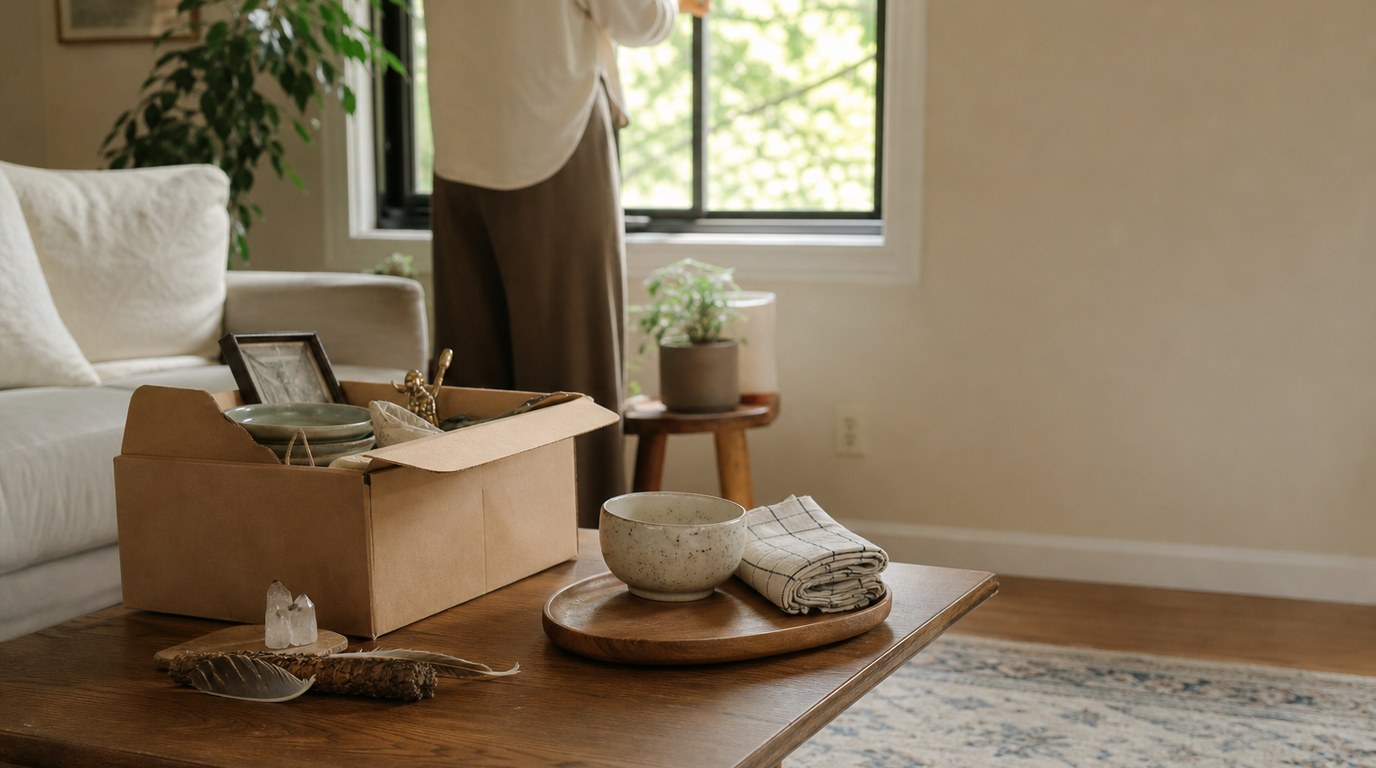
Before you begin, handle the practical matters. Open a window or door if weather and safety allow. Put away trash, old dishes, and obvious clutter. If you use smoke, check allergies, pets, children, lease rules, and fire safety. Keep a heatproof bowl nearby, and never leave burning herbs, incense, or candles unattended.
Choose your clearing tool. Options include a bell, rattle, clapping, prayer, Florida water, salt water, a broom, a candle, incense, resin, herbs, or simply your hands and voice. Use culturally specific tools only with respect, knowledge, and permission where appropriate.
Set one clear intention, such as: “May this home be cleansed of heaviness and filled with peace, protection, love, and ancestral blessing.” Keep it simple enough to repeat.
Step 1: Ground Yourself Before Clearing the Room
Stand near the entrance or center of the room. Place both feet firmly on the floor. Take three slow breaths. Let your shoulders drop and unclench your jaw.
Imagine your body becoming steady, like a tree with roots beneath it. If you pray, ask for guidance, protection, and clarity. If you work with ancestors, call only on well, loving, elevated ancestors who support your highest good.
Do not begin while frantic if you can help it. A calm presence gives the ritual direction.
Step 2: Start at the Entrance and Move with a Clear Direction
Begin at the main doorway of the room or home. This threshold is important because it marks what enters and exits your space.
Move clockwise if your intention is to bless, invite, restore, or strengthen. Move counterclockwise if your practice uses that direction for banishing or releasing. If you do not follow a directional tradition, simply choose one direction and stay consistent.
As you move, use your tool: ring the bell, clap, waft smoke, sprinkle water lightly, sweep, or speak your prayer. Move slowly enough to pay attention, but not so slowly that you lose focus.
Step 3: Clear Corners, Thresholds, and Stagnant Areas
Spend extra time where energy tends to feel stuck. This often includes corners, doorways, windows, closets, under furniture, behind doors, around mirrors, and near electronics. If a room has hosted conflict, grief, sickness, or heavy conversation, pause there.
Use sound to break up stagnant energy: clap into corners, ring a bell, shake a rattle, or speak firmly. You might say, “Anything heavy, harmful, or unhelpful must leave this space now.”
If using water, mist lightly instead of soaking surfaces. If using salt, be careful with wood, metal, plants, and delicate objects.
Step 4: Cleanse the Ancestor Altar or Sacred Area with Care
Approach an ancestor altar with respect, not force. If you maintain photos, candles, glasses of water, flowers, heirlooms, or offerings, tidy the area first. Remove spoiled food, dead flowers, dust, and clutter. Refresh water if that is part of your practice.
Do not wave heavy smoke directly onto fragile photographs, fabrics, or old documents. Instead, clear around the altar with sound, prayer, a gentle hand motion, or a candle placed safely nearby.
Speak with reverence: “May this altar be clean, honored, protected, and open only to loving ancestral guidance.” Thank your ancestors before moving on.
Step 5: Seal the Space After the Clearing
A clearing should have a clear ending. Once you have moved through the room or home, return to the entrance or stand at the center.
State what you are inviting in: peace, protection, health, clarity, loving ancestors, good sleep, honest communication, or blessing. You can trace a symbol of protection in the air, light a candle, place a small bowl of clean water on the altar, or say a closing prayer.
Then close any doors or windows you opened when it feels right. Thank your guides, ancestors, God, Spirit, or the land according to your path.
Step 6: Maintain the Energy with Small Daily Practices
A space stays clearer when it is tended regularly. You do not need a full ritual every day. Small acts matter.
Open a window for a few minutes. Change altar water. Remove trash before bed. Ring a bell in the morning. Say a short blessing at the door. Keep your altar surface clean. Wash floors with intention. Avoid letting old offerings, broken items, or unresolved mess collect in sacred areas.
Energetic maintenance works best when paired with ordinary care. Spiritual cleanliness and physical cleanliness support each other.
How to Know the Energetic Clearing Worked
After clearing, the space may feel lighter, quieter, warmer, brighter, or easier to breathe in. You may notice better sleep, fewer tense feelings in the room, or a renewed desire to pray, rest, clean, or create.
You might also feel tired afterward, especially if the space held grief or conflict. Drink water, eat something simple, and rest.
Do not judge the ritual only by dramatic sensations. Sometimes the clearest sign is ordinary peace: the room feels usable again, the altar feels approachable, and your body relaxes when you enter.
Common Mistakes and Troubleshooting
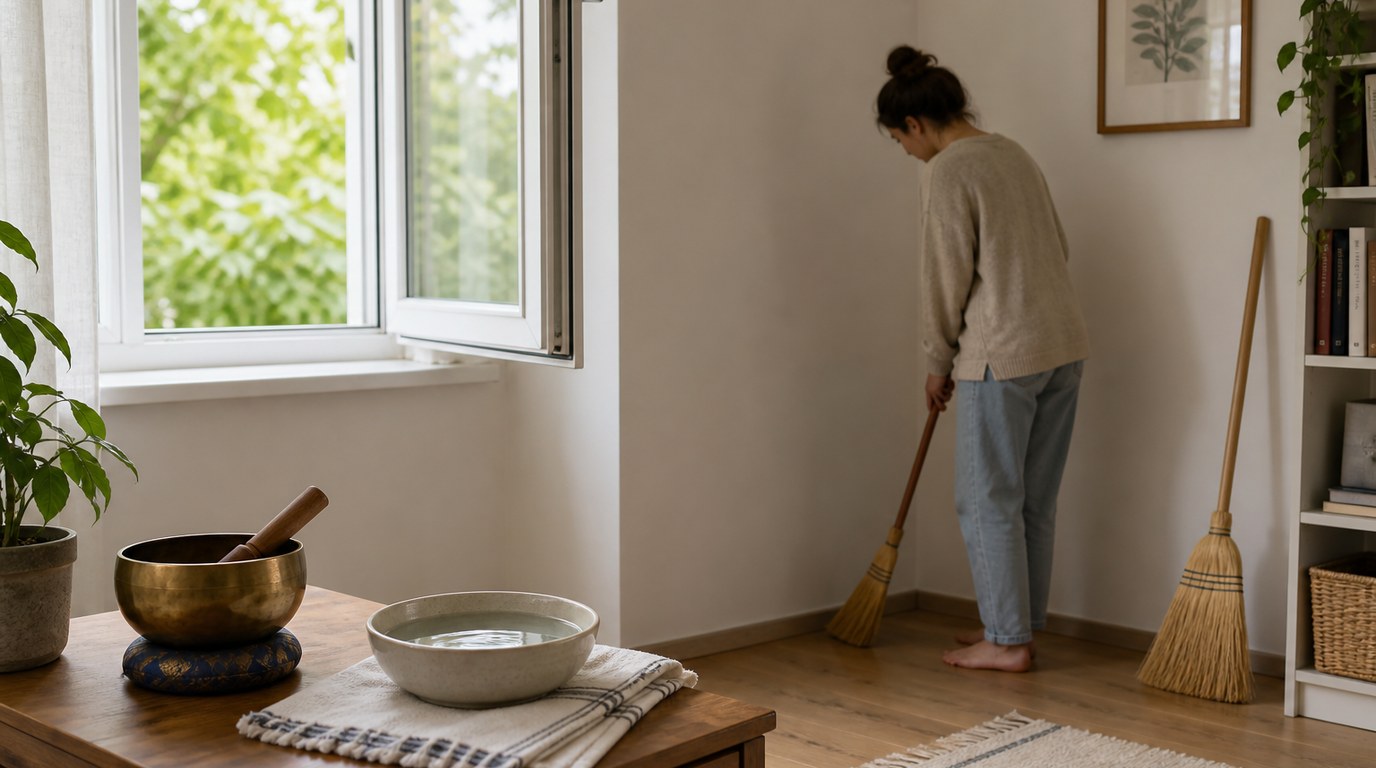
A common mistake is using smoke without ventilation or concern for others in the home. If smoke causes headaches, coughing, pet distress, or conflict, use sound, prayer, sweeping, or water instead.
Another mistake is clearing over clutter while ignoring the physical mess. If the room still feels heavy, remove trash, laundry piles, old food, and items connected to painful memories.
Do not rush the closing. If you clear but forget to seal, the ritual can feel unfinished. Always invite in what you want after releasing what you do not want.
If the space feels heavy again quickly, look for a source: ongoing arguments, poor sleep, stagnant air, neglected altar offerings, or too many draining visitors. Clear again, but also address the practical cause.
A Simple 10-minute Energetic Clearing Ritual
- Open a window or door. Put away obvious trash or clutter.
- Stand at the entrance. Take three slow breaths.
- Say: “I clear this space of heaviness, harm, and confusion.”
- Move through the room in one direction with sound, smoke, prayer, or sweeping.
- Pause at corners, windows, doors, mirrors, and the altar.
- Say: “Only peace, protection, love, and blessing may remain here.”
- Refresh altar water or straighten one sacred object.
- Return to the entrance.
- Say thank you to your ancestors, guides, or Spirit.
- Close by imagining the room filled with steady light.
FAQ
How Often Should I Energetically Clear My Space?
Clear your space whenever it feels heavy, after conflict, illness, guests, grief, or before important ritual work. Many people do a light weekly clearing and a deeper monthly one. Ancestor altars benefit from regular tending, especially when offerings are changed.
Can I Clear My Space Without Burning Sage or Incense?
Yes. Smoke is only one method. You can clear with bells, clapping, singing, prayer, sweeping, floor washing, a candle, visualization, or a bowl of clean water. These options are better for smoke-sensitive homes, pets, children, apartments, or shared spaces.
What Should I Say While Energetically Clearing a Room?
Use clear, simple words. For example: “I release all heaviness from this room. May this space be protected, peaceful, and blessed.” If you honor ancestors, add: “May only loving, elevated ancestors and helpful spirits be welcome here.”
Should I Clear My Ancestor Altar?
Yes, but gently and respectfully. Remove old offerings, dust the surface, refresh water, and clear around the altar with prayer, sound, or light smoke. Avoid damaging photos, fabrics, papers, or heirlooms. Always thank your ancestors as part of the process.
What If the Space Still Feels Heavy After Clearing?
Repeat the clearing, but also look for practical causes. Check clutter, stale air, spoiled offerings, unresolved conflict, or objects that carry painful memories. If the heaviness relates to grief, stress, or fear, combine spiritual care with rest, support, and real-world action.