
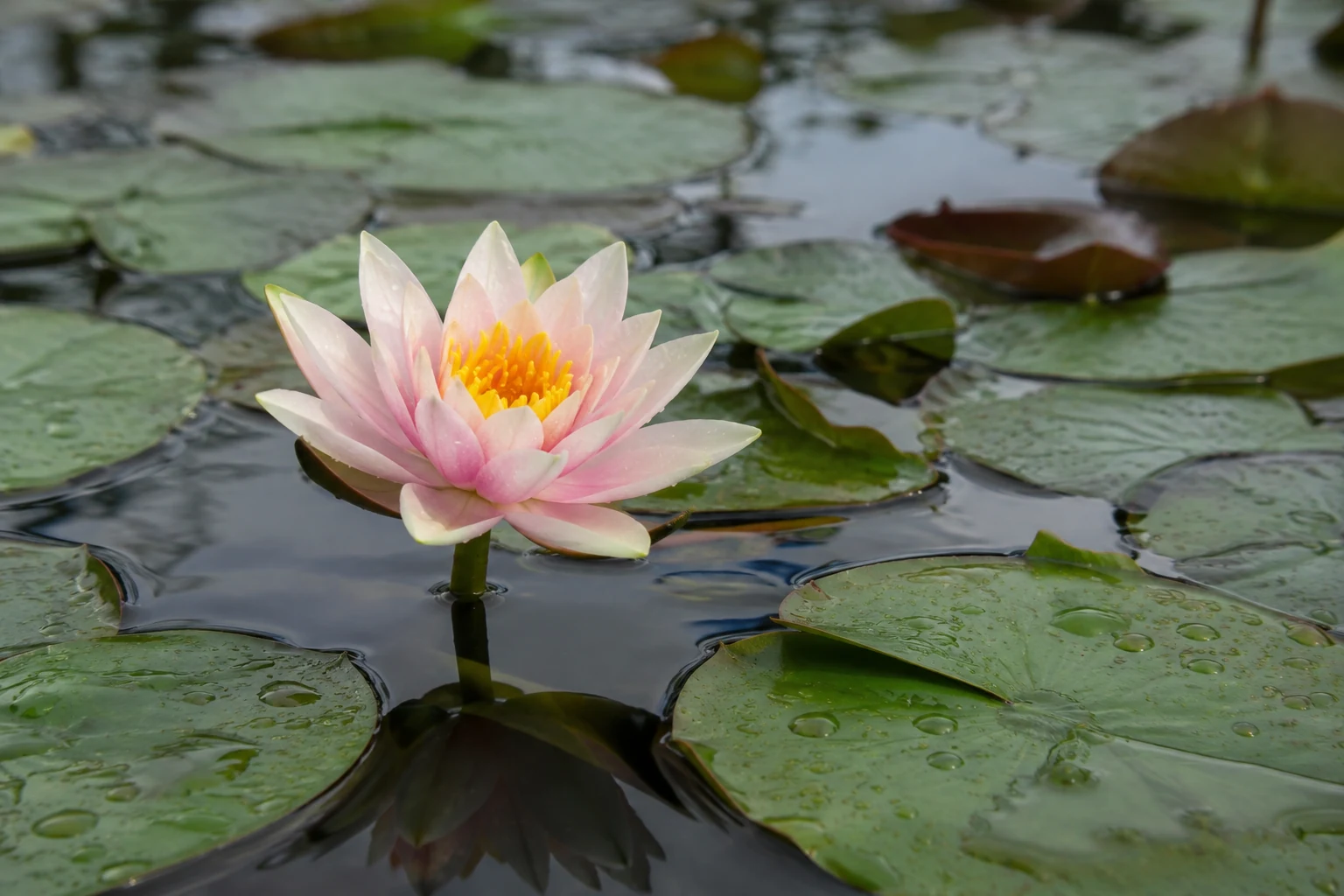
In the Western witchcraft and occult sources discussed here, a plant may be attributed to Water because of where it grows, its water-rich form, or associations with the Moon, Venus, fragrance, fruit, sleep, or dreams. These are different symbolic routes, which helps explain why Water-plant lists do not always match.
What Does It Mean for a Plant to Be Attributed to Water?
An elemental correspondence is a symbolic association within a particular practice or source. Calling a plant “Water-attributed” describes a writer’s or practitioner’s interpretation, not a botanical classification that everyone must use. The supplied guides discuss these associations in magical and ritual contexts.
One guide connects Water with emotional and dream themes. A writer might therefore include a plant for its association with those themes even if it does not grow beside a pond. The attribution can help someone choose a meaningful symbol; it does not demonstrate that the plant changes emotions, produces dreams, or has another physical or psychic effect.
Why Don’t Water-plant Lists Match?
The original guide presents Water traits as clues rather than a mandatory checklist. It explicitly says a Water-attributed herb need not have every trait. One writer may emphasize habitat, while another selects examples for a symbolic or sensory association. Neither approach produces a definitive list that every other source must reproduce.
An omission is not an explicit disagreement. If one list names a plant and another leaves it out, the second writer has not necessarily assigned it a different element. Likewise, physical water content alone cannot settle an attribution: it is one possible cue, not a test that makes every water-rich plant “Water.” To understand a difference between lists, look for the reason each source gives, as well as the names it includes.
Aquatic Flowers and Sea Plants: the Habitat Cue
Lotus, water lily, and seaweed are aquatic examples raised by the supplied material. A flower associated with water or a sea plant offers a relatively direct symbolic connection: its habitat calls Water to mind. The guides discuss aquatic plants and habitat as routes to attribution, but that does not assign every aquatic species to Water in every system.
The names have different levels of support. Grove and Grotto names lotus in its water-habitat or water-content group. Honeymallow names lotus, water lily, and seaweed; Wicca Magazine also names all three. Thus lotus appears in all three cited sources, while water lily and seaweed appear in two. That is an overlap in named entries, not proof that each writer uses an identical reason. A photograph of an aquatic flower cannot settle whether it shows lotus or water lily, so use an image of a plant whose identity you already know rather than treating an uncertain picture as evidence.
Why Willow Appears Alongside Aquatic Plants
A plant need not grow in water for its surroundings to inform its symbolism. Grove and Grotto names willow in its water-habitat or water-content group. Honeymallow also names willow among its Water plants, while Wicca Magazine includes willow in its tree list. Willow therefore appears in all three cited sources. Only the first supplies the particular habitat-or-water-content grouping used here; the two other inclusions do not tell us that their writers chose willow for the same reason.
Willow illustrates a specific association, not a rule about trees. These sources’ inclusion of willow does not extend a Water attribution to every tree, including every tree that happens to stand near water. If you choose willow as a symbol, you can say that all three guides name willow while being precise that one guide explains a particular cue. The overlap strengthens the name's documented presence, not a universal rule about trees.
Aloe and Cucumber: Visible Water Content
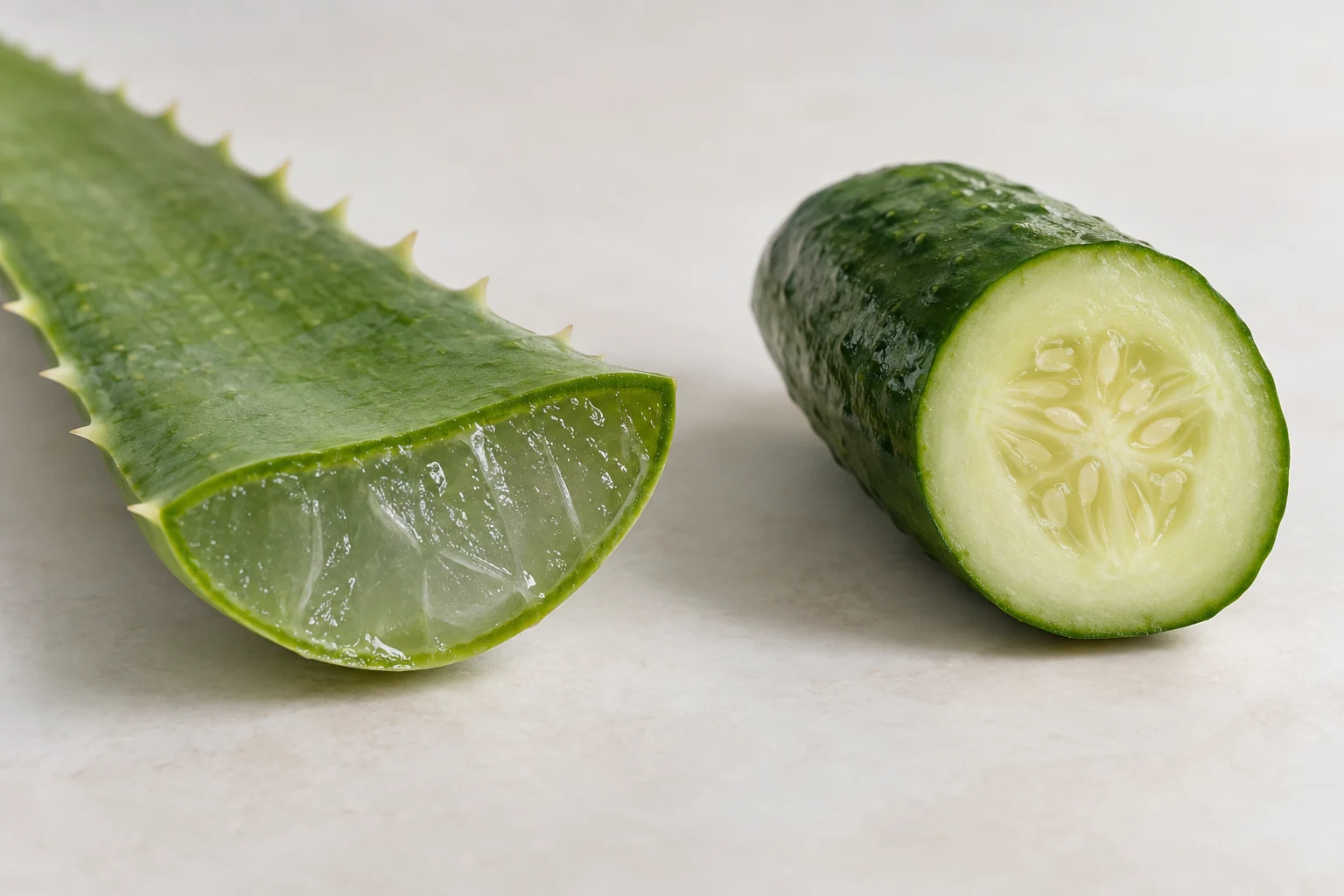
Aloe and cucumber illustrate a different cue from an aquatic flower or a near-water tree. The original guide gives water-content examples, and a separate plant list includes ordinary aloe and cucumber. Their water-rich form helps explain why a writer might connect these familiar plants with Water when habitat is not the point. Appearing in both sources does not mean both writers explain them in identical terms.
A cut aloe leaf or cucumber can make that visible form easy to notice. The image, however, establishes nothing about what to do with either plant. It illustrates a possible symbolic cue, not food, medical, skin-use, or ritual-use guidance.
Jasmine, Mugwort and Lily: Moon and Venus Associations
Some Water attributions rely on another set of symbols rather than a plant’s habitat or appearance. The original guide groups jasmine, mugwort, and lily through Moon or Venus associations. This is a planetary-symbolism route: the guide draws connections among symbolic categories when discussing Water. It is distinct from observing a wet habitat or a water-rich leaf.
Those three names belong to that guide’s Moon-or-Venus grouping. Its wording joins the planets and examples; it does not say whether each plant is assigned to the Moon, Venus, or both. If you are following a different list, look for that writer's own explanation before carrying over this grouping. Keeping the category attached to its source lets a reader understand why a nonaquatic plant appears without inventing a more precise correspondence or claiming a physical effect.
Rose, Apple and Lemon Balm: Fragrance and Fruit
The original guide also has a sensory grouping that includes rose, apple, and lemon balm. Fragrance or fruit offers a route to association based on qualities the writer notices or values symbolically, rather than an aquatic setting. This explains the examples in that guide; it does not make every fragrant herb, flower, or fruit a Water plant.
The examples have different levels of support across the supplied sources. A second guide independently names rose and apple, so both appear in at least two lists. Lemon balm is named in the original guide's sensory grouping; the cited Wicca Magazine excerpt independently establishes rose and apple, not lemon balm. Even where names overlap, inclusion in two lists does not prove agreement about the reason—or about a particular plant part.
Where Sleep and Dream Symbolism Fits
The original guide includes sleep and dreams among its Water-attribution cues; another guide names dream themes in its broader description of Water. This branch helps account for an entry whose relevance is not obvious from its habitat, water content, fragrance, or fruit. The writer may be drawing on an association with dreaming instead of a visible plant feature.
That is a symbolic connection, not a reason to try to induce sleep, dreams, or altered states. The original guide also acknowledges poisonous plants in this discussion. Their mention explains part of its framework; it does not make them beginner altar suggestions or call for consuming or burning a plant.
How to Compare Two Apparently Conflicting Entries
Take rose as an example. The original guide places it in a sensory grouping, and the second guide names rose too. Begin with what each source actually establishes: the original supplies a fragrance-or-fruit route for its group; Wicca Magazine's plant list establishes rose's inclusion, but gives no matching fragrance explanation in the saved excerpt. “Both name rose” is supported. “Both name rose for the same reason” is not.
Then check what the entry names. Does a source specify the whole plant, a flower, a fruit, or another part? If it does not, leave the part unspecified rather than supplying one. Finally, check whether another source independently names the entry; check the actual third list rather than assuming it agrees. This method works for willow as well: its three documented appearances are worth noting without assuming identical reasoning. Lotus provides another check: three sources name it, but only the original explicitly places it inside its habitat-or-water-content grouping. If either plant is absent from a list, absence alone establishes neither rejection nor a contrary attribution.
Choosing a Water Symbol for an Ancestor Altar
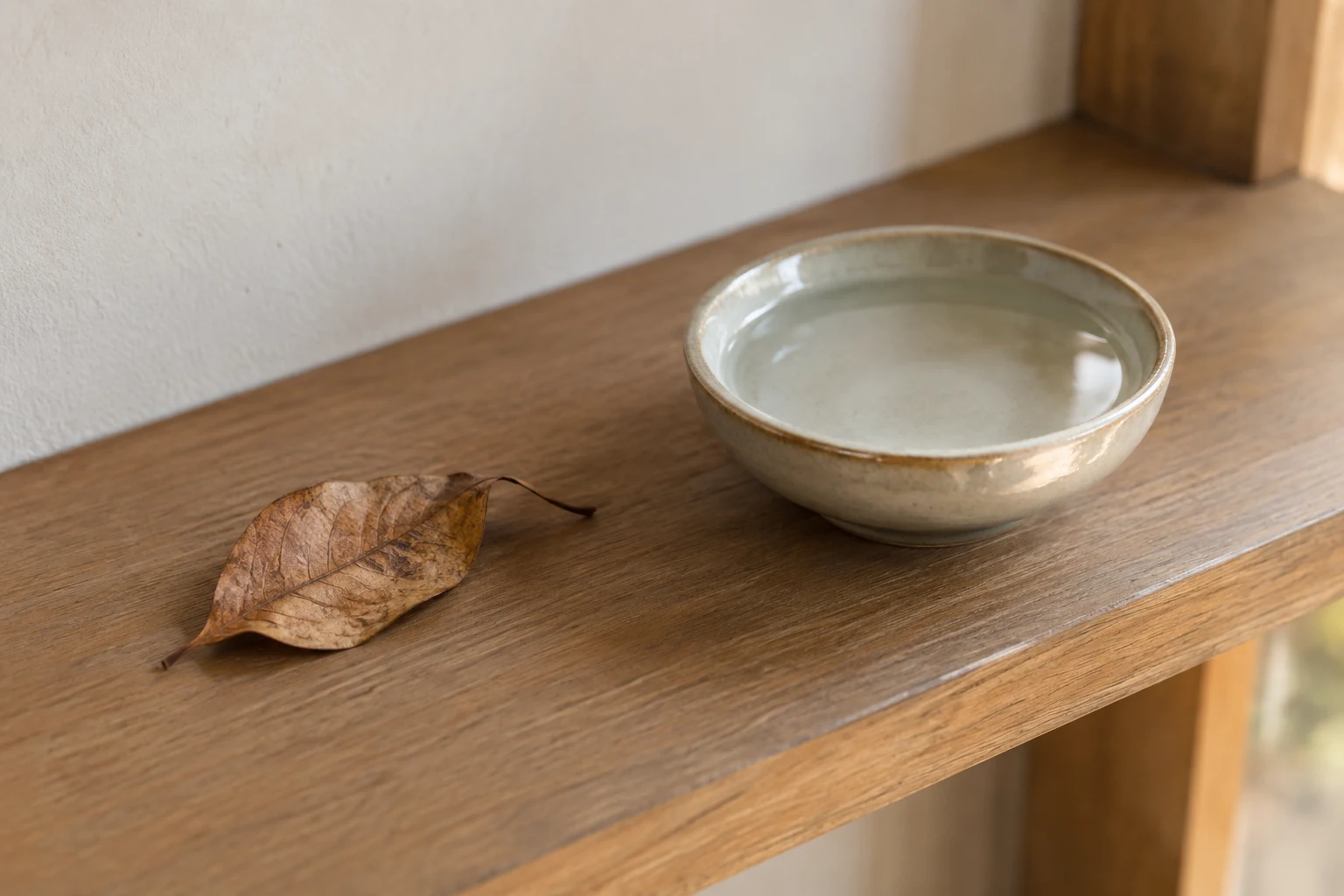
An ancestor altar need not follow a prescribed plant list. If a particular association matters to you, a photograph of a known water-associated plant can represent it. A known cultivated plant is another option. An already-owned dried leaf can serve as decoration without needing to identify it from a picture or claim it is safe for some other use. If you cannot identify a leaf in a photograph, describe it simply as a leaf; the nearby bowl may carry the Water symbolism without assigning a species to the leaf. These are optional arrangements for your own setting, not required rituals.
You can also leave plants out. One guide names bowls and cups as Water symbols, and another mentions a small bowl as a ritual representation of Water. A bowl or cup may express your intention more clearly than a leaf or flower you cannot identify. You can choose a familiar symbol without collecting anything from a waterway or protected area.
What a Symbolic Choice Does Not Authorize
These sources describe magical attributions and ritual symbolism. An attribution does not establish healing, love, divination, or psychic efficacy. It also does not establish that a plant is safe to ingest, put on skin, or expose to smoke.
You can choose a known Water symbol because its association is meaningful to your practice. That choice does not require physically using the plant or proving that it causes an effect.