
Find your local summer solstice, then choose one of the six short practices below. You do not need special supplies, a particular belief, or a full day set aside. These are suggestions for a personal practice, not claims about ancient or inherited traditions.
Find Your Local Summer Solstice
The June solstice begins summer in the Northern Hemisphere and winter in the Southern Hemisphere. The December solstice reverses that pattern: it begins summer in the south. If you live in the Southern Hemisphere, look for the December solstice rather than treating a June date as your summer celebration.
A solstice is a moment, not an entire day. Its local date and time can vary, so check a solstice calendar for your location instead of assuming it falls on the same calendar date every year. For observers outside the tropics, the summer solstice brings the year’s longest daylight day.
If the exact date is inconvenient, you can do your chosen practice on a nearby day. That is a personal timing choice; it does not move the solstice. What matters for the exercises below is making a little room to notice the season where you are.
Choose the Practice That Fits Today
Completing one option is enough. Choose morning light or a midday shadow if that time and the necessary daylight are available. Choose the short walk if the route, weather, and your mobility make it comfortable. If walking does not suit you, the stationary pause asks you to stay in one place.
A nature-journal entry needs little outdoor access. The flameless dusk practice works indoors and requires nothing earlier in the day. If going outside is unsuitable, use an available window view for an observation that fits it. If daylight or a visible shadow is unavailable, choose a different option rather than trying to force the morning-light or shadow practice.
Meet the Morning Light with an Intention
Begin in a comfortable morning spot where light falls on a wall, tabletop, ground, or landscape. You can sit or stand, indoors or out. Pick a place where you can pause without needing to hurry.
Do not look directly at the Sun without proper protection. Look instead at the illuminated surface or landscape. Notice one visible quality: perhaps the light makes an edge clear, reaches only part of the surface, or changes the colors you can see. Describe what is actually there rather than searching for a particular sign.
Then choose one modest intention for the day. It might be an action you can attempt, such as making time for rest or paying attention during a conversation. The light does not promise that your intention will come true; it simply gives you a moment in which to choose it.
To finish, put the intention into your own words—silently or aloud—and leave the spot. You do not need to keep watching the light or turn the intention into a larger ceremony.
Mark a Midday Shadow
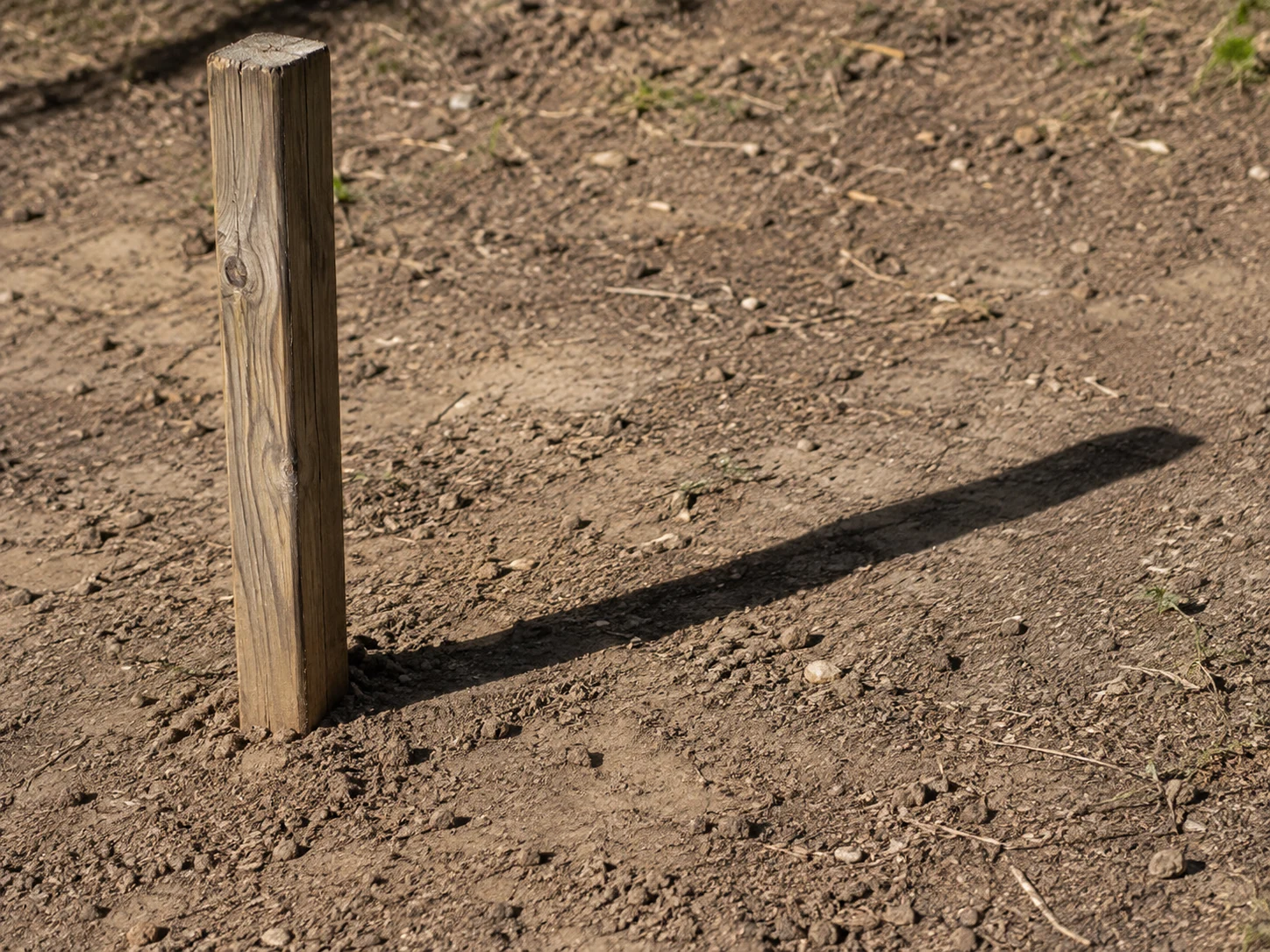
Near midday, find a stationary object that casts a visible shadow onto a surface where you are permitted to make a temporary mark. A post or the leg of outdoor furniture could work. Choose something removable, such as a small stone placed at the shadow’s tip. Shadow observation is one way to notice the solstice season, but this exercise calls for only a single mark.
Do not look directly at the Sun without proper protection. Keep your attention on the surface and the shadow instead. Place your marker at the tip, and note the time and which object made the shadow. If you wish, notice the direction it extends or its length relative to something nearby.
That mark records the shadow’s position at that time. It is not, by itself, a measurement of the day’s shortest shadow: establishing a daily minimum would require more observations. One mark also cannot prove which date is the solstice.
When you are done observing, remove the marker and leave the surface as you found it. If there is no visible shadow, choose another practice rather than guessing where the tip would be.
Notice Three Seasonal Details on a Short Walk
Choose a short route you can comfortably travel and return from, with a starting point and an endpoint in mind. It can be familiar; you do not need to reach a special destination. A nearby walk can be a simple way to spend time noticing the season.
As you go, notice three distinct details that are actually present. They might be something you see, a sound you hear, or a sensation you feel. For example, you could notice a patch of shade, a repeated sound, and the feel of air on your skin. Those are examples to guide your attention, not signs that must appear on your route.
Try naming each detail plainly first: “I heard this sound,” rather than “This sound means something is changing.” If you want to give an observation personal meaning, you can do that separately. You may also find that it means nothing particular to you.
Finish at your starting point or another planned endpoint. Pause briefly to recall the three details, then let the walk be complete. If the weather, route, or your mobility makes walking unsuitable, choose the stationary pause instead.
Pause in Place When a Walk Is Not Possible
If you cannot or do not want to walk, begin at an accessible backyard, balcony, doorstep, or window. Use a window view when going outdoors is unsuitable. A backyard can be a setting for a summer-solstice activity, but this pause does not depend on having one.
Choose one small area within your view—a section of ground, a tree branch, or part of a nearby building—and stay with it for a short pause. Notice what changes while you watch and what remains still. Perhaps movement appears in one part of the view while another part looks unchanged. If nothing visibly changes, that too is an observation. You do not need to collect three details or cover any distance.
The contrast between change and stillness may suggest something personal to you, or it may not. Either response is yours to decide; the view does not come with a required interpretation.
To finish, turn away from the view or close the pause in your own words. This is a complete practice on its own, not a substitute you must later make up for with a walk.
Make a Dated Nature-journal Entry

Open a paper notebook or digital note and write today’s date. Add the place or vantage point you are observing from, such as “kitchen window” or “front doorstep.” A nature journal can be a place to record observations; this entry can be short.
Write one concrete seasonal observation next. Record something you can point to or describe, rather than starting with what you think it means. “The tree outside my window casts shade across the step” is an observation. On a separate line, write one personal response: perhaps you welcome that shade, miss a different view, or simply find yourself curious about it. Keeping the two thoughts separate lets you see both what you noticed and what you brought to it.
Add one question you might revisit another day. It could be as simple as “Will the shade reach the same place next time I look?” You do not have to predict an answer or promise to make another entry.
Finish by closing the notebook or saving the note. The dated record is complete even if you never return to the question.
Close at Dusk with a Flameless Light
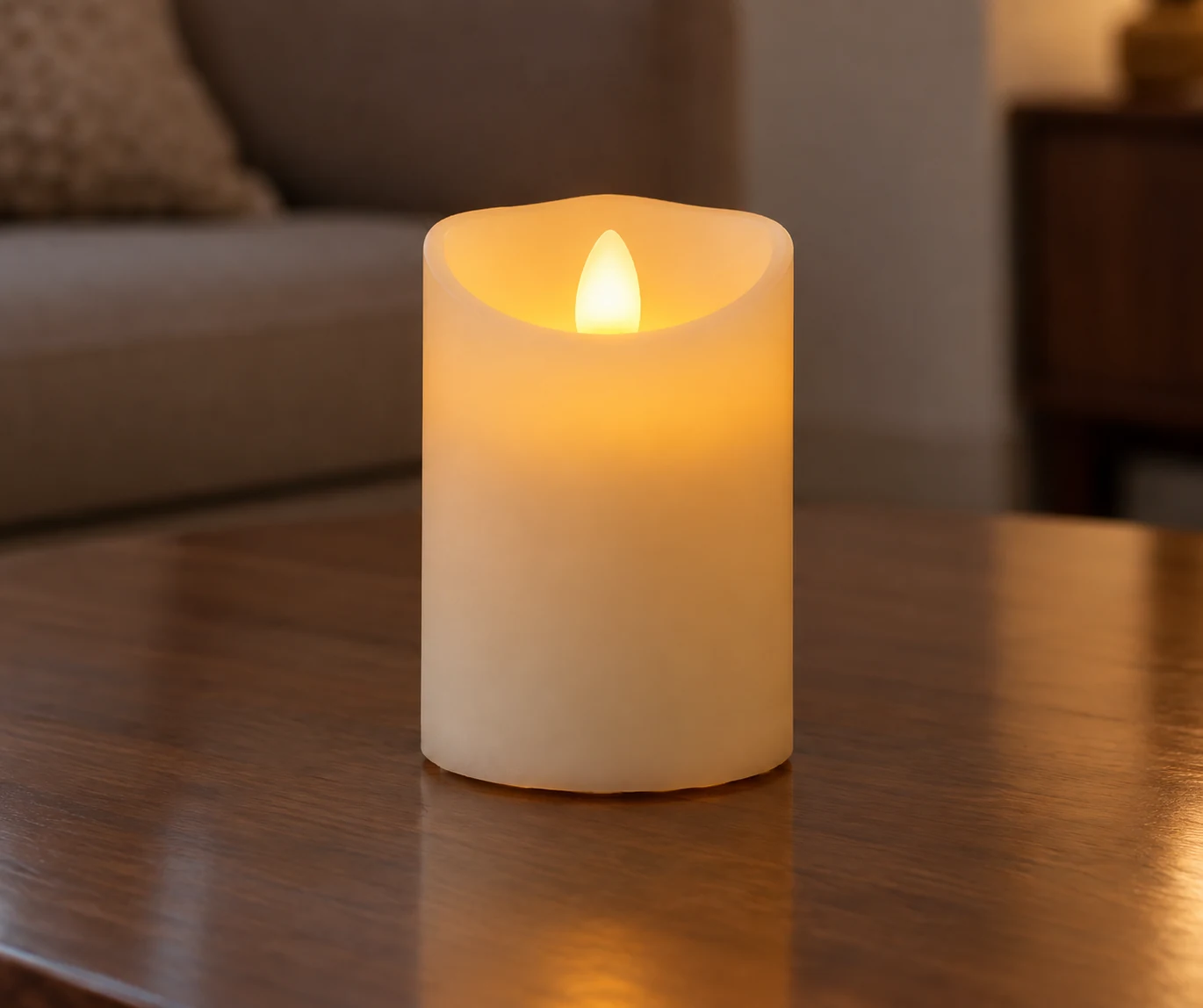
At dusk, bring a flameless light to a comfortable place. A battery-powered candle is one possibility; flameless candles are recommended as a home option by the National Fire Protection Association. You need no flame, earlier practice, or outdoor access for this option.
Switch on the light. While it is on, name one thing from the day you want to carry forward. It can be an observation you made, a choice you want to remember, or a question you have not answered. It might be as ordinary as noticing a patch of light on the floor or deciding to make time for a break.
You can say the thing aloud, write it down, or hold it briefly in your thoughts. It does not need a spiritual interpretation, and you do not have to feel a particular way about it. The light gives this short pause a beginning and an end; what you name is up to you.
When you are ready, switch off the light. That action finishes the dusk practice.
Let the Practice Be Complete
Each option begins with something you can do and, often, something you can observe. What that observation means—if it means anything personally—is a separate choice. No emotional or spiritual result is guaranteed. Once you have reached the finish of your chosen practice, you can let it end there.