
Start with the Space You Have
A witch garden can be a few pots on a windowsill, a balcony planting, or a small outdoor bed that feels meaningful to you. It need not follow a fixed historical plant list. Start with one spot you can observe and care for. First check what can grow there, then choose suitable plants, and finally decide what—if anything—you want the planting to represent. Even a single container can be a complete beginning.
Check the Growing Conditions First
Before choosing plants, watch when your spot receives direct sun and note whether it is sheltered or exposed. Check drainage as well: look for holes in a container, or observe how a bed drains. Sunlight and drainage should guide what you plant.
If you are unsure what suits your local conditions, take your notes to a nursery and ask. Where possible, consider locally suited native plants; they are often better adapted to local conditions and pollinators. Your site may call for different choices from the familiar herbs below, and that is a good reason to adapt the plan.
| Check | Your site notes |
|---|---|
| Sunlight | Record when the planting spot gets direct sun. |
| Shelter | Record whether the spot is sheltered or exposed. |
| Drainage | Record how the spot drains, or whether your container has drainage holes. |
Choose and Plant Compatible Companions
1. Plant a shared herb container if your site fits. Confirm that you have a sunny, sheltered spot and a container at least 20 cm deep with drainage holes. There, sage, thyme, and rosemary can grow together because they have similar growing needs. Add compost, position the plants, and settle the compost around them without blocking the drainage holes.
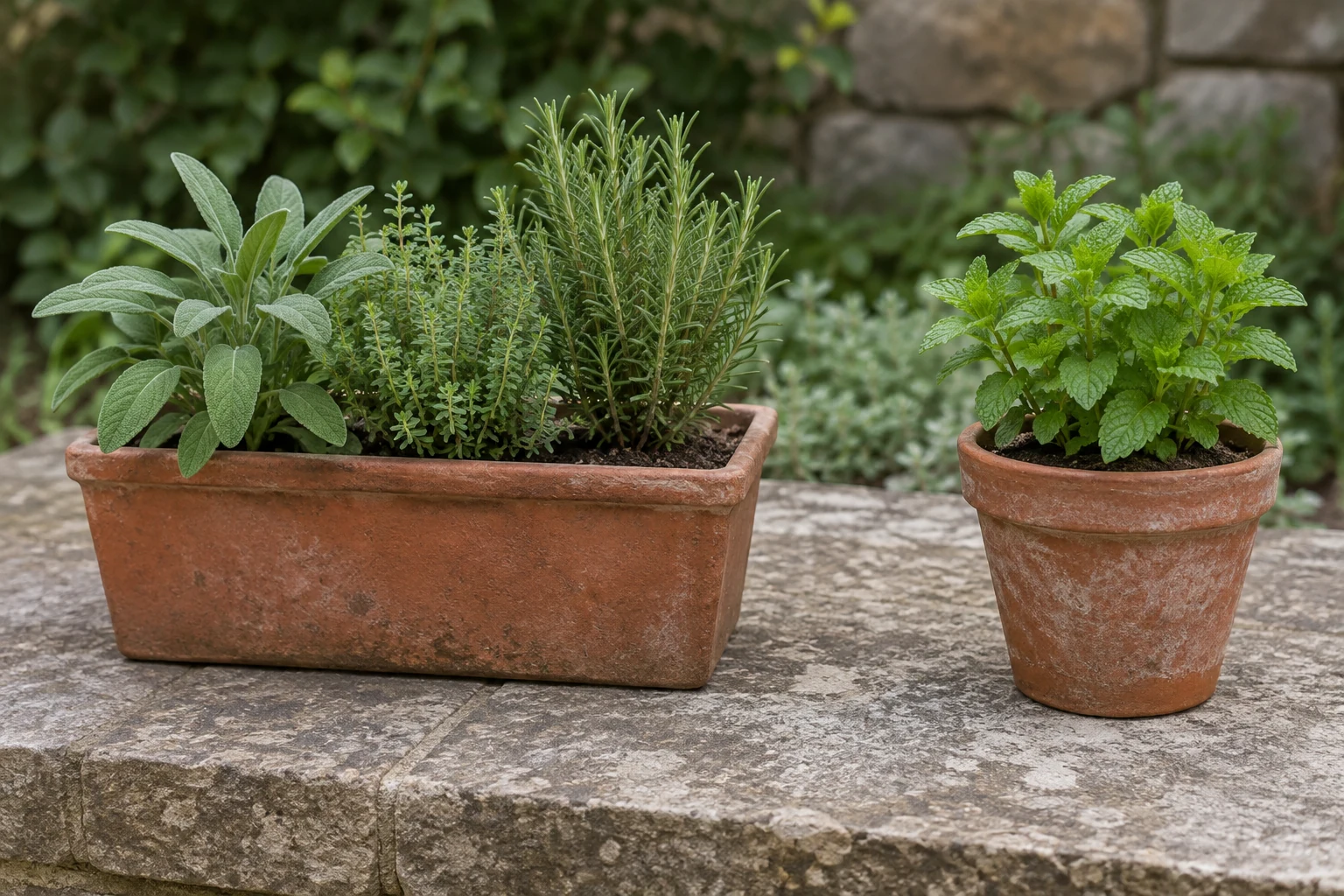
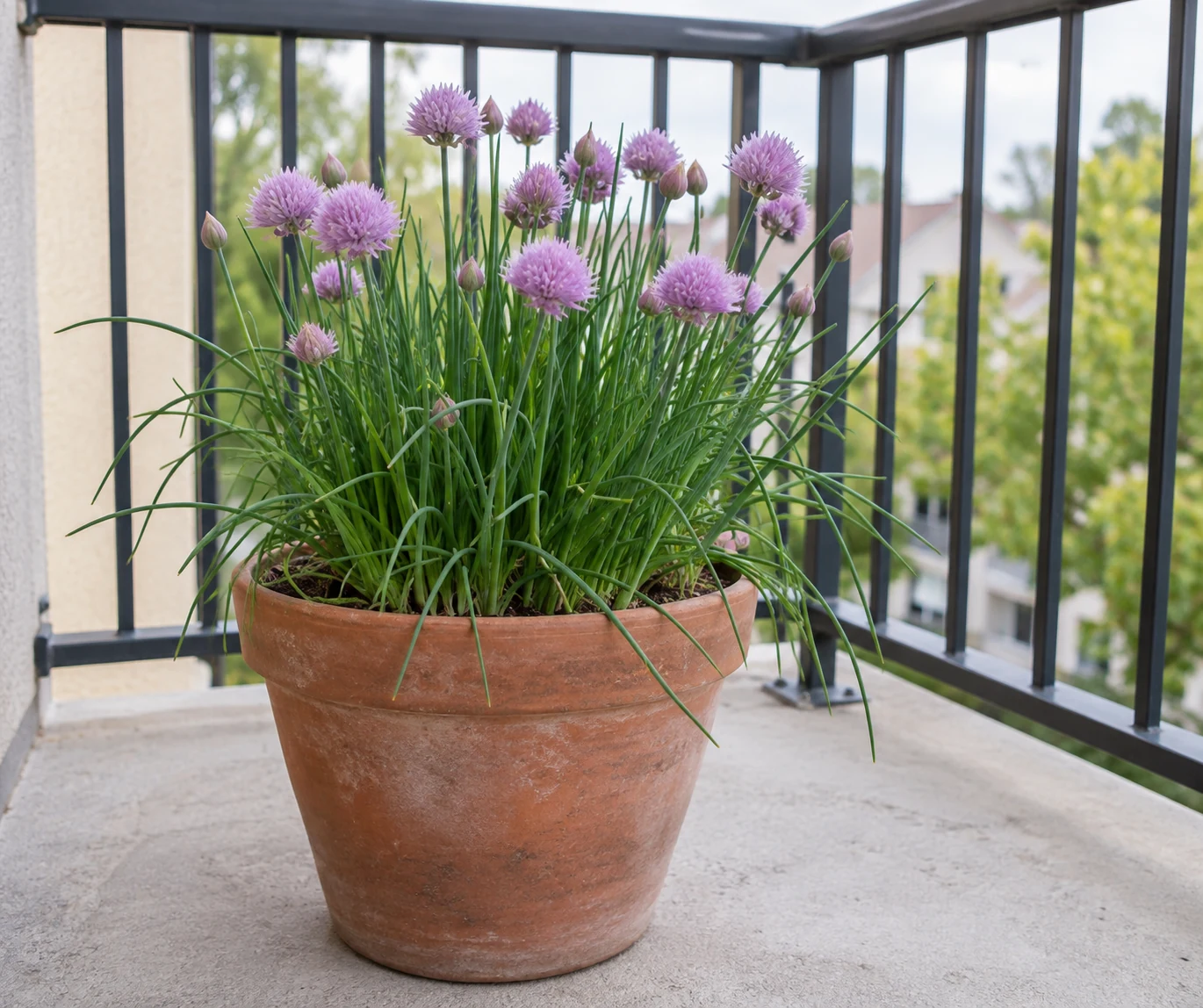
2. Keep plants with different needs apart. Give mint its own pot because its roots spread among other plants. If you want chives, keep them apart from the sage, thyme, and rosemary container too. Mint and chives need richer conditions and more frequent watering than those Mediterranean herbs.
If you have dogs or cats, check pet safety before considering English lavender: it is toxic to both. If the site suits it and you can address that concern, English lavender (Lavandula angustifolia) is an optional choice, not an essential part of the garden.
If your space does not suit the shared herb container, do not force the grouping. Use your site notes to find plants that fit the sunlight, drainage, and local conditions you actually have.
Give the Planting a Meaning of Your Own
Once you have chosen plants that can grow in your space, you can decide what they mean to you. A plant might recall someone, mark an intention, or simply make the garden feel like yours. Those are personal choices, not guaranteed spiritual effects or meanings everyone must share.
For example, rosemary from a garden was included in a commemorative wreath. That is a documented use of rosemary to express remembrance, not a rule that your rosemary must stand for the same thing.
Keep meaning separate from safety: symbolism does not establish that a plant is safe to ingest, burn, or use medicinally.
Water and Plan for the Seasons
For the sage, thyme, and rosemary container, check the compost and water when it dries, without waterlogging it. Check mint and chives in their separate growing spaces rather than watering everything alike. In their richer conditions, they need more frequent watering than the Mediterranean herbs.
Expect the planting to change through the year. Many potted herbs die out in winter, so plan for possible losses rather than assuming every plant will return. If you want to grow tender basil or marjoram, sow them indoors before the risk of frost has passed.
Let the Garden Develop with Your Space
A small witch garden can develop gradually. Let the site and each plant’s care needs guide what you grow, then give the planting a meaning that fits you. There is no universal list to complete.