
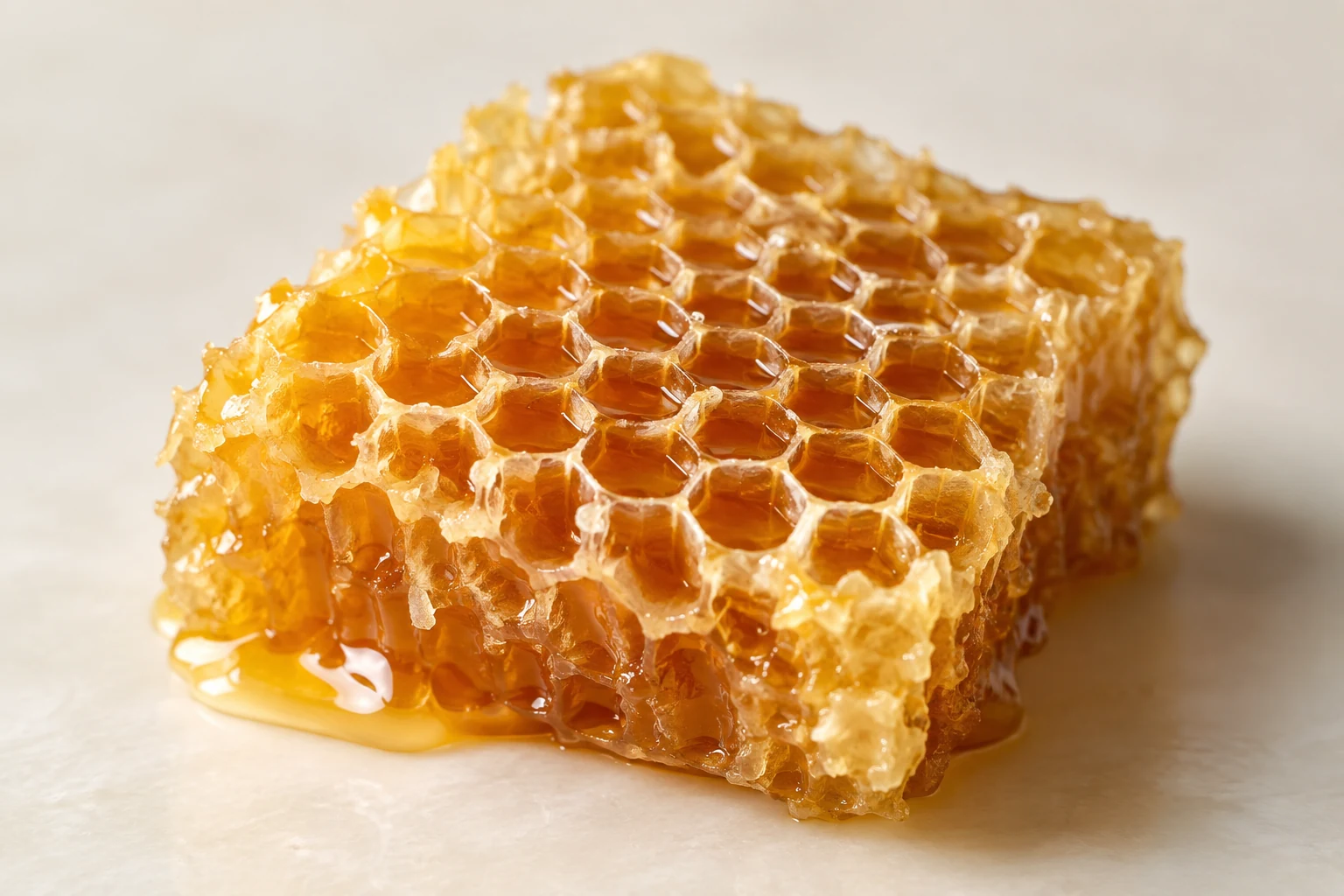
Beeswax can have a place on an altar as a candle or an unlit object. You can give it a personal meaning, but documented uses do not establish a spiritual effect inherent in the material. If you choose to light a beeswax candle, you also take on the ordinary risks of an open flame.
What Beeswax Is and What It Can Become
Honey bees produce beeswax and use wax to build comb. People make beeswax into candles and ornaments, so bringing it to an altar does not necessarily mean burning it.
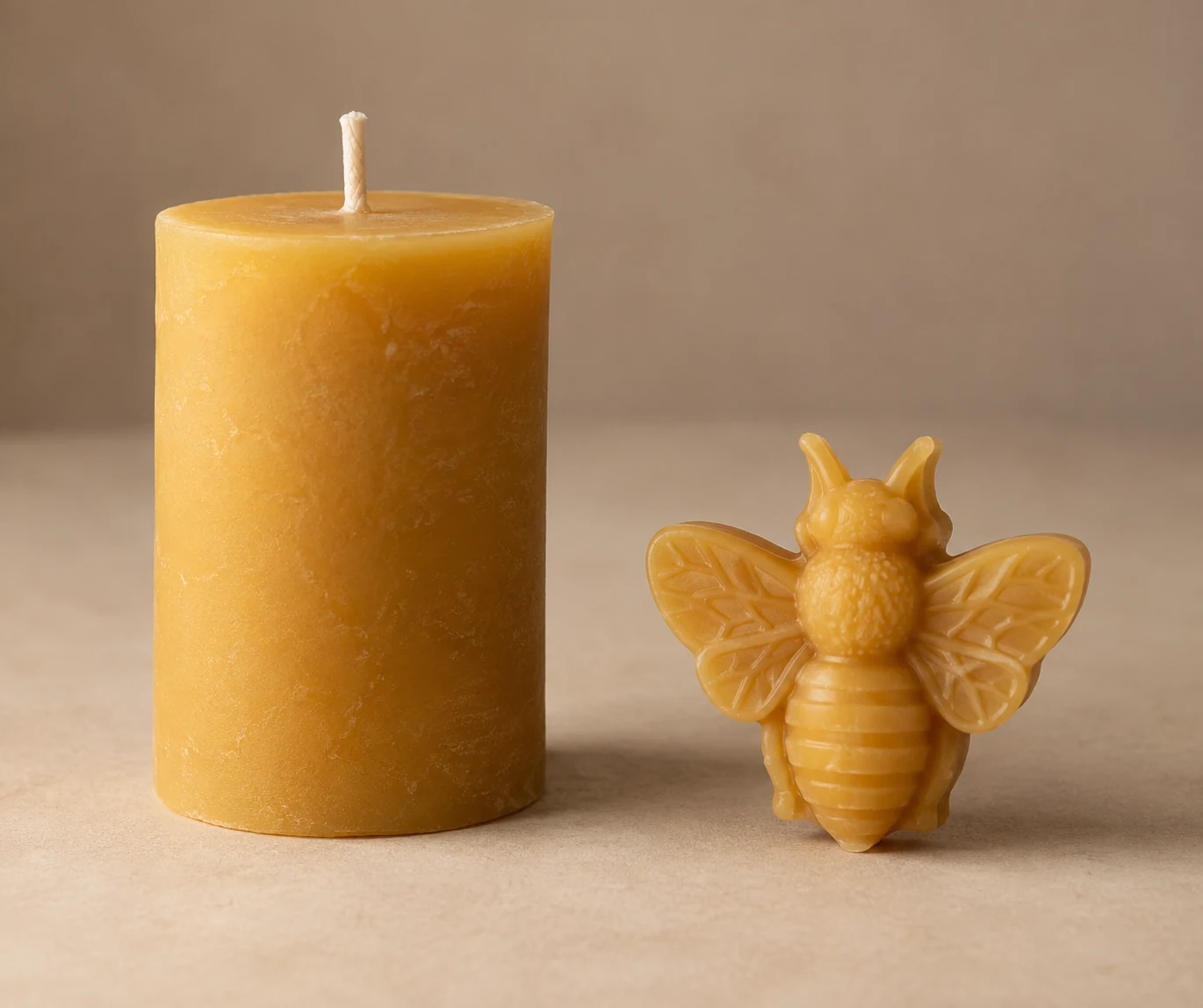
Beeswax is one of several candle waxes. It can lend a subtle honey hint to a candle’s fragrance, but that quality does not show that it uniquely burns cleaner than other waxes. Beeswax is not a basis for claiming that a candle purifies the air or provides health benefits. Its origin, texture, and possible scent may be reasons to choose it without expecting an extraordinary result.
Two Documented Uses, Not One Shared Meaning
A Smithsonian conservation record describes beeswax ex-voto images at Exeter Cathedral, dating them to the late fifteenth to early sixteenth centuries. An ex-voto is a devotional offering; the record concerns particular objects in that setting, not a meaning that belongs to every use of beeswax.
The Metropolitan Museum of Art describes beeswax in Ukrainian pysanky, eggs decorated with traditional folk patterns. In the technique it describes, wax is drawn onto the eggs in stages as part of making the decoration. This is a use of beeswax in a decorated object, rather than as a candle.
These are two documented examples, not a survey of beeswax traditions or a full account of either tradition’s meanings. The Exeter images and Ukrainian pysanky belong to distinct contexts. Neither establishes a universal symbolism for beeswax, and one should not be used to explain the other.
What the Examples Can—and Cannot—Mean for Your Practice
The records show what people made with beeswax in particular settings. They do not show that the material itself produces an inherent spiritual effect. You might associate beeswax with the honey bee’s comb, for example, or with an object that matters to you. That would be personal symbolism: a meaning you choose, rather than one claimed from either documented tradition or promised as a result.
You can act on that intention without lighting anything. Beeswax ornaments, as well as candles, offer a way to include the material in your space. Whether to use a flame is a practical choice, not a measure of how meaningful your practice is.
Using Beeswax with Attention to Fire Safety
An unlit beeswax ornament can serve as a material focus without adding an open flame. If you choose a candle, remember that its flame can ignite burnable items. Put it in a sturdy holder on an uncluttered surface, at least 30 cm from anything that can burn. Extinguish it before leaving the room or going to bed.
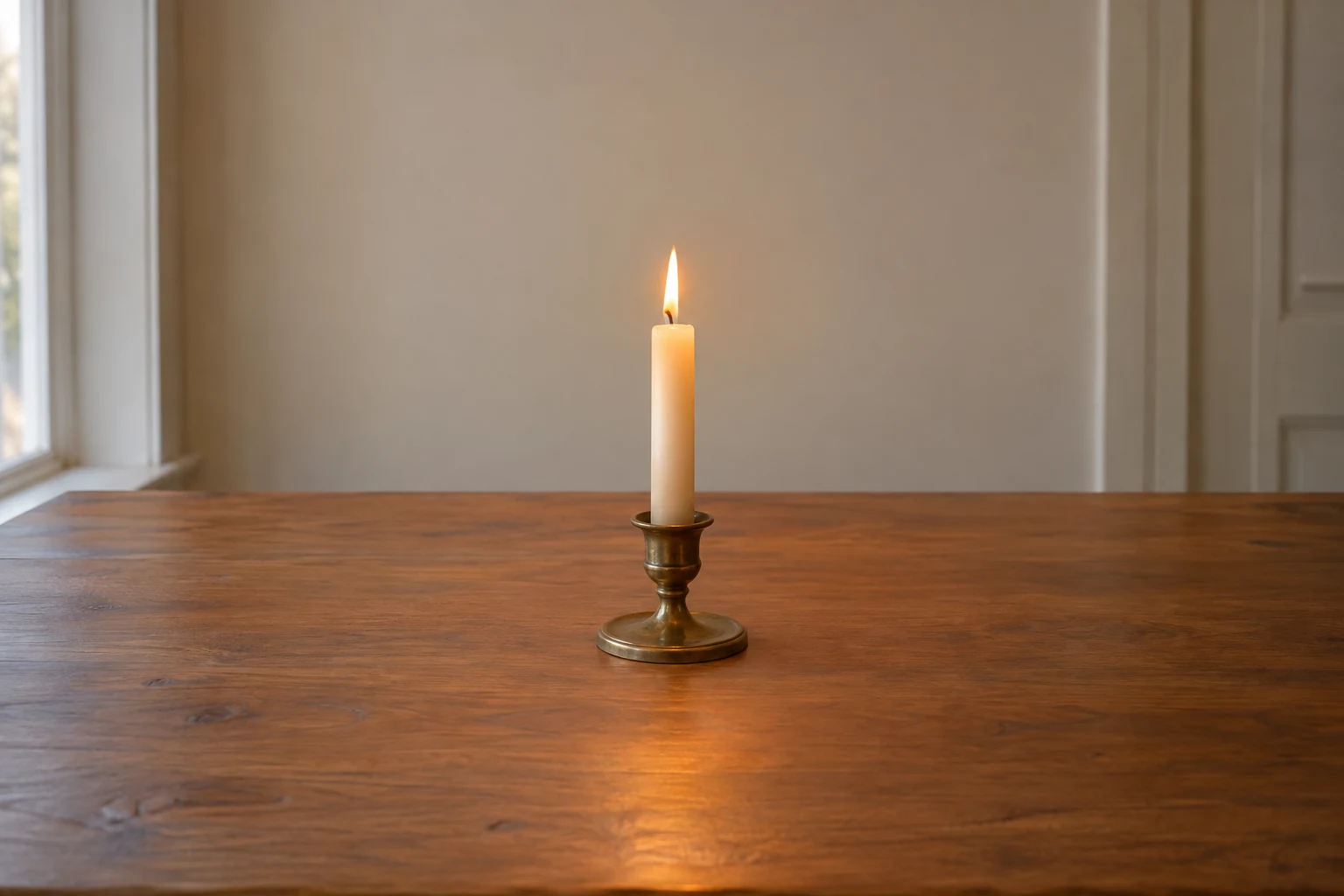
Unlit does not mean safe to expose to heat: beeswax itself is flammable, and handling wax can cause burns or fires. If your space or schedule cannot accommodate a burning candle safely, choose the unlit form.