
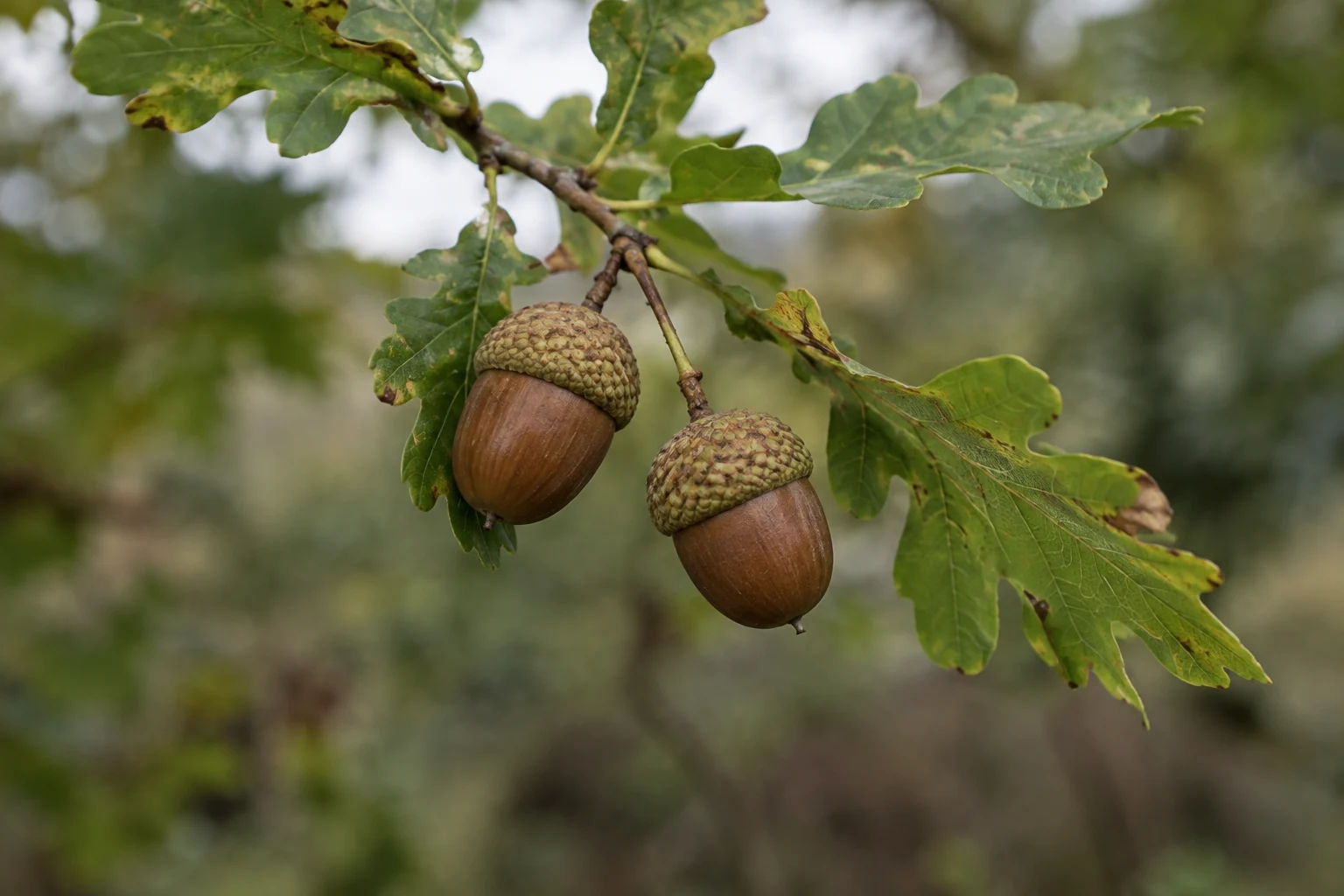
What an Acorn Represents Before It Reaches a Table
An acorn can invite thoughts of harvest and gratitude, but it is first an oak fruit containing a seed. Acorns also feed many birds and mammals. Good white oak crops are irregular, so even a tree that looks abundant does not offer a dependable surplus for people.
That is a useful starting point for gratitude: notice what the oak provides without assuming its fruit is yours to take. If gathering is permitted, leave plenty for wildlife. An acorn need not become an ingredient—or leave the ground—to hold personal meaning.
Acorns in Named Food Traditions
The National Park Service describes acorns as important food for many California Indian groups. Its account of Chumash plant foods records gathering and storing acorns, then grinding, leaching, and cooking them. This is a record of food knowledge, not a set of generic ritual instructions.
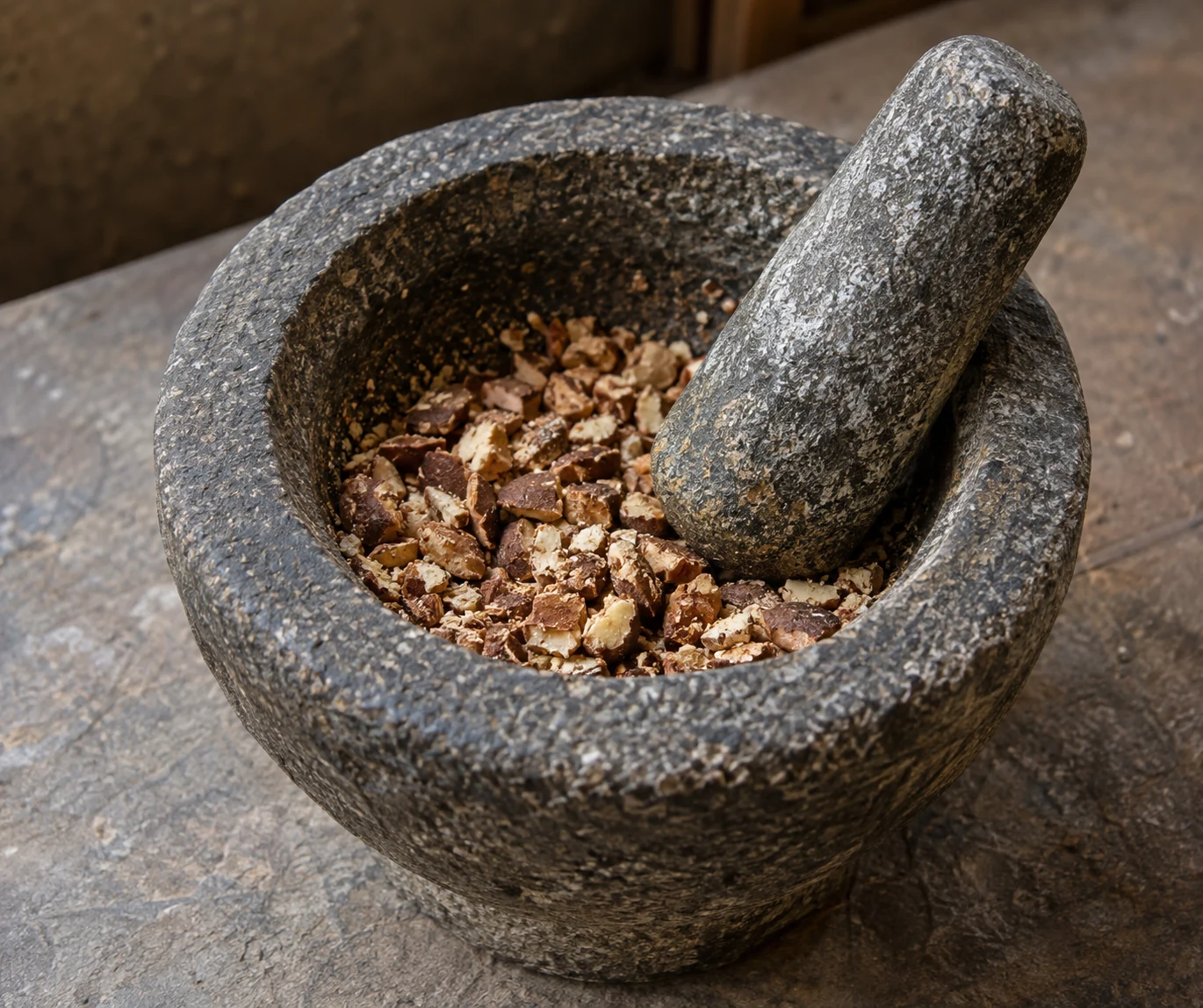
In a separate account, the National Park Service attributes a Cahuilla wewish recipe and an acorn bread account to elder Katherine Saubel. The wewish recipe specifies leaching acorn meal until it no longer tastes bitter. These are Cahuilla food accounts, not extensions of the Chumash account or instructions for someone else’s practice.
The Difference Between a Ripe Acorn and a Safe Ingredient
A brown acorn may be ripe, but ripe does not mean ready to eat. The Woodland Trust warns that raw acorns contain tannins and can be toxic to humans; removing tannins through leaching is necessary to make them safe to eat. The documented food accounts describe further preparation before acorns become food. Neither color nor a taste check alone establishes safety.
If you want acorns in a meal, choose an identified, safely processed food ingredient, such as acorn flour, rather than eating raw or unidentified acorns or improvising a leaching method. Acorn flour is a processed ingredient used in breads and other foods. Eating acorns is not necessary for a gratitude practice.
A Gratitude Practice That Remains Your Own
Pause with a meal or spend a quiet moment beneath an oak. Name, silently or aloud, something that sustains you and someone you wish to thank. Express that thanks in your own words. You need not collect or eat an acorn.
You might connect oak with endurance, harvest with nourishment, or a shared meal with ancestry. Those are personal meanings—not documented Chumash or Cahuilla ritual, or a promise of spiritual results. The named accounts concern particular prepared foods.
If you choose to gather acorns, check local permissions first and leave plenty for wildlife. An abundant-looking crop does not grant permission to collect it. Acorns feed birds and mammals, and good white oak crops are irregular. Leaving them where they are can be an act of thanks.