
What “Rowan the Sacred Witch Tree” Means
The title brings together three things: a living tree, place-specific accounts of its protective use, and the sacred meaning someone may give it today. Recorded folklore describes rowan used against witches, spirits and enchantment. Those accounts tell us about beliefs and customs; they do not demonstrate supernatural protection.
Calling rowan “sacred” need not mean adopting an inherited rite. A reader can approach the tree with care while keeping its living nature, the historical accounts and their own interpretation distinct.
The Living Rowan Behind the Name
The tree in these accounts is rowan, Sorbus aucuparia. It is also called mountain ash, although it is unrelated to true ash. The familiar name may help you recognize a reference to rowan, but it does not identify the tree as an ash.
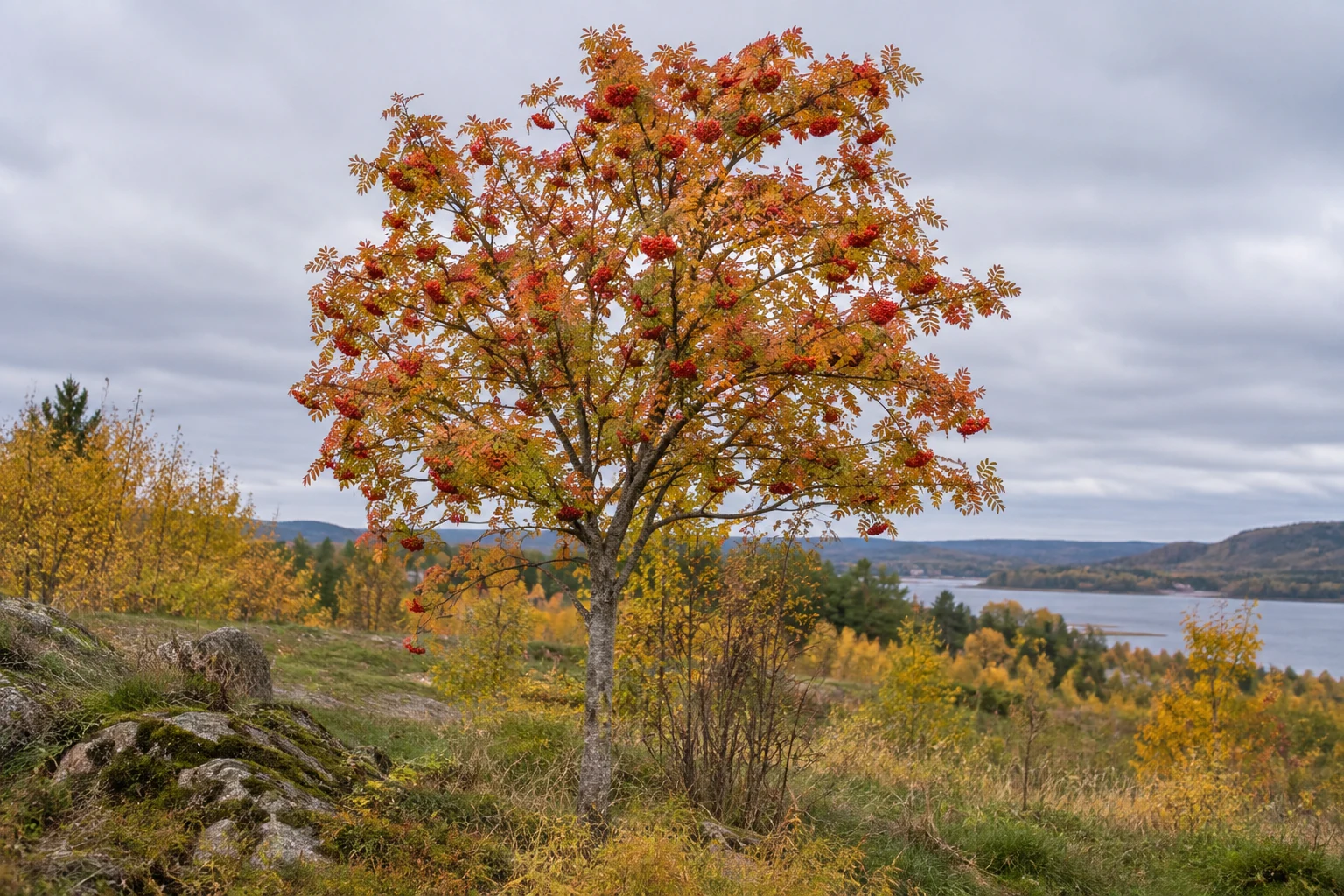
Rowan presents a changing picture through the year. Clusters of cream flowers appear in spring, while its fruit ripens red in late summer and autumn. A spring visit and an autumn visit may therefore reveal quite different features on the same tree. This seasonal change matters both to someone trying to recognize a rowan outdoors and to someone who knows it mainly as a symbol: the tree does not look like a photograph of red berries all year.
How to Recognize a Possible Rowan
Start with the leaves rather than searching only for fruit. Forestry England describes rowan leaves as having 11–15 toothed leaflets. Look also for clusters of cream flowers in spring or fruit that ripens red in late summer and autumn. Which of those features you can see depends on when you visit.
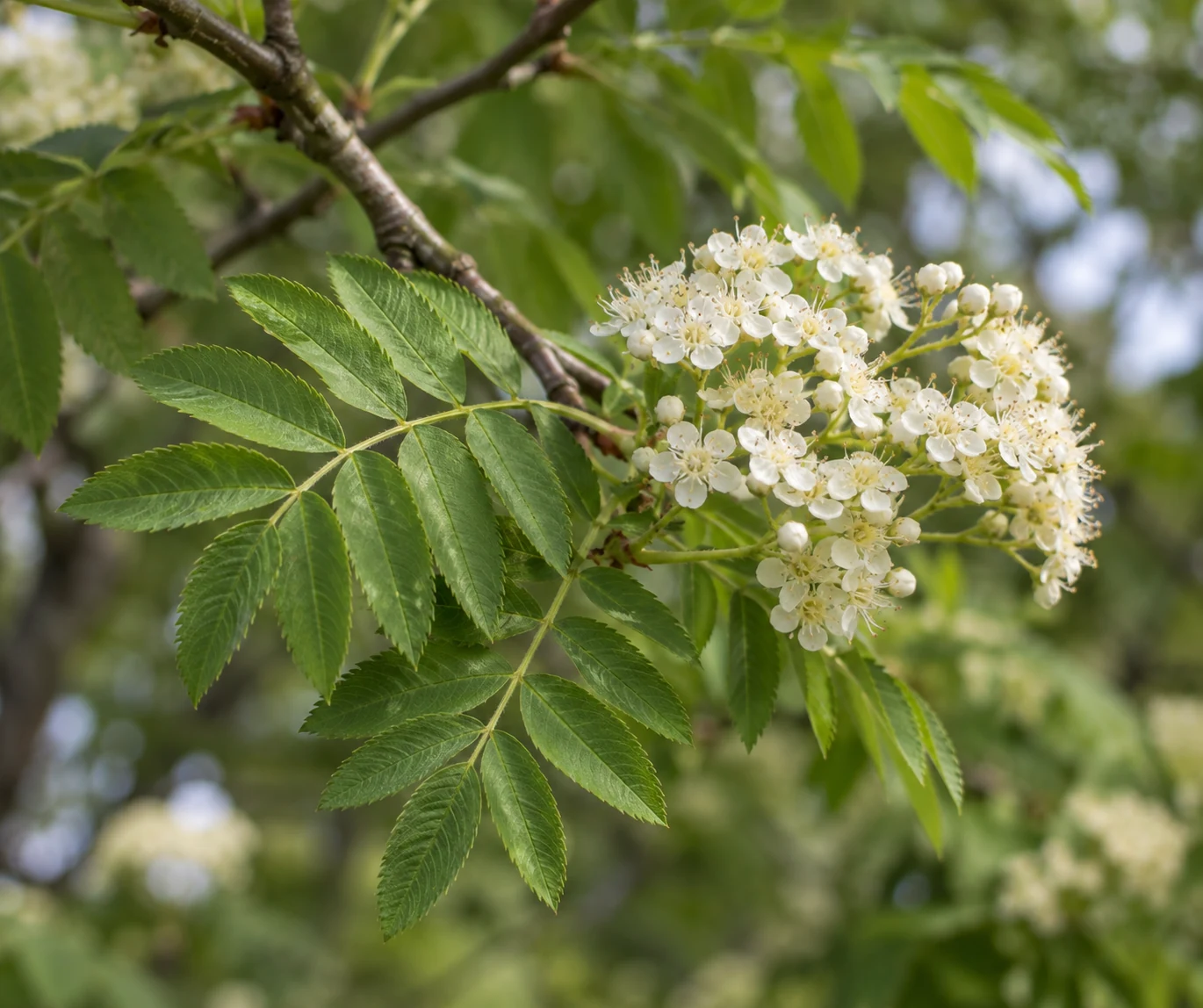
Compare the features that are available. Do the leaves fit the description? If flowers or fruit are present, do they fit the season? Returning to the same tree later may let you compare another feature. That gives you more to work with than berry colour alone. Likewise, a photograph centred on a bright fruit cluster may leave the leaves and much of the tree out of view.
These cues support provisional recognition, not a definitive identification from one sighting. The name “mountain ash” and a glimpse of red fruit are both easy to overread. You can take a closer look without touching the tree or removing a sample.
What Protection Meant in the Recorded Folklore
Woodland Trust records rowan planted by homes as protection against witches. Trees for Life records rowan sprigs used to protect cows and their produce from enchantment. These are reports of what people believed or did, not evidence that the tree prevented the feared harm.
Trees for Life describes protective witchcraft lore as common in the British Isles. That breadth does not make every account the same: the perceived threat, what people hoped to protect and how they used the tree could differ.
Woodland Trust also associates rowan’s bright red berries with magic and witches. The association is worth noticing, but it does not establish a cause. It would go beyond the account to say that the berries’ colour explains why people considered rowan protective. The recorded belief can be understood as folklore without supplying a single reason that everyone who used rowan would have shared.
Different Places, Different Rowan Customs
The local details show why a shared protective theme is not the same thing as a shared rite. Woodland Trust records rowan planted near houses in Ireland for protection against spirits. In that example, the tree stood by a home, and the stated concern was spiritual protection. The account describes a custom; it does not say that a rowan beside any house has that effect.
Trees for Life describes Manx crosses made from rowan twigs and tied to cattle or lintels—the horizontal supports above doorways. The source also records the use of rowan sprigs to protect cows and their produce from enchantment. Both accounts concern protection, but the details matter: a twig cross tied in place is not simply another name for a sprig, and the placements and things being protected should not be flattened into one gesture.
The same Manx account says people also wore the crosses, made them without a knife, and placed them on May Eve. Those details belong to that local record; they are not instructions for a modern visitor to cut branches or reproduce the custom. Naming its timing and form helps keep it separate from the Irish planting and the Highland restrictions described here.
Accounts from the Scottish Highlands describe a different relationship with the tree. Trees for Life notes taboos against taking most parts of rowan; Woodland Trust also records a Scottish taboo on cutting it. These are restrictions on taking from a tree, not another version of planting one by a house or tying a cross to cattle.
An Irish account concerning a home and spirits, Manx accounts concerning cattle or lintels, and Highland restrictions on taking have different locations, objects and purposes. Combining them into one pan-Celtic ceremony would erase those differences. Equally, a historical taboo does not automatically become a rule for everyone today. Keeping each account in its setting lets the protective theme remain visible without inventing a single practice behind it.
Interpreting “Witch Tree” and “Sacred” Today
“Witch tree” might sound like the name of a tree belonging to a particular witch tradition. Yet Woodland Trust’s account of planting rowan by homes describes protection against witches. In that context, the label points to a protective belief, not proof of one continuous tradition of witches using rowan.
Someone may nevertheless regard rowan as sacred. They might find meaning in paying attention to it, respecting its place in the landscape or reflecting on what they wish to protect. That is a present-day choice, distinct from claiming to perform an inherited Irish, Manx or Highland rite. The recorded customs do not jointly authorize a modern ritual.
The distinction can be expressed plainly: “This account describes people using rowan for protection” is a statement about folklore. “This tree helps me reflect on protection” is a statement about personal meaning. Both can be sincere without turning belief into proof or different local customs into one script.
What the Tree Supports—and What to Leave Alone
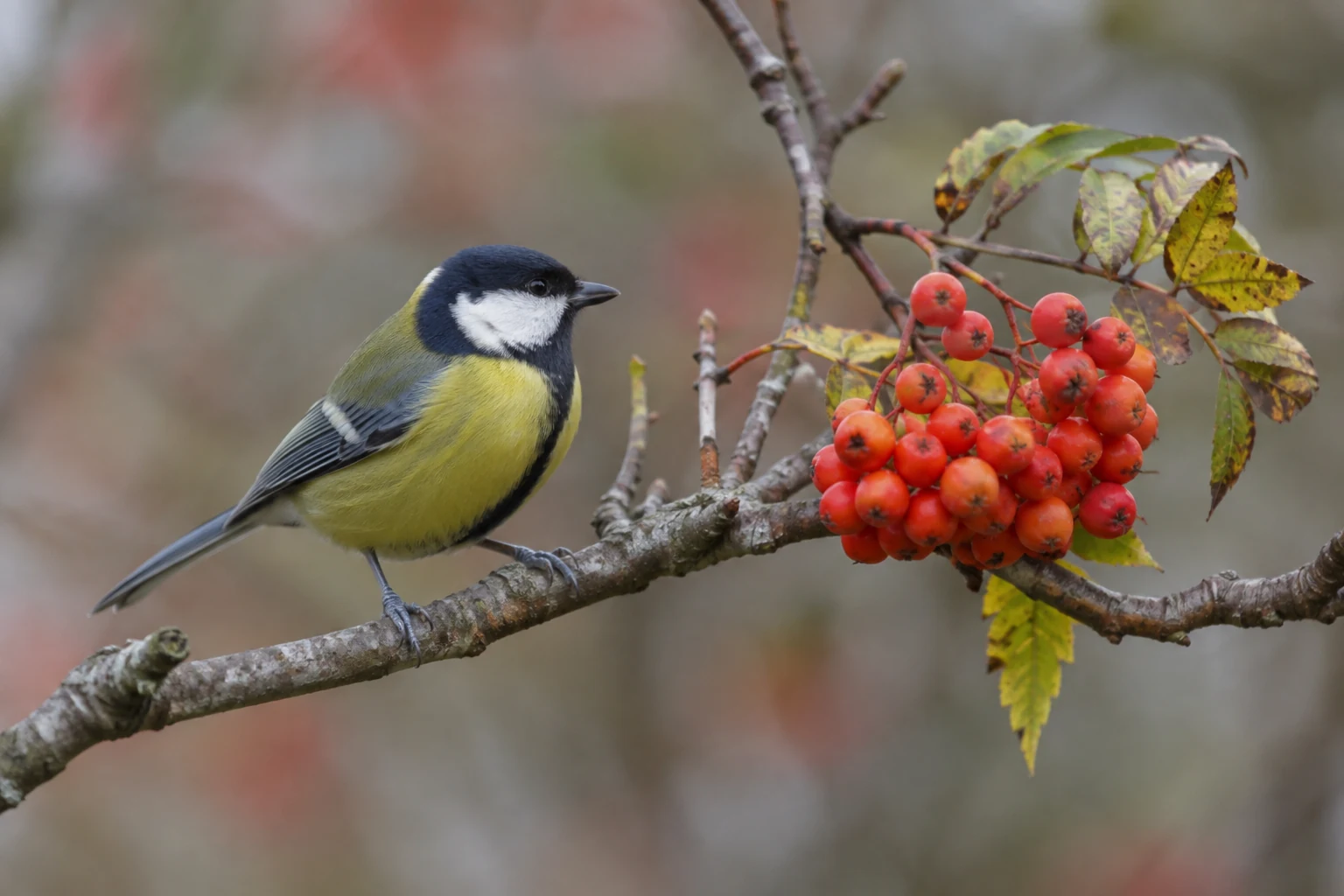
Rowan’s spring flowers provide nectar and pollen for insects. Its fruit feeds many birds in autumn and winter, and birds disperse its seeds. A fruit cluster is therefore more than a striking feature for a visitor to notice. Leaving it on the tree respects its role as food for wildlife.
Leave live branches in place as well. You need not collect a twig to acknowledge the historical crosses or sprigs described in folklore. Observing rather than taking is a practical choice for a reader today, not a claim that every recorded community followed the same rule.
Keep the fruit out of personal practice. The RHS marks rowan fruit as ornamental and not to be eaten, while Forestry England separately discusses preparation for human use. Those sources give differing food guidance; this article does not resolve it or offer eating, preparation or medicinal advice. Nothing about observing the tree requires harvesting its fruit.
A No-take Way to Spend Time with Rowan
If a rowan is accessible, choose a place where you have permission to stand and can observe without disturbing it. Notice its overall form, then look for whichever seasonal features are present: toothed leaflets, cream spring flowers or later red fruit. Flowers and ripening fruit belong to different parts of the year, so let the tree in front of you guide your attention rather than expecting it to match one image.
Then ask yourself: What would protection mean here if it meant care rather than a guaranteed shield? You might think of a boundary you want to respect, a place you want to look after or something you can leave undisturbed. This reflection is your own; it does not reenact an Irish planting, a Manx cross or a Highland taboo.
If no rowan is nearby, you can ask the same question at home. Consider the difference between guarding something and possessing it. You do not need a tree, a substitute object, fruit or branches to make that thought meaningful.
Careful attention leaves room for the living rowan, for customs understood in their own settings, and for the meaning you choose to make without taking from either.