
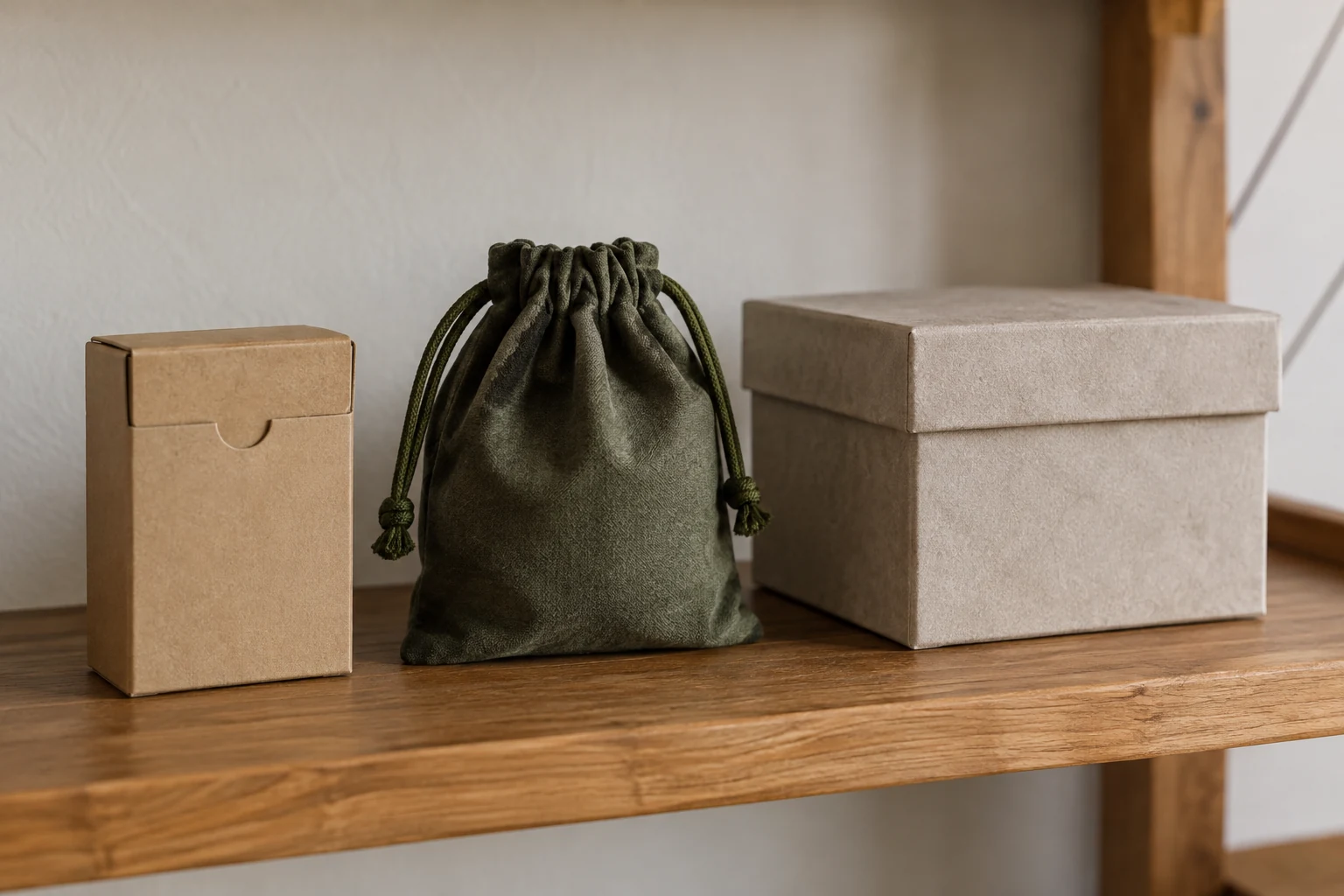
The right storage is the least complicated arrangement that fits your deck, suits where you keep it, and protects it from the pressure it will actually face. Start with the box you already have. A special box is not spiritually required; if the supplied one works, you may have no reason to replace it.
Start with the Deck You Have
Set out everything you want to keep together: the cards, guidebook, loose inserts, and anything you have added, such as a note about a spread. Decide whether each extra needs to share the container. A guidebook that fits beside the cards may call for a different shape of box from one that must sit on top of the stack.
Inspect the supplied box. Check its corners and sides, whether the lid still closes normally, and whether cards catch as you take them out. A sound box you use on a shelf presents a different decision from a crushed box—or one you plan to carry in a crowded bag.
Do not shop by a presumed universal “tarot size.” US Games lists standard Rider-Waite cards at 70 × 120 millimeters and a pocket edition at 58 × 89 millimeters. Those are two examples from one publisher, not dimensions to assume for your deck. Pocket cards, oversized cards, a thick guidebook, or added inserts can each change the space you need.
Measure the Inside Fit, Not Just the Label
Square the cards into a stack, then measure its width, length, and height. Measure the guidebook and inserts separately. Before comparing those numbers with a container, decide how the contents will sit: alongside one another, in separate compartments, or stacked. The arrangement matters because a book edge should not press into card faces, and an insert should not be trapped under a lid.
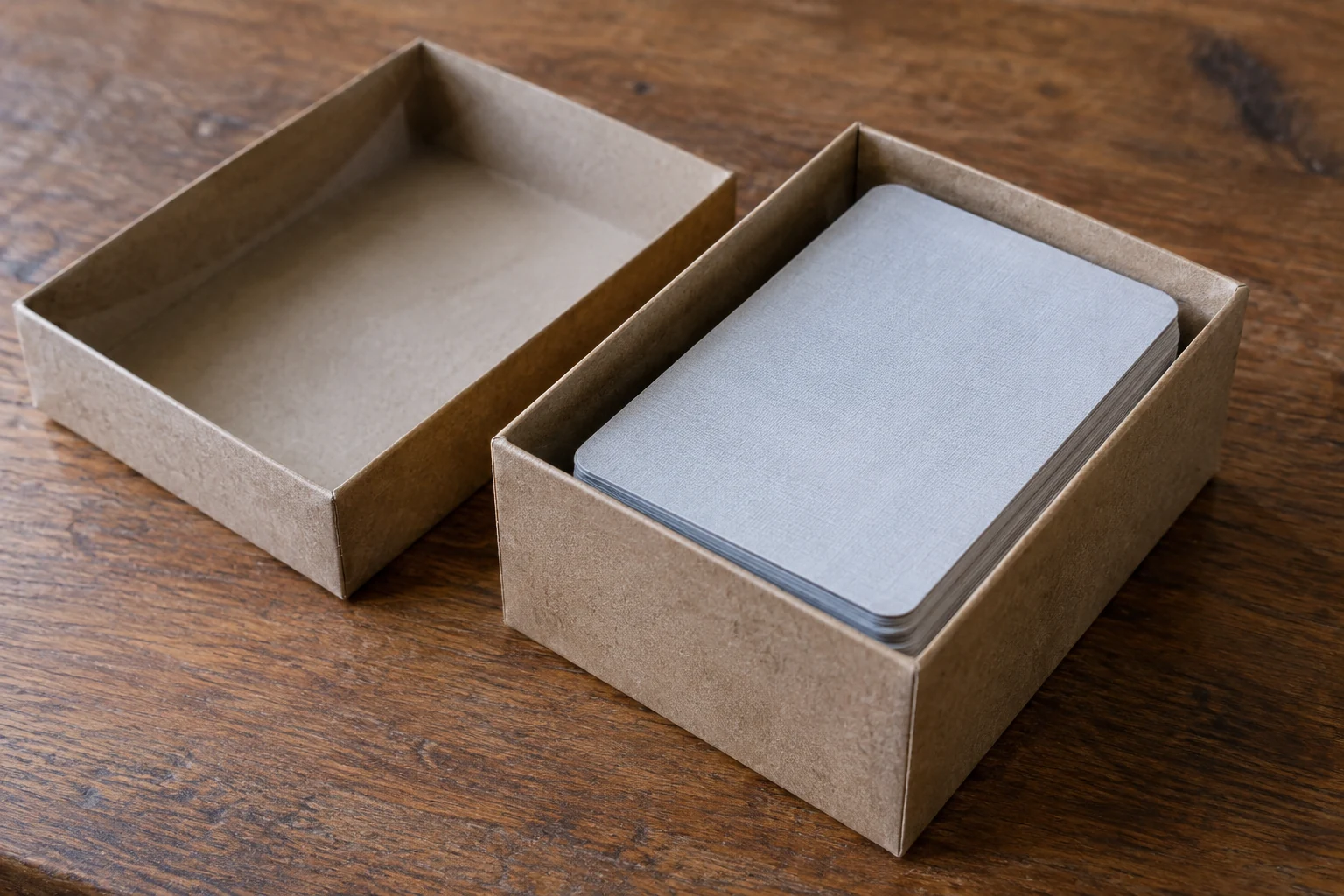
Measure the usable interior of your current box or any replacement you are considering. Check the narrowest part of the opening, the space beneath the closed lid, and seams or folds that take up room. Exterior dimensions cannot establish that the contents will fit. If a seller provides only outside measurements, ask for inside dimensions or leave the purchase undecided.
Test the arrangement in the box you have:
- Put the cards and other contents in without forcing them.
- Close the lid normally. If you must push down, bow the stack, or squeeze the guidebook against the cards, the fit is too tight.
- Gently turn the closed box. Notice whether the contents remain reasonably settled or slide across a large empty space.
- Take everything out again. You should be able to open and repack a deck you use regularly without scraping or pressing its contents.
The goal is room without strain, not zero clearance. For paper archives, the National Archives recommends containers large enough to avoid bending, appropriately sized to limit movement, and not overstuffed. Those principles make a useful fit check for paper cards, though archival-paper guidance is not a tested prescription for every deck material.
When the Supplied Box Is Enough
A sound original box can be a practical, no-cost choice for a deck used mostly at home. Tarot decks are sold with boxes, and a publisher may list both card and box sizes, but a listing does not prove how a particular box will perform under pressure. Judge the one in your hands by its fit, condition, and usual storage spot.
For example, if you return a deck to its freely closing box after each reading and keep it on a shelf where nothing heavy rests on it, changing containers may offer no useful improvement. It also keeps the guidebook and deck in their familiar arrangement. The remaining task is to protect that spot from spills, dampness, and other hazards—not to find more elaborate packaging.
Reconsider the box if its lid bows, its corners catch the cards, or its sides have become crushed. The same box may be adequate on a shelf but less suitable loose in a tightly packed bag. You can keep it for home use and choose a separate carrying arrangement; storage does not have to be one permanent choice for every setting. Product photographs may illustrate a box, but they cannot establish how much pressure it will withstand.
What a Pouch Can—and Cannot—Do
A soft pouch keeps a deck together and can make it convenient to carry. One retailer describes a tarot pouch as soft velveteen and intended for storing and carrying a deck. That tells you its material and intended use, not whether it has passed a crush-protection test.
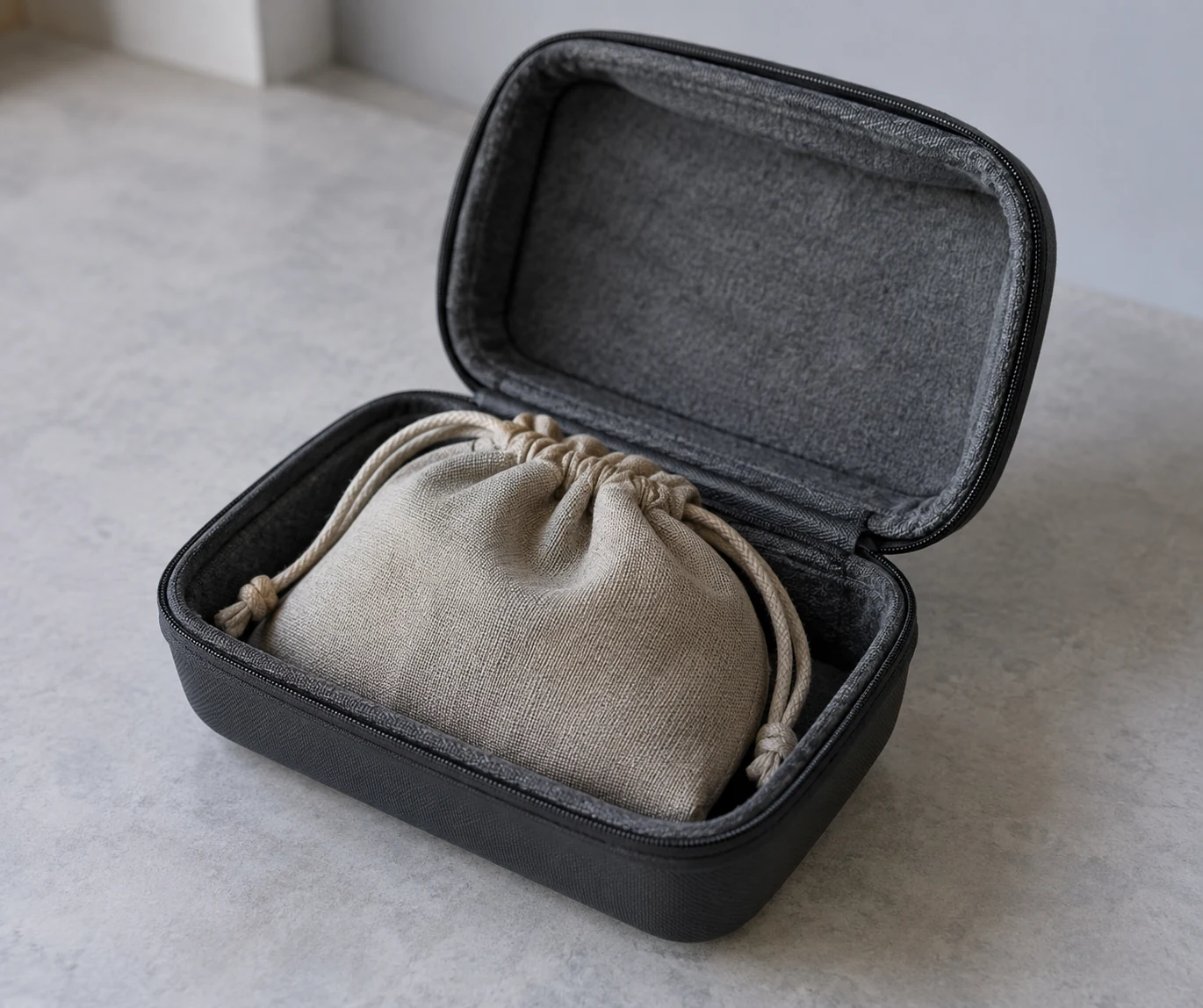
In a bag, the distinction is important. Soft fabric has no rigid walls to hold back a book, bottle, or other item pressing against the cards. That is an inference from its construction, not an independent performance finding about a particular pouch. If the deck rides in a roomy compartment where it will not be squeezed, organization may be all you need from it.
If the bag is routinely packed tight, place the pouch inside a rigid outer case with enough usable interior space for the complete contents. Check the case’s opening and closure just as you would a home-storage box. A case that forces the cards in does not solve the problem; one so large that the contents slide freely may require a better-sized choice. The tradeoff is bulk. Carrying a rigid case takes more bag space than carrying a pouch alone, so add it when expected pressure makes that space worthwhile. It need not be sold as a tarot accessory.
When Archival Board Is Worth Considering
For longer-term storage of a paper-card deck, a right-sized archival-board box may be worth considering if the supplied box is damaged or fits poorly. The National Archives recommends lignin-free and acid-free or buffered board or folder stock for paper archives. Look for those specific board characteristics in a seller’s description; the word “archival” alone does not establish what the box is made from.
Material does not make a badly sized box suitable. Measure the cards and anything stored with them, and make sure you can remove and replace them comfortably. A guidebook squeezed over the stack or a lid pressing down on it remains a fit problem, regardless of the board used. Likewise, a much larger box needs thought about how its contents will stay settled.
This is a careful analogy from paper preservation, not a guarantee for tarot materials. Coatings, foil details, gilded edges, and unusual card stocks may behave differently from the paper items addressed by archival guidance. The cited advice does not establish that a particular board is suitable for contact with every such surface. For an unusual deck, keep the decision narrow: avoid bending and pressure, consider its materials, and do not treat an “archival” label as proof of compatibility.
An archival-board box is therefore a material choice for a particular longer-term storage need, not an upgrade every deck requires. It also cannot make a damp or leak-prone storage place safe.
Choose a Safe Place and Handling Routine
Consider the spot as carefully as the container. The National Archives advises keeping paper archives out of damp basements, garages, and hot attics and away from leak sources. For paper cards, favor a dry spot in an ordinary living space over a shelf beneath plumbing, near a leak risk, or somewhere prone to dampness. Check the actual shelf or altar rather than assuming the room as a whole is suitable.
Handle cards with clean, dry hands. The National Archives advises washing hands before handling paper, avoiding lotion, and keeping food and drink away from originals. Those habits are easy to adapt to readings: move snacks and beverages off the reading surface before laying out the deck. If cards get damp, do not put them straight into a closed container while moisture remains.
If you keep a deck on an altar with candles, treat flame as a separate safety decision. The National Fire Protection Association says to keep candles at least one foot from anything that can burn and to extinguish them when leaving the room. Keep cards, pouches, boxes, cloths, and guidebooks outside that distance. An altar can remain meaningful to your practice without placing paper or fabric beside a flame.
Match the Arrangement to Home, Travel or Collection Use
Once fit and location are settled, expected pressure and frequency of access distinguish the choices. This scenario map is not a product ranking; it shows when a different arrangement does a different job.
| Use | Practical starting point | Reason to change it | Tradeoff |
|---|---|---|---|
| At home, accessed often | Keep the sound supplied box on a low-pressure shelf. | Its closure strains, its sides are damaged, or the chosen spot is unsafe. | No new container or packing routine, but it still needs a suitable location. |
| Carried to readings | Use a pouch to keep contents together; add a fitting rigid outer case if the bag may compress them. | A change in how tightly the bag is packed or what shares the compartment. | Rigid protection against bag pressure takes more room. |
| Stored longer-term as a paper-card collection | Consider a right-sized archival-board box if the existing box is unsuitable. | The deck’s materials, the condition of its current box, and the storage environment. | More deliberate material selection, without a guarantee for unusual surfaces. |
Before buying anything, make one final pass through the decision:
- List the contents: cards, guidebook, and only the inserts you intend to store with them.
- Confirm the interior fit: allow a normal closure and easy removal without bending, squeezing, or excessive movement.
- Name the pressure: a quiet shelf, a roomy bag compartment, and a tightly packed bag do not call for the same arrangement.
- Check the destination: choose a dry place away from leaks, food, drink, and flame.
Then make only the change those checks justify: keep the box, add rigid outer protection for pressured travel, or choose an appropriately sized archival-board container for a longer-term paper-card storage need.