
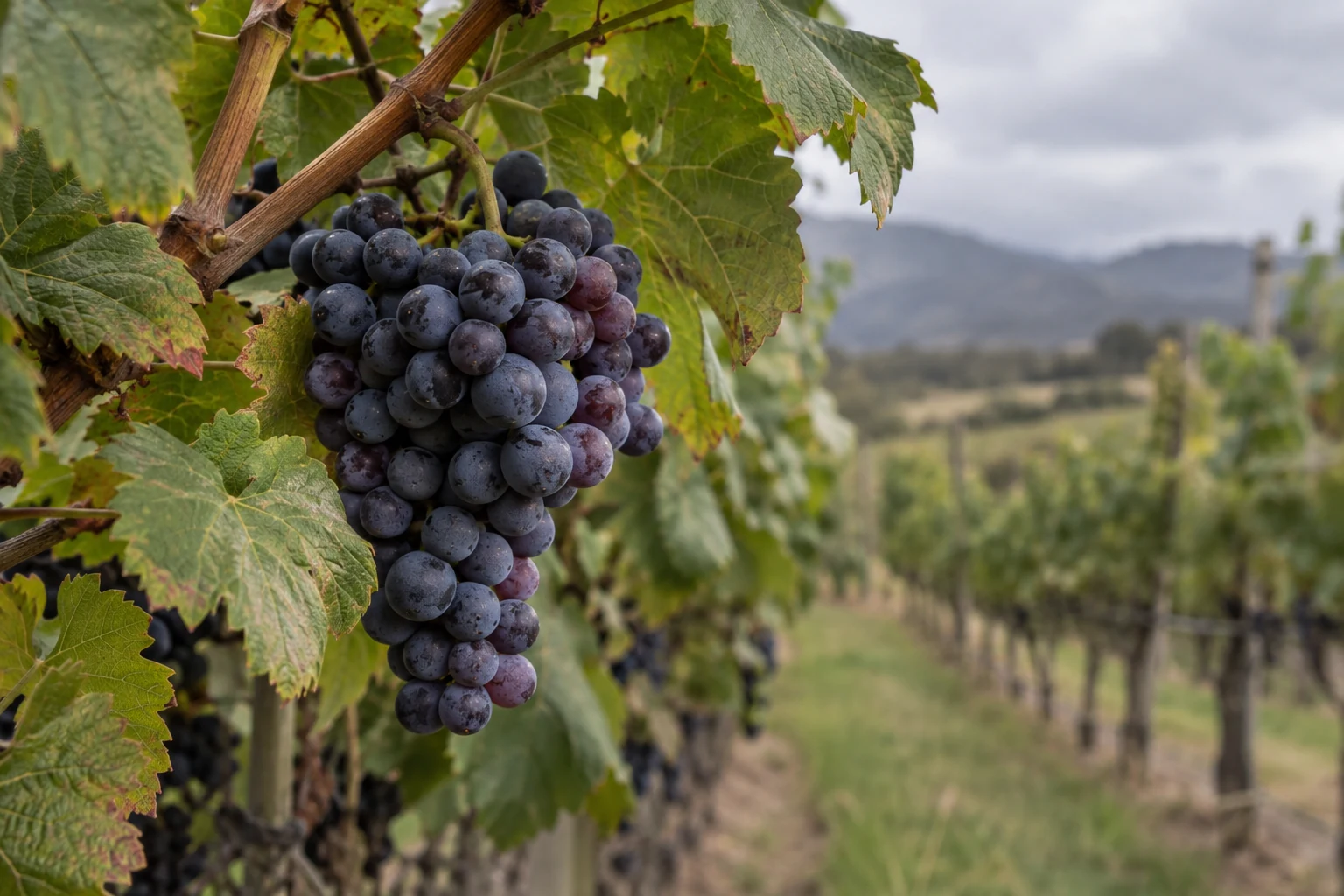
What La Vendemmia Connects—and What It Does Not
La vendemmia means the grape harvest. The word covers grapes gathered to eat as fruit as well as grapes gathered for winemaking. It names the gathering, not a particular celebration or a prescribed way to remember ancestors.
Grapes connect several subjects that are worth keeping distinct. Harvesting involves physical work. In some places, knowledge of growing vines passes between people and is shared in community life. A reader might then think about work, food or seasons in their own family or neighborhood. That reflection can be meaningful, but it is a personal response—not evidence of a universal Italian ancestor-remembrance rite. You need no vineyard, Italian ancestry or glass of wine to be curious about a seasonal memory.
Why There Is No Single Harvest Date
Visit Tuscany places the Tuscan grape harvest in September and October, but says its precise timing is decided year by year according to weather, rainfall and individual vineyards. September and October describe a season in that account, not an appointment that every grower keeps. Even within Tuscany, a date that suited one vineyard or year need not suit another.
Marche offers a contrast. Its tourism account says the region has no single harvest date: grapes ripen at different times, some areas begin in August, and other varieties wait. The point is not that Marche has an August harvest while Tuscany has a September one. Neither region can be reduced to a single start date, because what is ready to gather varies.
Together, these accounts explain why a fixed national harvest day would mislead. They also offer a way to hear a seasonal recollection accurately. If someone says, “We always did this in September,” their memory may tell you something valuable about their own place and time. It does not establish when grapes were ready elsewhere, or even when the same place harvested in every year.
The Work Behind the Harvest
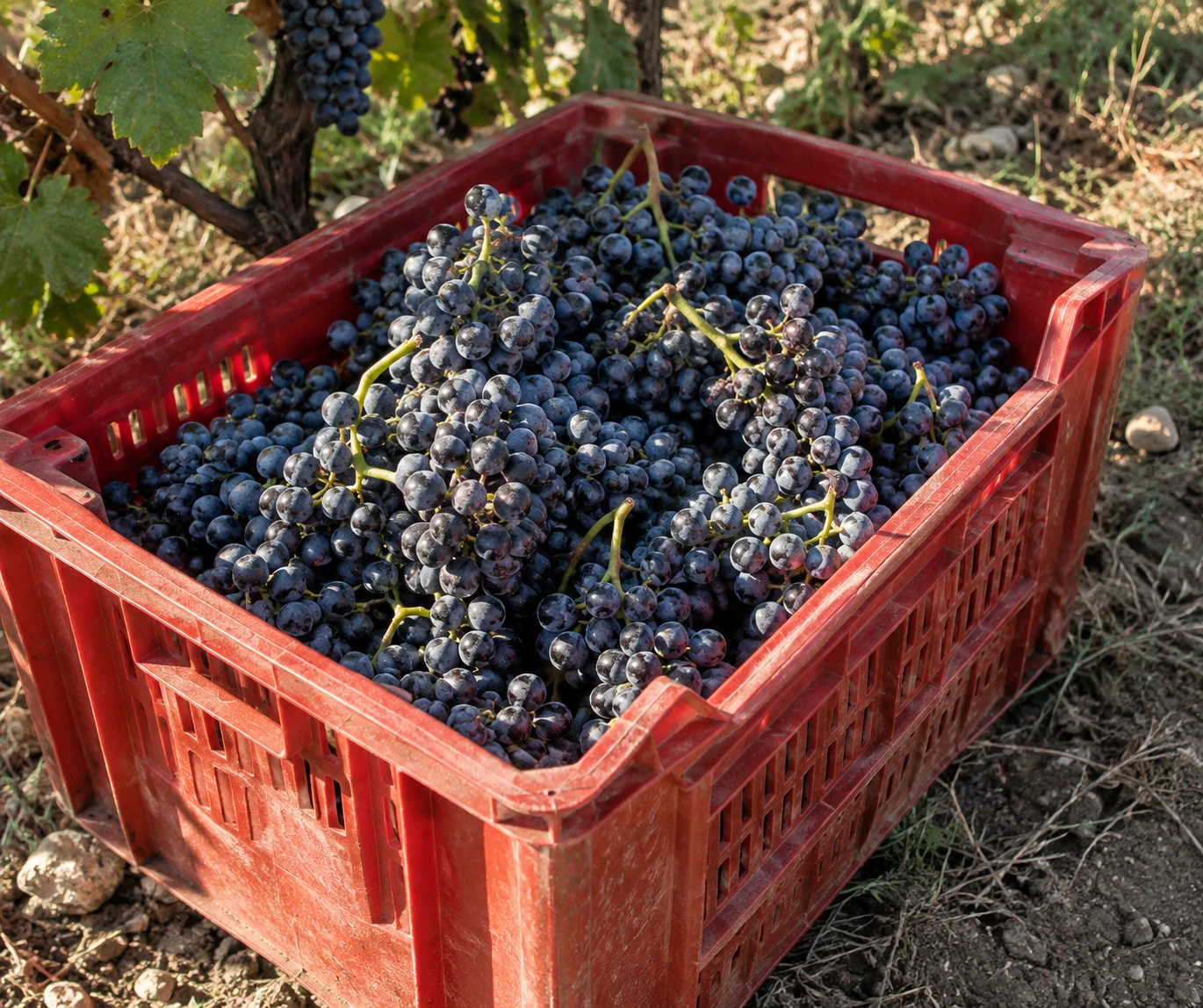
A Tuscan account follows grapes through a short but concrete sequence: pickers cut bunches, place them in crates, and the crates are taken to a cellar for processing. Each step serves the next. The bunches must be gathered before they can be moved; the crates hold what has been picked and carry it onward. A crate in a harvest image can look like an autumn decoration, but in this account it is part of handling the crop.
That sequence shifts attention from the appearance of ripe grapes to the people doing the work. Grapes do not move from vine to cellar because a harvest is being celebrated. Someone cuts the bunches, fills the crates and takes the harvest to its next stage. Keeping those actions visible makes it easier to distinguish the crop’s journey from a public event built around it.
This is a Tuscan description, not a template for every vineyard. It gives a reader something specific to understand without assuming identical methods across Italy. It also explains why a story about a harvest may be a story about tasks and the people who performed them, even when the first thing a visitor notices is the fruit.
What a Visitor Is—and Is Not—Joining
Present-day harvest tourism can make la vendemmia an event for visitors. Attending such an event is different from being responsible for the harvest work described above. Visit Tuscany says wineries may sometimes let visitors pick a few grapes. That limited possibility does not mean every event offers picking, or that a visitor may enter working vines and take on harvest tasks.
If you are considering a visit, ask the organizer what participation actually includes. Will you observe, join a celebration, or be invited to pick a limited number of grapes? The answer belongs to that event, not to the word vendemmia on a tourism page. You can enjoy an occasion and take an interest in the work without assuming the workers’ role is yours to join.
Pantelleria: One Place Where Skills Are Passed on
Pantelleria offers a particular documented relationship between vine cultivation and community knowledge. UNESCO describes its vine cultivation practice as passed through generations. It says local skills are handed down through family instruction and that local festivals share this agricultural practice.
Family instruction and a festival do not do the same thing. Instruction points to practical learning between people: knowledge continues because someone teaches and someone learns. A local festival gives the practice another kind of presence in the community. It can provide an occasion to share what the practice means locally without implying that everyone attending receives the same instruction as a family member learning the skills.
Those distinctions make Pantelleria useful for thinking about continuity. Cultivation is not only a crop visible at harvest; in this case, it is also knowledge that people carry forward. A festival can make that practice publicly visible, while the teaching of skills depends on closer instruction. Both forms of sharing matter, but they should not be treated as interchangeable.
This evidence concerns Pantelleria’s practice. It does not show that every Italian family grew vines, that every harvest festival teaches cultivation skills, or that this practice includes an ancestor-remembrance rite. A reader need not claim a connection to the island to appreciate what the case shows: one community can sustain agricultural knowledge across generations and share awareness of it locally. It may prompt a question about knowledge in your own community, but it cannot supply the answer on your family’s behalf.
Ask About a Memory Rather Than Assume One
Interest in ancestry can begin with a question rather than a claim. You might wonder whether someone remembers seasonal work, food at family mealtimes, or a time of year that changed daily routines. There is no need to presume that they—or anyone before them—harvested grapes.
First ask a relative or another prospective interviewee whether they would like to talk. The Smithsonian advises checking a person’s interest and using open-ended questions. You could ask, “What do you remember about the work or food that marked a season when you were growing up?” The question gives the person room to choose what matters. It also fits the Smithsonian’s suggested topic of food eaten at family mealtimes without steering the answer toward a vineyard.
An informal conversation does not have to become an oral-history project. The Smithsonian defines oral history as preserving historically interesting personal recollections through planned, recorded interviews. If you do want to record, ask permission first. Someone’s willingness to talk is not permission to record their voice; they may prefer a conversation that stays unrecorded.
Keep any detail you retain close to what the person actually said. Suppose they recall a particular food appearing at family meals in one season. You can remember that as their recollection of those meals. You cannot infer from it that earlier generations ate the same food, or that an entire community followed the custom. If they recall no harvest at all, there is no missing grape story to invent. A specific memory, with its limits intact, offers a sounder connection than a lineage assumed in advance.
Meaning Without a Vineyard, a Relative or Wine
A relative may not be available or may not want to discuss the past. A willing community elder could instead speak about local work, food or changing seasons. Ask whether they are interested, and seek permission before recording. Their recollection can tell you about what they remember locally; it does not become evidence of your own family history.
If no conversation is available, you can begin with observation. Notice when a seasonal food appears where you live, or write down a change in the work or activity around you. Identify the note as something you observed. If you do not know what your ancestors did at harvest time, leaving that history unknown is more honest than filling the space with a borrowed custom.
Wine is not required for reflection. Because vendemmia can include grapes gathered to eat as fruit, table grapes can keep the fruit itself in view. Nonalcoholic juice or a written memory may suit someone else. These are optional choices made today, not ancient or universal Italian rites. They allow room for personal meaning without drinking alcohol, entering a vineyard or claiming Italian ancestry.
What the Connection Can Hold
La vendemmia has variable timing and involves work; Pantelleria documents one particular way vine knowledge passes through a community. A memory or observation can sit alongside those facts without claiming to prove an inherited tradition. The connection remains meaningful when documented practice, another person’s recollection and meaning chosen today each keep their own place.