
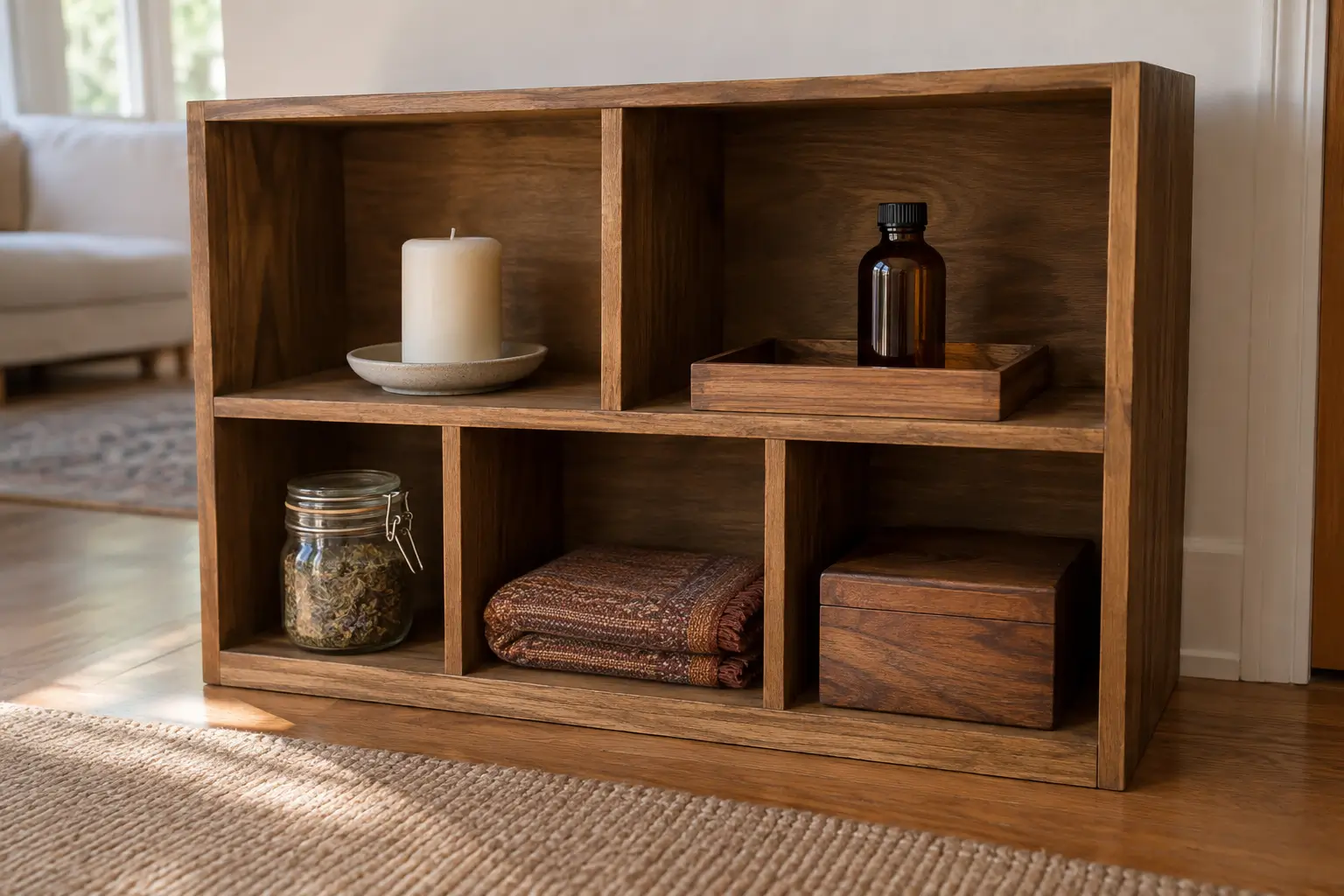
Check Permissions and Prepare to Sort
Organize altar supplies by checking the family or community protocols that apply, recording permitted items, assigning separate places suited to them, and keeping those locations current after use. There is no single altar layout that overrides the rules governing a particular item.
Before touching anything, establish who may handle it. If an item’s status is uncertain, leave it where it is until the appropriate family member or recognized community representative advises you. Handling protocols for sacred or culturally sensitive objects take precedence over a general sorting plan.
Survey the area before clearing it. Look for a lit candle and nearby combustible material; open, leaking, or unidentified liquids and anything that could be mistaken for food; exposed points or blades; and objects that appear fragile or unstable. This first pass helps you decide what can be moved without turning a sorting session into an avoidable spill or handling problem.
Extinguish a lit candle before leaving it unattended or proceeding with sorting. During candle use, the US Fire Administration advises a stable holder and at least 12 inches between a lit candle and combustible materials. The 12-inch guidance does not specify how far apart unlit candles must be stored.
Then clear a clean, dry staging surface with room to set permitted items down separately. Move only items you are allowed to handle and can move with confidence. Note each item’s original position before it leaves that spot, especially if its place is the clearest clue to its identity. Work around anything whose restriction or condition still needs an answer.
Decide What May Be Named and Shared
A label can help someone find a supply, but it can also reveal information they are not meant to have. Before making visible labels or a shared inventory, find out who may approve an item’s name, handle it, read its record, and retrieve it. For an inherited or culturally sensitive item, consult the recognized family or community representative who has authority in that situation rather than treating an inherited description as complete. Older records may omit important context, and information about an item may itself require restricted access.

Ask what terminology, if any, is approved for a private record and what may appear on the outside of a container. In the contexts described by the Canadian Conservation Institute, correct Indigenous-language terminology can be part of respectful care. That is a reason to seek guidance—not to invent, translate, or display a name without approval. When a descriptive label would disclose restricted information, put a neutral code such as HI-01 on the storage space and keep the approved description in a record available only to authorized people.
Set retrieval rules separately from naming rules. A household might permit everyone to retrieve candles but reserve an inherited item for a particular person to handle. A location code tells an authorized user where to look; it does not grant access. Record who may consult the private information and who may retrieve the item. If either decision is unresolved, write “name pending approval” or “access pending confirmation” in the restricted record rather than guessing or making the outer label more revealing.
Conservation organizations describe consulting representatives when caring for sensitive collections. That offers a useful way to think about consultation at home, but museum practice does not replace the protocols that actually govern your family’s or community’s items.
Make a Record Before Assigning a New Place
Give each permitted item a unique identifier before relocating it. For clearly defined groups of identical everyday supplies, one group record may be manageable. A notebook or private digital list can work if the people authorized to use it can keep it up to date. Include:
- Identifier and identity: a unique ID and an approved name or neutral description. If naming is unresolved, record that decision as pending.
- Original location: a specific starting point, rather than “on the altar.”
- Observed condition: what you can see, without assuming a cause.
- Risks and restrictions: relevant spill, ingestion, sharp-edge, or fragility concerns, plus handling and access limits.
- Assigned location: a code matching one labeled storage space.
- History: dated moves, use that needs tracking, and later condition observations.
Here is a filled-in example:
> Item ID: A-014
> Approved description: Blue altar cloth
> Original location: Altar cabinet, upper shelf, beneath the wooden tray
> Condition observed: Small loose thread at one corner
> Relevant risks: Keep clear of liquids; avoid pulling the loose thread
> Handling/access: Household members approved to handle; description approved for the private record
> Assigned location: TX-01
> Movement history: 11 May 2026 — moved from the altar cabinet upper shelf to TX-01; loose thread noted before the move
“Small loose thread” is an observation, not a diagnosis or repair instruction. If the cloth later moves, add a dated entry and update its assigned location. Keep the original location in the record so someone can reconcile an older memory of where it belonged.
The identifier connects the item, record, and current place. It may be enough to identify an ordinary supply on its container; an attached label on a restricted item may need approval. In either case, authorized users need a way to make that connection without guessing what a neutral location code means. Description and condition are established collection-record principles, and tracking a unique identifier through moves can be scaled down to a home inventory without adopting a museum cataloging system.
Assign Separated, Protective Storage
Choose places you can describe consistently: a particular cabinet, shelf, drawer, box, or enclosed case. Give each storage space its own code, label it as permitted, and leave enough room to retrieve its contents without shifting other items. Consistent location labels make moves easier to record and positions easier to check.
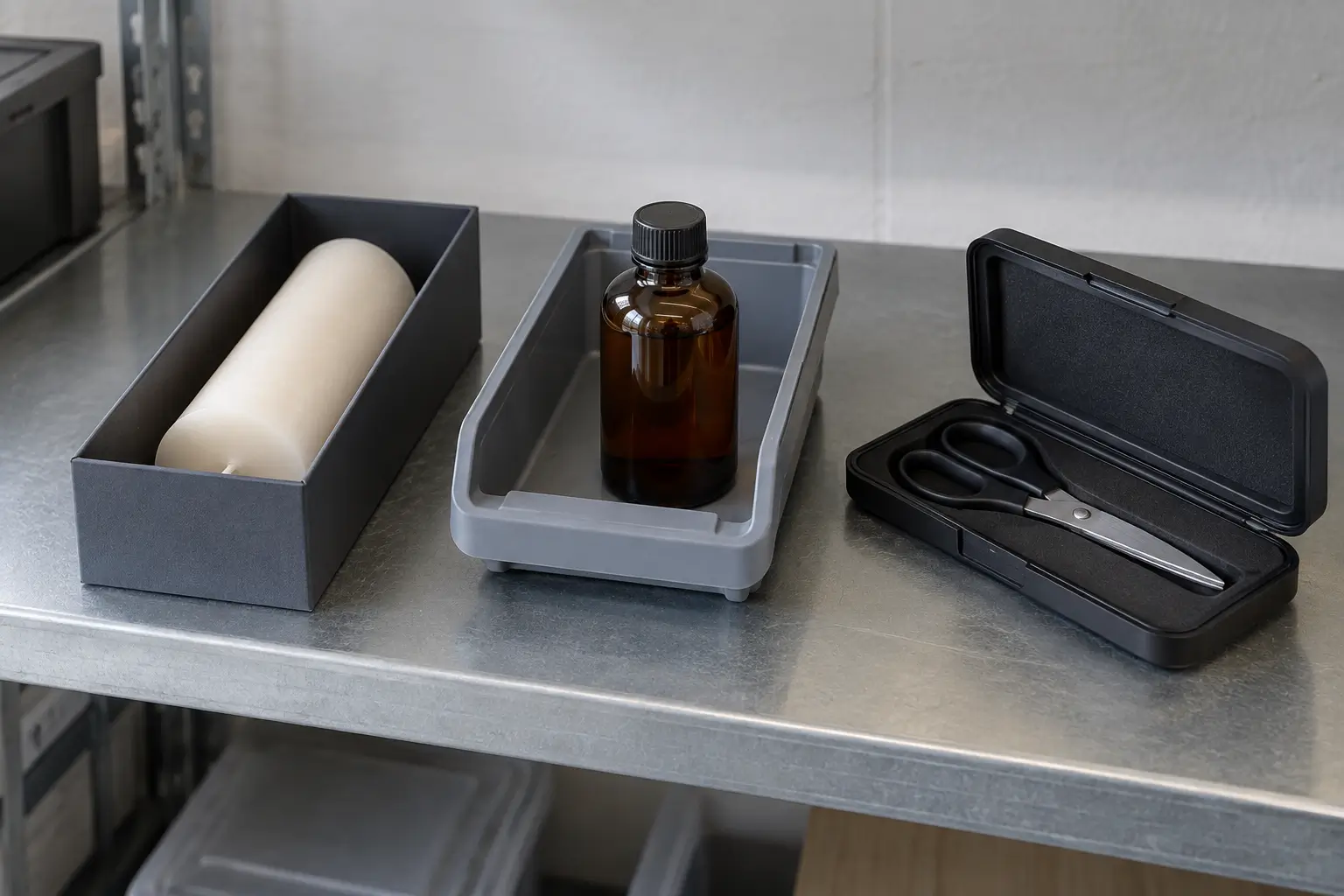
Assign places according to the supplies and the risks they present:
- Unlit candles: Keep them in a defined drawer or container so they can be found without searching among liquids or loose tools.
- Non-food oils: Keep containers closed in a designated place apart from food supplies. Essential oils may cause harm if swallowed or misused. Poison Control advises keeping them inaccessible to children and pets and locked away in a home with young children.
- Food and demonstrably edible herbs: Use a food-designated space away from non-food oils and household chemicals. Do not treat an unidentified herb as edible because it came from an altar or resembles a culinary herb; keep it out of food storage until its identity and intended use are clear. The FDA cautions against storing non-perishable food near household cleaning chemicals.
- Non-edible herbs: Give them a separate, designated container or space so their use need not be inferred from their appearance. A neutral location code can identify the space when a descriptive label is not approved.
- Textiles: Use a clean place away from liquids that could spill onto them. In the example record, the blue cloth goes in TX-01, a designated textile box; its condition note travels with its record.
- Pointed tools: Enclose exposed points and edges before putting the tools in their assigned place, with access suited to the household. The CPSC’s advice to enclose pointed school supplies supports this storage principle; it is not guidance specific to ritual tools.
A fragile inherited item calls for a handling decision before a storage decision. If movement is permitted, inspect it first. If it appears too fragile to move confidently, stop and seek appropriate advice. When it can be moved, carry one item at a time, supporting it with both hands. A suitable support that allows it to stay in place can reduce repeated handling. These are heritage-object care principles adapted to a home, not a complete conservation specification.
Where possible, keep vulnerable inherited items off the floor and away from likely leaks, heaters, vents, and direct light. Library of Congress guidance for family heirlooms recommends these precautions and infrequent handling. Choose a place an authorized person can reach without moving several other objects; a crowded “special” shelf can make careful retrieval harder.
Retrieve, Return, and Correct the System
A code is useful only if it points to a distinct, findable place. This example map includes TX-01, the assigned location in item A-014’s record. Adapt the spaces to your home and keep any access limits in the permitted record.
| Code | Assigned place | Contents |
|---|---|---|
| CA-01 | Altar cabinet, lower drawer | Unlit candles |
| OI-01 | Utility cabinet, enclosed upper compartment | Closed non-food oils |
| FD-01 | Pantry, designated food box | Food and demonstrably edible herbs |
| HB-01 | Utility cabinet, designated non-food box | Non-edible herbs |
| TX-01 | Linen cabinet, labeled textile box | Textiles, including A-014 |
| SH-01 | Household cabinet, enclosed tool case | Pointed tools |
| HI-01 | Interior cabinet, designated supported space | Fragile inherited item, if approved for that location |
To use the system, an authorized household member checks an item’s record and access rule, follows its location code, and retrieves it from that place. For A-014, that means finding the cloth in TX-01. After use, they return it to TX-01 and note any new observed condition. If it must remain elsewhere, they record the date, new location, and who moved it rather than leaving the record pointing to an empty box. Track use when the household needs that history; the basic requirement is that the physical item and its permitted record agree.
Correct problems when they appear:
- Crowding: If retrieving one item requires shifting several others, assign more space or a different place. Give the new space a distinct code, then update the affected records and location label together.
- Spill: Keep the spill from reaching other supplies and check which items were affected before returning anything to storage. Record a changed condition or location; do not place an affected item back among unaffected supplies without reassessing it.
- Access problem: If a permitted user cannot find an item because its description is restricted, ask the person authorized to decide how retrieval should work. Do not solve the problem by exposing its name on an outer label or opening the private record to more people.
Occasionally check a few recorded items against their assigned places. A location remains useful only while its label, permitted record, and actual contents match; a small check can catch a missed return before someone needs the item.