Start with the Book in Front of You
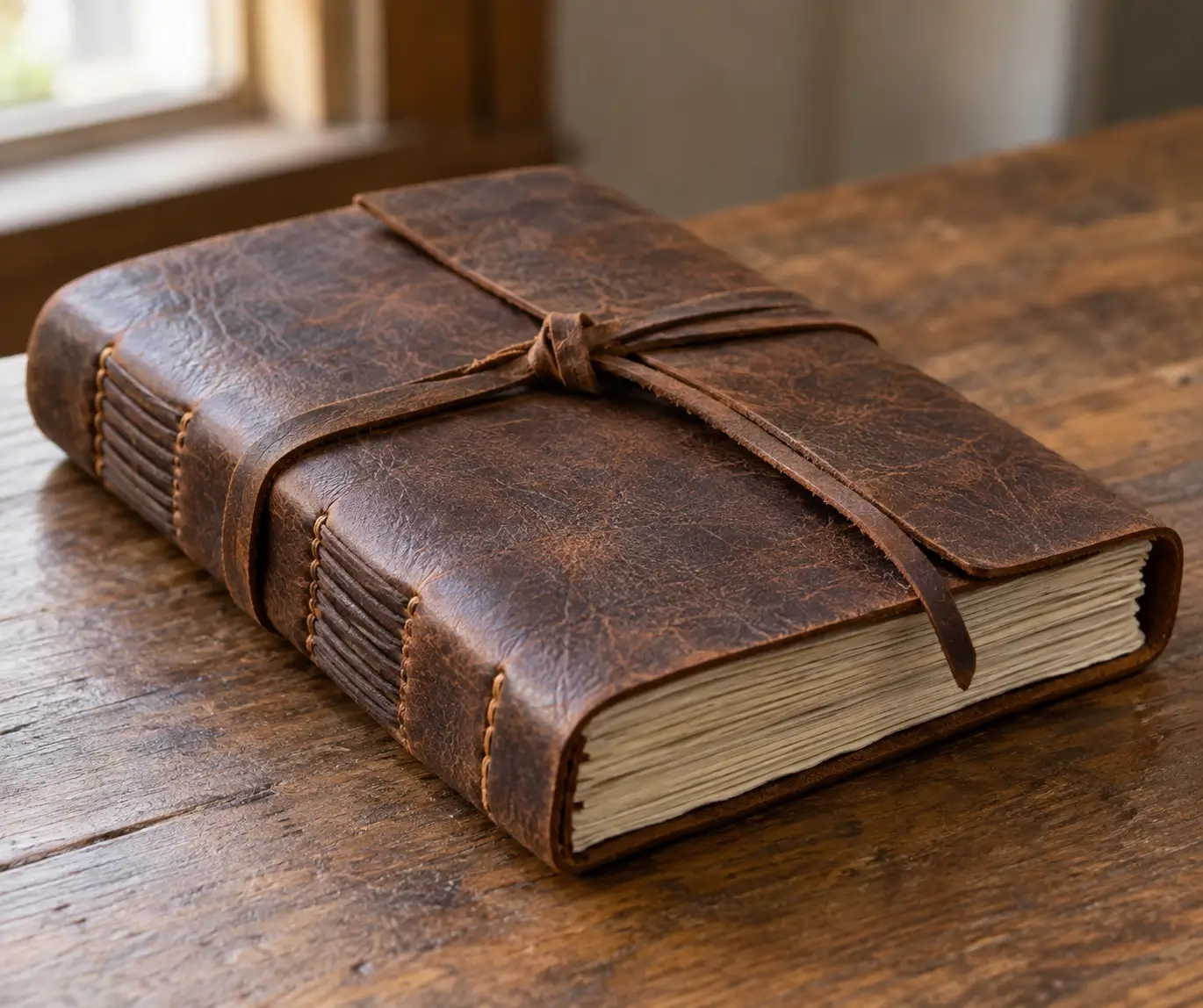
A leather cover cannot tell you what paper is inside, which ink will suit it, or how far the binding can safely open. Let this particular book guide your choices. The path is to check its condition, find a supported opening, test your writing tool, then choose how to use and store it. A sound new journal usually needs straightforward care; a fragile or valued volume calls for more restraint.
Assess the Binding Before Its First Opening
Begin with clean, dry hands and a clear work surface. Move drinks, uncapped pens, and other objects that could damage the book out of the way. Set the closed journal down where you can see its spine and the joints—the places where the covers meet the spine. Notice any parts that already appear loose.
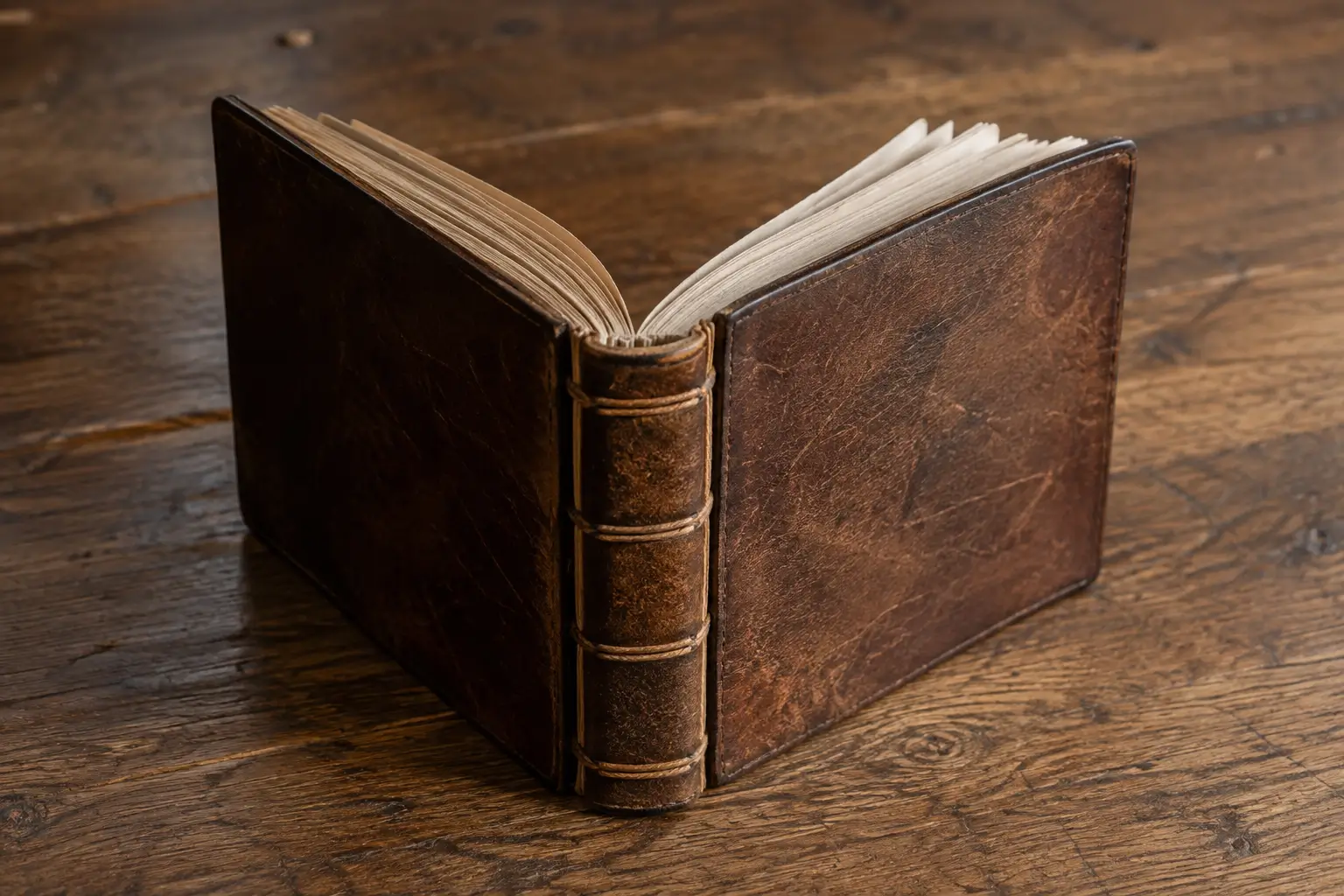
As you begin to move a cover, watch how the cover, joint, and spine respond. Books differ in materials and strength, and most are not designed to be forced flat. Resistance is information about this binding, not an invitation to press harder.
If this is a sound modern journal, proceed gently. If it appears fragile or is a valued older book, do not test the limits of its opening. Ask the maker, where appropriate, or a book conservator for advice before using it.
For the sound journal, open a cover gradually while supporting it on the work surface. Support beneath the covers or joints so their weight does not pull against the spine. Stop where the pages are accessible without holding the covers down. If the covers do not rest comfortably there, place a rolled towel beneath each side to make a simple cradle, adjusting the support to the book rather than pulling the book flat. The towels support the two sides at the position the binding permits; they are not there to hold it at a predetermined angle.
Gently check how it feels near the beginning, middle, and end: the comfortable position may change as pages move from one side to the other. There is no target angle to reach. If turning to the next page requires pressure, close the journal and reconsider its support.
Test a Writing Tool on These Pages
If the maker identifies the paper, use that information as a starting point, not a guarantee for your pen. Performance depends on the actual writing tool and page. In trials on one maker’s handmade leather journals, a Uni-Ball spread while other pens wrote well, and a Sharpie showed some bleed-through. Those results explain the value of testing; they do not predict what will happen in yours.
For a sound journal, use a supplied sample or a page you are willing to spend on a trial. With the pen you intend to use, make a few short marks and write a line at your usual pressure. Allow the ink to dry before touching it. Check whether the marks dry acceptably, whether their edges stay defined, and whether they feather into fine, uneven edges or spread more broadly. Drying and feathering are separate things to observe: a line can feel dry yet still have spread beyond where you intended it to go.
Turn the page over. Show-through is writing visible from the reverse; bleed-through is ink that has passed into or through the page. Judge both against how you plan to use the journal. Faint show-through may be acceptable if you will write on only one side, but the same result may be distracting if you intend to fill both sides. Looking at the reverse as well as the writing sample makes that choice clearer.
Suppose your pen dries without smearing, but its lines spread and ink appears on the back where you want to write. It has failed your test for two-sided use. Try another tool on a different expendable spot rather than assuming every pen will behave the same way. If the new marks dry acceptably and both sides suit your intended use, keep that combination for this journal. The decision is about whether you can use these pages as planned, not whether a pen is good or bad in every notebook.
This is a practical screening, not proof of archival permanence or water resistance. It cannot establish how a future ink will behave, either. If you change writing tools, test the new one before using it for an important entry.
Write, Shelve, and Carry It Without Strain
Write at the opening you found comfortable instead of pressing the journal flat. Keep the covers supported, particularly at the joints, and shift the support as the balance of pages changes. If reaching a page makes you lean heavily on a cover, reposition the journal or its cradle rather than widening the opening by force. The position that worked near the middle may need adjusting when most of the pages have moved to one side.
Before closing it, remove any pen or other object resting between the pages. Bring the covers together gently instead of using them to compress something left inside. Notice whether the book still closes as it did before.
To take a shelved journal out, make room around it and grasp the book itself. Do not pull its headcap, the top of the spine. Lift a large or heavy volume with two hands and keep it supported as you carry it, rather than letting its weight hang from one cover. If a journey may leave it vulnerable to jostling, consider a properly fitted protective enclosure. A box can also support a book being moved for care, rather than leaving you to hold a loose or awkward volume by its cover.
Surface scuffs on a frequently handled cover are different from a change in how the book works. A joint that starts to separate, parts that loosen, or an opening that becomes newly uneven or resistant deserve attention. You do not need to diagnose the cause to stop putting pressure on that change.
Choose a Safe Place Between Uses
Choose a place away from direct sunlight or intense light, local heat such as a radiator, and persistent dampness. Heat can dry leather; damp conditions and extremes of humidity can harm a binding or encourage mould. A reasonably stable environment is a useful everyday goal, without treating every new journal as though it needs collection-level controls. For routine storage, the practical choice is a spot that avoids those obvious hazards rather than a search for ideal museum conditions.

Look beyond the shelf surface for water and heat risks. Avoid storage under plumbing, in a damp basement, or over a radiator. A convenient spot is not a good one if a leak, continuing dampness, or concentrated heat could reach the book.
Stand an ordinary-sized journal upright with enough neighboring support that it does not lean. Leave room to remove it without scraping it against other books or pulling at its spine. For a large volume, flat storage is an alternative to upright shelving; place it where it can lie supported rather than bend under other objects. These arrangements let the book rest without a shelf position putting continuing pressure on its covers or binding.
An enclosure is useful for a particular need, not mandatory between routine entries. Properly fitted, it can protect the book during vulnerable transport or keep detached pieces with it while you arrange advice. An enclosure can also buffer environmental shifts, though it does not make a damp or overheated storage spot suitable. It should fit without squeezing the book. It protects loose parts from being lost; it does not repair them or make an unstable binding safe to keep opening.
Know When Upkeep Should Stop
Consider gentle, dry exterior dusting only when the binding is sound. Even dry cleaning can damage fragile leather. If the surface is weak, powdery, or coming away, leave it alone rather than trying to make it cleaner. Dusting is limited surface care, not treatment for a binding that has changed mechanically.
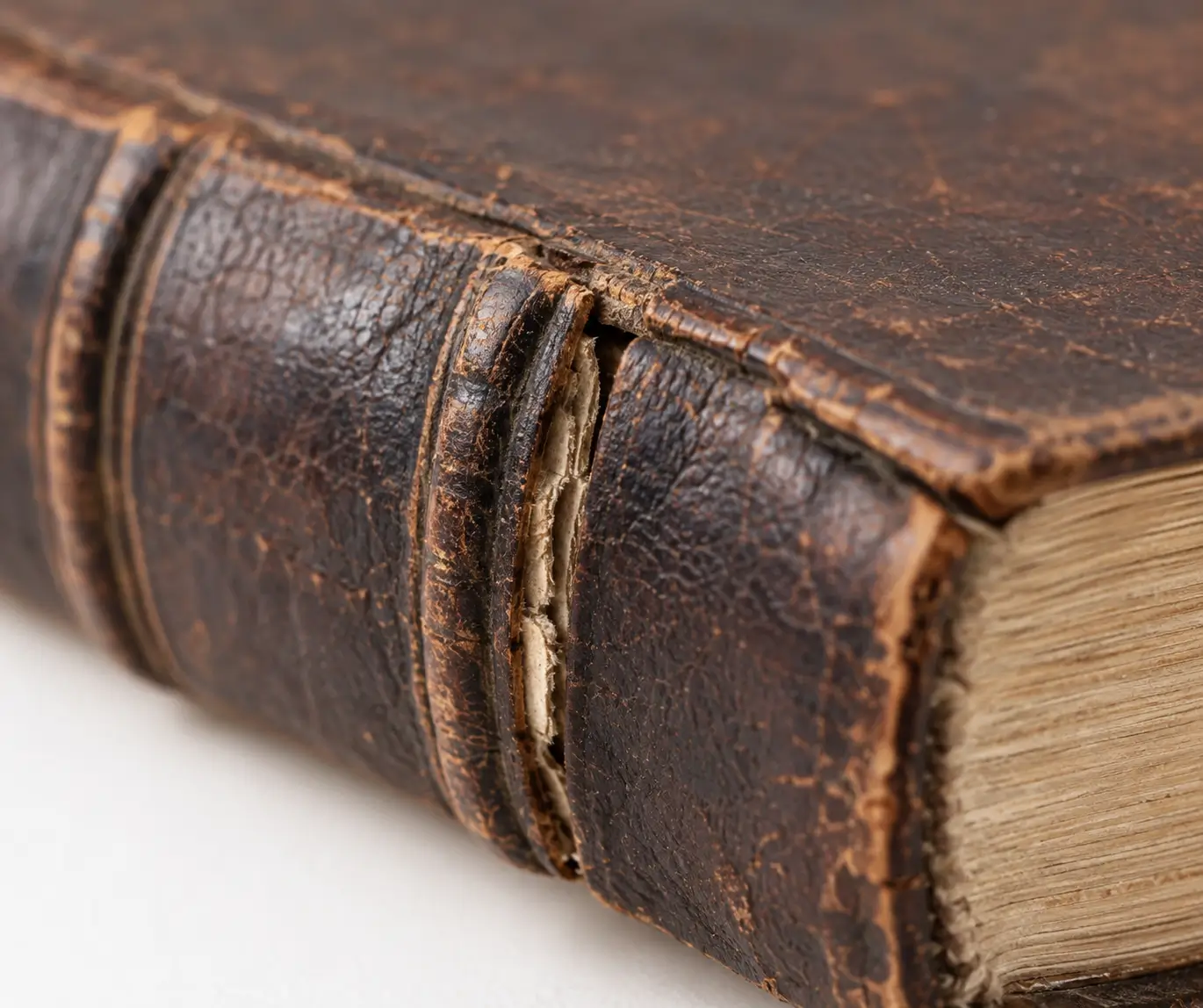
Oils, waxes, and leather dressings are not general fixes for book covers. Library of Congress guidance advises against oils and waxes on leather-bound books, and the Canadian Conservation Institute does not recommend leather dressings for bookbindings. Water cleaning is not a safe default: moisture can disturb or darken the binding surface. Do not substitute glue or self-adhesive tape for a repair; tape on a separated leather joint can leave permanent stains.
The next step depends on what you notice:
- A joint is damaged or separating: Stop opening or carrying the book in a way that pulls on it. For a modern journal, ask its maker what they recommend for its construction.
- Leather is powdery: Stop rubbing or dusting it and seek professional advice. More cleaning will not resolve material coming away from the surface.
- You suspect mould: Do not treat it as a routine cleaning task. Mould cleaning requires precautions and carries health risks; seek appropriate professional advice rather than brushing it away.
For a valued book, worsening damage, or a complicated problem, consult a book conservator instead of experimenting with treatment. That boundary does not mean a newly made journal needs professional care for every scuff. If pieces have detached, keep them with the book—ideally in a properly fitted enclosure—so they are available when you ask for advice.
Let the Book’s Condition Set the Pace
A sound journal can be used confidently when its pages suit your tested pen and its covers remain supported within their comfortable opening. When its condition or value makes the next action uncertain, pause and ask for advice rather than pushing past that limit.