
What Does “Honey Magic” Mean?
“Honey magic” is better understood as a question about meaning than as the name of one inherited technique. What is someone doing with honey, on what occasion, and for what purpose? In a Jewish holiday custom, honey accompanies a hope for the coming year. In South Indian Hindu worship, it is used in bathing a deity image. These are distinct practices, not examples of one shared ritual meaning. A reader’s personal interpretation is possible, but it should be distinguished from either documented tradition.
Apples and Honey at Rosh Hashanah
At Rosh Hashanah, the Jewish New Year, dipping apples in honey expresses hope for a sweet and fruitful year. The sweetness makes that hope tangible; the action does not imply that honey can determine how the year unfolds. Reform Judaism describes this as a Jewish holiday custom, not a universal spell.
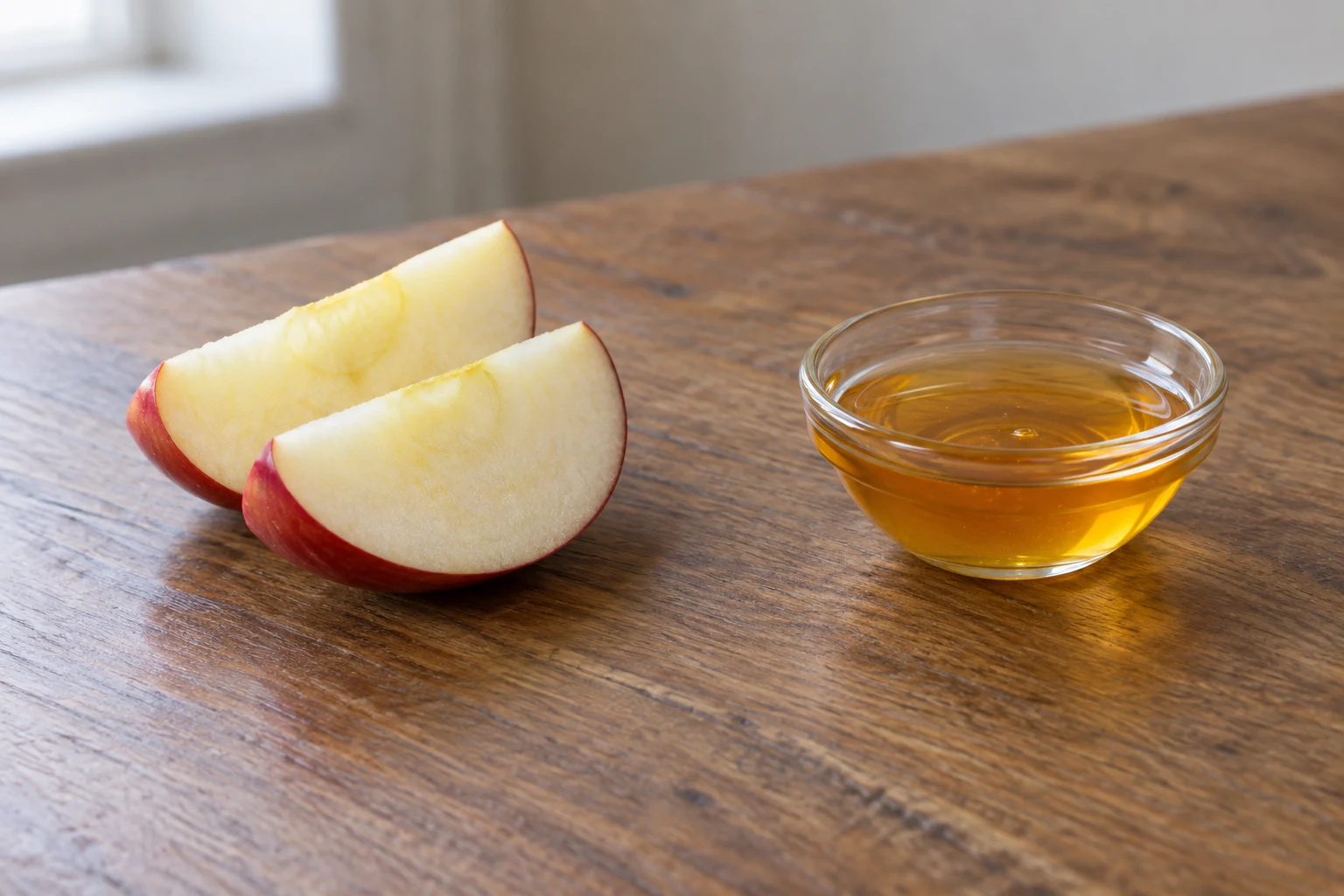
It is a custom, not a biblical or Talmudic mandate. That distinction helps explain the practice without suggesting that every Jewish person must observe it or detaching it from its holiday setting.
Honey in South Indian Hindu Puja
Puja is Hindu devotional worship involving a sensory encounter with the deity. That worship setting matters when considering the place of honey in the practice.
In the South Indian puja described by the Smithsonian, honey is one of several substances used to bathe a representation of a deity. The source does not assign it the Rosh Hashanah meaning of wishing for a sweet year. The presence of honey in both practices tells us what was used, not that the worshippers intended the same thing.
What the Evidence Cannot Establish
An ancient Egyptian jar fragment held by the Metropolitan Museum of Art bears an inscription identifying honey as its contents. The museum also describes honey’s historical use as a sweetener. These facts document honey’s presence and an ordinary use.
The fragment does not, by itself, establish that its honey was used for ritual magic. Calling it evidence of an ancient honey spell would assign the object a purpose it cannot demonstrate.
Making a Personal Intention Your Own
If sweetness has meaning for you, you can create a new personal intention exercise around it. This would be your adaptation—not the Jewish Rosh Hashanah custom, Hindu puja, or an ancient rite. The apple-and-honey custom shows how sweetness can express hope, but it does not lend its authority to a new exercise. Hindu devotional worship likewise should not be relabeled as a generic altar practice.
For example, you might name a hope for your own conduct, such as speaking more kindly, while adding honey to food or a drink for yourself. Let the taste remind you of an action you can take. It cannot change someone else’s feelings or guarantee a result. Do not give honey to children younger than 12 months, including in food, water, formula, or on pacifiers: the CDC warns that it can cause infant botulism.
A personal practice can be meaningful without claiming another tradition’s authority or promising an outcome.