
What Bayberry Means in an Altar Correspondence
Bayberry’s association with luck and prosperity is a traditional belief, not a demonstrated effect of the plant. In an altar correspondence—a symbolic connection between a material and an intention—bayberry can represent a wish for enough food or money without promising either.
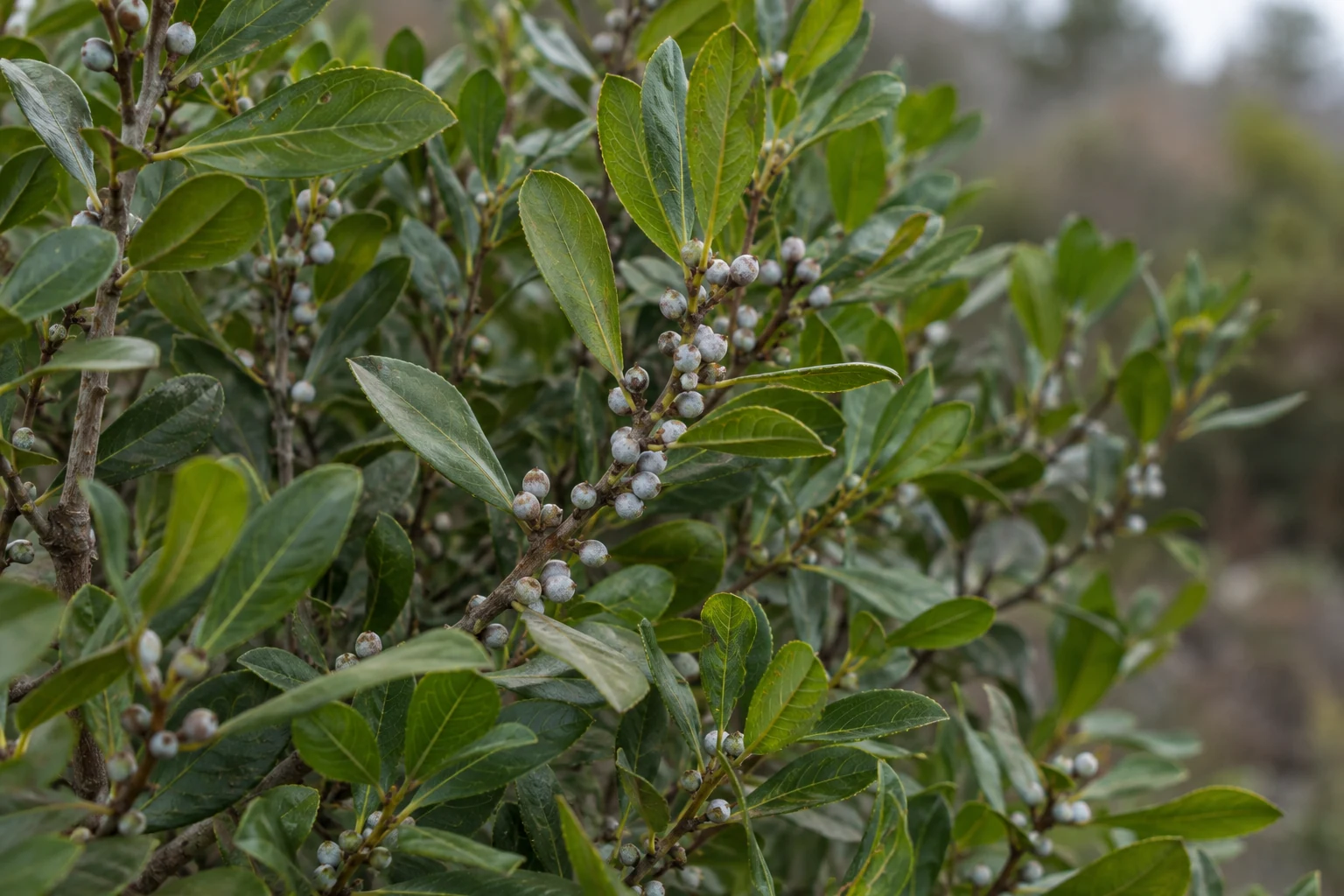
Northern bayberry is Morella pensylvanica, formerly Myrica pensylvanica. It has fragrant leaves, and female plants bear gray, waxy berries that have been used to make candles. But a candle or fragrance oil labelled “bayberry” should not be assumed to contain wax from those berries. The name on a product does not establish its ingredients.
How Bayberry Became Candle Material
Bayberry has a candle-making history distinct from its luck association. In early America, bayberry or myrtle berries supplied wax for candles. Colonial Williamsburg records a 1698 Virginia description of wax from myrtle berries and its incense-like fragrance.

That account establishes a dated use for the berries as candle material. It does not describe a prosperity ritual. Keeping the two histories separate makes it possible to appreciate the plant’s practical use without assuming that beliefs associated with bayberry candles today are equally old.
Where the Prosperity Association Comes from—and Where the Record Stops
Knox County Public Library quotes a winter-holiday saying that links burning a bayberry candle with having food and money. The saying instructs the reader to let the candle burn all the way down. The library also reports a New Year’s Eve candle custom as tradition. These are accounts of a good-luck belief, not evidence that a candle changes anyone’s finances or food supply.
The 1698 Virginia account documents berry wax, not the prosperity verse. Colonial Williamsburg’s record of early candle production therefore cannot establish that the saying existed in the colonial period. The supported distinction is narrower: bayberry supplied candle wax in early America, and a holiday prosperity saying is recorded as tradition. The supplied evidence does not date that saying to the era of the wax account.
A Symbolic Observance That Does Not Require an Unsafe Burn
If this correspondence is meaningful to you, you might place a bayberry-themed candle on your altar and name an intention for sufficient food or money. Let it serve as a reminder of that intention, not a guarantee of an outcome. This is an optional modern way to engage with the recorded belief.

Honoring the saying does not require burning a candle to the end. If you light one, set it in a sturdy holder on a clear surface. Extinguish it before the flame approaches the holder or container, and blow it out before leaving the room or going to bed. You can keep the saying’s symbolic meaning without following its burn-down instruction.
You can also omit the candle and reflect on what sufficiency means in your circumstances. Adapt the observance to your tradition; literal completion of the verse is not necessary.