
To create sacred space by engaging the six senses, prepare a clean, safe area and intentionally invite sight, sound, smell, taste, touch, and spirit into the space. Use visual symbols, a candle or altar cloth, prayer or music, gentle fragrance, meaningful textures, water or food offerings, and quiet intuitive listening. The goal is not to overwhelm the space, but to help your body, mind, and spirit recognize: “This place is set apart.” For an ancestor altar, these senses can become acts of remembrance—photos for sight, spoken names for sound, flowers for smell, water for taste, heirlooms for touch, and prayer for spiritual connection.
Introduction: Why the Senses Help Make Space Sacred
Sacred space is created through attention, care, and repeated relationship. The senses help because they bring spiritual practice out of abstraction and into the body. When you see a clean altar, hear a bell, smell fresh flowers, touch a cloth, taste ritual water, or pause for intuition, you signal to yourself that this moment is different from ordinary activity. Engaging the six senses to create sacred space can support ancestor veneration, meditation, prayer, grief work, and daily grounding.
Before You Begin: Prerequisites for a Safe and Respectful Sacred Space
Before adding ritual items, choose a location that can remain clean, stable, and undisturbed. A shelf, small table, tray, windowsill, or cabinet can work. Wipe the surface, remove clutter, and check fire safety if using candles or incense. Keep flames away from fabric, curtains, pets, and children.
If your sacred space includes ancestors, decide whom you are honoring and whether you have cultural, family, or spiritual protocols to follow. Avoid borrowing closed practices, sacred objects, or ceremonial methods without proper relationship and permission. Begin with what is yours: names, photos, water, flowers, prayer, memory, and respect.
Step 1: Set the Intention for the Space
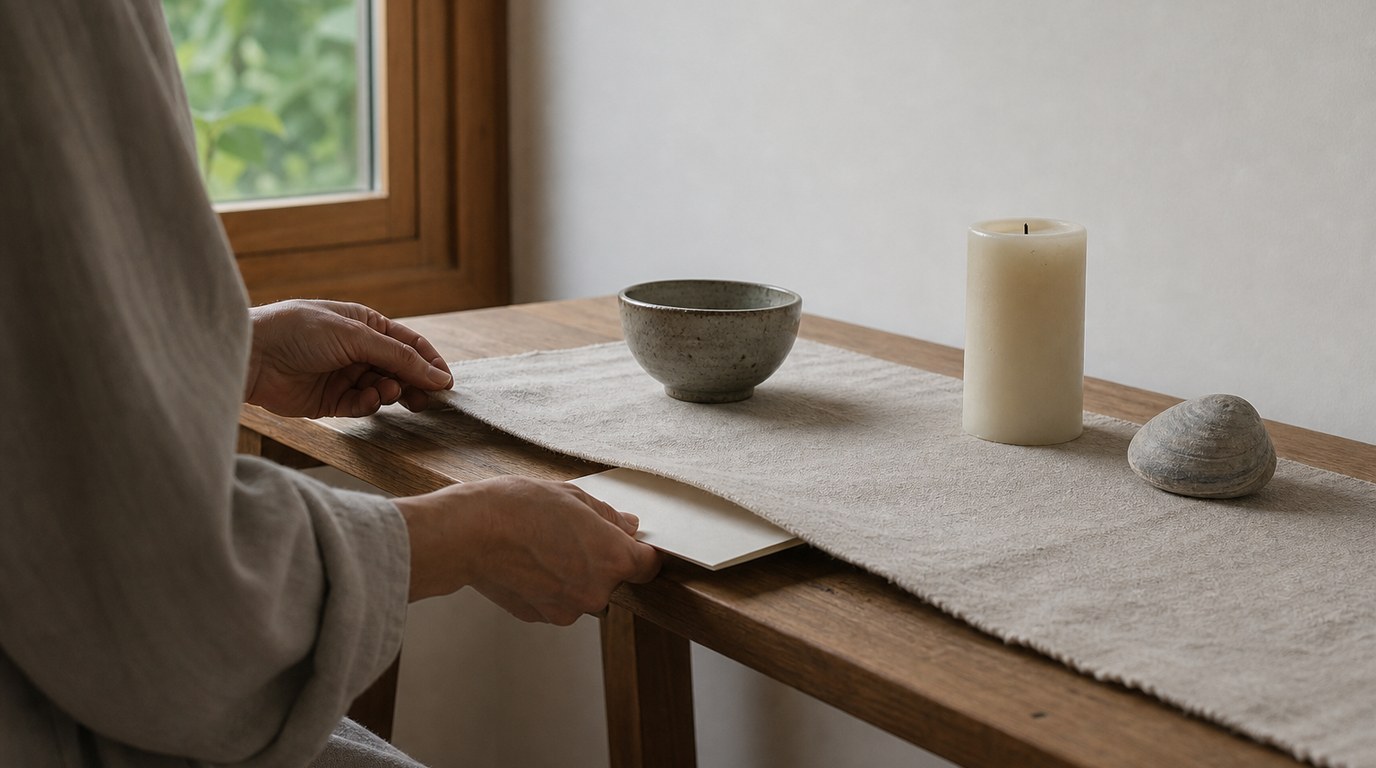
Start before you place anything down. Stand or sit near the chosen area and speak your intention clearly. You might say, “This space is for prayer, remembrance, protection, and connection with my loving ancestors.” If you prefer silent practice, write the intention on paper and place it under the altar cloth or beneath a bowl of water.
Keep the intention simple and specific. A sacred space for ancestral gratitude will feel different from one for grief, healing, meditation, or seasonal ritual. Your intention becomes the organizing center for every sensory choice that follows.
Step 2: Engage Sight with Symbols, Beauty, and Order
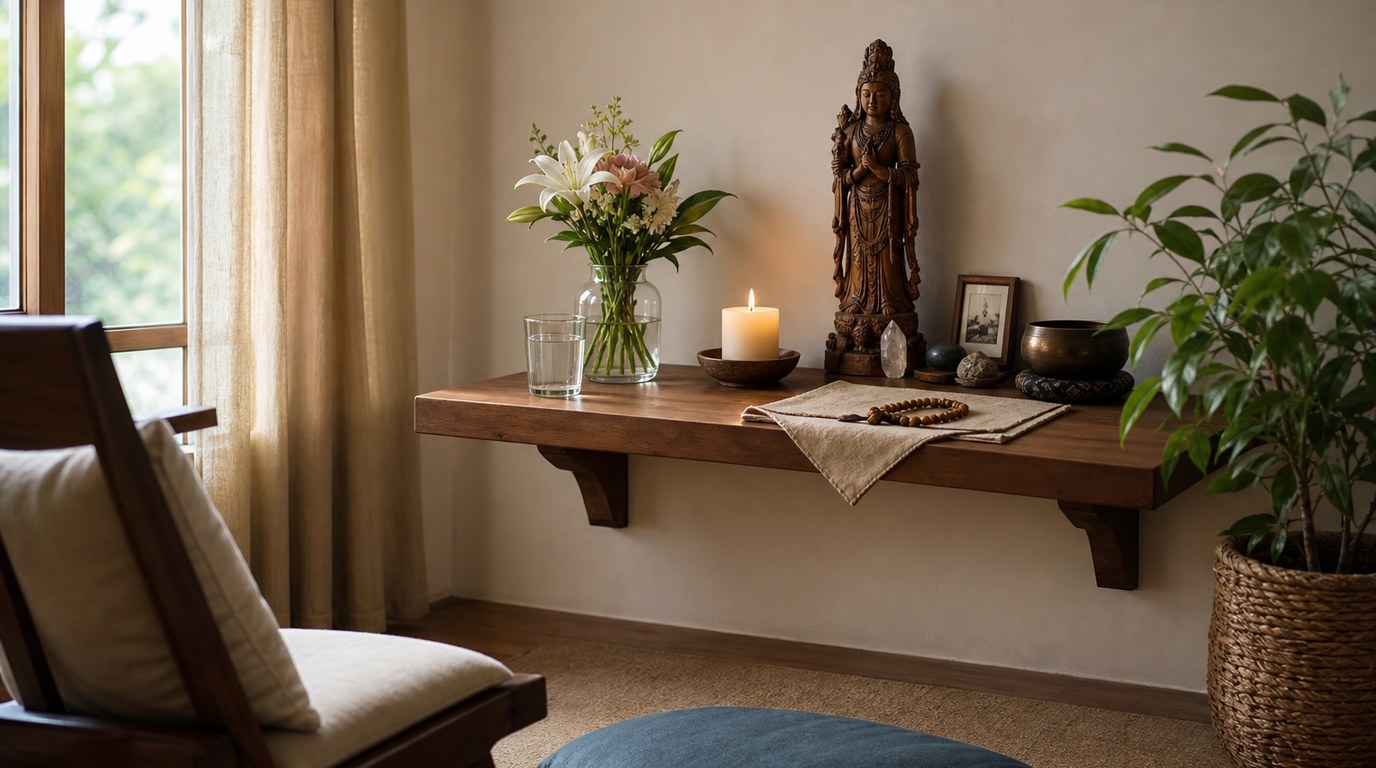
Sight is often the first sense that tells you a space is sacred. Choose visual elements that communicate reverence: a clean cloth, a candle, flowers, ancestral photos, spiritual artwork, shells, stones, or a meaningful color palette. Arrange items with breathing room instead of crowding the surface.
For an ancestor altar, photos, written names, family objects, or a simple framed word such as “Beloved” can be enough. Keep the area visually orderly. Dust regularly, remove dead flowers, and straighten items after use. Beauty does not need to be expensive; it needs to be cared for.
Step 3: Engage Sound with Voice, Bells, Music, or Silence
Sound can open and close sacred space. You may ring a bell, clap softly, play a hymn, chant, drum gently, recite a prayer, or speak the names of your ancestors. Even one clear breath can become a sound marker if you use it consistently.
Choose sound that suits your household and tradition. If you live with others, keep volume respectful. Silence is also a powerful option. You might begin with one bell tone, sit in quiet prayer, then close with the same tone. Repetition teaches your nervous system when ritual has begun and ended.
Step 4: Engage Smell with Incense, Herbs, Oils, or Freshness
Scent quickly changes atmosphere, but it should be used with care. Incense, resin, herbs, essential oils, fresh flowers, citrus peel, or a bowl of clean water with herbs can all mark sacred space. Choose scents that feel respectful, not merely decorative.
Use smoke safely and with ventilation. Avoid incense or oils that trigger asthma, allergies, migraines, or discomfort for anyone in the home. If you use culturally specific herbs, learn their context and avoid treating them as generic “spiritual tools.” Fresh air, clean linens, unscented flowers, or simmered kitchen spices can be just as sacred as smoke.
Step 5: Engage Touch with Texture, Grounding Objects, and Care
Touch helps you feel present. Add tactile items such as a soft altar cloth, smooth stone, wooden prayer beads, a shell, a family heirloom, a handmade bowl, or a small object you hold during prayer. These items can ground your body when emotions rise.
Touch also includes care. Wiping the altar, refilling water, folding cloth, and placing offerings with both hands are physical acts of devotion. If you work with ancestral objects, handle them gently and store fragile items safely. The point is not constant handling, but embodied respect.
Step 6: Engage Taste with Offerings, Water, or Ritual Nourishment
Taste enters sacred space through offerings and mindful nourishment. For ancestors, a glass of fresh water is one of the simplest and most widely accessible offerings. You might also offer coffee, tea, fruit, bread, or a small portion of a family recipe.
If your practice includes consuming food or drink after prayer, do so mindfully and according to your tradition. Some offerings are eaten, some are disposed of, and some are left for a set time. Do not leave perishable food until it spoils. Refresh offerings regularly, and dispose of them respectfully through compost, trash, burial, or running water where appropriate and safe.
Step 7: Engage the Sixth Sense Through Prayer, Intuition, and Listening
The sixth sense is the inner sense: intuition, spiritual perception, prayerful listening, or the felt awareness that you are not alone. Approach it with humility. After arranging the sensory elements, sit quietly and notice what arises in your body, emotions, memory, or spirit.
You may ask, “What needs attention here?” or “Beloved ancestors, guide me toward wisdom and healing.” Then listen without forcing an answer. Intuition is not a performance. It may come as calm, a remembered phrase, a dream later that night, or a clear sense to simplify the space. Stay grounded and discerning.
Step 8: Close and Maintain the Sacred Space
A sacred space needs closure, not just opening. Thank the ancestors, spirits, God, guides, or sacred presence according to your path. Extinguish candles safely, close prayer with a phrase, ring a bell, bow, or place your hands over your heart.
Maintenance is part of the ritual. Refresh water, remove old offerings, clean ash, replace wilted flowers, and keep the area from becoming a storage surface. A simple weekly tending is often better than an elaborate setup that becomes neglected. Sacred space grows through consistency.
Common Mistakes and Troubleshooting
The most common mistake is adding too much too quickly. If the space feels chaotic, remove half the items and return to your intention. Another mistake is using smoke, candles, or fragrance without considering safety; switch to LED candles, fresh flowers, sound, or prayer if needed.
If the space feels flat, refresh one sense at a time: clean the surface, speak aloud, add water, or sit in silence. If it feels emotionally heavy, open a window, remove old offerings, pray for peace, and take a break. Sacred space should support reverence, not pressure or fear.
How to Know Your Sacred Space Is Working
Your sacred space is working when it helps you become more present, respectful, and connected. You may feel calmer when you approach it, remember your ancestors more naturally, or find it easier to pray, grieve, reflect, or give thanks.
Look for practical signs too: you maintain it regularly, offerings are refreshed, the space stays clean, and your ritual has a clear beginning and ending. The result is not constant mystical experience. It is a steady sense of relationship, care, and sacred attention.
Conclusion: Begin Simply and Let the Space Grow
You do not need a perfect altar or rare ritual objects to begin. Start with a clean surface, a clear intention, water, one visual symbol, and a few quiet minutes. Then add the senses gradually as your practice deepens.
Engaging the six senses to create sacred space is really about building relationship—with your body, your home, your ancestors, and the sacred. Let the space teach you. Tend it with respect, keep it safe, and allow it to grow through repeated acts of care.
FAQ
Do I Need All Six Senses to Create Sacred Space?
No. You can create sacred space with one or two senses if that is what you have available. Intention, cleanliness, and respect matter more than having every element. Begin simply, then add sight, sound, smell, taste, touch, or intuitive listening as your practice develops.
What Is the Sixth Sense in Sacred Space Creation?
The sixth sense refers to intuition, spiritual awareness, prayerful listening, or inner knowing. It is the part of the practice where you pause, listen, and notice what feels aligned. It should be approached with humility, grounding, and discernment rather than forced signs.
Can I Create Sacred Space If I Cannot Burn Incense or Candles?
Yes. Use flameless candles, fresh flowers, sound, clean water, prayer, color, texture, or natural light. Sacred space does not require smoke or fire. If incense or candles are unsafe because of pets, children, allergies, lease rules, or health concerns, choose safer sensory markers.
What Should I Put on an Ancestor Altar for the Senses?
You might place photos or names for sight, speak prayers for sound, offer flowers for smell, use a cloth or heirloom for touch, and set out fresh water or food for taste. For the sixth sense, include quiet time for prayer, dreams, memory, and listening.
How Often Should I Refresh My Sacred Space?
Refresh water and perishable offerings daily or every few days, depending on your practice and climate. Clean the surface weekly if possible. Replace flowers when they wilt, remove ash or dust, and reset the space whenever it feels neglected, cluttered, or spiritually unclear.