
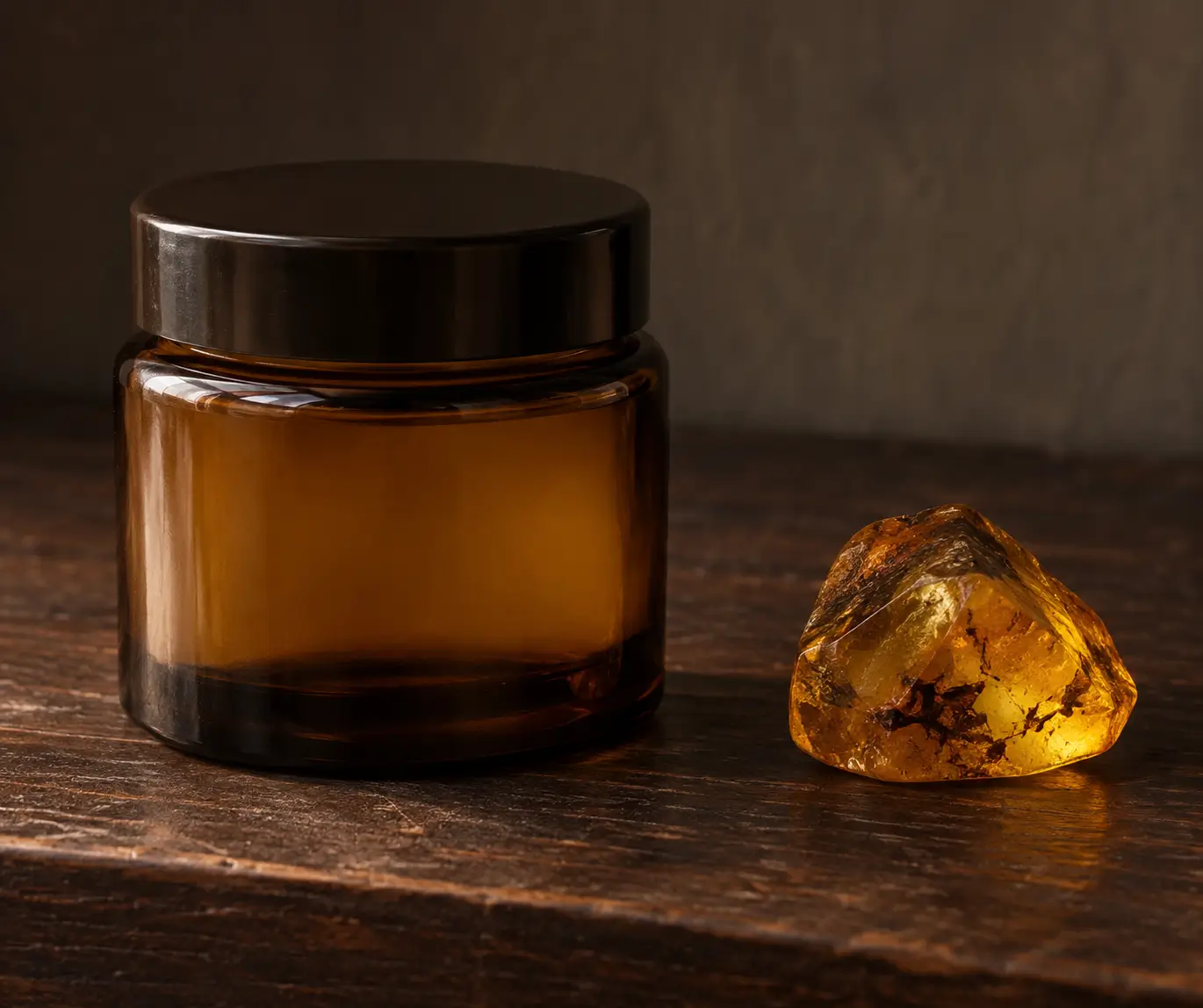
Why “Amber” on a Fragrance Label Is Ambiguous
“Amber” sounds like the name of a single ancient aromatic substance. On a perfume, incense, or altar-fragrance label, however, it can point to several different things. It may refer to fossilized tree resin, be confused with the separate material ambergris, or name a composed fragrance accord rather than one physical ingredient.
A useful way to read the term is to consider three possibilities:
- Material: Is the seller identifying fossil amber or another specific substance?
- Accord: Is “amber” the name of a scent assembled from several materials?
- Description: Is the word simply communicating the fragrance’s intended character?
The label alone does not prove that a product contains fossilized resin, natural ambergris, or any other particular ingredient. General definitions can explain what these terms mean, but they cannot disclose the formula of an individual perfume, incense blend, or altar fragrance.
Understanding amber therefore begins with terminology rather than assumptions. Fossil amber, ambergris, and a modern amber accord belong to different categories. Their similar names do not make them interchangeable.
Fossil Amber Is Ancient Tree Resin, Not a Standard Perfume Formula
In its geological sense, amber is resin originally produced by trees that later became fossilized or petrified. This is the material commonly recognized as ancient amber.
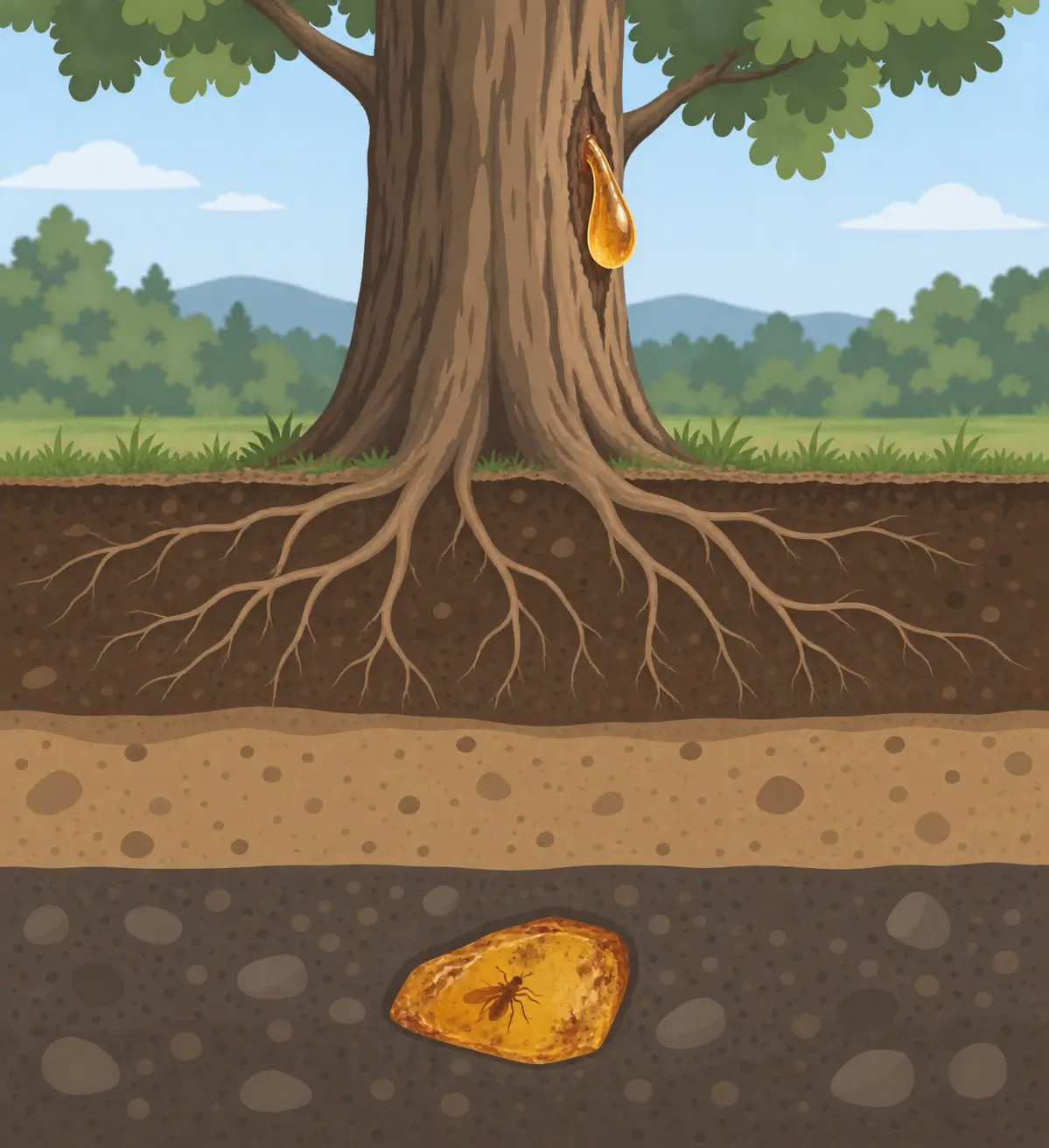
That definition includes an important distinction: amber is not another name for every plant resin. Smithsonian research differentiates fossilized amber from non-fossilized plant resin. Both have botanical origins, but they do not describe the same material state.
This matters when evaluating fragrance descriptions. A seller may use resin-related language around an amber scent, but that does not establish that fossil amber is present. Conversely, a product made with non-fossilized plant resin should not automatically be described as containing fossil amber. “Plant resin” is a broader category; “amber,” in the strict material sense, identifies resin that has undergone fossilization or petrification.
> Fossil amber is a material definition, not automatically a perfume formula.
Nothing in this geological definition establishes fossil amber as the standard source of fragrances marketed as amber. A fragrance can borrow amber’s name or imagery without containing the fossilized substance. The available evidence does not support moving from “this smells like amber” or “this is sold as amber” to “this contains fossil amber.”
The same caution applies to descriptions using words such as ancient, natural, traditional, or spiritual. Such words may communicate a product’s atmosphere, symbolism, or intended use, but they do not identify its ingredients. Only product-specific information—such as an ingredient list, formula disclosure, or sourcing statement—can clarify whether “amber” refers to an actual material.
This distinction can be especially important with incense or altar fragrance. A person may care whether a product contains a named plant resin, synthetic fragrance materials, or a composed blend. Those are reasonable questions about composition and suitability, but the word “amber” by itself cannot answer them.
Ambergris Is a Separate Animal-derived Perfumery Material
Ambergris is not fossil amber. Despite the similarity between the names, it is a different substance with a different origin.
The Natural History Museum identifies ambergris as a rare natural byproduct associated with the sperm whale’s squid-based diet. Fossil amber, by contrast, began as tree resin and later became fossilized or petrified. One is animal-derived; the other is fossilized plant material.
Keeping the definitions separate prevents a common error:
- Amber: fossilized or petrified tree resin.
- Ambergris: a rare natural byproduct associated with the sperm whale’s squid-based diet.
Ambergris became important in perfume history because of ambrein, one of its characteristic substances. According to the Natural History Museum, ambrein from ambergris was used to help perfume scent last longer. The museum also notes that synthetic substitutes now replace natural ambergris in most perfumes.
This historical role does not mean every fragrance called amber contains ambergris. Nor does a perfume’s longevity prove that natural ambergris was used. The evidence establishes a historical perfumery function and the widespread modern use of synthetic replacements; it does not reveal the contents of any particular product.
> Ambergris is a distinct animal-derived material with a historical perfumery role, not another name for fossil amber or the general amber fragrance family.
When animal origin matters for ethical, religious, ritual, or personal reasons, similarity of names is not enough. A buyer needs a direct, product-specific statement about whether natural ambergris, a synthetic substitute, or neither is present.
The reverse assumption should also be avoided. A label that says only “amber” is not evidence of whale-derived material. In modern fragrance language, the word commonly refers instead to a constructed accord.
Modern Perfume Amber Usually Means a Constructed Accord
In perfumery, an accord is a combination of materials designed to create one unified scent impression. The accord has a recognizable identity even though it may contain several components. Its name describes the overall effect, not necessarily an ingredient of the same name.
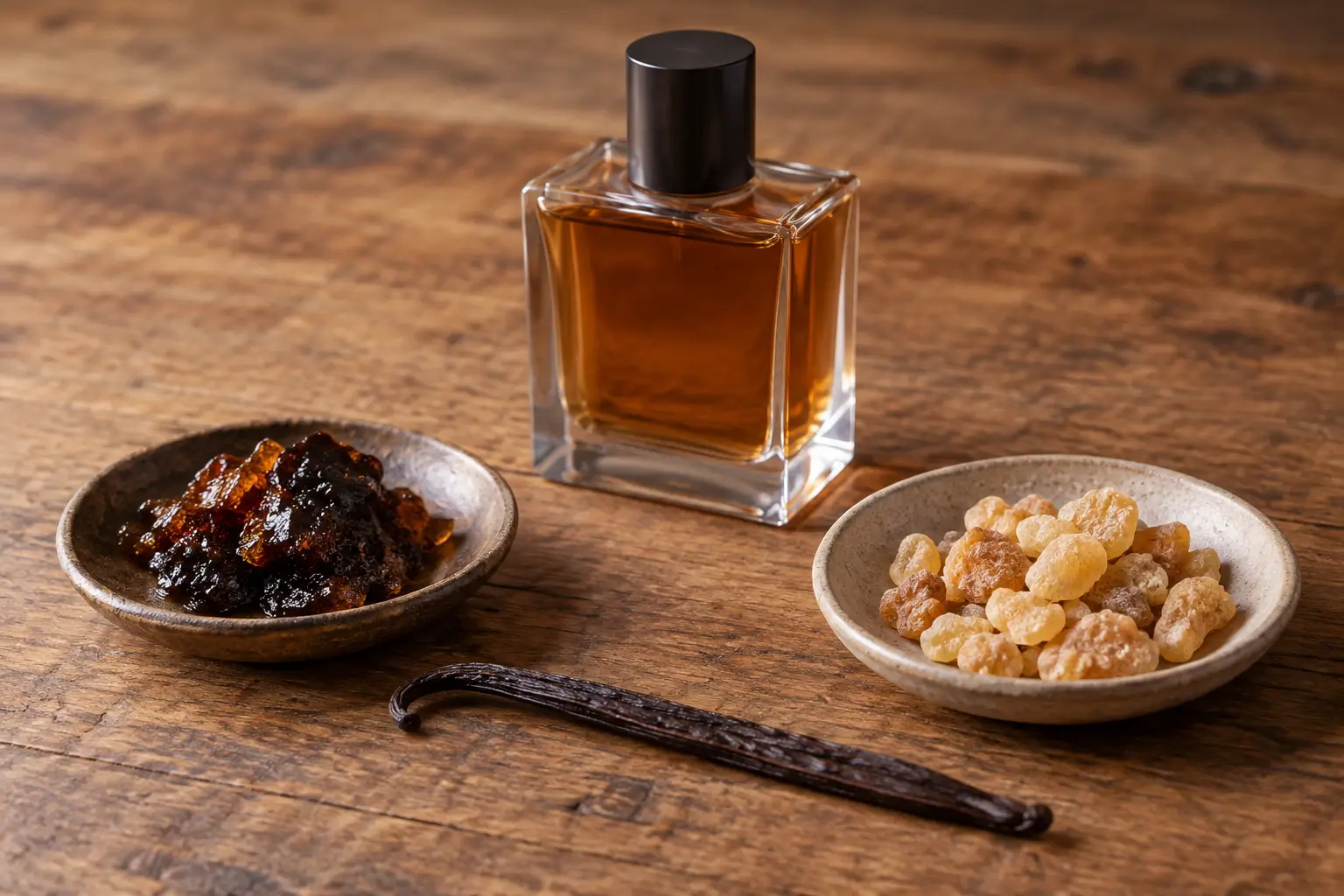
A perfume-material reference describes amber as a fantasy accord commonly built around labdanum, benzoin, and vanilla. This differs fundamentally from the geological definition of amber as fossilized tree resin.
Here, fantasy accord means that the fragrance idea is composed. “Amber” can name the impression produced by the formula rather than indicate that a piece of fossil resin was used.
| Term | What it identifies |
|---|---|
| Fossil amber | Tree resin that became fossilized or petrified |
| Ambergris | A rare natural byproduct associated with the sperm whale’s squid-based diet |
| Amber accord | A composed perfume concept commonly structured with labdanum, benzoin, and vanilla |
An amber accord may be described as warm, sweet, or resinous because those words characterize the combined scent. They do not, on their own, prove that the product contains fossil amber, ambergris, or any particular resin. A formula can evoke the idea of a material without containing that material.
Labdanum, benzoin, and vanilla should not be treated as a universal recipe. The cited reference identifies them as a common structure, not a mandatory formula for every fragrance called amber. Perfumers may vary their formulas, while sellers of incense or altar fragrance may use “amber” more loosely as a general scent category.
This creates two useful but separate questions:
- What scent does “amber” describe in this seller’s fragrance language?
- What materials create that scent in this particular product?
A product description may answer the first question while leaving the second unresolved. For example, language about sweetness, warmth, or resinous depth can help someone imagine the fragrance, but it is not a complete ingredient disclosure.
This also explains why two products labeled amber need not contain identical materials or smell exactly alike. Their shared name may indicate a broad scent concept rather than a standardized formula. The evidence supports one common accord structure, but it does not establish how every perfume, incense, or altar-fragrance seller uses the term.
How to Interpret Amber Claims Before Buying or Using a Fragrance
The definitions above provide a vocabulary for evaluating labels, but they cannot reveal the formula of a particular product. Knowing the differences among fossil amber, ambergris, and an amber accord does not establish what is present in a specific bottle, incense stick, loose blend, oil, or altar fragrance.
The most useful question to ask a seller is:
> When you say “amber,” do you mean an actual material, a composed fragrance accord, or only a descriptive scent category?
If “amber” identifies a material, ask for its precise identity. “Fossil amber,” “plant resin,” and “ambergris” are not interchangeable terms. A reference to resin should clarify which resin is meant, while any claim involving ambergris should distinguish natural animal-derived material from a synthetic substitute.
If “amber” identifies an accord, ask what materials create it. Labdanum, benzoin, and vanilla form one common structure, but the cited evidence does not make that combination universal. If the seller is using amber only as a descriptive category, the word may offer little information about composition.
Depending on your concerns, useful questions include:
- Is a complete ingredient list available?
- Does the fragrance use natural materials, synthetic materials, or both?
- Does it contain any animal-derived material?
- Are specific plant resins used, and if so, which ones?
- Is there a sourcing statement for ingredients important to the buyer?
- Does “amber” denote an ingredient, an accord, or simply the intended scent?
- Are allergens or materials unsuitable for burning identified?
These questions may matter because of allergies, ethical preferences, religious observance, ritual suitability, indoor-air concerns, or a desire to know what is being worn or burned. The amber name alone cannot resolve them.
Marketing language deserves the same care. Words such as natural, ancient, sacred, traditional, and spiritual do not prove that a product contains fossil resin. They also do not establish the presence of natural ambergris. Even imagery of golden stones, trees, temples, or historical trade cannot substitute for direct ingredient and sourcing information.
Likewise, do not assume that a product is free of animal-derived materials solely because “amber” often means an accord. General terminology cannot determine a specific formula in either direction. If material origin matters, seek confirmation from the manufacturer or seller.
For altar or personal use, composition and meaning can be considered separately. A fragrance may hold symbolic or devotional importance because of its scent, associations, or place within a tradition. That personal or cultural meaning does not depend on making unsupported claims about its physical ingredients. Different traditions may also have their own requirements concerning purity, sourcing, preparation, or appropriate offerings; those standards should be consulted directly rather than inferred from marketing language.
Accurate terminology supports a more intentional choice without promising any spiritual result. Before buying or using an amber fragrance, determine what kind of claim “amber” represents: a named material, a composed accord, or a broad scent description. That small clarification prevents fossilized resin, animal-derived ambergris, and modern fragrance composition from being collapsed into one misleading idea.