
The Best Incense Depends on What Is Actually in It
The best choice among these 20 incenses is the one with a verified material or clearly disclosed blend, an appropriate burn form, relevant cultural context, an aroma you enjoy, and requirements that fit your ventilation and fire controls. Treat ritual meanings as traditions or personal correspondences—not promises that a particular incense will produce a spiritual result.
“Incense” is a broad category: it can mean any substance burned to release a fragrant aroma, including materials such as frankincense and myrrh . Historical incense mixtures have incorporated varied ingredients, including roots, nuts, bark, resins, and musk . That breadth makes the ingredient list more useful than a product’s evocative name.
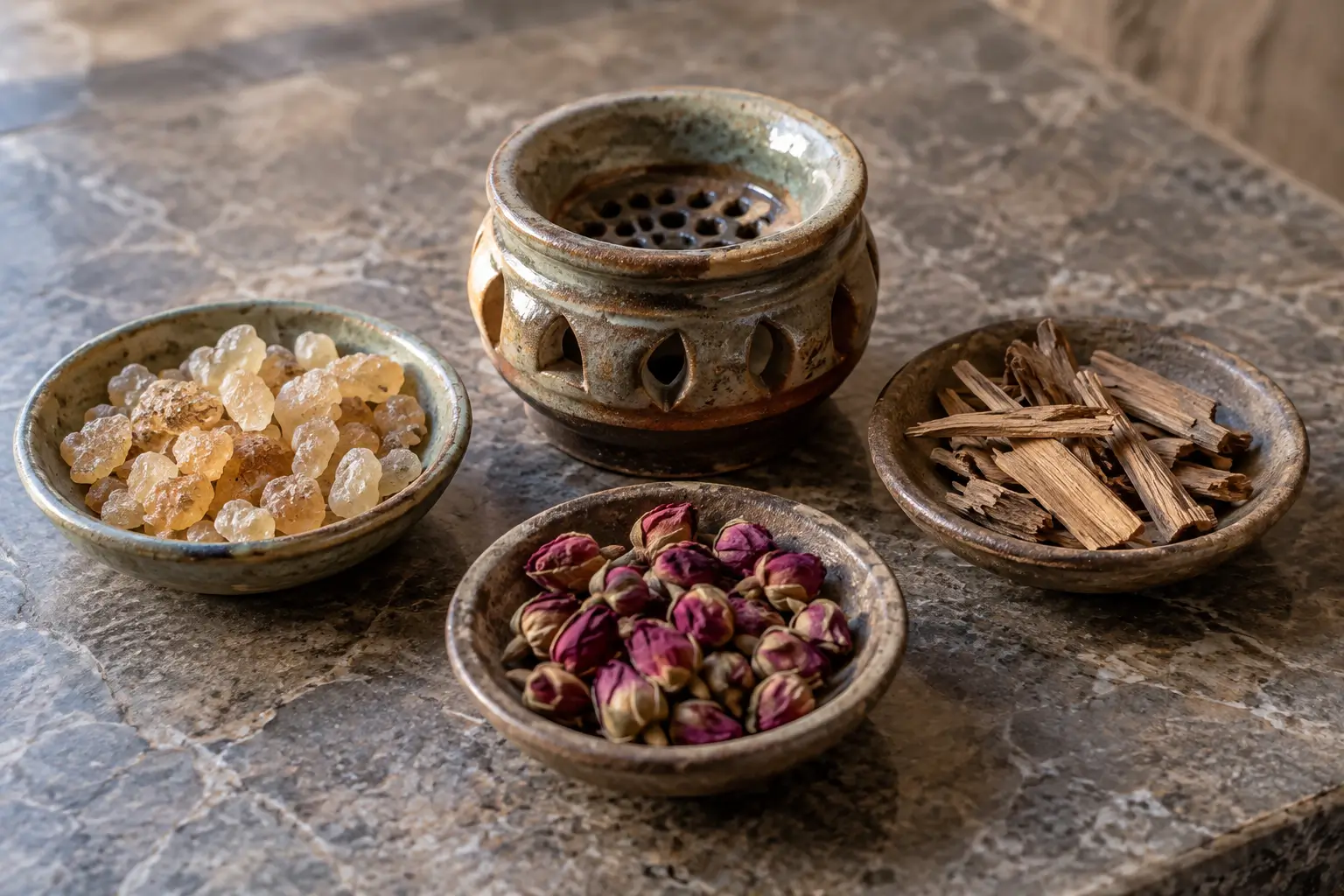
Start by identifying which kind of material you are considering. Resins such as Frankincense resin, Myrrh resin, Benzoin resin, Copal resin, and Dragon's blood resin are not interchangeable with fragrant woods such as Sandalwood, Agarwood, Cedar, and Palo santo. Pine resin or needles and Juniper form a coniferous group, while Rosemary, Culinary sage, Mugwort, and Patchouli represent herbal or earthy choices. Lavender, Jasmine, and Rose point toward floral materials, while Cinnamon and Clove are spices.
These category names still do not reveal everything in the package. A rose incense might contain identifiable floral material, or “rose” might describe the scent of a modern fragrance blend. Patchouli may refer to aromatic leaf material or a prepared product formulated to smell like patchouli. “Sandalwood” on the front of a box does not by itself establish what wood, if any, the product contains. When the distinction matters to you, favor labels that identify the material, species, origin, or blend composition rather than relying on a scent name alone.
The 20 options were selected to represent widely encountered incense materials and scent families across resins, woods, coniferous materials, herbs, flowers, and spices. The list is based on sourced information rather than hands-on product testing, so it should be read as a selection guide, not a ranking of particular brands.
Your priorities determine which entries deserve closer attention. Someone seeking documented historical context might begin with a named resin, while a reader choosing primarily for atmosphere might start with woody, floral, herbal, or spice aroma preferences. In either case, the next questions remain practical: what is actually being burned, how must it be burned, and whether that form suits the intended space.
How Cultural Context and Ritual Correspondences Change the Choice
A documented traditional use and a personal ritual correspondence are not interchangeable. A traditional use should be tied to a named culture, period, religious setting, or established practice. Incense has appeared in ancient religious ceremonies and in the long-distance Arabian trade, but that broad history does not mean every incense material carried the same meaning in every place . Look for specific context rather than treating “ancient,” “sacred,” or “ceremonial” as complete explanations.
Traditions can also change over time within the same culture. The Kyoto National Museum distinguishes personal incense blending during Japan’s Heian period from the later Muromachi practice of burning single woods under the influence of Zen Buddhism . This difference matters when selecting incense: a blended preparation and a single fragrant wood may both have historical context, yet belong to different practices and convey different intentions. A product description that simply calls either one “traditional Japanese incense” leaves out information needed to understand the connection.
A correspondence is a more flexible symbolic association. Someone might associate an aroma with remembrance, protection, affection, contemplation, or another personal intention. Such meanings can support an individual ritual, but they should be presented as optional interpretive choices—not as guaranteed properties of the material. “Used by some people as a remembrance correspondence” is more accurate than “causes remembrance” or “summons spiritual protection.”
When cultural continuity is important to you, favor materials whose seller or reference identifies the relevant tradition and explains the connection precisely. For example, a reader studying a historical incense practice would need more than a scent name: the material, preparation, period, and setting should align with the documented practice. If those details are absent, treat the description as marketing or a modern interpretation rather than established historical context.
For a personal ritual without a claim of cultural authority, begin with the meaning you wish to express and choose an aroma that supports that association for you. You might reserve one scent for reflection, use another as a seasonal marker, or connect a familiar aroma with family remembrance. Describe the result as your practice rather than assigning it universally.
Be cautious when a seller promises fixed supernatural outcomes, combines unrelated traditions without explanation, or uses culturally specific language only to make a product sound more powerful. The practical tradeoff is straightforward: documented context offers greater historical specificity but may call for more careful study and respectful boundaries; personal correspondence offers flexibility but carries no basis for claiming that others share the same meaning.
How to Choose a Burn Form and Use It More Safely
Burn form determines the equipment and level of supervision you need. Loose resin generally calls for a heatproof burner and a separate heat source, while wood chips, needles, leaves, flowers, and spices need a container that securely catches burning fragments and ash. Sticks require a holder sized to keep them upright and collect ash; cones need a stable, heat-resistant surface with enough clearance around them. Avoid improvising with containers that could tip, scorch, crack, or allow material to spill.
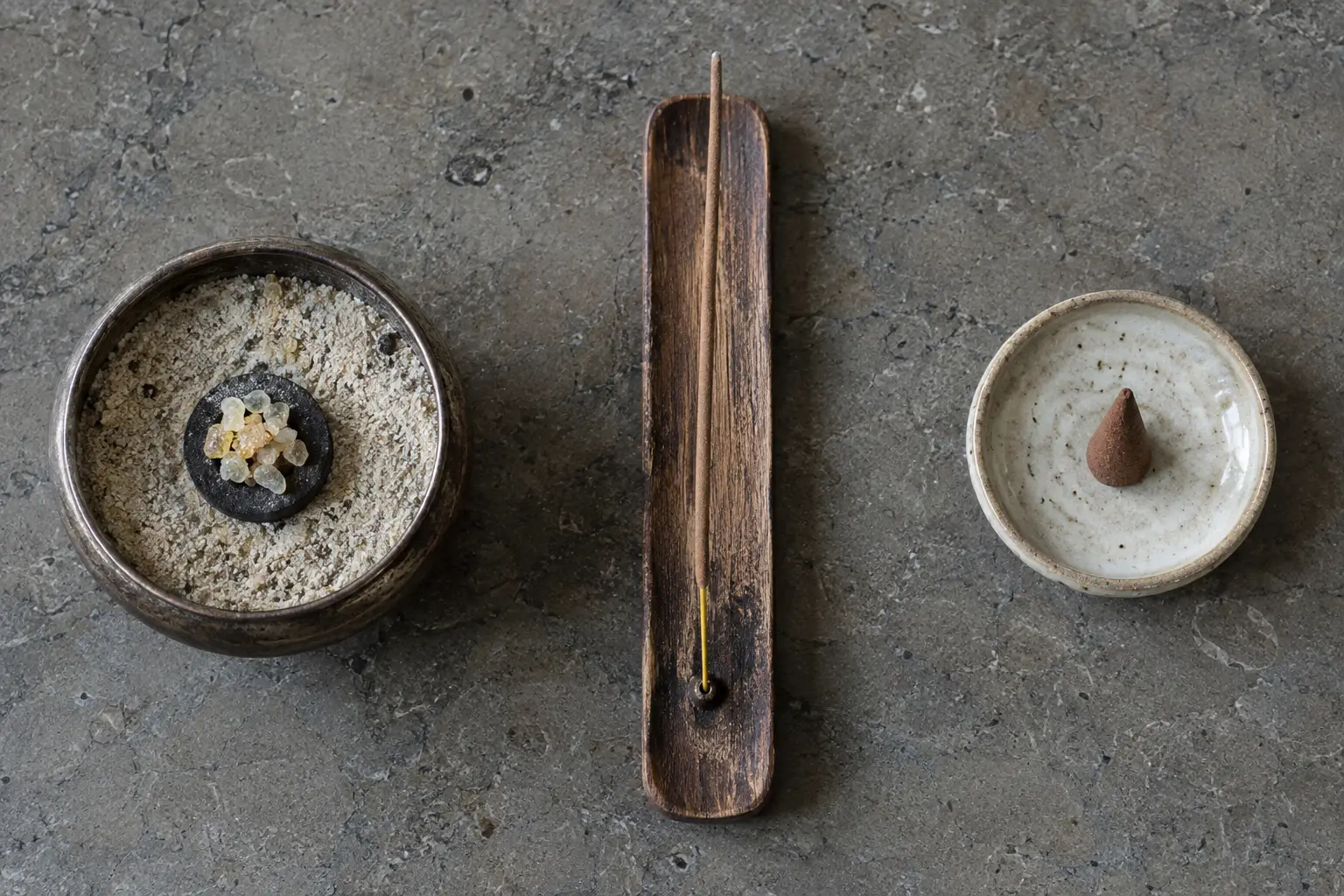
Match the form to the setting before choosing a scent. A loose-resin setup may be unsuitable where you cannot safely manage both the incense and its heat source. Needles, dried leaves, petals, and spices may be better reserved for a controlled burner rather than placed directly on an exposed surface. Sticks and cones simplify setup, but their labels may describe a scent rather than clearly identify whether they contain botanical material or a modern fragrance blend.
Room conditions matter as much as the holder. The EPA advises proper ventilation when burning incense indoors . Consider whether windows or other ventilation are available, how small or crowded the room is, and whether anyone present is sensitive to smoke or fragrance. If allergies or sensitivities are a concern, choosing not to burn incense is a valid option; incense smoke should not be treated as harmless or therapeutic.
Place any burner on a stable, heatproof surface away from materials you do not want exposed to flame, heat, sparks, or ash. Keep the setup where it cannot be knocked over, and do not leave it unattended. Use only the amount the burner can contain comfortably rather than overloading it for a stronger aroma.
Finally, plan how you will stop the burn before lighting anything. Extinguish the material and any separate heat source completely, then leave the burner undisturbed until it is safe to handle. If the available space, ventilation, holder, or supervision does not suit a candidate’s burn form, choose another form—or enjoy the material unburned for scent or symbolic use.
| Decision factor | What to record |
|---|---|
| Ingredient disclosure | Write down the material, species, origin, or blend details you expect the label to disclose. |
| Burn form and equipment | List the forms you can accommodate and the holder or heating equipment available. |
| Cultural context | Choose whether you want a documented traditional context, a modern personal correspondence, or scent alone. |
| Aroma direction | Select resinous, woody, coniferous, herbal or earthy, floral, or spice. |
| Indoor ventilation | Confirm whether the burning space can be properly ventilated. |
| Personal and fire limits | Record smoke or fragrance sensitivities, room constraints, and any burn forms you will avoid. |
Resins: Frankincense, Myrrh, Benzoin, Copal, and Dragon’s Blood
Frankincense resin is the strongest choice here for readers prioritizing a clearly documented historical incense. Kew identifies frankincense as a resin, while the Met places it among the important aromatic resins of Judeo-Christian tradition . Choose loose resin when you want the material itself and have appropriate heating equipment; if buying sticks or cones, check whether the label identifies actual frankincense or only a frankincense-style fragrance. Use a small amount with ventilation, a stable heatproof burner, and careful control of the heat source.
Myrrh resin suits readers seeking a bitter, balsamic alternative with ceremonial history. Kew discusses myrrh as an anointing material in historical gift symbolism, and the Met identifies it as an important aromatic resin within Judeo-Christian tradition . That context does not make every modern myrrh product equivalent: distinguish identifiable resin from scented sticks or blended cones. Burn or heat it only in suitable equipment, ventilate the room, and extinguish the heat source completely afterward.
Benzoin resin is the better fit when sweetness matters more than a named historical context. Select a product that identifies benzoin as the material rather than relying on a scent name alone. Loose pieces require resin-compatible heating equipment; a stick or cone may instead be a modern fragrance blend. Because no tradition-specific evidence is supplied here, treat any ritual meaning as a personal correspondence rather than documented history. Keep the quantity modest and the burner stable.
Copal resin is appropriate for readers exploring a specifically identified Mesoamerican resin tradition, but “copal” alone is not enough information for a confident choice. Favor sellers that disclose the resin’s identity, origin, and form. Avoid transferring the documented context of frankincense or myrrh to copal; each material requires its own cultural evidence. Whether loose or prepared, use it only with adequate ventilation and controlled heat.
Dragon's blood resin demands the closest label scrutiny because the common name does not itself establish which botanical resin is present. Choose it only when the source material is adequately identified; otherwise, treat a dragon’s-blood stick or cone as an undisclosed or modern fragrance product rather than verified resin. No tradition-specific claim is supported by the evidence provided here, so ritual associations should remain optional personal correspondences. Use sparingly in a heatproof holder, keep it attended, and fully extinguish it after burning.
Fragrant Woods: Sandalwood, Agarwood, Cedar, and Palo Santo
Sandalwood suits readers seeking a fragrant wood, but the label should identify the species, source, and whether the product contains actual wood or merely a sandalwood-style fragrance blend. Choose a burn form compatible with your equipment, and treat any ritual meaning as tradition-specific rather than automatic.
Agarwood is the provenance-focused option. Look for clear origin and material disclosures, especially when comparing raw wood with prepared sticks or cones. A seller invoking a cultural tradition should name that tradition and explain the product’s relationship to it.
Cedar is the clearest fit for a dry, woody scent preference. Because “cedar” may function only as a broad scent label, favor products that identify the plant material and distinguish wood from added fragrance. Select a form you can burn under controlled conditions.
Palo santo requires equally careful scrutiny of species, origin, and harvesting claims. Prefer traceable wood or transparently described prepared incense over vague scent branding.
For all four, compare the disclosed botanical material, preparation, provenance, and aroma—not just the familiar name on the package. Raw wood, chips, powders, sticks, cones, and fragrance blends are not interchangeable and may require different holders or heat sources.
Coniferous Choices: Pine and Juniper
Pine resin or needles suits readers who want clearly identified plant material rather than an incense labeled only “pine-scented.” Check whether the product contains resin, needles, wood, or a prepared blend, because each form may require different equipment. Choose it when you prefer a recognizable coniferous direction and the label provides straightforward ingredient details.
Juniper is the better fit when you want a sharper evergreen profile and can confirm what the product contains. Look for the plant species and whether the incense uses actual botanical material or merely a modern fragrance blend. A generic “forest” or “evergreen” label does not establish that juniper is present.
Treat tradition-based descriptions carefully for either option. If a seller connects pine or juniper with purification, protection, or another ritual purpose, look for a named cultural context rather than assuming that correspondence applies universally. You may also adopt such a meaning as a personal correspondence without presenting it as established tradition.
For both choices, match the form to a controlled burn setup. Favor the option you can use sparingly in a ventilated space with suitable fire controls.
Herbal and Earthy Choices: Rosemary, Culinary Sage, Mugwort, and Patchouli
Rosemary suits a remembrance correspondence when that meaning is part of your personal practice. Prefer products that identify the botanical material and clarify whether they contain leaf or added fragrance.
Culinary sage is the clearer choice when you specifically want garden sage. Do not treat the generic word “sage” as evidence that a product belongs to, or can substitute for, a culturally specific sacred practice. Keep any ritual meaning personal unless the seller provides reliable tradition-specific context.
Mugwort calls for especially careful identification. Look for a species name and a complete ingredient list rather than relying on the common name alone. It is a poor choice when allergies, smoke sensitivity, or uncertain labeling are concerns.
Patchouli fits an earthy scent preference, but check whether the incense uses identifiable leaf material, an extract, or a modern fragrance blend. Those forms should not be treated as interchangeable simply because they share a scent name.
For all four, match the product to your intended experience: recognizable plant material, a disclosed fragrance composition, or an optional personal correspondence. Use only a controlled amount in an appropriate holder, with adequate ventilation, and avoid products whose ingredients are unclear.
Floral and Spice Choices: Lavender, Jasmine, Rose, Cinnamon, and Clove
Choose Lavender when you want a floral-herbal direction rather than a purely sweet floral scent. Check whether the incense contains identifiable plant material or is a modern fragrance blend, and treat any ritual meaning as a personal correspondence unless the seller provides tradition-specific context.
Jasmine suits readers seeking a more distinctly floral option, while Rose may fit those who prefer petals or a clearly labeled floral blend. For either, a scent name alone does not reveal whether the product contains flowers, extracts, or added fragrance. That distinction matters when ingredient transparency is a priority.
Choose Cinnamon for a warm spice profile and Clove when you want an especially assertive spice direction. Labels should clarify whether the incense uses bark, buds, other botanical material, or fragrance compounds. Stronger is not automatically better: a concentrated aroma can overwhelm a small room or conflict with other ritual scents.
Across all five options, favor clear ingredient disclosure over unsupported spiritual promises. Use small amounts in a controlled, ventilated setting, particularly when evaluating an unfamiliar floral blend or intense spice incense.
A Final Decision Sequence for Choosing Among the 20
Start with the label: identify the material, relevant species or origin, and whether the product is raw botanical material or a modern fragrance blend. Next, confirm that its burn form suits your available equipment. Then separate documented cultural use from an optional personal correspondence; neither should be treated as a guaranteed outcome.
Choose the aroma family that fits your setting. For a resinous profile, consider Frankincense resin for historical context, Myrrh resin for bitter balsamic character, or Benzoin resin for sweetness. Choose Copal resin or Dragon's blood resin only when identity and sourcing are clear. For wood, prioritize traceable Sandalwood, Agarwood, Cedar, or Palo santo. Pine resin or needles and Juniper suit coniferous preferences. Rosemary, Culinary sage, Mugwort, and Patchouli cover herbal or earthy directions, while Lavender, Jasmine, and Rose emphasize floral scent. Cinnamon and Clove provide stronger spice options.
Finally, rule out anything incompatible with the room, ventilation, smoke or fragrance sensitivities, equipment, or fire controls. The best choice is the one whose contents, context, aroma, and practical demands you can evaluate clearly.