
The Short Answer: Name the Step, Not the Reader
Intuitive divination describes a step chiefly guided by a directly noticed impression. Inductive divination describes a step chiefly guided by interpreting a sign through learned meanings. The distinction is about how you arrived at an interpretation, not what kind of person you are. An encyclopedia describes the intuitive mode in terms of direct inspiration and the sign-based mode in terms of interpreted signs; a practitioner source likewise distinguishes intuitive reception from sign interpretation.
The question is where the meaning came from in that particular step. Did an impression arise and shape what you said before you applied an established meaning? “Intuitive” is the more useful description. Did you recognize a sign and draw on meanings you had learned for it? “Inductive” is the more useful description. The presence of a sign alone does not settle the question; what matters is how you gave it meaning. Likewise, noticing something spontaneously does not make every later part of an interpretation intuitive.
Both modes involve interpretation. A felt impression still has to be put into words, while a learned meaning still has to be applied to the question at hand. The difference is which source chiefly guides a step, not whether one involves thought and the other does not. If you cannot identify one chief source, you need not force the step into a single category. Describing what contributed to it is more precise than assigning yourself a fixed label.
Rules therefore have different roles. In an inductive step, a learned association or interpretive convention supplies a starting point for what a sign means. In an intuitive step, that convention is not the chief reason you give the impression its meaning. This distinction can help you explain a reading to someone else: it separates “this occurred to me” from “this is the meaning I was taught to use.” Neither account is inherently more authentic. These are analytical names for approaches to divination, not a test of supernatural ability or a universal classification of every tradition.
Here, inductive also does not mean scientific induction: it does not imply that repeated observations have established a reliable prediction. The term distinguishes a mode of ritual interpretation from direct inspiration. Neither label, by itself, validates a reading as a way to discover hidden facts or predict what will happen. That limit matters when describing your practice: “I interpreted a sign using a meaning I learned” says what you did; “therefore the result is evidence” claims something the distinction cannot establish.
What Each Mode Looks Like in Practice
The contrast is easiest to see in what a reader does after something catches their attention. In the practitioner’s scrying example, the material being read is described as images and impressions. If an image comes to mind and the reader describes what it suggests before consulting a set meaning, the interpretation is led by that noticed impression. The important action is not simply “scrying”; it is attending to an image and finding meaning in what was perceived.
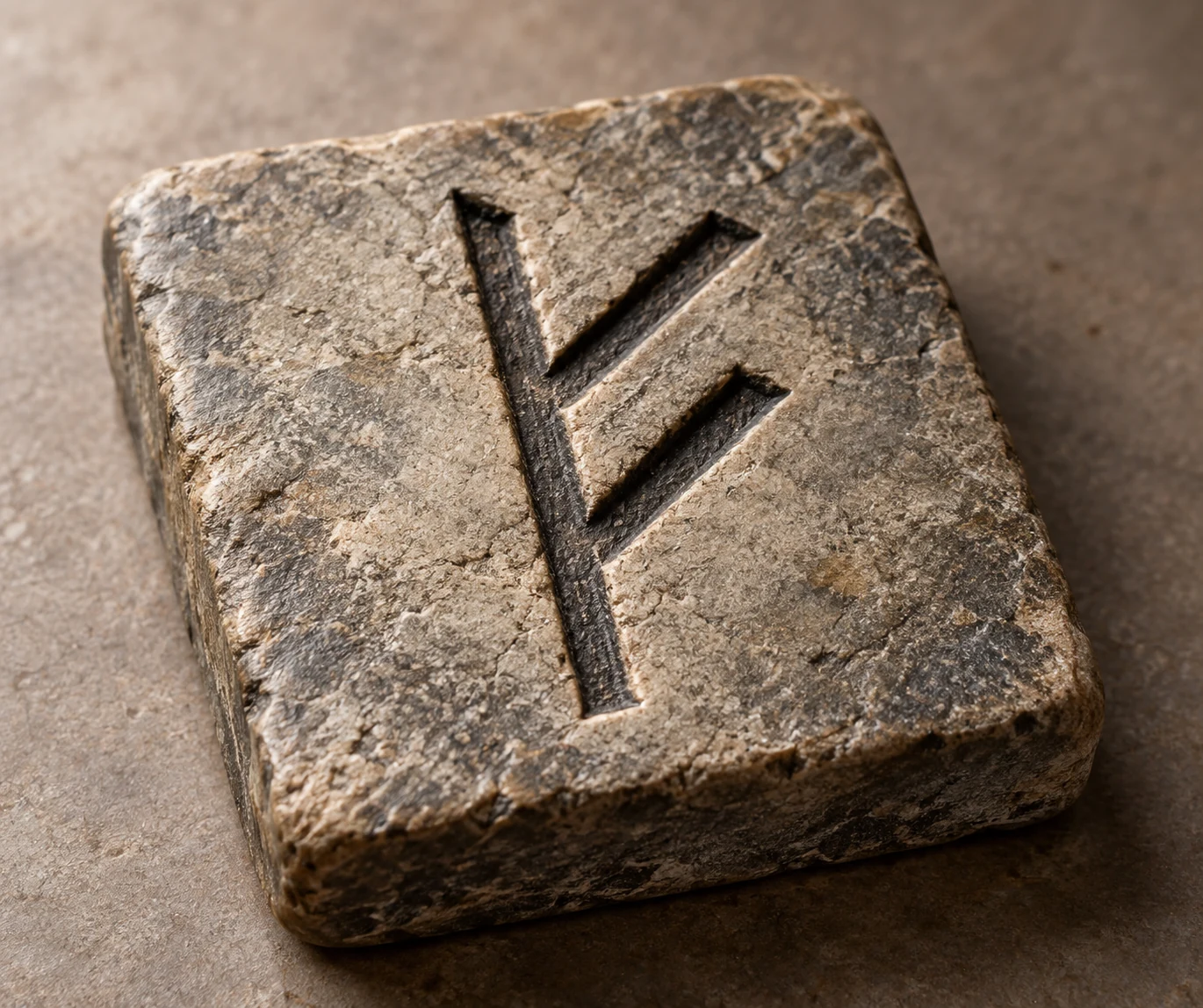
Now compare the practitioner’s drawn-rune example. Here, a sign is selected, and the reader interprets definitions associated with it. The observable step is different: rather than beginning with an impression and describing it, the reader brings a learned meaning to the drawn sign and considers how it bears on the question. A reader might still have a personal reaction to the rune, but looking to its definition is the part that makes this example useful for identifying an inductive step.
The range of possible inputs extends beyond those two examples. An encyclopedia also lists lots and bird behavior among divinatory signs. One involves a selected result; the other involves something observed. Neither input alone tells you how its meaning was reached. A reader could follow an established interpretation of a lot’s result or of observed bird behavior; another could put more weight on an immediate impression. To describe the method precisely, say both what supplied the sign and what supplied its meaning.
A predetermined tarot layout shows why rules can enter a reading before any card is interpreted. The practitioner’s tarot example uses such a layout: the positions are decided in advance, so the reader has a structure for considering what appears where. That is an observable use of a rule, but it does not, by itself, tell you whether the reader will interpret a card chiefly through a learned meaning or through an impression prompted by it. “Used a fixed layout” is therefore more informative than labeling every moment of that tarot reading the same way.
These examples give you practical descriptions rather than labels based on equipment: noticed images while scrying, applied a drawn rune’s definition, or placed cards in predetermined positions. Each names an action someone else could recognize in an account of the reading. The tool identifies where attention was directed; the subsequent step shows how the reader made sense of it.
Where a Tarot Reading Can Change Modes
A tarot reading need not stay in one mode from start to finish. The practitioner’s example combines an intuitive decision about when to stop shuffling with a fixed layout for placing the cards. Those are different moments in the same reading: one follows a felt impression, while the other follows a plan chosen in advance.
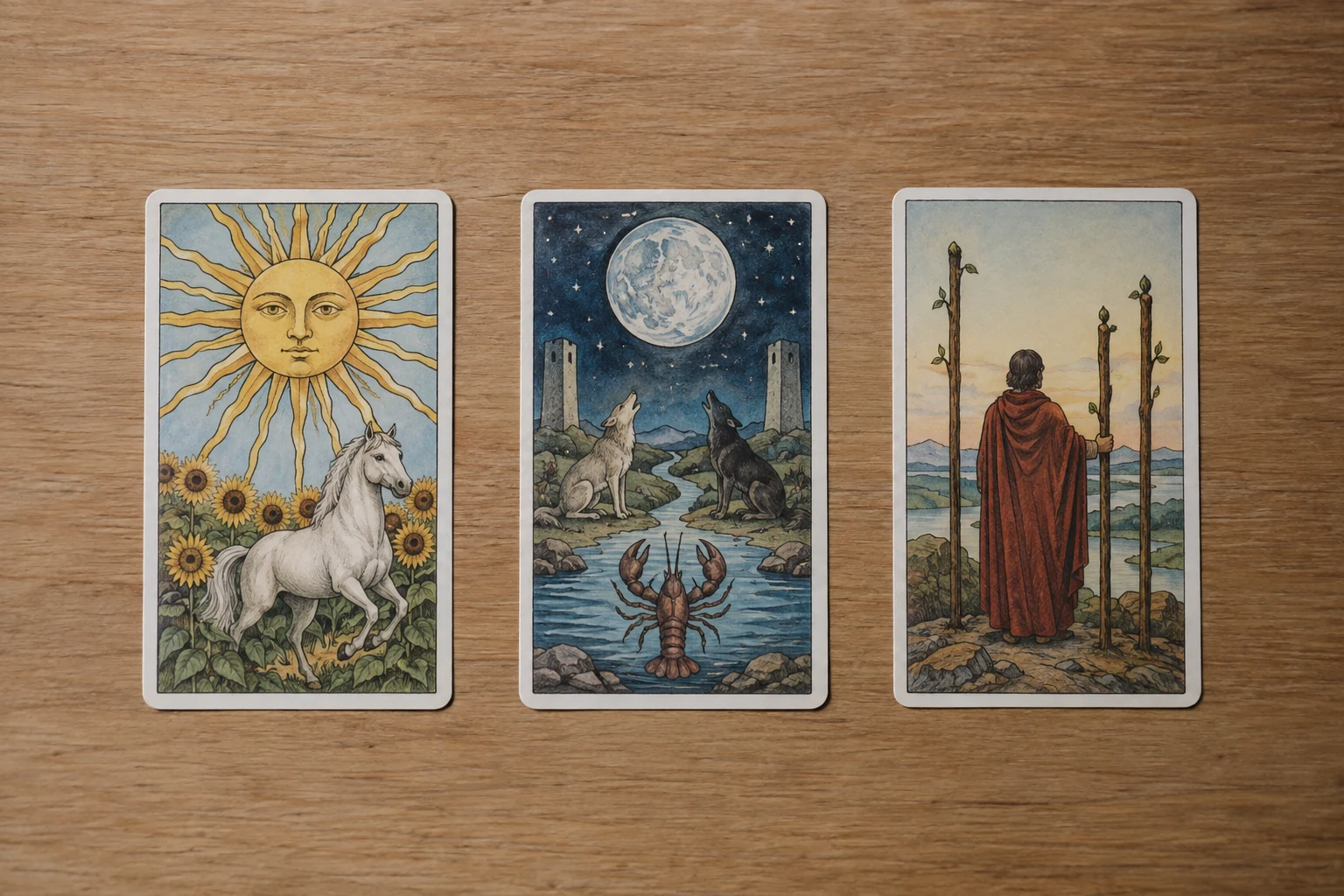
Suppose you shuffle until it feels like the moment to stop, then place three cards in positions you have already assigned to “situation,” “obstacle,” and “next step.” The stopping point is impression-led. The layout gives each card a role before you see it. Neither step determines, by itself, how you will interpret the cards. The practitioner explicitly describes tarot as capable of combining intuitive and inductive approaches.
Interpretation is where the blend becomes easier to see. You might begin with a meaning you have learned for a card and consider how it fits the position it occupies. Then you notice that a small detail in its picture draws your attention and changes the emphasis of your reading. You have not switched tools; you have used a learned meaning and a direct impression in sequence. Alternatively, the pictured detail might prompt your first thought, which you then weigh against the card’s familiar meaning. In either case, describing which step did what is more precise than calling the entire tarot reading one kind of divination.
There is room for an interpretive middle, too. The encyclopedia names an interpretive category and describes combinations rather than forcing every practice into a strict either-or. In the three-card example, the layout supplies a structure, but you still have to decide how a particular card relates to its position and to the other cards. That decision may draw on learned associations, an immediate impression, or both. Calling it “interpretation” need not conceal the steps: you can still say what structure you used and what caught your attention.
The same distinction applies if the balance shifts during a reading. A person could choose every placement by a fixed procedure yet rely chiefly on impressions when discussing the images. Another could stop shuffling on a feeling but then stay closely with learned card meanings. The tool and the shuffle do not settle the label for everything that follows. A useful description of either reading tracks the contribution of each step, including the moments when a rule and an impression meet.
A Self-check for Describing Your Own Reading
After a reading, try recounting it in the order it happened rather than assigning yourself a single label. What first caught your attention? Did you notice an image, feeling, or association before consulting a meaning? Which learned meanings or rules did you use, and did they confirm, change, or merely give words to that first impression?
Then ask what chiefly shaped each interpretation. Suppose a drawn card brings a particular memory to mind, and you later consult its learned meaning. You might describe the initial association as impression-led and the later explanation as meaning-led. If neither step would have produced the interpretation on its own, “mixed” is more informative than forcing the whole reading into one category. The practitioner behind the original comparison describes the modes as a scale rather than discrete boxes, while the encyclopedia also cautions against rigid distinctions.
It can help to write a brief account in plain language: “I noticed ___; I applied the meaning or rule ___; the part that most shaped my interpretation was ___.” If the last blank changes from one moment of the reading to the next, say so. This self-check describes what you did; it does not test whether an impression was unusually perceptive or whether a sign revealed a hidden fact.
There is room for a reflective purpose, too. The original practitioner argues that randomly drawn signs can prompt creative reflection and describes reflection that does not depend on obtaining external information. That is a useful distinction between finding something to think about and finding out that something is true: the former can matter to a reader without establishing that a message came from outside them or that a prediction is accurate.
For that reason, keep the description of a reading separate from decisions that require dependable information. Do not use a reading to locate missing property or settle medical, financial, or legal choices. If a reading raises a concern in one of those areas, treat the concern as a prompt to seek appropriate information or help, not as an answer. Your most useful final label may be modest: intuitive at one step, inductive at another, or mixed where impression and learned meaning worked together.