
Make Spice Use an Intentional Meal Practice
You can bring more attention to cooking with spices without changing your recipe. Choose them for the dish, notice their aroma, mix a small blend, and taste as you cook. If you like, pause to consider what you hope to bring to the table. That intention-setting pause is an optional modern personal practice—not an ancient universal rite or a way to guarantee an outcome.
Choose Spices for the Dish and Check Their Aroma
Start with food-grade spices that suit the meal you’re making. Spices commonly come from seeds, roots, or bark; leafy herbs are a different kind of seasoning. Let the flavor you want in the finished dish guide your choice.
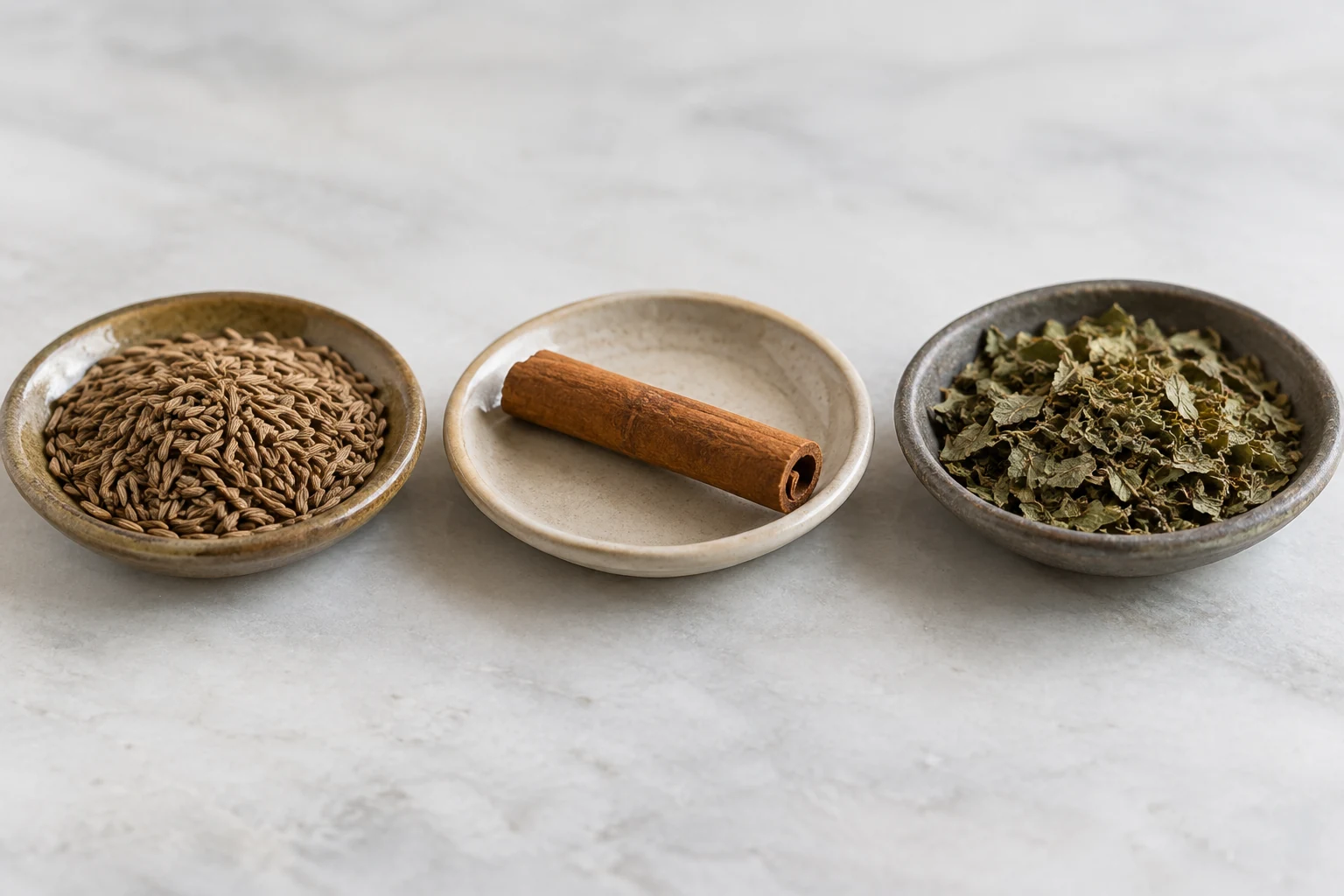
Before mixing, smell each spice on its own. If its aroma has faded, replace it: herbs and spices lose flavor with age. A blend serves the food you’re preparing, rather than a fixed symbolic purpose.
Cultural names for blends deserve care. Smithsonian Folklife describes South Asia’s many distinct regional and ethnic cooking traditions, in which spice combinations are chosen for particular dishes. It identifies garam masala as a mixture of aromatic spices, distinct from generic curry powder.
Grind and Mix a Small Blend
For a starting point, measure:
- 1 teaspoon cumin seeds
- ½ teaspoon celery seed
- ¼ teaspoon black peppercorns
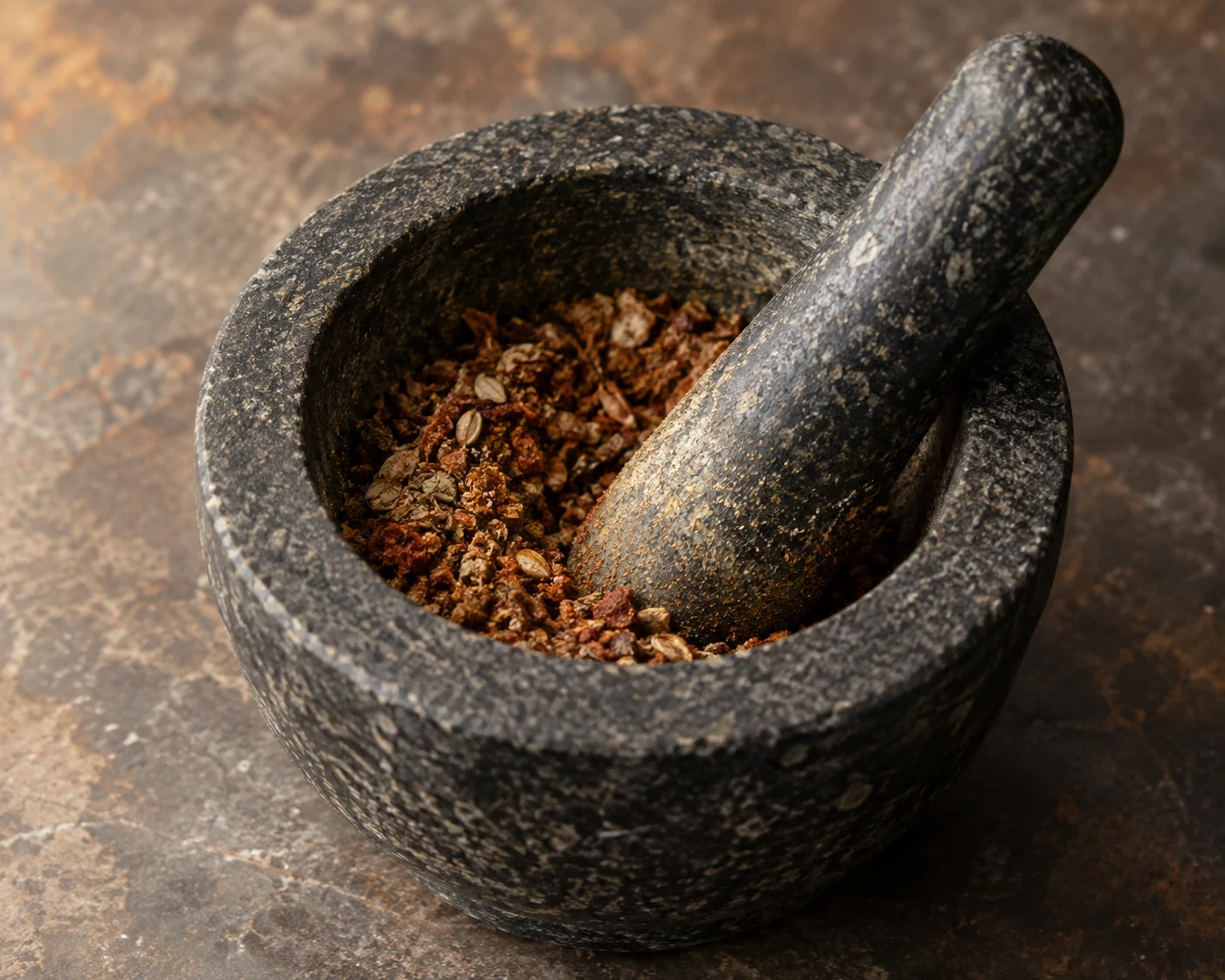
Grind the spices and mix them together. Grinding whole spices such as cumin and peppercorns as needed helps keep them fresh until you use them.
Smell the finished blend, then consider whether its flavors suit the dish you have in mind. These proportions are a suggestion, not a formula with a promised effect. If you make it again, you can adjust the balance to suit another meal.
Use the Blend in a Meal
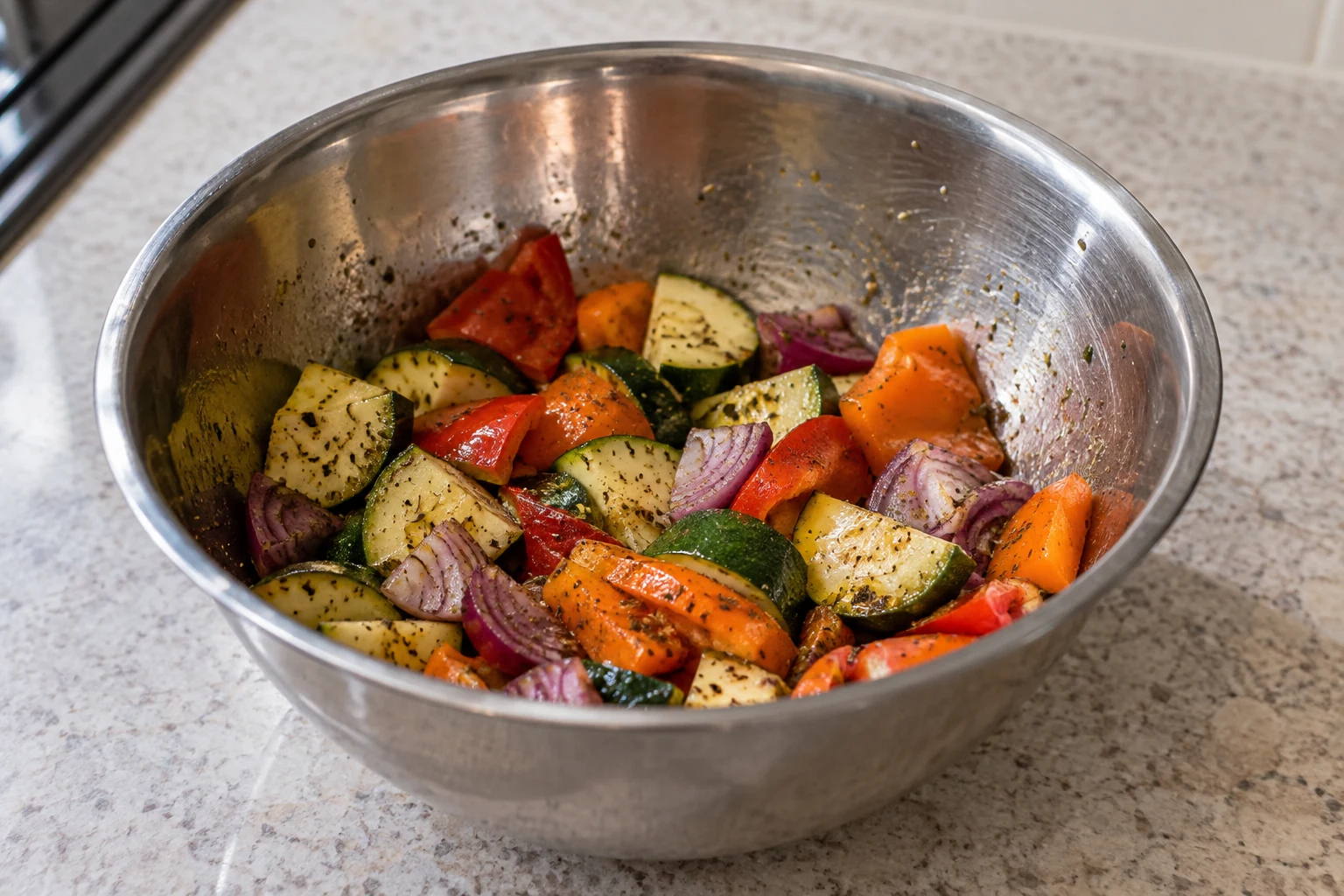
Toss about 1 teaspoon of the blend with 2 cups of vegetables and oil, then cook the vegetables according to your usual recipe. Taste before serving and adjust the seasoning to the dish. Use less if the spice flavor is already prominent, or more if you want it stronger. The example amount is a starting point, not a rule.
Take an Optional Pause While Cooking
When you smell the spices or add them to the vegetables, you can pause briefly and choose a simple intention for the meal. For example: I hope to be present with the people eating this. If you’re cooking alone, choose a thought that fits your circumstances—or skip the pause.
This is a personal choice, not a traditional requirement. It needn’t change the ingredients, the cooking method, or what you expect the meal to do.
Store What Remains
Put any unused blend in an airtight container for another meal. Spices lose aroma with age, even when stored, so smell the blend before using it again and replace it if its fragrance has faded.
Let the Meal Be the Point
Let flavor guide your spice choices, and give the food your attention as you cook and taste. Any meaning you bring to that moment can remain personal.