Winter tarot archetypes speak to stillness, endings, inner wisdom, ancestral memory, and the quiet preparation that happens before renewal. In tarot, winter is not only a season of cold or hardship. It is a spiritual atmosphere: the cave, the hearth, the dark moon, the snow-covered field, the elder’s counsel, and the seed resting below the ground.
Cards such as The Hermit, Death, The Moon, The High Priestess, The Hanged Man, and The Star often carry winter qualities. In the Minor Arcana, winter may appear through Swords, Pentacles, and cards of rest or withdrawal. These archetypes are especially useful for readings about reflection, grief, patience, boundaries, ancestral guidance, and spiritual renewal.
What Winter Represents in Tarot
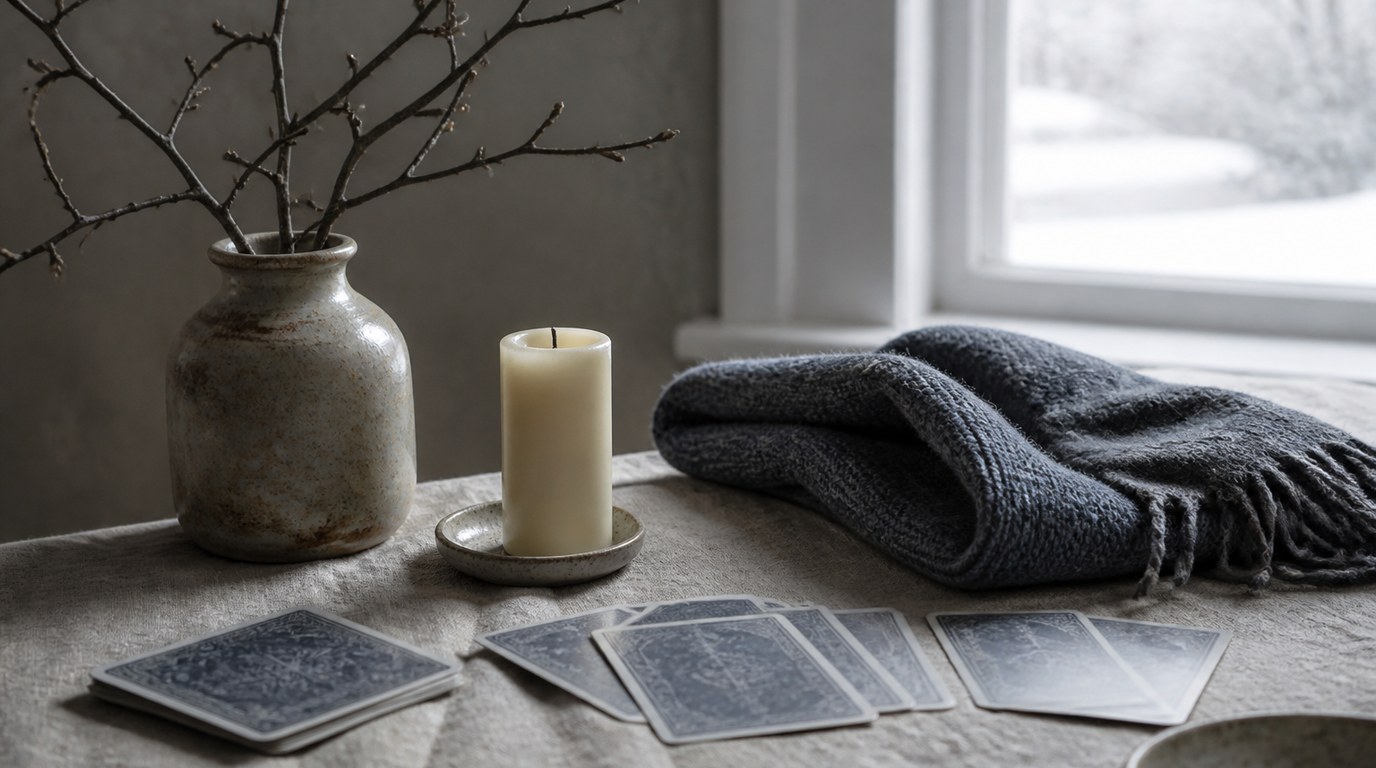
Winter in tarot represents sacred pause. It is the part of the cycle where growth is not always visible, but deep change is happening beneath the surface. Spiritually, winter asks for honesty, conservation of energy, protection, and listening.
A winter card in a reading may point to solitude, closure, grief, healing, elder wisdom, or the need to stop forcing movement. It can also show a time when the soul is gathering strength.
The key mental model is this: winter does not mean nothing is happening. It means the work has gone inward. Like roots under frozen ground, spiritual development may be hidden, slow, and essential.
Core Winter Tarot Archetypes at a Glance
| Tarot archetype | Winter meaning | Spiritual lesson |
|---|---|---|
| The Hermit | Solitude, retreat, elder guidance | Seek truth through stillness |
| Death | Endings, release, seasonal transformation | Let the old form fall away |
| The Moon | Mystery, dreams, uncertainty | Trust intuition without rushing |
| The High Priestess | Hidden wisdom, sacred silence | Listen before acting |
| The Hanged Man | Suspension, surrender, waiting | Stop resisting the pause |
| The Star | Hope after darkness, renewal | Receive gentle restoration |
| Four of Swords | Rest, recovery, withdrawal | Healing requires quiet |
| Five of Pentacles | Hardship, exclusion, winter scarcity | Seek support and shelter |
| King or Queen of Swords | Clarity, boundaries, cold truth | Speak and choose wisely |
These cards do not all mean winter literally. Rather, they carry winter’s symbolic qualities: darkness, patience, survival, wisdom, and eventual return of light.
The Hermit: the Elder, the Lantern, and the Sacred Retreat
The Hermit is one of the clearest winter tarot archetypes. He stands apart from noise, holding a lantern in the dark. This is not isolation as punishment; it is retreat as spiritual discipline.
In a reading, The Hermit may suggest study, prayer, silence, mentorship, or time away from distraction. He can represent an elder, ancestor, teacher, or the wise self within.
His lantern is important. Winter does not remove light; it makes light more precious. The Hermit teaches that guidance may come quietly, through dreams, memory, meditation, or the counsel of someone who has already walked a difficult road.
Death and the Winter Cycle of Release
Death is often feared, but as a winter archetype it speaks to natural endings. Leaves fall, fields go bare, and forms that once held life return to the earth. This is not failure. It is the cycle of release.
In tarot, Death rarely points to literal death. More often, it marks an identity, habit, relationship pattern, season, or attachment that has completed its purpose.
Winter helps us understand this card with less fear. Some things must end so life can reorganize. Death asks: What are you carrying that belongs to the last season? What must be composted before renewal can begin?
The Moon and the High Priestess: Winter Intuition and Hidden Knowledge
The Moon and The High Priestess both belong to the world of mystery, but they are not the same.
The Moon is the snowy path at night: beautiful, uncertain, and full of shadows. It can indicate dreams, confusion, fear, illusion, or emotional tides. Its winter lesson is to move slowly when visibility is low.
The High Priestess is the keeper of hidden knowledge. She does not panic in the dark; she understands it as sacred space. Her winter quality is silence, divination, memory, and deep listening.
Together, these cards teach that not every answer comes through action. Some truths reveal themselves through patience, ritual, dreams, and inner knowing.
The Hanged Man and the Star: Waiting, Surrender, and Hope
The Hanged Man is winter’s forced pause. He cannot move forward by effort alone, so he learns to see differently. In readings, this card may show delay, sacrifice, surrender, or a needed change in perspective.
The Star is what appears after the long night. It is not loud victory; it is gentle hope, healing, and spiritual replenishment. If The Hanged Man is the frozen pause, The Star is the first clear sky after the storm.
Together, they show an important winter teaching: waiting is not always wasted time. Surrender can soften the spirit enough to receive hope again.
Minor Arcana Winter Signs: Swords, Pentacles, and Rest Cards
Winter symbolism is not limited to the Major Arcana. The Swords suit often feels winter-like because it deals with air, thought, truth, grief, and mental clarity. Cards such as the Three of Swords, Four of Swords, and Queen of Swords can show cold honesty, sorrow, rest, or boundaries.
Pentacles can also carry winter themes, especially around the body, shelter, money, food, and survival. The Five of Pentacles is a classic winter image of hardship and exclusion, but it also asks where warmth and help may be found.
Rest cards matter too. The Four of Swords, in particular, reminds us that recovery is sacred work, not laziness.
How to Read Winter Archetypes in a Tarot Spread
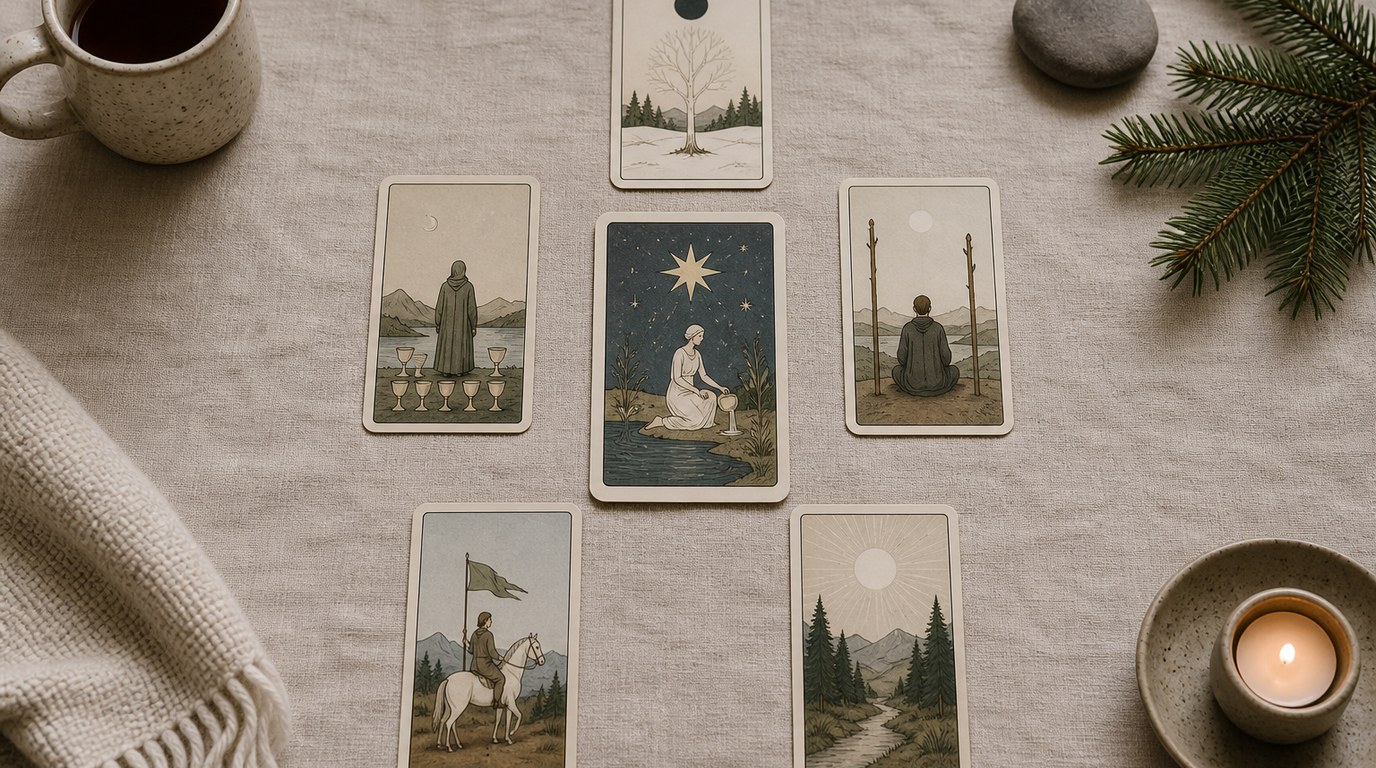
When a winter archetype appears, first ask whether the card describes timing, energy, or spiritual instruction. It may point to the winter season, but more often it describes an inner climate.
Look at the surrounding cards. The Hermit beside The Star may suggest healing through solitude. Death beside Pentacles may indicate practical life changes. The Moon beside Swords may warn against anxious thinking or unclear communication.
Helpful questions include: What is ending? What needs rest? What truth is being revealed? Where is support available? What wisdom is asking to be heard?
Winter cards should be read with patience. They often describe processes that unfold slowly.
Using Winter Tarot Archetypes in Ancestor and Home Ritual
Winter tarot archetypes pair naturally with ancestor work because both honor memory, silence, lineage, and the unseen. You might place The Hermit, The High Priestess, or The Star on an ancestor altar as a focus for reflection.
Simple offerings can include a white candle, water, tea, bread, evergreen, or a written prayer. Ask your ancestors for guidance around release, protection, and endurance.
A winter tarot ritual does not need to be elaborate. Pull one card, sit quietly, speak the names of your dead if appropriate, and listen. The goal is not performance, but reverent connection.
Common Misunderstandings About Winter Tarot Archetypes
Winter tarot archetypes are not automatically negative. They can feel heavy because they deal with endings, truth, grief, and waiting, but they also carry wisdom, protection, and renewal.
Another misunderstanding is that winter cards mean nothing will improve. In seasonal symbolism, winter is temporary. It prepares the ground for spring.
Finally, not every dark or quiet card means danger. Sometimes the message is simply: rest, listen, conserve your energy, and let time reveal what force cannot.
FAQ
What Tarot Card Represents Winter the Most?
The Hermit is often the strongest winter tarot archetype because he represents solitude, darkness, elder wisdom, and the guiding lantern. Death, The Moon, The High Priestess, and Four of Swords also carry strong winter energy, depending on the question and surrounding cards.
Are Winter Tarot Archetypes Negative?
No. Winter archetypes can be serious, but they are not inherently negative. They often point to rest, release, reflection, protection, and hidden growth. Their challenge is that they ask for patience instead of immediate movement or easy answers.
Which Tarot Suit Is Connected to Winter?
Many readers connect Swords with winter because of its associations with air, clarity, cold truth, grief, and the mind. Pentacles can also feel wintry when the reading concerns shelter, scarcity, the body, food, money, or survival through difficult conditions.
How Can I Use Winter Tarot Cards in Ancestor Work?
Choose a winter-associated card such as The Hermit, The High Priestess, Death, or The Star and place it near a candle or offering. Ask your ancestors what should be released, remembered, protected, or healed. Sit quietly afterward and record any impressions, dreams, or messages.