
Magic in the morning rituals does not need to be elaborate, expensive, or perfect. A powerful morning practice can be as simple as protecting your attention, cleansing your space, greeting your ancestors or the sacred, making a small offering, and choosing one clear intention for the day. The purpose is to begin before the world pulls you in every direction.
This guide gives you a practical nine-step ritual you can do at home, with or without an altar. Use what fits your tradition, leave what does not, and keep the practice safe, respectful, and repeatable.
What Makes a Morning Ritual Feel Magical?
A morning ritual feels magical when ordinary actions become conscious, sacred, and directed. Lighting a candle is not only lighting a candle; it becomes a signal that your attention has arrived. Pouring water becomes an offering. Breathing becomes grounding. Speaking an intention becomes a promise to your spirit.
The “magic” is not about forcing the day to obey you. It is about entering the day awake, connected, protected, and aligned with what matters.
Before You Begin: Simple Prerequisites
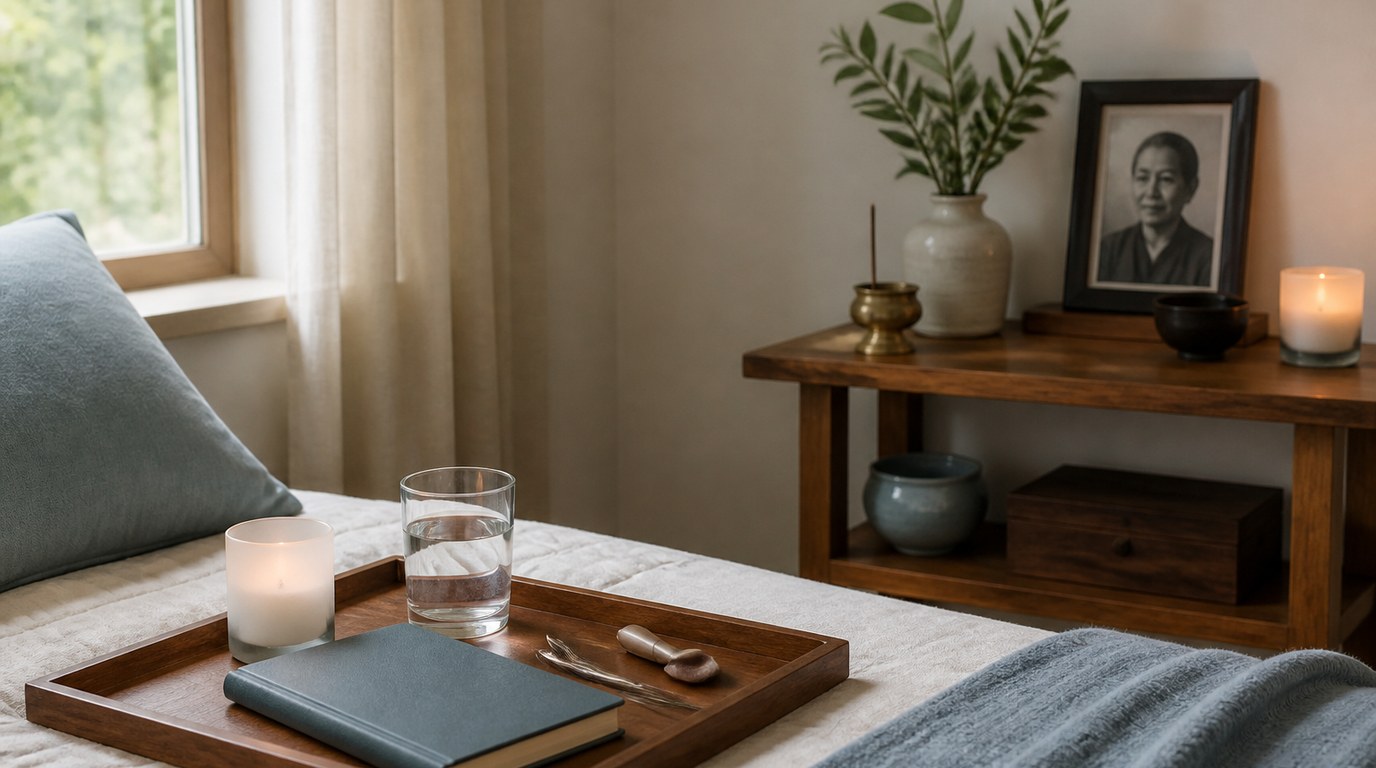
You do not need many tools. Helpful items include a candle or battery candle, a glass of water, incense or cleansing spray, a journal, a pen, and any sacred object you already use. If you keep an ancestor altar, make sure it is tidy enough to receive attention.
Choose a small, consistent space: bedside table, kitchen counter, altar, windowsill, or quiet corner. Five to fifteen minutes is enough.
Use fire safely. Never leave a candle burning unattended, keep flames away from fabric, and use a flameless option if you have pets, children, rentals, or health concerns around smoke.
Step 1: Wake up Without Reaching for Your Phone
For the first few minutes, protect your mind from messages, news, and other people’s needs. Before touching your phone, place one hand on your heart or belly and take three slow breaths.
Say quietly: “I return to myself before I enter the world.”
If you use your phone as an alarm, turn it off and set it face down. This small boundary keeps your morning energy from being claimed too quickly.
Step 2: Cleanse the Space and Yourself
Cleansing marks a shift from sleep into sacred attention. You can waft incense, ring a bell, open a window, mist the room with water, wash your hands, or simply breathe with intention.
As you cleanse, say: “May what is heavy be released. May what is mine return to me. May this space be clear.”
If smoke is not appropriate in your home, do not force it. Sound, fresh air, water, and prayer can cleanse beautifully.
Step 3: Light a Candle or Create a Point of Focus
Light a candle if it is safe, or turn on a small lamp, battery candle, or altar light. This point of focus tells your body and spirit: the ritual has begun.
Look at the flame or light for a few breaths. Let your eyes soften. Imagine your attention gathering from yesterday, from dreams, from worry, from distraction.
If using a real candle, place it on a stable surface and extinguish it fully before leaving.
Step 4: Greet Your Ancestors, Guides, or the Sacred
If you work with ancestors, greet them by name, family line, or loving title. You might say: “Good morning to my beloved ancestors, known and unknown, who walk with wisdom, love, and protection.”
If ancestor work is not part of your path, greet God, Spirit, the land, your guides, your higher self, or the sacred presence you honor.
Keep the greeting respectful and clear. You are not demanding service. You are acknowledging relationship and inviting guidance aligned with your wellbeing.
Step 5: Make a Small Morning Offering
A morning offering can be simple: fresh water, coffee, tea, fruit, flowers, a candle flame, a song, or a few words of gratitude. Place it with care and say what it is for.
For example: “I offer this water with gratitude. May there be clarity, protection, and right relationship today.”
Refresh offerings regularly. Do not let food rot or water become stagnant. If disposing of offerings, do so respectfully according to your tradition, such as returning water to the earth or discarding food with thanks.
Step 6: Set One Clear Intention for the Day
Choose one intention, not ten. Morning magic works best when it has a clear direction.
Try this structure: “Today, I choose to move with ___.” Fill the blank with patience, courage, discipline, softness, honesty, protection, focus, or joy.
Then make it practical: “I will show this by answering slowly,” or “I will show this by finishing one important task before distraction.”
An intention is strongest when it has a real-world behavior attached.
Step 7: Pull a Card, Read a Sign, or Journal a Message
If you use tarot, oracle cards, prayer cards, or bibliomancy, ask a grounded question: “What energy should I carry today?” or “What do I need to remember?”
Pull one card only. Write one sentence about it. Avoid pulling repeatedly until you get the answer you prefer.
If you do not use divination, journal three lines: “I feel… I need… I will…” This keeps reflection honest and prevents the ritual from becoming vague or overly dependent on signs.
Step 8: Seal the Ritual with a Body-based Action
A ritual needs a clear closing. Use your body to seal the work so the practice does not remain only in thought.
You might touch the floor, press your hands together, anoint your wrists, stretch your arms overhead, drink water, or take one deep bow.
Say: “This ritual is complete. I carry its blessing into my day.”
Then extinguish candles, close jars, put away tools, and leave the space neat. Closing well builds trust with your practice.
Step 9: Carry the Magic Into One Ordinary Task
Choose one everyday action as the bridge between ritual and life. Make your bed with gratitude. Stir your coffee clockwise with intention. Wash your face as a cleansing act. Put on jewelry as protection. Open the door with a breath of courage.
This step matters because magic in the morning rituals should not stay separate from chores, work, parenting, study, or commuting. The proof of the ritual is how you meet the next ordinary moment.
How to Know Your Morning Ritual Is Working
Your ritual is working if you feel more present, steady, honest, or supported over time. You may notice you react less quickly, remember your intention during stress, care for your altar more consistently, or begin the day with less spiritual clutter.
Do not measure success by dramatic signs or perfect moods. A working ritual does not guarantee an easy day. It helps you meet the day with clearer attention, stronger boundaries, and deeper connection.
Common Mistakes and Troubleshooting

The most common mistake is making the ritual too complicated. If it takes forty minutes and requires ten tools, you may avoid it. Reduce the practice until it feels repeatable.
Another mistake is skipping safety: leaving candles burning, using smoke around sensitive lungs, or placing offerings where pets can reach them. Adjust the ritual to your actual home.
If you feel nothing, keep going gently for a week. Spiritual rhythm often grows through repetition.
If the practice becomes anxious, simplify it. Do not over-read every sound, delay your responsibilities, or treat one missed step as a bad omen. Ground yourself, drink water, and return to the basics.
A 5-minute Version for Busy Mornings
When time is short, do this:
- Take three breaths before checking your phone.
- Wash your hands and say, “I begin clear.”
- Light a candle or look toward natural light.
- Greet your ancestors, guides, or the sacred.
- Offer water or gratitude.
- Set one intention.
- Touch your heart and say, “I carry this with me.”
This brief version keeps the core alive: attention, cleansing, connection, offering, intention, and embodied closure.
FAQ
Do I Need an Ancestor Altar to Do Magic in the Morning Rituals?
No. An ancestor altar can deepen the practice, but it is not required. You can greet your ancestors, guides, or the sacred from any clean, quiet place. If you feel called to build an altar later, begin simply with water, a photo, or a meaningful object.
What Is the Best Time to Do a Morning Ritual?
The best time is the time you can repeat. For many people, that means shortly after waking and before checking messages. Sunrise can feel powerful, but consistency matters more than exact timing. Even a five-minute ritual before work can be spiritually meaningful.
Can I Do This Ritual If I Live with Other People?
Yes. Keep it quiet and simple. Use a bedside shelf, bathroom mirror, kitchen corner, or small box of ritual items you can put away. If candles, incense, or spoken prayers are not practical, use breath, silent words, water, and a journal.
What Should I Say During a Morning Ancestor Offering?
Try: “Beloved ancestors of love, wisdom, and protection, I greet you with respect. I offer this water with gratitude. Walk with me today in clarity, strength, and right action.” Adjust the words to fit your lineage, beliefs, and relationship with your dead.
What If I Miss a Day?
Do not treat a missed day as failure. Simply return the next morning. You can say, “I return to the practice with respect.” A healthy ritual supports your life; it should not become another source of shame, fear, or perfectionism.