
Quick Answer
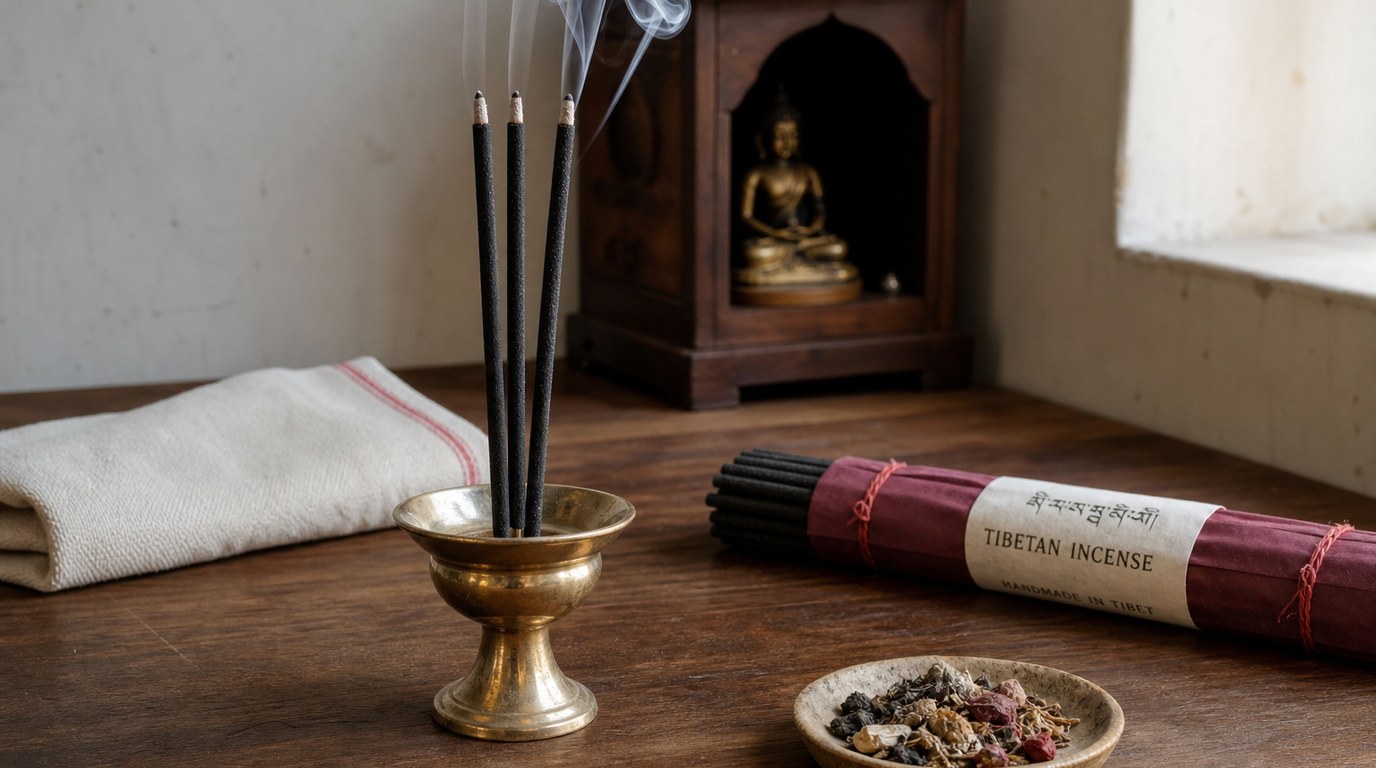
Tibetan incense is a traditional form of incense commonly used for offerings, meditation, purification, and creating a sacred atmosphere. Unlike many stick incenses that use a bamboo core, Tibetan incense is often made as a solid herbal stick from powdered woods, resins, spices, flowers, and medicinal plants. Its scent is usually earthy, resinous, smoky, herbal, or lightly sweet rather than perfume-like.
The main takeaway: Tibetan incense is best understood as a ritual support, not just a pleasant fragrance. In Tibetan Buddhist settings, incense may be offered to enlightened beings, teachers, protectors, or sacred images. In home practice, it can be used respectfully to prepare an altar, mark the beginning of meditation, cleanse the feeling of a space, or make a devotional offering to ancestors and spiritual guides.
You do not need to perform a formal Tibetan Buddhist ritual to burn Tibetan incense at home. However, it is wise to understand the difference between simple respectful use and practices that belong to specific lineages, empowerments, or temple traditions. For a home altar, a simple intention such as “May this offering bring clarity, peace, and benefit” is often enough.
Good use of Tibetan incense depends on three things: intention, context, and safety. Choose incense from a reputable source, burn it in a proper holder, ventilate the room, and treat the smoke as part of a mindful act rather than a decorative background scent.
How to Think About This Topic
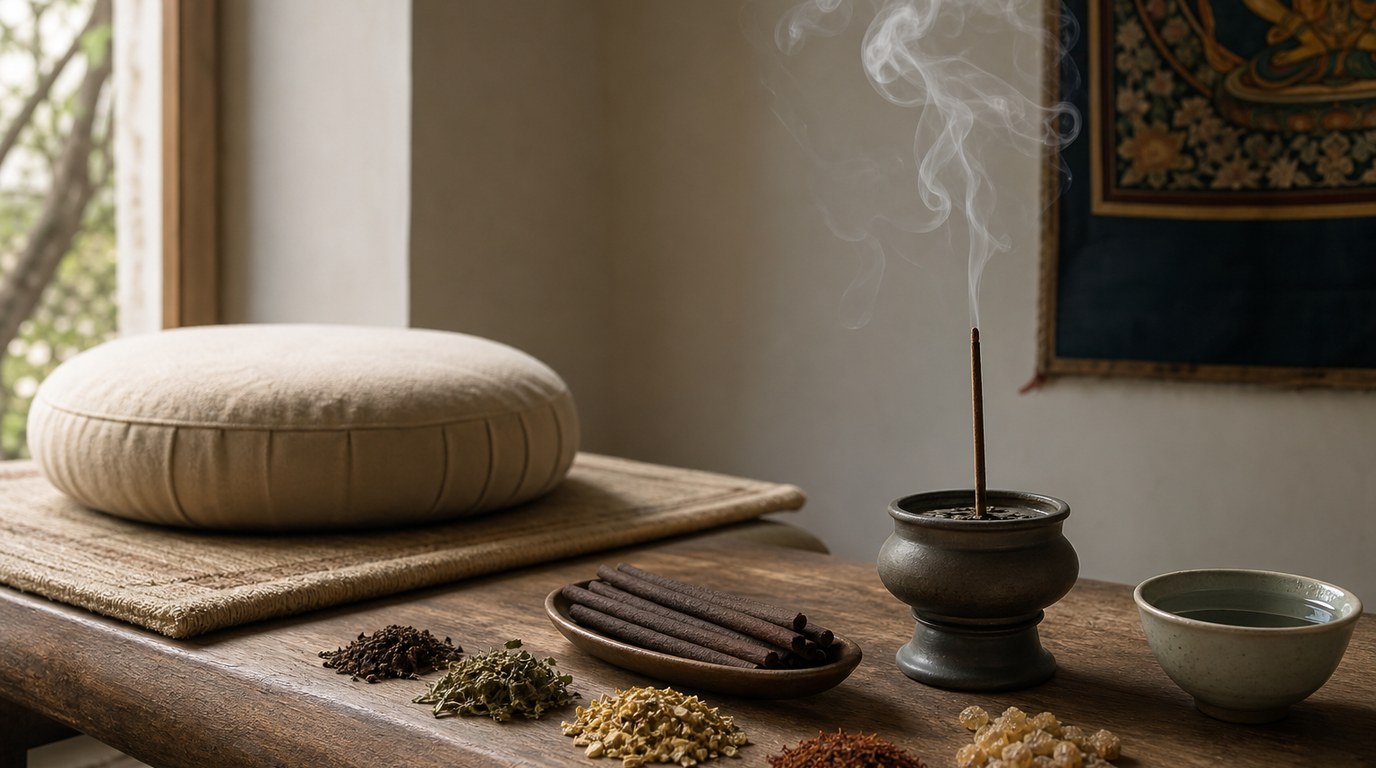
A helpful way to understand Tibetan incense is to separate three layers: the physical incense, the ritual action, and the spiritual meaning.
The physical incense is the material object: a stick, rope, powder, or loose blend made from aromatic ingredients. Traditional Tibetan incense may include plants associated with cleansing, vitality, calm, or offering. Common examples include juniper, sandalwood, saffron, clove, cardamom, agarwood, rhododendron, or other Himalayan herbs. Exact formulas vary widely. Some are made for temple offering, some for meditation, and some for everyday household use.
The ritual action is what you do with it. Lighting incense before an altar is different from burning it casually while cleaning a room. Passing incense smoke near an offering bowl, sacred image, ancestor photograph, prayer beads, or meditation seat gives the act a devotional structure. The incense becomes part of a sequence: prepare the space, light the offering, settle the mind, speak a prayer or intention, and let the smoke rise.
The spiritual meaning is why the smoke matters. In many ritual contexts, incense represents purification, generosity, and the movement from ordinary awareness into sacred attention. Its fragrance is offered rather than consumed. The rising smoke can symbolize prayers, blessings, remembrance, or the subtle presence of unseen support. For an ancestor altar, this symbolism can be especially meaningful: the incense marks a boundary between ordinary time and relational time with the dead, the lineage, and the spirit world.
For someone searching for Tibetan incense, the practical question is usually not only “What does it smell like?” but “How should I use it properly?” The answer depends on your context. A Buddhist practitioner may follow instructions from a teacher or lineage. A non-Buddhist home practitioner may use Tibetan incense as a respectful offering tool, while avoiding claims that they are performing a formal Tibetan rite.
This distinction matters. Burning Tibetan incense before meditation, during altar tending, or while offering water, flowers, food, or prayers is a simple devotional use. Performing specific protector rituals, healing rites, smoke offerings, or mantra-based ceremonies without instruction is different. Those practices may have rules, commitments, or cultural meanings that deserve care.
At home, think of Tibetan incense as a bridge: between body and breath, between room and altar, between memory and offering. Its value comes less from exoticness and more from how consciously it is placed within your practice.
Practical Guidance
Use Tibetan incense in a way that matches your purpose. The same stick can support different kinds of practice, but the attitude and setup should change depending on what you are doing.
| Use | Simple way to practice | Best attitude |
|---|---|---|
| Altar offering | Light one stick before images, ancestors, or sacred objects | Generosity and respect |
| Meditation | Burn a small amount before sitting | Settling and clarity |
| Cleansing a room | Let smoke move through the space with ventilation | Renewal, not fear |
| Ancestral remembrance | Offer incense with water, flowers, or spoken names | Gratitude and connection |
| Devotional prayer | Light incense before chanting or quiet prayer | Humility and sincerity |
For an ancestor altar, begin simply. Clean the altar surface, refresh water or other offerings, then light the incense. Place it in a stable burner where ash will not fall onto cloth, paper, or photographs. Pause before speaking. You might say, “I offer this fragrance in honor of my ancestors, guides, and all who support this home.” Then sit quietly, pray, chant, or name those you remember.
For meditation, avoid overpowering the room. Tibetan incense can be dense and smoky, so half a stick or a short burn may be enough. Light it before you sit, let the flame go out, and allow the smoke to establish a contemplative atmosphere. If the scent pulls too much attention, use less next time.
For cleansing, keep the practice grounded. Open a window or door. Light the incense, then move slowly through the room, especially near thresholds, corners, the altar, and places that feel stagnant. You do not need dramatic gestures. A clear phrase such as “May this space be peaceful, protected, and aligned with good intention” is sufficient.
When choosing Tibetan incense, look for transparency. Reputable makers or sellers will often describe the incense as handmade, monastery-made, herbal, medicinal, natural, or based on traditional formulas. Avoid products with vague “Tibetan style” branding if they smell strongly synthetic or give no ingredient or sourcing information. Natural does not always mean smoke-free or allergy-safe, but it usually better fits ritual work.
Also consider form. Stick incense is easiest for daily altar use. Rope incense is compact and traditional in Himalayan regions, but it needs a heat-safe dish and careful handling. Powder or loose incense may be used on charcoal, though that creates more smoke and heat, so it is better for experienced users.
Cultural respect is practical, not complicated. Do not present yourself as performing Tibetan Buddhist ceremonies unless you have been taught them. Avoid mixing sacred Tibetan mantras, deity names, or ritual claims into commercial or casual performances without understanding. If you feel drawn to deeper practice, learn from Tibetan teachers, temples, or reliable texts rather than inventing ritual details.
Safety belongs inside the ritual, not outside it. Never leave incense unattended. Use a ceramic, metal, stone, or sand-filled holder. Keep incense away from curtains, dried herbs, altar cloths, pets, and children. Ventilate, especially if anyone has asthma, migraines, pregnancy-related sensitivity, or respiratory concerns. If smoke is not appropriate in your home, you can still make an incense offering symbolically by placing an unlit stick on the altar with a spoken intention.
A respectful home practice does not need to be elaborate. One stick, one clear intention, one moment of attention can be enough.
FAQ
What Should a Beginner Know First About Tibetan Incense?
A beginner should know that Tibetan incense is usually used as an offering or ritual support, not only as fragrance. Start with one good-quality stick, a safe holder, ventilation, and a simple intention. Use it before meditation, altar tending, prayer, or ancestral remembrance.
What Matters Most When Evaluating Tibetan Incense?
The most important factors are source, ingredients, purpose, and smoke quality. Choose incense from reputable makers or sellers who describe their materials and intended use. For altar work, a natural, balanced, not overly perfumed incense usually feels more appropriate than a synthetic decorative scent.
What Mistakes Should Readers Avoid with Tibetan Incense?
Avoid leaving incense unattended, burning too much in a closed room, or treating formal Tibetan Buddhist rituals as casual aesthetics. Also avoid assuming every product labeled “Tibetan” is traditional. Use incense respectfully, safely, and honestly within the level of practice you actually understand.
What Is the Next Logical Step After Learning About Tibetan Incense?
The next step is to create a small, consistent practice. Choose one purpose—altar offering, meditation, cleansing, or ancestor remembrance—and use Tibetan incense in that context for a week. Notice how intention, scent, smoke, and silence change the feeling of the space.