
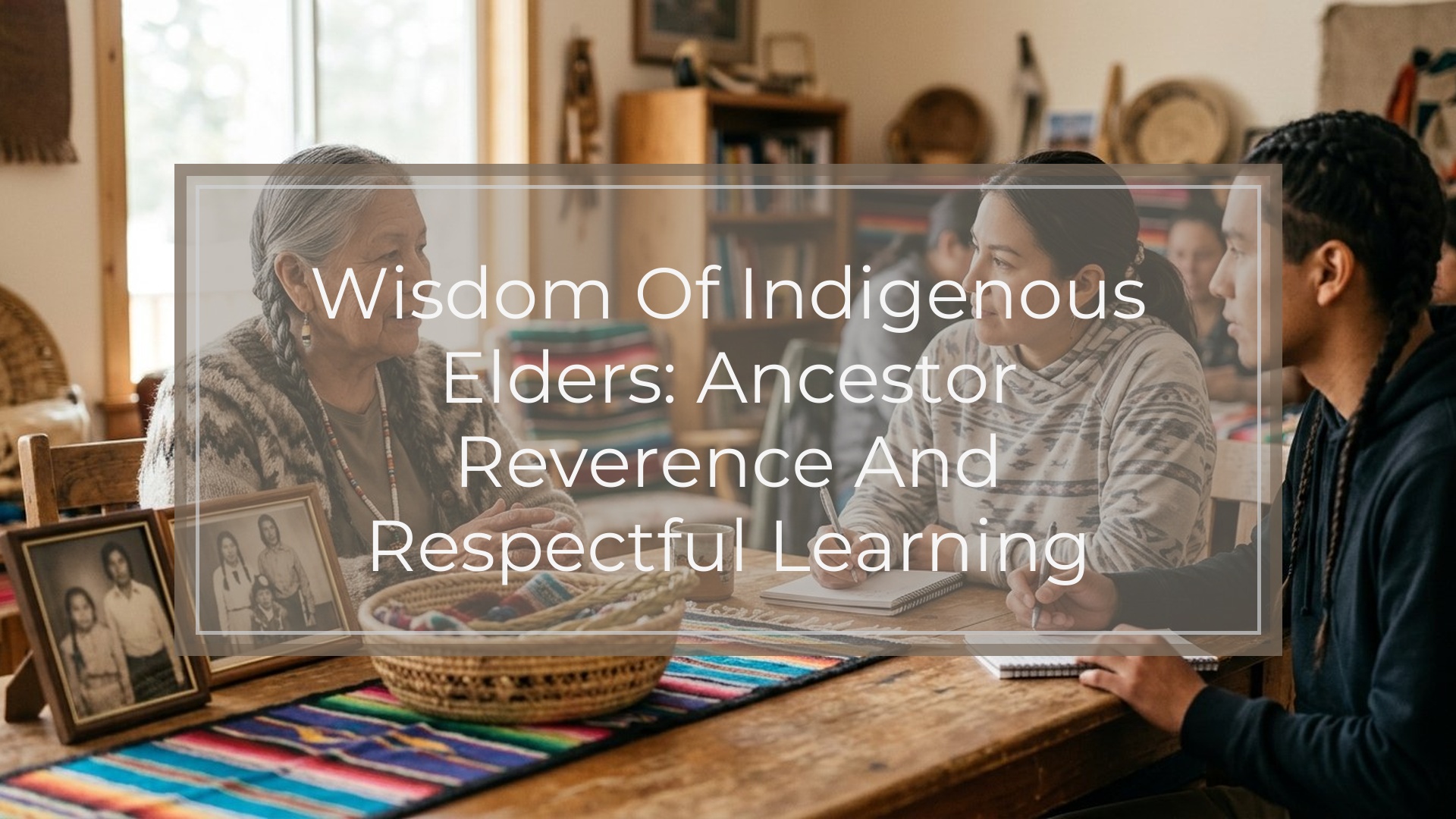
The wisdom of Indigenous elders is not simply a collection of sayings, teachings, or “ancient secrets.” It is lived knowledge carried through relationship: with ancestors, land, language, ceremony, community, and responsibility. In spiritual practice, this wisdom often points toward humility, reciprocity, listening, and remembering one’s place within a larger web of life.
For those who practice ancestor reverence, Indigenous elder wisdom can offer an important reminder: the sacred is not separate from daily conduct. How we tend our altars, speak to our dead, care for family, honor land, and make offerings should be guided by respect rather than spiritual consumption.
What the Wisdom of Indigenous Elders Means
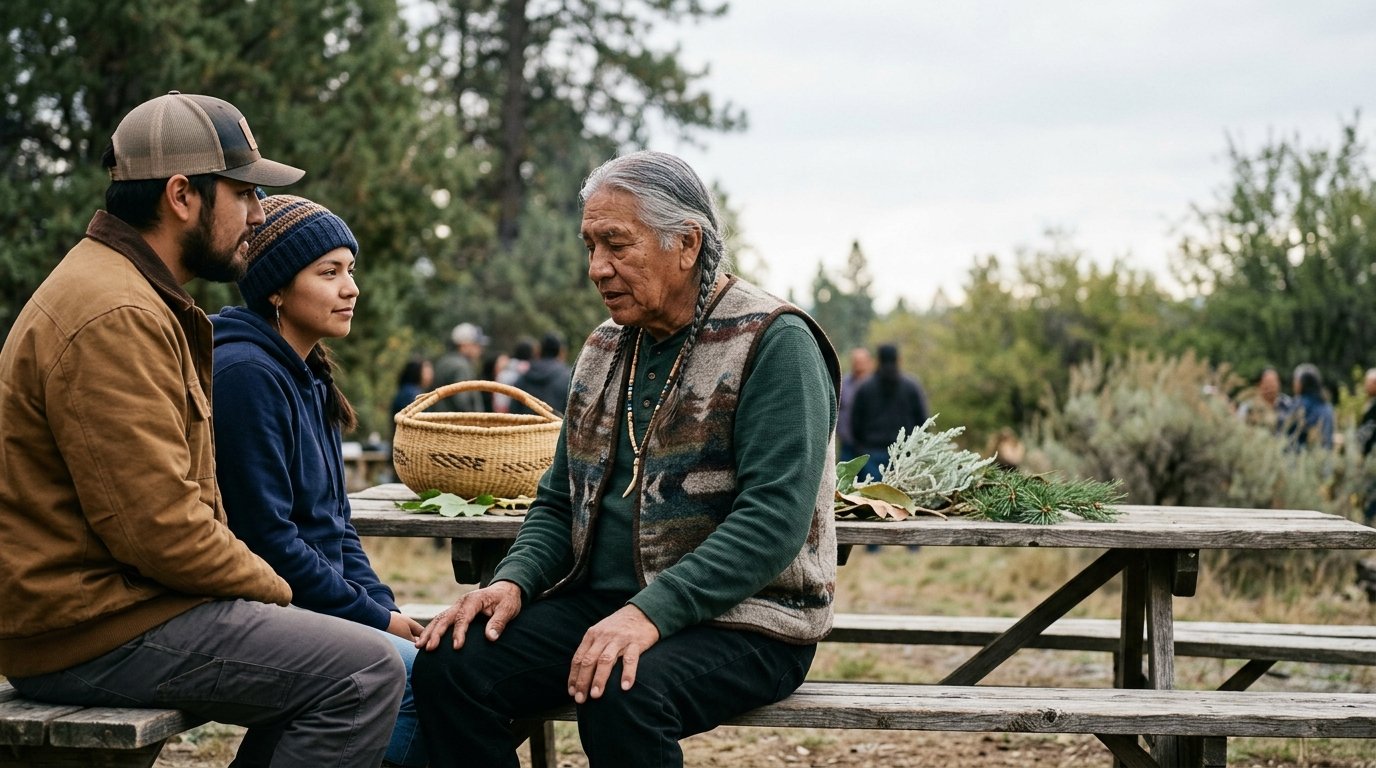
The wisdom of Indigenous elders refers to knowledge carried by respected older people within specific Indigenous nations, cultures, families, and communities. It may include teachings about origin, kinship, land, healing, prayer, ethics, foodways, language, governance, and the responsibilities of being human.
It is important not to flatten this wisdom into a single universal category. Indigenous peoples are not one culture, and elders do not all teach the same things. Their wisdom is rooted in particular histories, territories, and relationships.
Spiritually, elder wisdom often teaches through story, example, silence, correction, and lived practice. It is not abstract inspiration. It is knowledge that asks something of the listener.
A Spiritual Mental Model: Wisdom as Relationship, Not Information
A helpful way to understand elder wisdom is this: wisdom is relationship, not information.
Information can be copied, quoted, collected, and consumed. Relationship requires time, consent, reciprocity, accountability, and care. This distinction matters deeply in spiritual practice. A teaching taken out of context can become decoration. A teaching received in relationship can become responsibility.
For example, hearing an elder speak about gratitude is not an invitation to imitate their people’s ceremony. It may be an invitation to examine whether you live gratefully: Do you waste less? Do you honor your dead? Do you repair harm? Do you give before asking?
How Elder Wisdom Supports Ancestor Reverence
Ancestor reverence is the practice of honoring those who came before us. Elder wisdom supports this by reminding us that ancestors are not only names on a family tree. They are part of a living field of memory, obligation, blessing, and repair.
Many Indigenous worldviews emphasize continuity between the living, the dead, the land, and future generations. While each tradition is distinct, this broader principle can help deepen ancestor altar practice in respectful ways.
An ancestor altar is not just a place to ask for help. It can become a place to remember duties: caring for elders, healing family patterns, telling truthful stories, preserving recipes, learning names, and living in a way your descendants can thank you for.
Respectful Ways to Learn from Indigenous Elders
Learning from Indigenous elders begins with humility. If an elder, teacher, author, or community has made knowledge public, receive it with care. Pay attention to context. Who is speaking? What nation or community are they from? Is the teaching meant for everyone, or only for initiated, family, clan, or community members?
Respect also includes material support. Buy books from Indigenous authors. Attend public talks when invited. Pay for classes or events when fees are requested. Follow community protocols. Do not pressure elders to teach, explain, bless, or validate your spiritual path.
Most importantly, let learning change your behavior. If you admire teachings about land, support Indigenous land protection. If you value ancestral continuity, respect living descendants and communities.
Respectful Ways to Engage with Elder Wisdom
The difference between respectful learning and appropriation often comes down to consent, context, and accountability. Use this table as a practical guide when encountering teachings connected to Indigenous elders.
| Respectful approach | What to avoid |
|---|---|
| Learning from public books, talks, and community-approved resources | Taking restricted teachings from private, sacred, or closed contexts |
| Naming the source and cultural context when appropriate | Presenting Indigenous teachings as generic “ancient wisdom” |
| Supporting Indigenous teachers, artists, and organizations | Profiting from practices without permission or relationship |
| Applying broad values like humility, reciprocity, and care | Imitating ceremonies, songs, regalia, or sacred objects |
| Accepting “no” or silence as a boundary | Demanding access because you feel spiritually drawn |
Bringing Elder-inspired Values Into Your Own Ancestor Altar Practice
You can bring elder-inspired values into ancestor altar practice without copying Indigenous ceremonies. Focus on principles that are widely ethical rather than culturally specific: respect, reciprocity, truthfulness, gratitude, and responsibility.
At your altar, you might place photos of your own ancestors, a glass of water, a candle, flowers, heirlooms, or foods connected to your family line. Speak plainly. Thank your ancestors for life, protection, skill, endurance, or lessons learned. Ask for guidance in becoming a better descendant.
You can also include a practice of accountability. For example, before making requests, ask: “What responsibility have I neglected?” or “What family truth needs compassion and honesty?” This keeps the altar from becoming only a place of petition. It becomes a place of relationship.
Avoid adding Indigenous sacred items or ritual forms unless they are genuinely yours through ancestry, community, permission, or proper initiation.
Learning from Land, Community, and Responsibility
Elder wisdom often points beyond the individual self. It asks us to notice where we stand, who feeds us, whose land we live on, and what responsibilities come with spiritual awareness.
In ancestor reverence, this can be simple and concrete. Learn the history of the place where you live. Find out whose Indigenous homelands you occupy. Support local Indigenous-led efforts when possible. Care for the water, soil, plants, and neighborhood around you.
This does not require performing someone else’s rituals. It requires becoming more honest, more grateful, and more responsible in your own life.
Common Mistakes to Avoid
Avoid treating Indigenous elders as mystical symbols rather than real people with boundaries, communities, and political realities. Do not mix sacred objects, songs, medicines, or ceremonies into your altar because they “feel powerful.” Power without permission is not reverence.
Also avoid claiming identity, lineage, or authority that is not yours. A distant family story should be handled carefully, not used as instant permission to teach or perform traditions.
Finally, do not confuse admiration with entitlement. Respectful spiritual practice can be inspired by values without taking forms that belong to others.
A Simple Reflection Practice for Receiving Ancestral Guidance
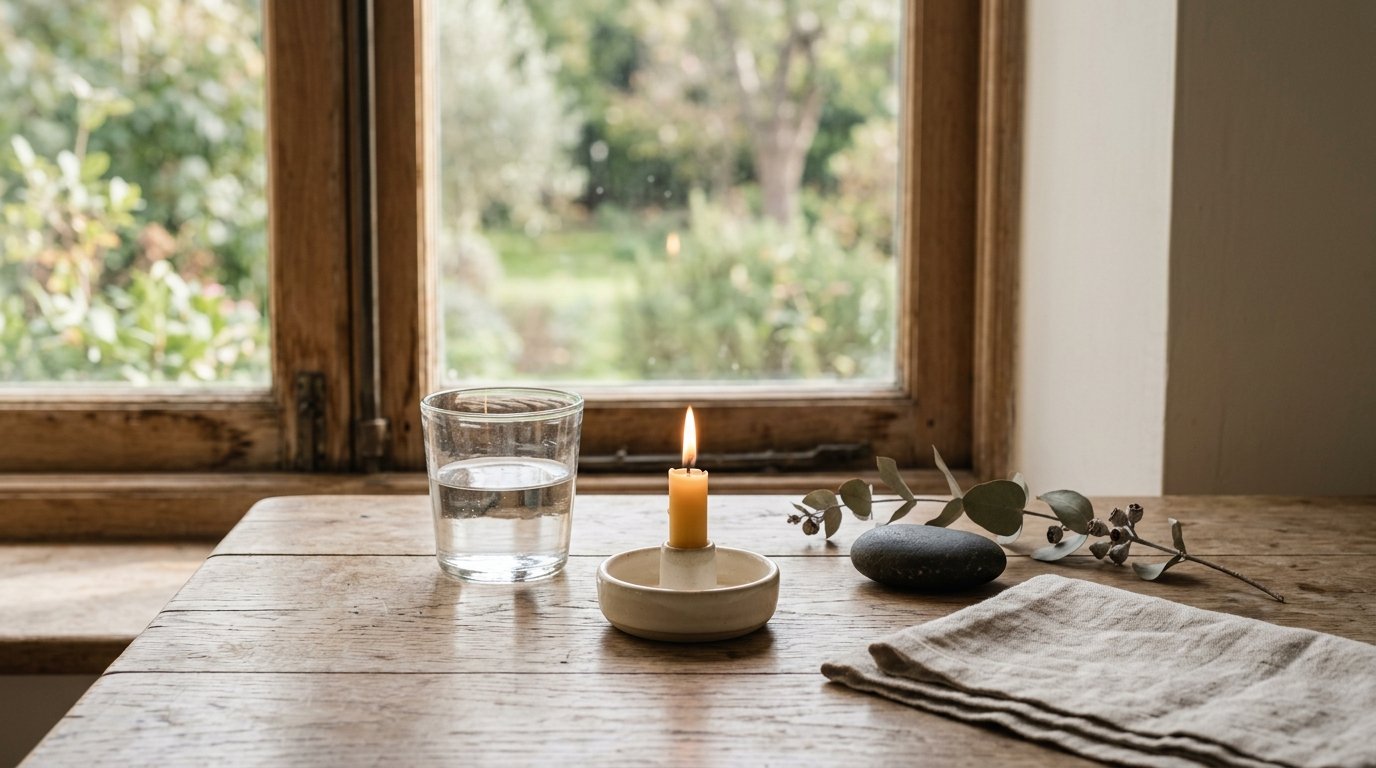
Sit quietly before your ancestor altar or a clean, intentional space. Light a candle if that is part of your practice. Place a glass of water nearby as a simple offering.
Say: “Ancestors of my blood, love, and honorable lineage, guide me toward wisdom, humility, and right action.”
Then ask one question: “What responsibility is mine today?” Sit for five minutes. Notice thoughts, memories, emotions, or names that arise. Write them down. End by giving thanks and doing one practical act: call an elder, clean a grave, cook a family recipe, or repair a relationship.
Conclusion: Honoring Wisdom with Humility
The wisdom of Indigenous elders teaches that spiritual knowledge is not something to collect; it is something to live responsibly. For ancestor reverence, this means tending your altar with humility, honoring your own lineage truthfully, and respecting the boundaries of cultures not your own.
Begin with gratitude. Continue with listening. Let your practice make you more accountable, more generous, and more rooted.
FAQ
What Is the Wisdom of Indigenous Elders?
The wisdom of Indigenous elders is lived knowledge held within specific Indigenous communities, nations, families, and traditions. It may include teachings about land, ancestors, ethics, ceremony, language, and responsibility. It should be understood in context, not treated as generic spiritual advice.
How Can I Learn from Indigenous Elders Respectfully?
Learn through public, permitted sources such as books, talks, classes, interviews, and community-approved events. Credit the source, pay when appropriate, follow stated protocols, and accept boundaries. Respectful learning also means supporting Indigenous communities materially and politically, not only spiritually.
Can I Use Indigenous Practices on My Ancestor Altar?
Do not use Indigenous ceremonies, sacred objects, songs, medicines, or ritual forms unless they are truly part of your lineage or you have clear permission and proper instruction. Instead, honor your own ancestors with simple offerings, family traditions, prayer, gratitude, and ethical action.
How Does Elder Wisdom Relate to Ancestor Reverence?
Elder wisdom often emphasizes continuity between past, present, future, land, and community. This deepens ancestor reverence by shifting the altar from a place of requests to a place of relationship. It reminds you to honor the dead through how you live.
What Is a Respectful Offering for Ancestors?
Respectful offerings are usually simple and sincere: water, flowers, candles, family foods, incense from your own tradition, music, prayer, or acts of service. The best offering is not always an object. Sometimes it is forgiveness, truth-telling, care for elders, or breaking a harmful family pattern.