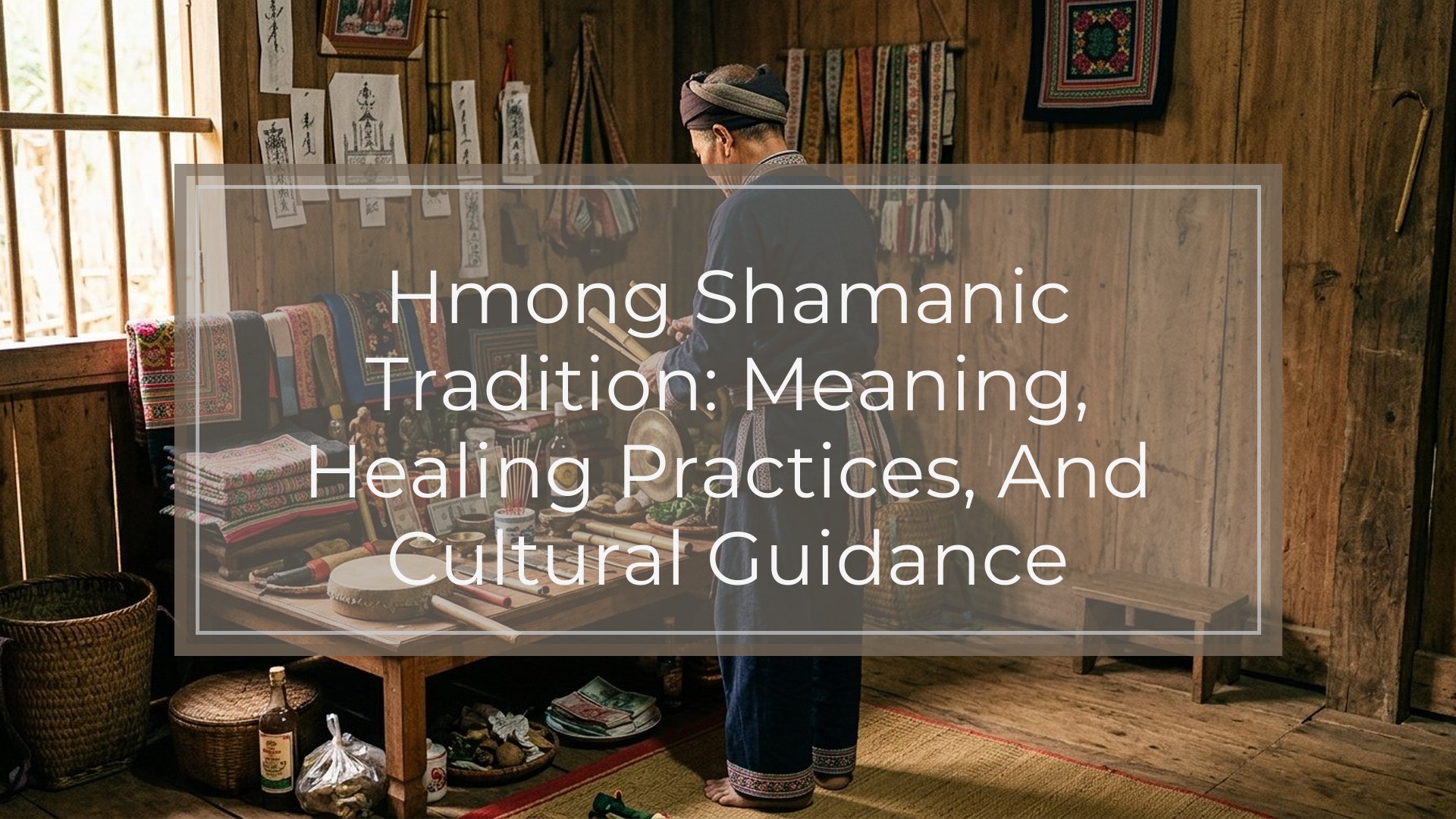
The Hmong shamanic tradition is a living spiritual and healing system rooted in relationships among the body, soul, family, ancestors, household spirits, and the unseen world. In many Hmong communities, a shaman, often called a txiv neeb in Hmong, helps restore balance when illness, misfortune, fear, grief, or spiritual disruption is understood to involve the soul or spirit world. Practices vary by clan, region, family history, and diaspora community, so it is best approached with humility rather than as one fixed system. For readers interested in ancestor altars, offerings, and home ritual life, the key is to understand that Hmong shamanism is not decorative spirituality; it is relational, inherited, and guided by trained ritual specialists.
Quick Answer
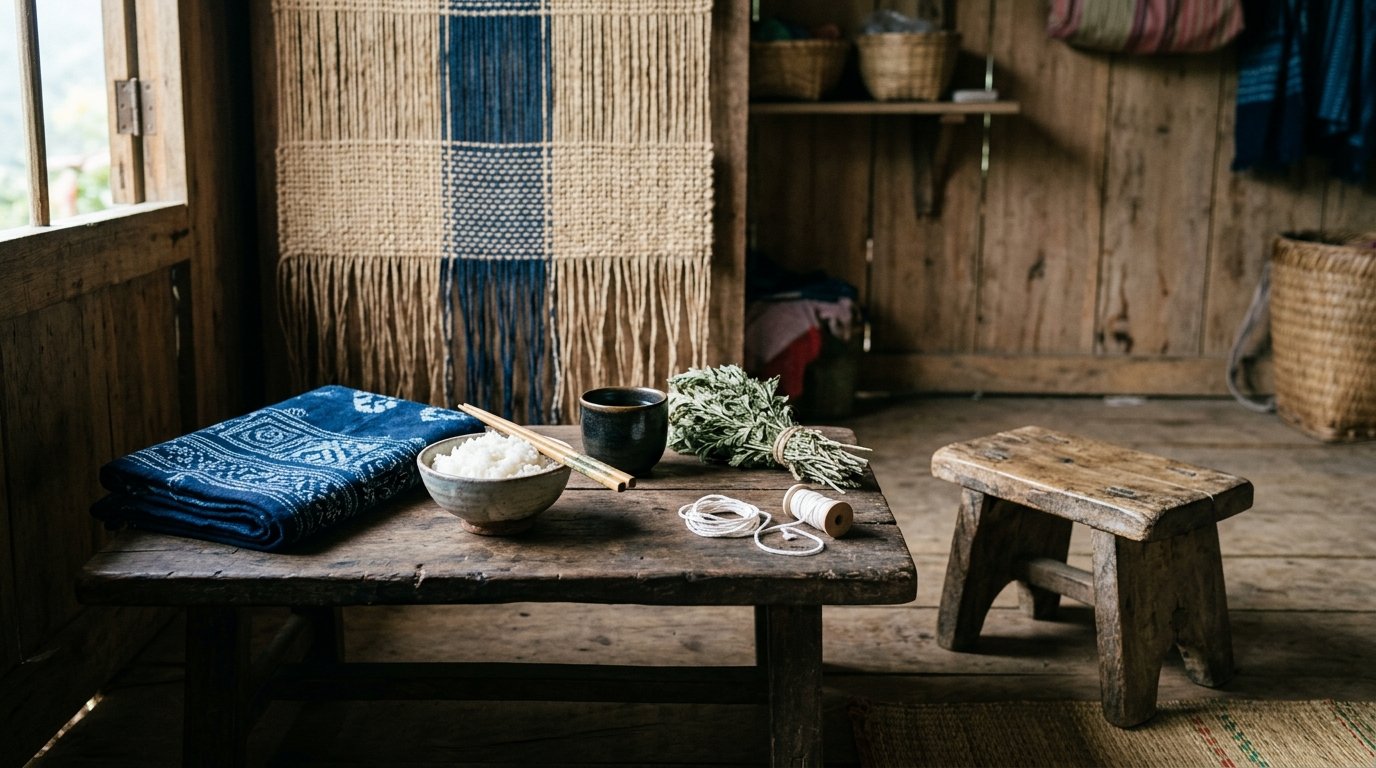
The main takeaway: the Hmong shamanic tradition centers on healing, soul restoration, and maintaining right relationship between living people, ancestors, spirits, and the household. A shaman does not simply “perform ceremonies”; they mediate between worlds, diagnose spiritual causes of distress, call back lost souls, negotiate with spirits, and help a family restore harmony.
Hmong shamanic practice is often family-based. A ritual may be requested when someone is sick, frightened, recovering from trauma, facing repeated bad luck, or when ordinary remedies do not fully explain what is happening. The ritual setting is usually the home, because the home is spiritually active: it holds family life, ancestral presence, protective forces, and boundaries between inside and outside worlds.
Common ritual elements may include chanting, drumming or gong sounds, a shamanic bench, ritual tools, offerings, spirit money, and animal sacrifice in some traditional contexts. These elements should not be treated as aesthetic altar objects. Their meaning comes from lineage, training, spiritual obligation, and the specific ritual being performed.
For non-Hmong readers, the respectful approach is to learn, listen, and avoid copying ceremonies. For Hmong descendants reconnecting with family practice, the best starting point is elders, relatives, clan knowledge, and community-recognized practitioners.
How to Think About This Topic
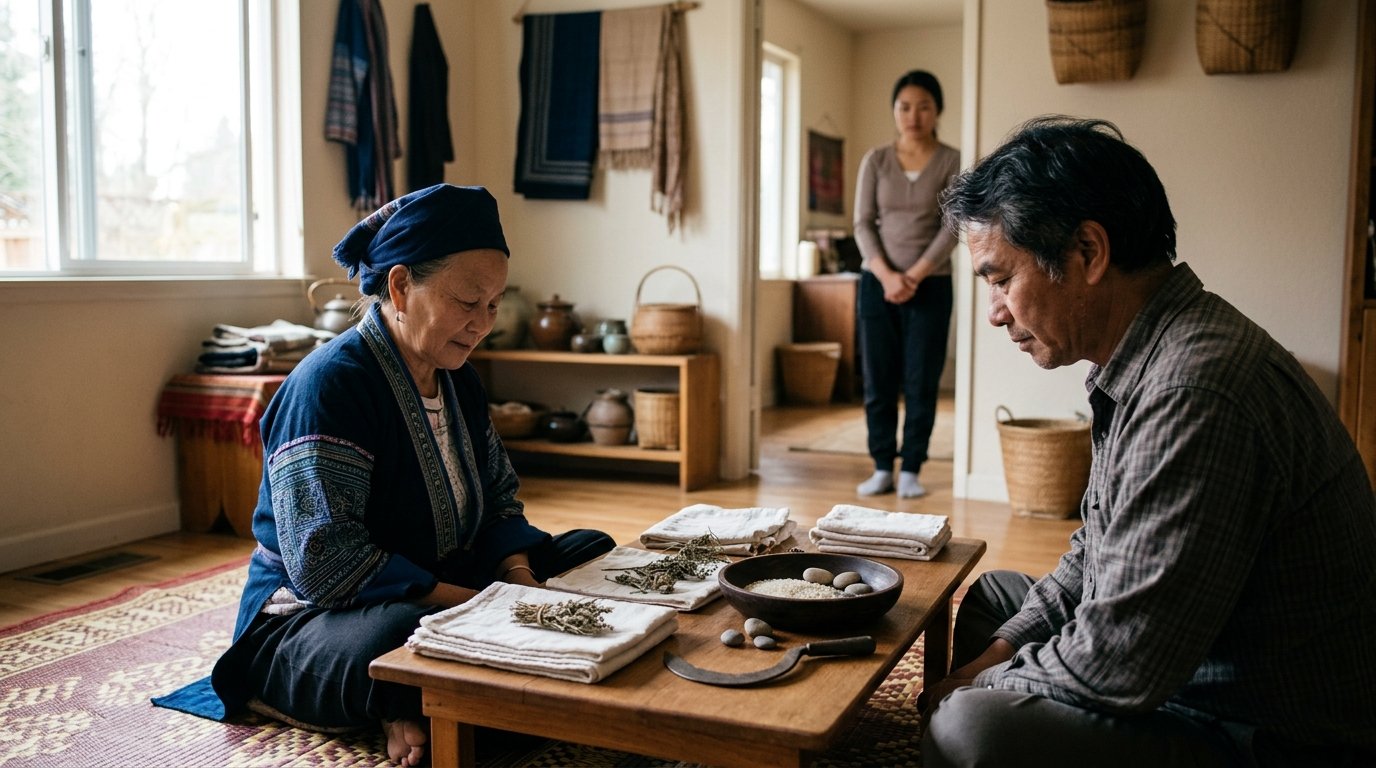
A useful mental model is to see Hmong shamanic tradition as a system of relationship and repair. It is not only a belief about spirits; it is a way of understanding what happens when a person’s life force, family bonds, ancestral obligations, or spiritual protection becomes weakened or disturbed.
In many Hmong worldviews, a person is more than a physical body. Illness may have physical, emotional, social, and spiritual dimensions at the same time. A frightening event may cause soul loss. A neglected obligation may create imbalance. A spirit encounter may affect health. A family conflict may have visible and invisible consequences. This does not mean every problem is treated only spiritually; many Hmong families use hospitals, medicine, prayer, and shamanic ritual together. The shamanic tradition adds another layer of care, especially where the concern involves the soul or the unseen world.
The shaman’s role is also specific. A txiv neeb is usually understood as someone called by spirits and trained through experience, elders, or spiritual guidance. Their work may involve entering a ritual state, traveling spiritually, communicating with helping spirits, identifying what is wrong, and performing the proper rite to restore balance. This is different from a person casually choosing to become a “shaman” as a personal style or wellness identity.
Ancestors matter deeply, but Hmong ancestor practice should not be flattened into a generic ancestor altar model. In many families, ancestors are honored through household practices, funeral rites, memorial obligations, food offerings, and seasonal or life-event rituals. The home may include spiritually significant places, but the form depends on family tradition. Some families maintain practices closely; others have adapted through migration, Christianity, Buddhism, urban life, or intermarriage.
For someone searching “Hmong shamanic tradition,” the most important point is context. Ritual objects, chants, offerings, and ceremonies only make sense inside a web of kinship, clan responsibility, spiritual authority, and lived family memory. To understand the tradition respectfully, ask: What relationship is being repaired? Who has authority to perform the rite? What family or clan context gives the act meaning? What is being protected, healed, or returned?
Practical Guidance
If you are learning about Hmong shamanic tradition for family, research, altar practice, or respectful spiritual understanding, begin with boundaries. Learn what the tradition means before trying to reproduce what it looks like. A gong, bench, sword, or offering plate is not automatically “Hmong shamanic” outside its ritual setting. The same object may be sacred, ordinary, inherited, or inappropriate depending on who uses it and why.
A practical way to understand common elements is to view them by function rather than appearance:
| Element | General role in context | Respectful note |
|---|---|---|
| Shaman (txiv neeb) | Mediates, diagnoses, and performs healing rites | Authority comes through calling, training, and community recognition |
| Ritual sound | Helps structure the shamanic journey or ceremony | Do not treat chants or rhythms as casual performance pieces |
| Offerings | Support communication, repayment, healing, or respect | Meaning depends on the specific rite and family tradition |
| Household space | Holds family, ancestors, protection, and boundaries | Home rituals vary widely; avoid assuming one universal setup |
| Ancestors | Linked to lineage, memory, obligation, and protection | Honor is relational, not just symbolic decoration |
For Hmong readers reconnecting with tradition, good questions are: Which side of the family carried these practices? Are there elders who remember funeral, healing, or household rites? Is there a clan leader, ritual expert, or shaman the family trusts? What practices were changed after migration or conversion? These questions are more useful than searching for a universal altar checklist.
For non-Hmong readers, respectful learning means not imitating ceremonies, not purchasing sacred-looking objects to create a “Hmong altar,” and not presenting yourself as trained in Hmong ritual. You can study history, listen to Hmong teachers, support cultural preservation, and acknowledge the tradition’s depth without claiming it.
If you are caring for an ancestor space at home and are inspired by Hmong practice, keep your own practice honest. Honor your own ancestors in ways connected to your lineage. If you have Hmong ancestry, seek family guidance. If you do not, appreciate Hmong shamanism as a distinct tradition rather than borrowing its ritual forms. Respect also includes recognizing diversity: Hmong communities are not all the same, and not every Hmong household practices shamanism today.
The safest practical rule is simple: learn from people, not just objects. Ritual knowledge lives in families, language, songs, obligations, and relationships. Objects may support ritual, but they do not replace the living tradition.
FAQ
What Should a Beginner Know First About Hmong Shamanic Tradition?
Begin with the idea of relationship and healing. Hmong shamanic tradition often addresses soul loss, spiritual imbalance, family well-being, and relationships with ancestors or spirits. It is not a generic “shamanism” template, and practices vary by family, clan, region, and community.
What Matters Most When Evaluating Hmong Shamanic Tradition?
Context matters most. Ask who is performing the ritual, what family or clan tradition supports it, what problem the ceremony addresses, and how the ritual objects are understood. Without cultural and relational context, sacred practices can be easily misunderstood or reduced to decoration.
What Mistakes Should Readers Avoid with Hmong Shamanic Tradition?
Avoid copying rituals, inventing altar setups, using sacred objects as aesthetic props, or assuming all Hmong families practice the same way. Also avoid treating shamanic healing as a replacement for medical care; many families use spiritual and medical support together.
What Is the Next Logical Step After Learning About Hmong Shamanic Tradition?
If you have Hmong ancestry, speak with elders, relatives, clan leaders, or trusted ritual practitioners. If you are an outside learner, read Hmong-authored sources, attend public cultural education when invited, and approach the tradition with respect rather than imitation.