
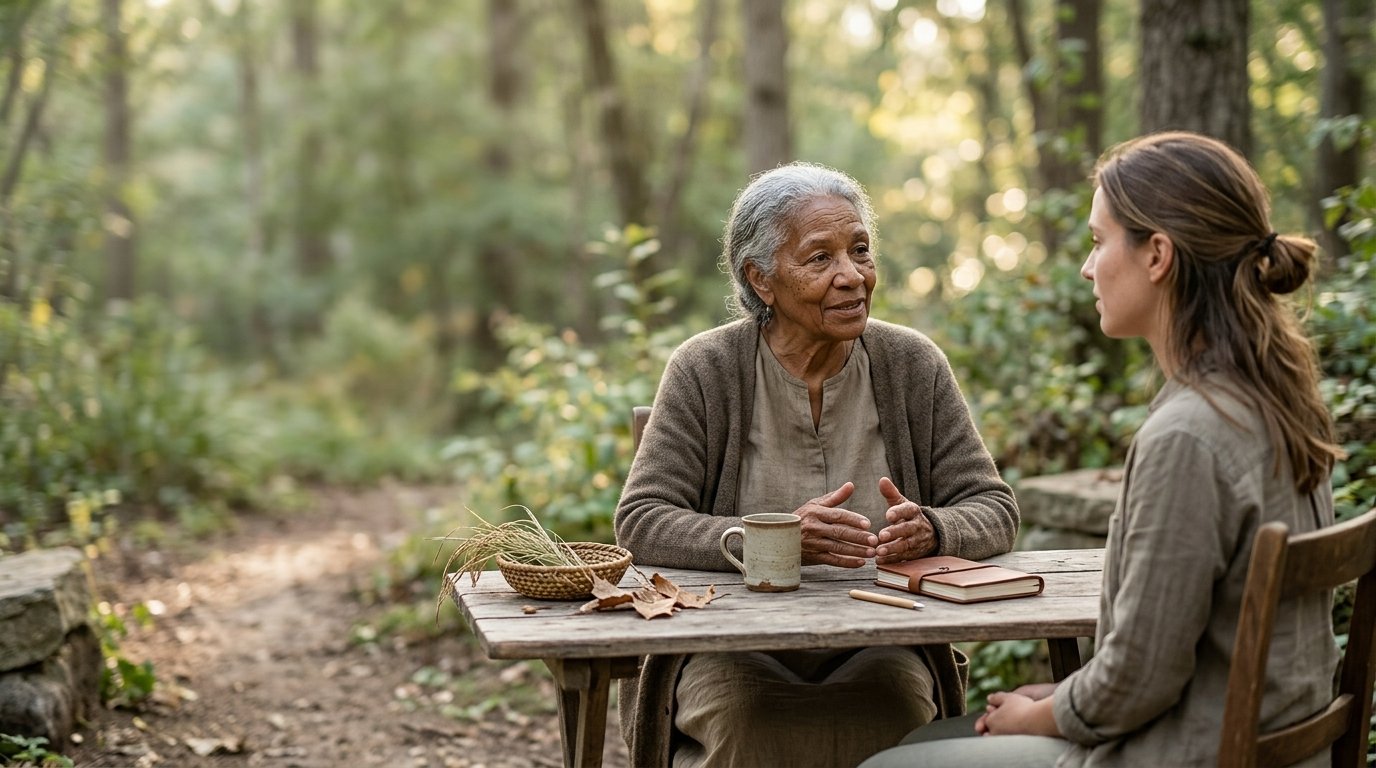
Valuing and understanding shamanic elders’ perennial wisdom means recognizing elders as more than teachers of techniques. In many shamanic and animist traditions, elders are living bridges between ancestors, spirits, land, memory, and community responsibility. Their wisdom is “perennial” because it carries enduring truths about relationship, healing, reciprocity, humility, death, and belonging. This wisdom is not usually learned through books alone. It is transmitted through story, ritual, observation, apprenticeship, service, and long practice. To approach it respectfully, learners must honor cultural boundaries, listen before asking, give back where possible, and avoid treating sacred knowledge as a personal spiritual shortcut.
Why Shamanic Elders Matter
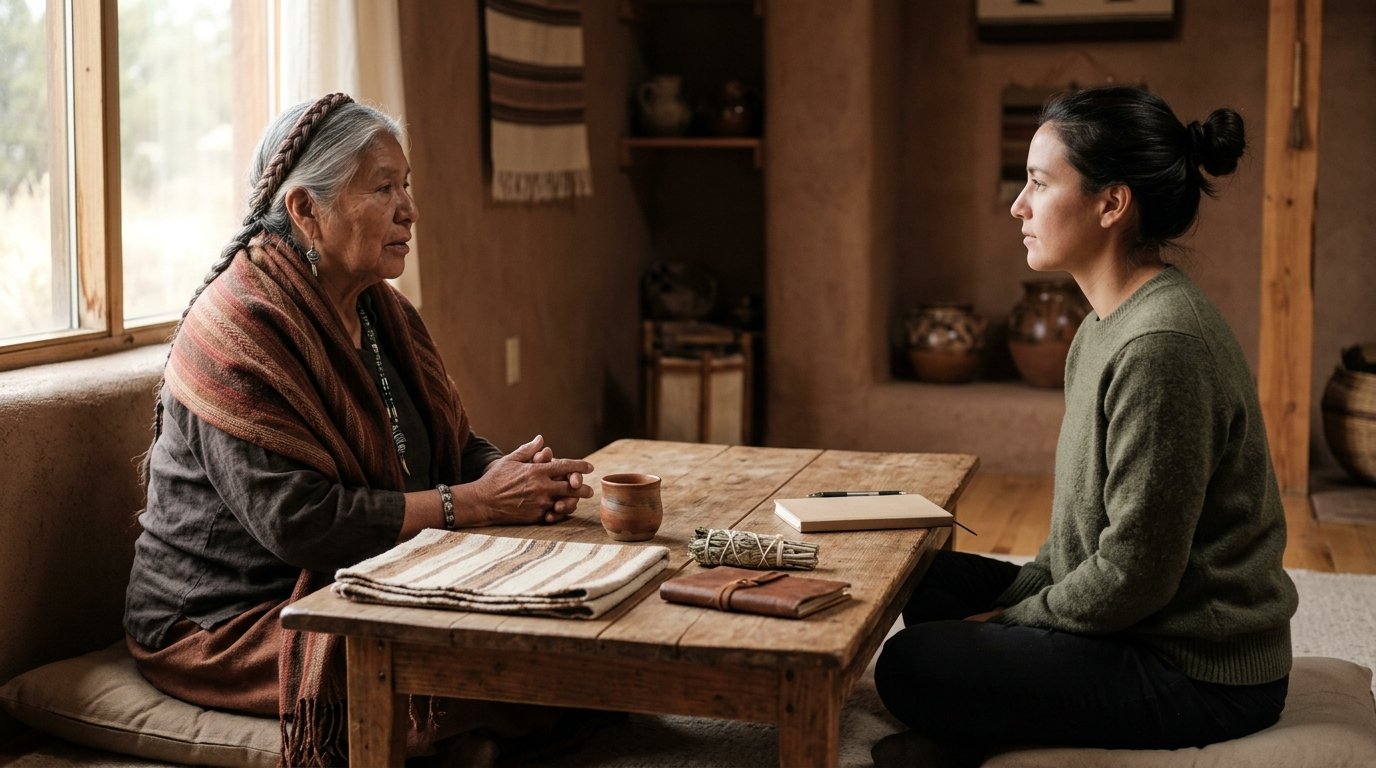
Shamanic elders matter because they hold continuity. They remember what cannot be reduced to instructions: the tone of a prayer, the timing of an offering, the proper way to approach a place, the signs that a ritual is complete, and the responsibilities that follow spiritual contact.
A helpful mental model is this: elders are not simply sources of information; they are guardians of relationship. Their role often connects the living community with ancestors, spirits, land, plants, animals, and the unseen forces recognized by their tradition.
In many cultures, an elder’s authority comes not from age alone, but from tested experience, service, humility, discipline, and accountability to community.
What Perennial Wisdom Means in Shamanic Traditions
Perennial wisdom does not mean that all traditions are the same or that sacred practices can be freely mixed. In this context, it means that certain spiritual insights endure across generations because they remain useful, true, and life-giving.
Shamanic elders often preserve wisdom about balance, reciprocity, grief, healing, dreams, death, initiation, and the sacredness of the natural world. These teachings may appear in different languages, rituals, songs, and cosmologies, but they point toward long-lasting human concerns.
Perennial wisdom is therefore rooted and specific, not generic. It lives inside particular lineages, lands, stories, and obligations.
What Shamanic Elders Preserve
Shamanic elders preserve layered forms of knowledge. Some of it is visible, such as songs, altar arrangements, ritual tools, seasonal ceremonies, healing methods, or protocols for offerings. Some of it is subtle, such as discernment, restraint, spiritual ethics, and knowing when not to act.
They may also preserve communal memory: stories of migrations, losses, sacred places, ancestral agreements, taboos, and ceremonies that help people remain connected to their origins. This knowledge is often practical and spiritual at once.
| Form of elder wisdom | What it may include | Respectful approach |
|---|---|---|
| Ritual knowledge | Prayers, offerings, songs, ceremony order | Ask what is appropriate to witness or learn |
| Ancestral memory | Family, clan, land, and lineage stories | Listen without demanding private details |
| Healing discernment | Timing, diagnosis, spiritual boundaries | Do not imitate without training or permission |
| Ethical teaching | Reciprocity, humility, restraint | Practice service, not extraction |
| Land-based wisdom | Seasons, plants, animals, sacred places | Honor local protocols and ecological care |
How Elder Wisdom Is Transmitted
Elder wisdom is usually transmitted gradually. It may come through formal apprenticeship, family inheritance, community participation, ceremonial service, or years of watching and listening. In many traditions, the student first learns patience, respect, and practical help before receiving deeper teachings.
This matters because shamanic wisdom is embodied. A person may know the words of a chant but not its weight, timing, lineage, or spiritual consequence. Elders teach through presence as much as explanation.
Transmission can also happen through correction. An elder may redirect a learner’s posture, motive, offering, or assumptions. Such correction is not rejection; it is often part of shaping spiritual maturity.
Respectful Ways to Learn from Shamanic Elders
Respectful learning begins with humility. If you meet an elder, do not begin by asking for powerful practices, secret ceremonies, or personal initiation. Begin by learning who they are, what community they serve, and what boundaries surround their tradition.
Offer practical respect: arrive on time, listen carefully, follow instructions, contribute fairly, and do not record, photograph, quote, or share teachings without permission. If payment, gifts, food, or service are customary, honor that protocol.
It is also wise to examine your motive. Are you seeking healing, belonging, identity, power, or novelty? Honest self-reflection protects both learner and elder. True learning is relational. It asks, “How can I be in right relationship?” not only, “What can I receive?”
Shamanic Elders, Ancestor Reverence, and Home Altars
Ancestor altar practice can help modern practitioners understand elder wisdom in a grounded way. An altar teaches continuity, patience, and reciprocity—qualities also central to learning from elders. When you tend a home altar, you are not just decorating a sacred space. You are practicing relationship with those who came before you.
You might place photographs of beloved dead, a candle, water, flowers, inherited objects, or simple food offerings. These acts can cultivate listening and gratitude. They also remind you that wisdom is not self-created. It comes through lineages of birth, adoption, culture, land, and spiritual care.
An altar can become a quiet place to ask: “What have my elders preserved for me, and what must I preserve for others?”
Common Misunderstandings About Shamanic Elders
One misunderstanding is that a shamanic elder is simply anyone who is older and spiritually interested. In traditional settings, eldership usually involves community recognition, long service, and tested responsibility.
Another misunderstanding is that elder wisdom is automatically available to outsiders. Some teachings are public, some are earned, and some are private to a family, lineage, or people.
A third mistake is romanticizing elders as flawless. Elders are human. Respect does not require abandoning discernment. Healthy spiritual learning includes boundaries, consent, accountability, and attention to whether a teacher’s actions match their teachings.
Practicing Elder Wisdom Without Appropriation
To practice elder wisdom without appropriation, focus on values before techniques. Many people are drawn to drums, songs, plant medicines, trance methods, or ceremonial tools, but the deeper foundation is respect, reciprocity, restraint, and accountability.
Start with your own ancestors and local relationships. Learn your family stories. Care for graves if possible. Tend an ancestor altar. Support Indigenous, traditional, or land-based communities without demanding access to their sacred practices.
If you are invited to learn from a tradition outside your own, follow its protocols carefully. Name sources honestly. Do not repackage teachings as your invention. Do not sell what you were not authorized to carry. Let gratitude become responsibility.
A Simple Reflection Practice for Honoring Elder Wisdom

Sit near your ancestor altar, or create a simple space with a candle and a bowl of water. Breathe slowly. Speak the names of elders you know: family elders, spiritual mentors, cultural teachers, or beloved dead.
Ask quietly: “What wisdom have I received, and how can I carry it with care?” Sit in silence for several minutes. Close by offering thanks. If a practical action arises—calling an elder, preserving a story, making an offering, or repairing a relationship—write it down and follow through.
FAQ
What Is a Shamanic Elder?
A shamanic elder is a respected spiritual holder within a shamanic, animist, or traditional healing context. Their role may include ritual guidance, healing, teaching, storytelling, community counsel, and preserving relationships with ancestors, spirits, land, and lineage.
Why Is Elder Wisdom Considered Perennial?
It is considered perennial because it carries enduring insight across generations. Teachings about reciprocity, humility, death, healing, balance, and relationship remain relevant even as societies change. However, perennial does not mean generic; the wisdom remains rooted in specific traditions.
Can I Learn Shamanic Practices Without an Elder?
You can learn about shamanic traditions through books, study, and respectful observation, but deeper practice often requires guidance, permission, and accountability. Without an elder, it is safest to focus on ancestor reverence, ethical reflection, dreamwork, and non-appropriative personal ritual.
How Do I Respectfully Approach a Spiritual Elder?
Approach slowly and humbly. Learn the proper protocol, ask what is appropriate, and avoid requesting secret or advanced teachings. Offer fair compensation, service, or gifts when customary. Listen more than you speak, and never record or share teachings without permission.
How Does Ancestor Altar Practice Relate to Elder Wisdom?
Ancestor altar practice trains the same qualities that elder wisdom asks of us: remembrance, patience, gratitude, humility, and reciprocity. By tending an altar, you honor those who came before and create a home-based practice of listening to inherited wisdom with care.