
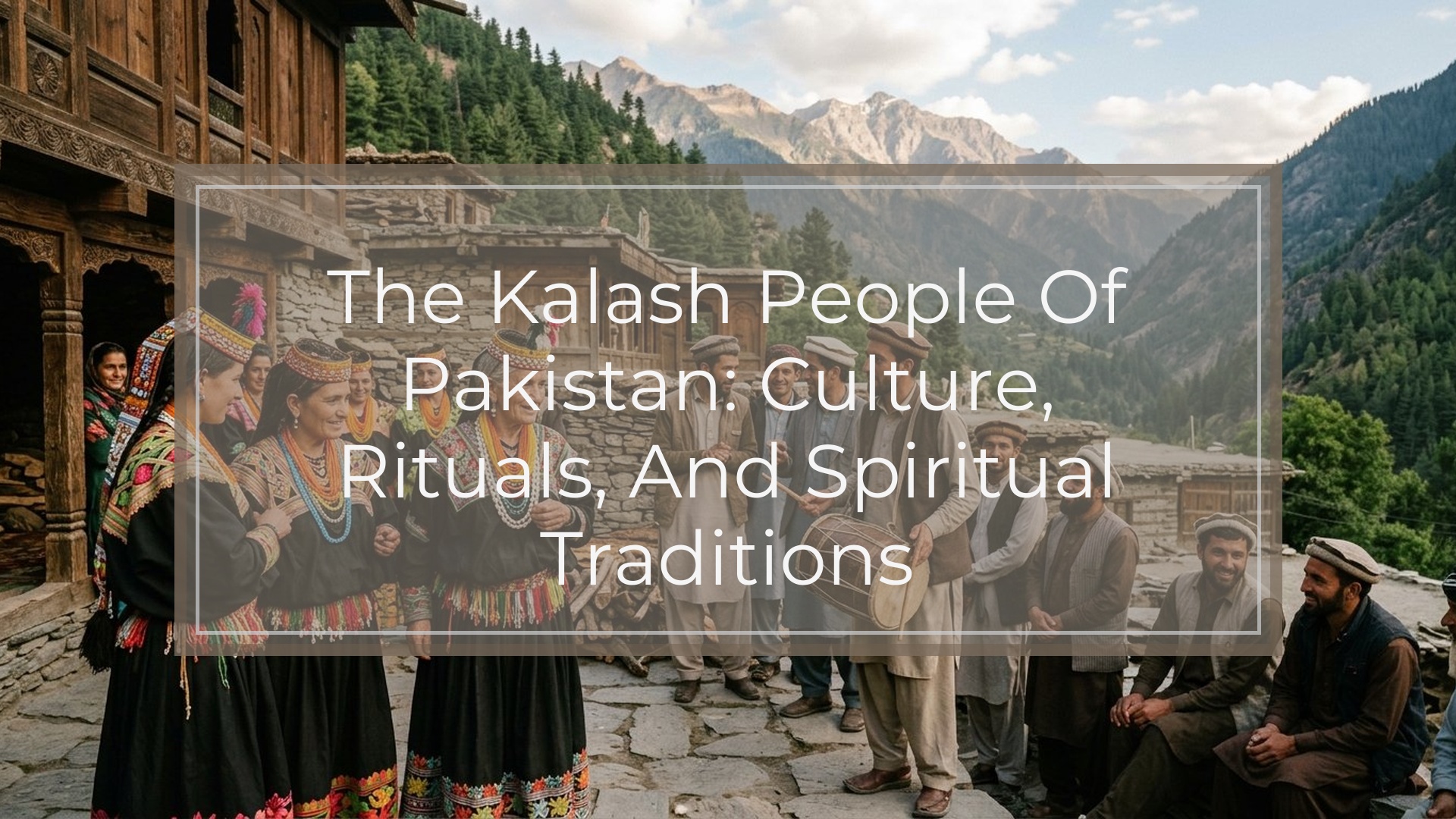
The Kalash people of Pakistan are an Indigenous ethnoreligious community living mainly in three valleys of Chitral, in the Hindu Kush mountains of Khyber Pakhtunkhwa. They are known for a distinct spiritual tradition shaped by seasonal festivals, sacred landscapes, ritual purity, offerings, music, dance, and reverence for ancestors. Their culture is not simply “ancient” or “colorful”; it is a living community practice carried by families, elders, ritual specialists, and village life. For readers interested in ancestor veneration, sacred objects, and home ritual, the Kalash offer an important example of how memory, land, livestock, harvest cycles, and community obligation can form a complete spiritual world.
Who Are the Kalash People?
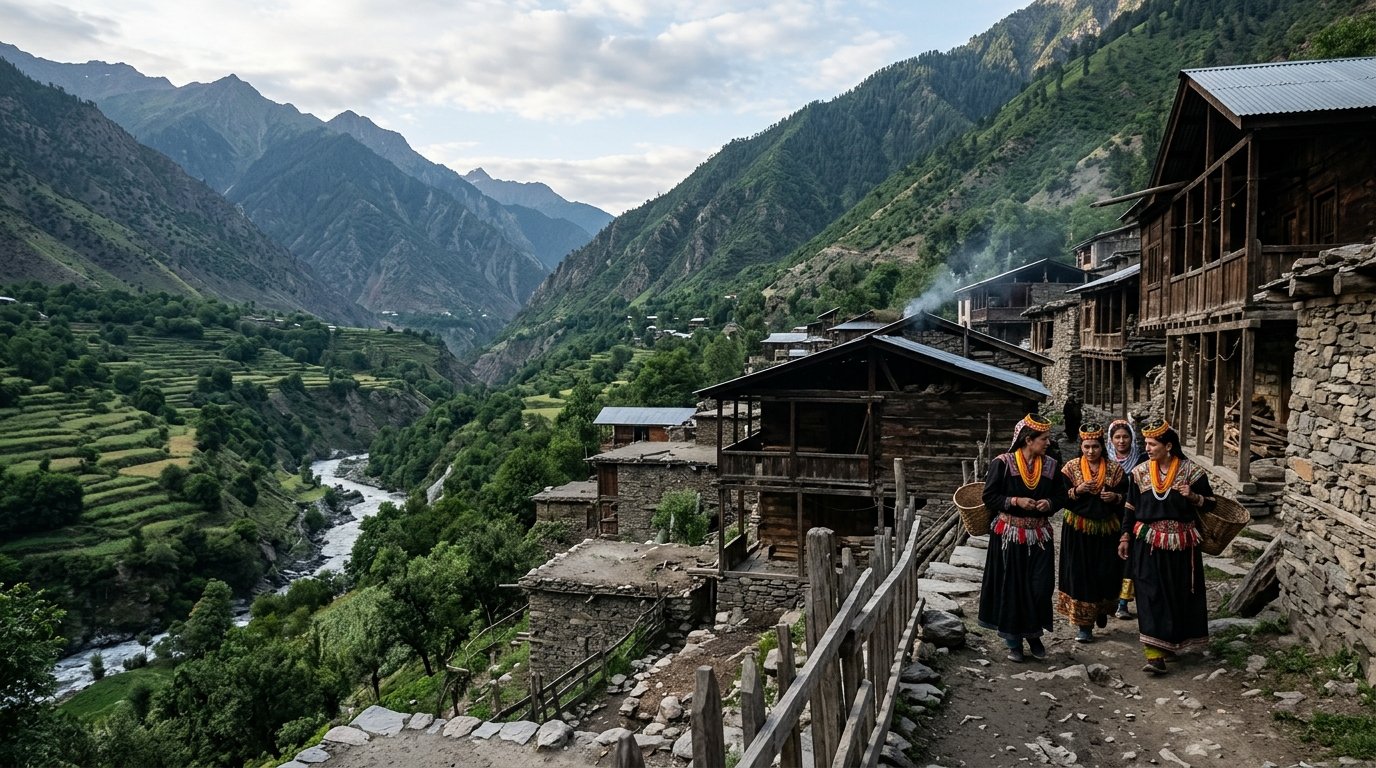
The Kalash are a small Indigenous community of northern Pakistan, primarily associated with the valleys of Bumburet, Rumbur, and Birir in Chitral. They speak Kalasha, a Dardic language, and maintain religious customs that differ from the Muslim-majority surroundings of Pakistan.
Their identity is both ethnic and spiritual. To speak of the Kalash is not only to describe a people, but also a shared way of marking seasons, honoring divine beings, remembering ancestors, and maintaining social balance. Today, many Kalash also navigate education, tourism, migration, and interfaith relationships while preserving their inherited traditions.
Why the Kalash Matter in the Study of Ritual and Ancestral Traditions
The Kalash matter because they show how ritual can organize daily life, not merely special occasions. Their festivals connect households to agriculture, herds, ancestors, and the wider valley. Offerings, songs, dances, and sacred spaces help renew relationships between the living, the dead, the divine, and the land.
For students of ancestor veneration, the Kalash are especially significant because their practices are communal rather than purely private. Memory is carried through households, festival participation, oral tradition, and inherited obligations. Their example reminds modern practitioners that ancestral practice is often about continuity, ethics, and belonging as much as personal devotion.
Where the Kalash Live: Valleys, Sacred Landscape, and Community Life
Kalash life is rooted in mountain valleys where geography shapes spiritual meaning. Terraced fields, walnut trees, pastures, streams, and seasonal routes all influence ritual timing and community rhythm. The landscape is not a passive background; it helps define where offerings are made, where festivals gather, and how people understand purity and blessing.
Village life also matters. Kalash traditions are sustained through families, neighbors, elders, musicians, ritual specialists, and shared spaces. Because many rites depend on collective participation, the valleys themselves function like living ceremonial settings, holding memory through place.
Core Traits of Kalash Spiritual Tradition
Kalash spiritual tradition includes devotion to multiple divine beings, reverence for ancestors, seasonal rites, and strong ideas about purity and impurity. These concepts affect where people go, who participates in certain rites, and how ceremonial life is ordered.
Ritual action often involves offerings, food, drink, song, dance, and the presence of the community. Goats and dairy products have special importance in many contexts, reflecting the role of herding and pastoral life. Fire, wooden structures, carved forms, and designated sacred spaces may also appear in ritual settings.
A key trait is integration: religion is not separated from farming, kinship, gendered spaces, birth, death, and seasonal change. Kalash practice is therefore best understood as a living system of relationships rather than a collection of isolated symbols.
Major Kalash Festivals and What They Honor
Kalash festivals are among the clearest examples of their ritual world. Chilam Joshi, often held in spring, celebrates renewal, flowers, fertility, and the return of seasonal abundance. It includes music, dancing, social gathering, and prayers for prosperity.
Uchal, associated with summer, gives thanks for agricultural and dairy abundance. It reflects the importance of food cycles, herds, and the relationship between human labor and natural blessing.
Chaumos, the winter festival, is especially important. It marks a sacred turning point in the year and involves purification, offerings, songs, and communal rites. It is often described as the most spiritually intense Kalash festival, connecting the community to divine presence, ancestors, and the renewal of cosmic order.
These festivals are not performances for outsiders. They are religious and cultural obligations that help sustain Kalash identity.
Ritual Objects, Offerings, and Sacred Materials
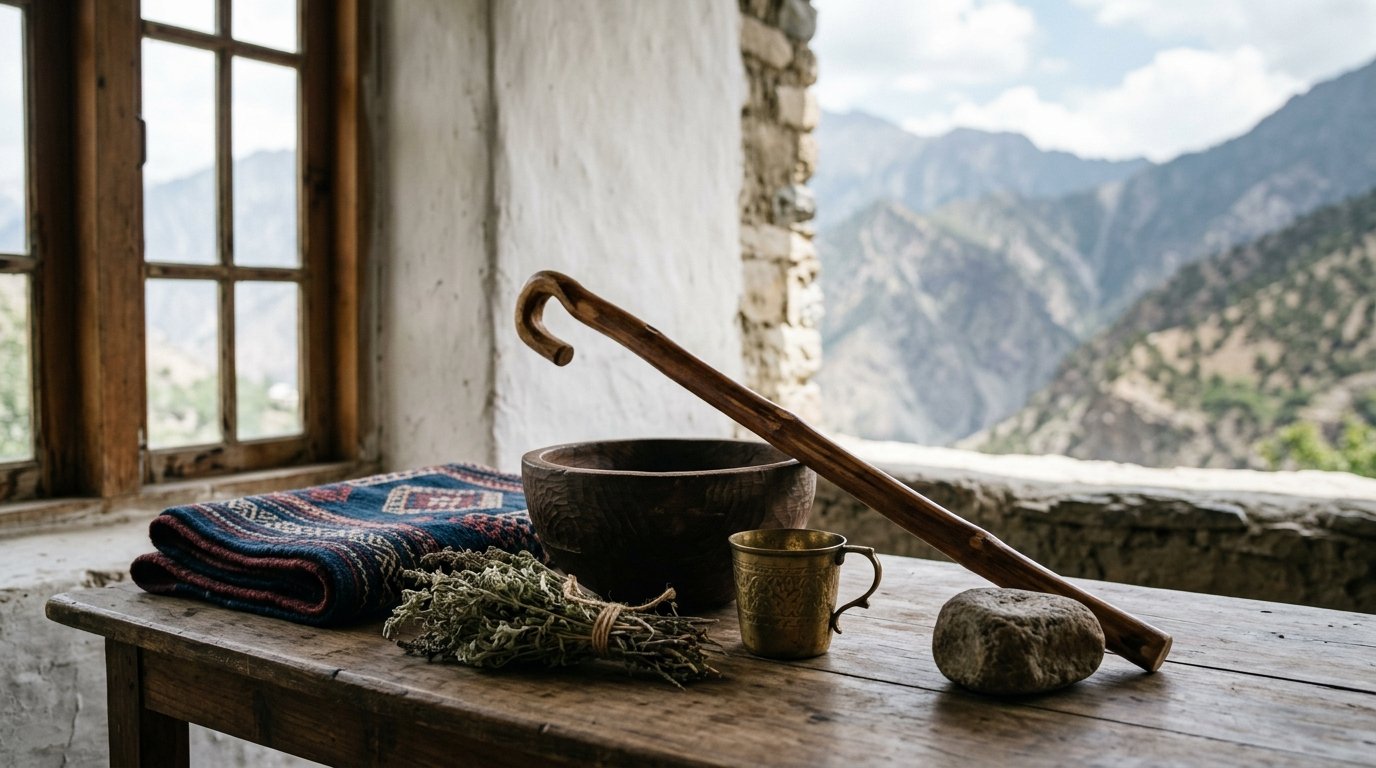
Kalash ritual life includes tangible objects and materials that carry spiritual meaning. Offerings may include food, wine, milk products, grains, and sacrificial animals, depending on the rite. Goats are especially important in many ceremonies, both economically and ritually.
Wood also has a visible role in Kalash sacred culture. Carved posts, ancestral figures, and architectural forms can mark memory, status, or sacred presence. Clothing, headdresses, beads, and ceremonial dress may also become meaningful during festivals, especially when worn in proper communal context.
For readers focused on altars and offerings, the key lesson is that materials gain power through relationship: to land, ancestors, season, obligation, and community permission.
Ancestor Reverence, Memory, and Household Continuity
Ancestor reverence among the Kalash is tied to family continuity and collective memory. The dead are not simply absent; they remain part of the moral and spiritual world of the living. Household identity, ritual responsibility, and festival participation all help maintain this continuity.
This does not mean outsiders should copy Kalash ancestral rites. Instead, the Kalash can teach a broader principle: ancestors are honored through remembrance, proper conduct, seasonal awareness, and respect for inherited ways. A home ancestor altar in another tradition can reflect similar values without borrowing sacred forms that belong to Kalash communities.
Modern Challenges and Cultural Preservation
The Kalash face pressures from tourism, economic change, climate stress, religious conversion, schooling, media attention, and outside romanticization. Their small population makes cultural preservation especially urgent.
Respectful learning matters because misrepresentation can turn living religion into exotic spectacle. Visitors and researchers should avoid treating Kalash festivals as costumes or entertainment detached from sacred meaning. Preservation is not only about saving old customs; it is about supporting Kalash people as they define their own future, protect their language, and transmit tradition to younger generations.
Related Traditions and Entities to Understand Alongside the Kalash
To understand the Kalash more clearly, readers may also study the wider Hindu Kush region, Chitral’s history, Dardic languages, mountain pastoralism, and Indigenous seasonal religions. Nuristani traditions across the border in Afghanistan are sometimes discussed in comparison, though they are not the same.
It is also useful to compare ancestral practices in other cultures with care. Similar themes—offerings, seasonal rites, sacred geography—do not mean traditions are interchangeable. The Kalash should remain understood on their own terms.
Respectful Ways to Learn from Kalash Traditions Without Appropriating Them
Learn from the Kalash by studying reliable sources, listening to Kalash voices where available, and recognizing their traditions as living religion. Avoid copying festival rites, sacred dress, songs, or offerings as personal “aesthetic” spirituality.
For your own practice, take inspiration at the level of principle: honor your ancestors, mark seasonal change, make offerings from your own lineage, and treat land as sacred. Respect means allowing Kalash traditions to remain Kalash, while deepening your own roots with humility.
FAQ
What Should a Beginner Know First About the Kalash People of Pakistan?
Begin with the fact that the Kalash are a living Indigenous ethnoreligious community, not a relic of the past. They live mainly in Chitral’s mountain valleys and maintain distinctive traditions involving festivals, offerings, ancestors, sacred spaces, music, dance, and seasonal renewal.
What Matters Most When Evaluating the Kalash People of Pakistan?
The most important point is context. Kalash practices belong to specific families, valleys, histories, and religious obligations. Their rituals should be understood through community life, not separated into isolated symbols or treated as decorative material for outsiders.
What Mistakes Should Readers Avoid with the Kalash People of Pakistan?
Avoid romanticizing, exoticizing, or copying Kalash practices without permission. Do not treat festivals as tourist spectacles or assume all mountain traditions are the same. It is also a mistake to describe the Kalash only as “ancient,” ignoring their modern lives and choices.
What Is the Next Logical Step After Learning About the Kalash People of Pakistan?
The next step is to read respectful ethnographic, historical, and Kalash-led sources, then reflect on your own ancestral practices. Instead of borrowing Kalash rites, strengthen your own offerings, seasonal observances, and household remembrance in ways rooted in your lineage and place.