
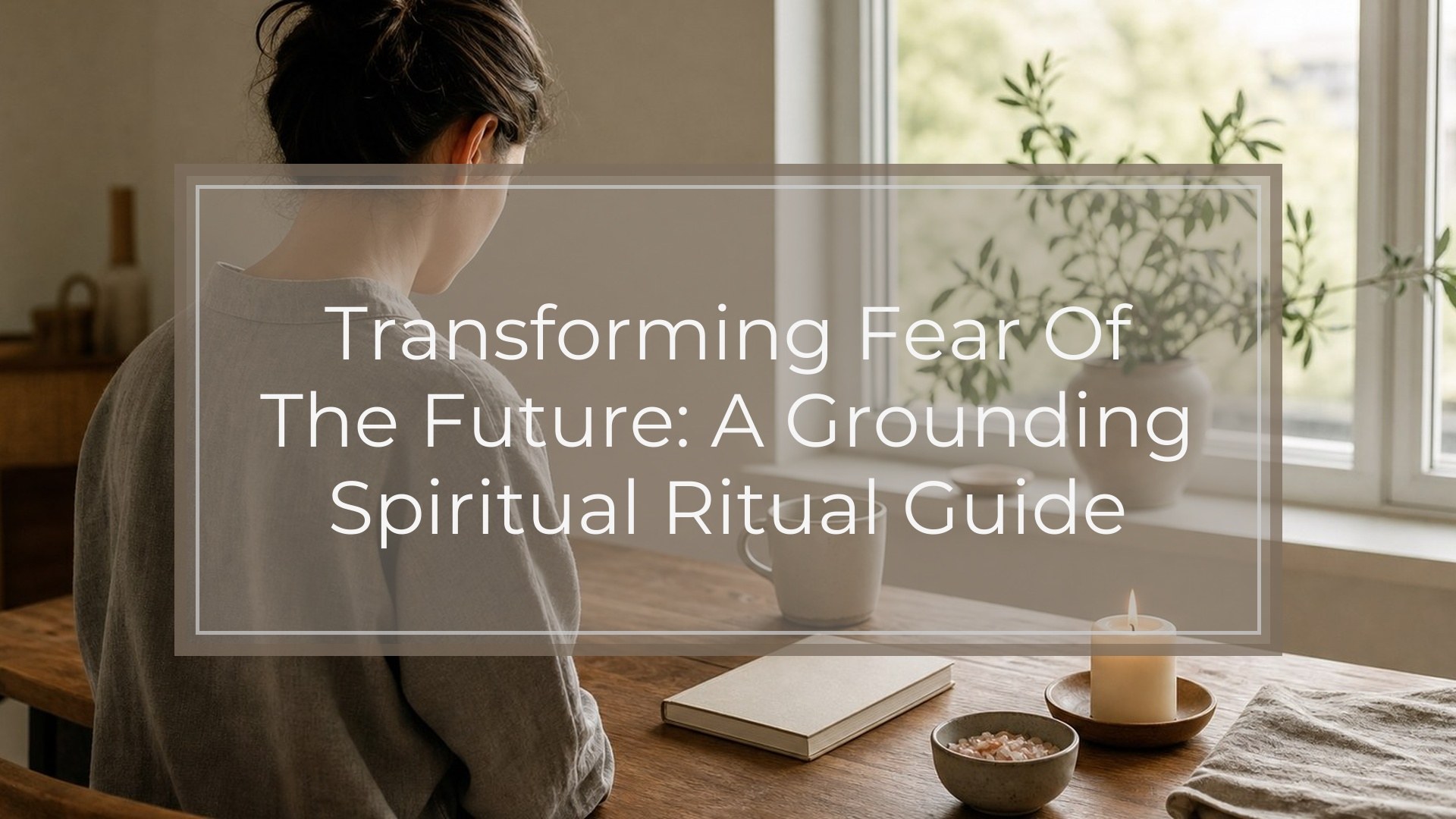
Transforming fear of the future is not about forcing yourself to feel fearless or pretending uncertainty is harmless. A spiritual practice can help you move the fear out of your mind’s loop, place it in a sacred container, and ask for grounded guidance. The simplest approach is to prepare a small altar, calm your body, name the fear clearly, offer it for transformation, and leave with one practical next step. Ancestors, guides, or your highest sense of wisdom can be invited, but the ritual should always end with present-time action: a call to make, a boundary to set, a task to complete, or rest to receive.
Why Fear of the Future Needs Both Grounding and Spiritual Care
Fear of the future often grows when the mind tries to solve every possible outcome at once. Spiritually, that fear can feel like a cloud over your intuition, making it harder to sense protection, timing, and support. Practically, anxiety can pull you out of the body and into imagined scenarios.
This practice uses both grounding and spiritual care. Grounding tells the nervous system, “I am here now.” Ritual tells the spirit, “I do not have to carry this alone.” The goal is not to predict the future. The goal is to become steady enough to meet the next step with clarity, protection, and trust.
Before You Begin: Prerequisites and Safety Notes
Choose a time when you will not be rushed. If you are in a panic state, begin with breathing, water, food, or contacting a trusted person before doing ritual. Spiritual work should support emotional safety, not replace medical care, therapy, crisis help, or practical planning.
You will need a small surface, a candle or battery candle, a bowl of water, paper, pen, and an offering such as fresh water, tea, flowers, fruit, or a simple prayer. If you work with ancestors, invite only well, wise, and loving ancestors. Keep candles away from fabric, pets, children, and sleepiness. If fire does not feel safe, use a light, stone, or glass of water instead.
Step 1: Prepare a Small Altar or Sacred Space

Clear a small table, shelf, tray, or windowsill. Wipe it clean and place your candle or light in the center. Add the bowl of water and your offering. If you keep an ancestor altar, you may use it, but keep the setup simple.
Say:
“May this space hold only what is wise, loving, protective, and true. I ask for support in transforming fear into clarity and right action.”
Take a moment to notice the room. This altar is your ritual container; the fear does not need to spill everywhere.
Step 2: Ground Your Body Before Addressing the Fear
Sit with both feet on the floor. Place one hand on your belly and one hand on your chest. Breathe in for four counts and exhale for six counts. Do this five times.
Then name five things you see, four things you feel, three things you hear, two things you smell, and one thing you can taste or imagine tasting. This brings your attention back to the present.
Say quietly:
“I am in this room. I am in this body. The future is not here yet. I meet this moment first.”
Do not move forward until your breath has slowed at least slightly.
Step 3: Name the Future Fear Clearly
On paper, write one fear about the future in a single sentence. Keep it specific. Instead of “Everything will go wrong,” write, “I am afraid I will not have enough money next month,” or “I am afraid my relationship will not survive this change.”
Under it, write:
“What is mine to prepare for?”
“What is not mine to control?”
“What support can I receive?”
Do not list twenty fears. If more arise, write them on a separate “later” page. This step is about giving one fear a clear shape so it can be transformed instead of multiplying in the mind.
Step 4: Offer the Fear to the Altar for Transformation
Fold the paper and place it beside the bowl of water or beneath a small stone. Light the candle if you are using one. If not, touch the water or place your hand near the light.
Say:
“Wise and loving ancestors, guardians, and sacred helpers, I place this fear before you. I do not deny it, and I do not worship it. Please help transform this fear into protection, preparation, courage, and clear sight.”
Pause for a full minute. Let the altar hold the fear with you. If tears come, let them come. If nothing dramatic happens, that is also fine. The ritual is still working through attention, intention, and containment.
Step 5: Ask for One Message and One Practical Next Step
Now ask for guidance, but keep it grounded. Say:
“Please show me one message I need to hear and one practical next step I can take within the next twenty-four hours.”
Sit quietly for three to five minutes. Notice words, body sensations, memories, or simple ideas. Write down only what feels calm, clear, and non-coercive. A true message may sound like, “Rest before deciding,” “Call your sister,” “Review the budget,” or “Do not answer while angry.”
Be careful with guidance that sounds frantic, grandiose, shaming, or demanding. Spiritual discernment matters. Good guidance brings steadiness, even when it asks for courage.
Step 6: Seal the Ritual and Return to the Present
Thank the altar, ancestors, guides, or sacred presence in your own words. For example:
“Thank you for holding what I could not hold alone. May this fear continue to transform into wisdom and right action.”
Touch the floor, drink water, and look around the room. Blow out the candle safely, or turn off the light. Leave the offering in place for a few hours or overnight if appropriate. Dispose of water respectfully in the sink, earth, or a plant, depending on your tradition and what is safe.
How to Check Whether the Ritual Worked
The ritual worked if you feel even a small shift from spinning to steadiness. You may still feel concerned, but the fear should feel more contained. Look for signs such as deeper breathing, less urgency, a clearer next step, or the ability to rest.
A good result is not “I know the future now.” A good result is “I know what to do next.” If you received one grounded action, complete it within twenty-four hours. That action is part of the ritual’s success. If you feel more activated afterward, return to grounding and seek human support.
Common Mistakes and Troubleshooting
One common mistake is trying to transform too many fears at once. Choose one fear per ritual. If many fears appear, write them down for later and return to the original sentence.
Another mistake is skipping grounding. Without grounding, ritual can become rumination with candles. If you feel dizzy, panicked, numb, or flooded, stop. Open your eyes, eat something, touch a wall, or call someone safe.
Do not leave candles unattended. If you are tired or emotionally overwhelmed, use a battery candle.
Be cautious about asking for signs repeatedly. This can feed anxiety. Ask once, listen, write, and act. If guidance feels harsh, frightening, or absolute, do not obey it blindly. Return to your values, trusted counsel, and practical reality.
A Short Daily Practice for Ongoing Future Anxiety

Each morning, place fresh water on your altar or touch your heart if you do not have one. Say:
“Today, may fear become wisdom. May uncertainty become patience. May I take the next right step.”
Name one concern, then name one action for the day. Keep it small: send the email, wash the dishes, check the calendar, rest for twenty minutes. In the evening, thank your supports and remove or refresh the water. This daily rhythm trains your spirit to meet the future through presence.
FAQ
What Is the First Step Someone Should Take with Transforming Fear of the Future?
The first step is to ground your body before trying to analyze or spiritually transform the fear. Sit down, breathe slowly, feel your feet, and return to the room. Once your nervous system settles, prepare a small altar or sacred space.
What Can Go Wrong When Following Transforming Fear of the Future Advice?
The main risks are spiraling into more fear, treating every thought as a spiritual message, or ignoring practical responsibilities. Go slowly, work with one fear at a time, use candle safety, and seek trusted emotional or professional support if you feel overwhelmed.
How Long Does It Usually Take to Work Through Transforming Fear of the Future?
A simple ritual can take fifteen to thirty minutes. The emotional shift may be immediate, gradual, or subtle. For ongoing anxiety, repeat the short daily practice for a week while also taking practical steps related to the concern.
How Can a Beginner Tell Whether Transforming Fear of the Future Worked?
A beginner can tell by looking for grounded results: calmer breathing, less mental looping, a clearer sense of what is controllable, and one practical next step. The fear may not disappear, but it should feel less powerful and more contained.