
Quick Answer
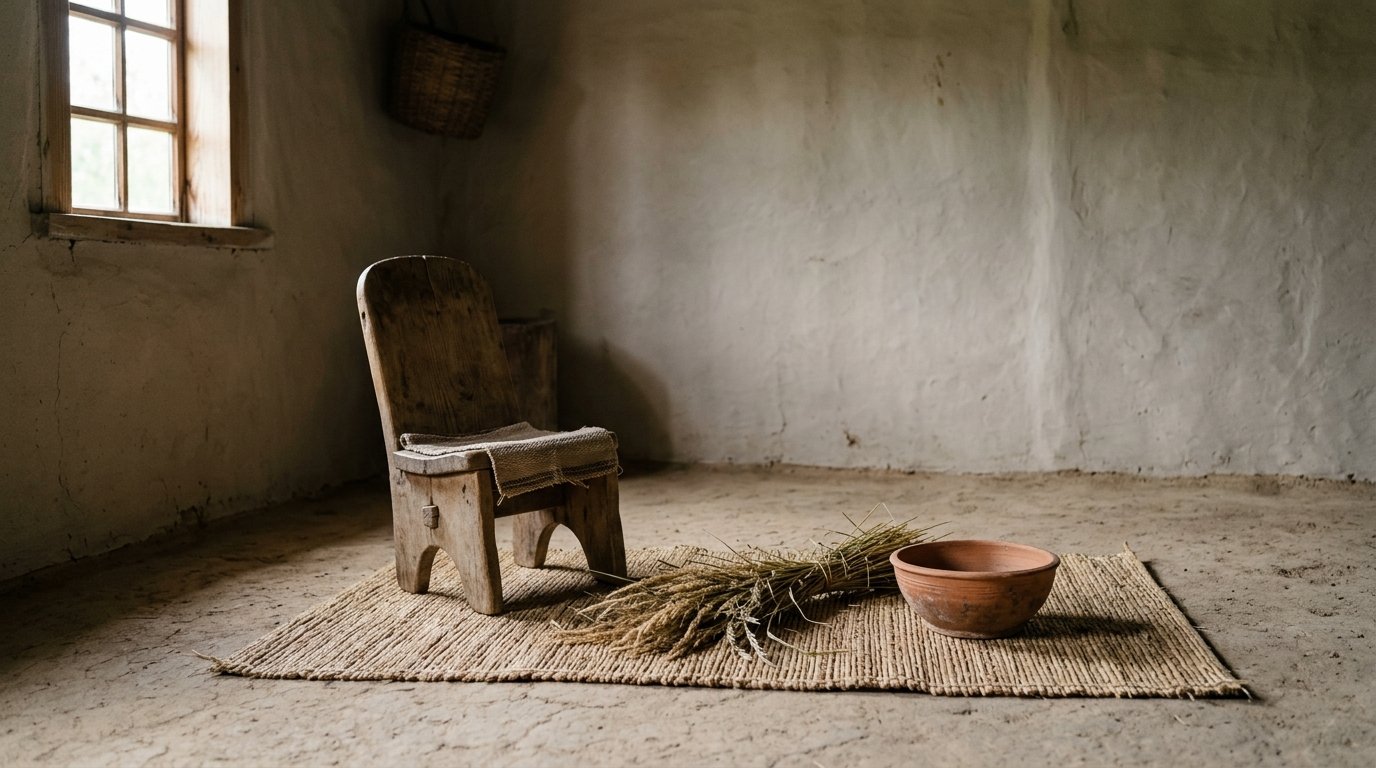
The tradition of making shaman chairs and woven mats centers on ritual craft: objects made to support sacred work, mark spiritual authority, create a clean ceremonial place, or help a practitioner sit, pray, sing, heal, remember, or offer. The exact meaning depends on the culture. In some traditions, a chair may represent the seat of a healer, elder, diviner, or ritual specialist. A woven mat may define sacred ground, receive offerings, hold ritual tools, or provide a place for sitting, kneeling, or ancestral remembrance.
The main takeaway is this: these objects are not just furniture or decoration. They are made through material knowledge, symbolic patterning, inherited technique, and spiritual intention. Wood, fiber, reed, grass, cane, leather, beadwork, carving, dye, and weaving can all carry meaning.
For a home ancestor altar, the respectful approach is not to copy restricted ceremonial items. Instead, learn the cultural context, choose ethically made pieces, and use a simple chair, stool, or mat as a grounded place for prayer, offerings, meditation, or remembrance.
How to Think About This Topic
A helpful mental model is to see shaman chairs and woven mats as ritual supports. They support the body, the ceremony, the tools, and the relationship between the visible and invisible worlds. In many spiritual settings, where someone sits or where offerings are placed matters. A chair or mat can create a boundary: this is the place of attention, prayer, healing, listening, or honoring.
The phrase “shaman chair” is broad and should be used carefully. “Shaman” itself is often applied to many different Indigenous, animist, healing, and spirit-working traditions, even when those communities use their own names for ritual specialists. Not all such practitioners use chairs. Some sit on the ground, on mats, on hides, on stools, near fires, or in specially prepared spaces. In some cultures, a carved or decorated chair may be associated with rank, lineage, healing authority, or communication with spirits. In others, the important ritual object may not be a chair at all.
Woven mats are equally varied. A mat may be practical, sacred, domestic, ceremonial, or all of these at once. Mats can be made from palm, rush, reed, grass, pandanus, raffia, wool, cotton, bark fiber, or other local materials. Their patterns may show clan identity, cosmology, protective symbols, ancestral memory, or simply skilled household craft. A mat can be a threshold object: it separates ordinary floor from prepared ritual space.
For readers interested in ancestor altars, the key question is not, “How do I make a shaman chair?” as if there were one universal method. A better question is, “What kind of seat or woven surface is appropriate for my practice, my ancestry, and my level of permission?” That shift keeps the topic practical and respectful.
Think of these objects through four layers:
| Layer | What It Means | Practical Question |
|---|---|---|
| Material | Wood, fiber, dye, cord, hide, reed, or cloth | Is it natural, durable, and ethically sourced? |
| Craft | Carving, joining, weaving, binding, knotting, decorating | Was it made with skill and care? |
| Meaning | Status, prayer, protection, memory, offering, sacred place | Do I understand its use, or am I guessing? |
| Permission | Cultural access, family lineage, teacher guidance, community norms | Is this mine to use, adapt, or display? |
This mental model protects against two mistakes. The first is treating sacred craft as exotic décor. The second is assuming every beautiful object is spiritually available to anyone. A respectful practice recognizes beauty, but also asks about origin, context, and relationship.
In a home altar setting, a chair might be used as a symbolic “seat” for the ancestors, a place where a photograph, cloth, or offering bowl rests. A woven mat might sit beneath the altar to mark a clean and intentional boundary. These uses are simple, reverent, and less likely to imitate closed rites.
Practical Guidance
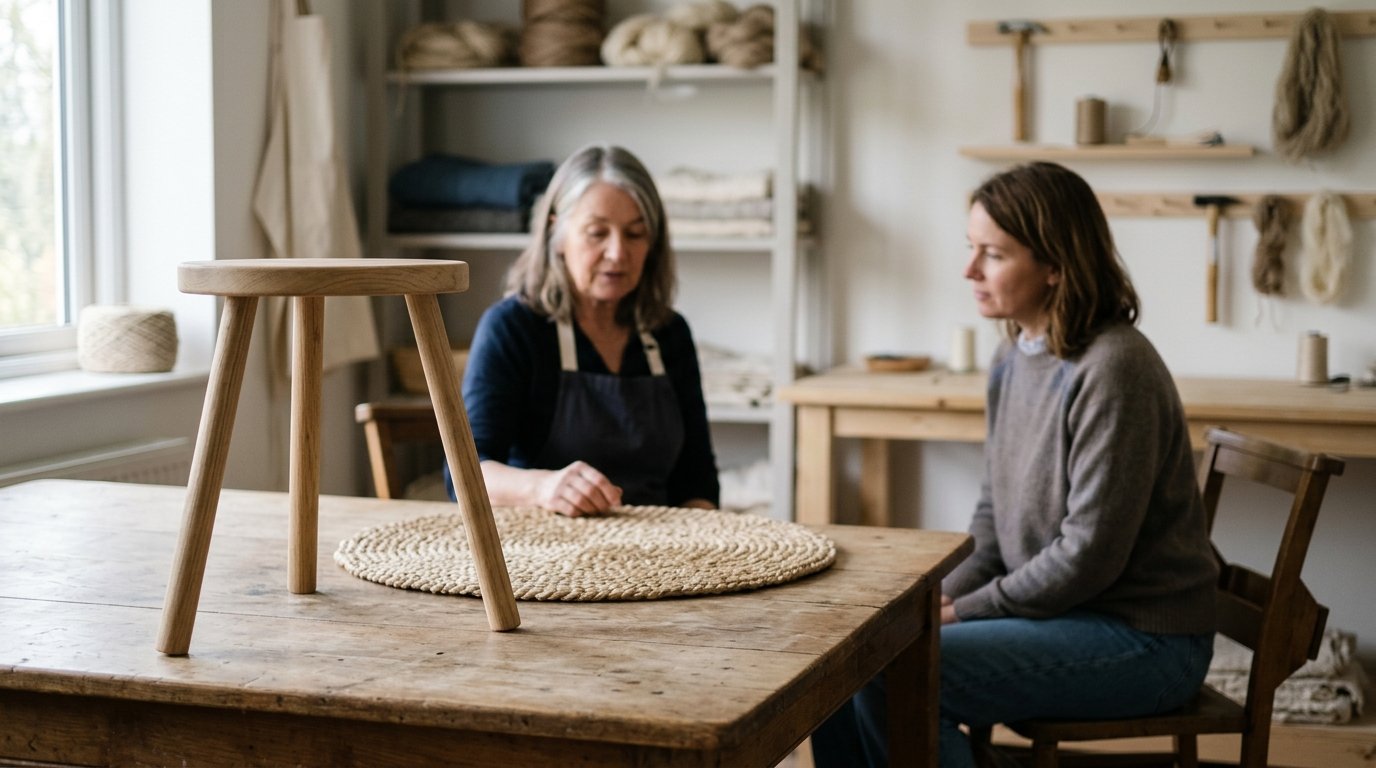
If you want to honor the tradition of making shaman chairs and woven mats in a responsible way, begin with context before acquisition. Ask where the object comes from, who made it, what it is normally used for, and whether it is appropriate for private devotional use. A plain handmade stool from your region may be more respectful than a ceremonial-looking object taken out of context.
When evaluating a chair, stool, or mat for sacred space, consider these criteria:
- Cultural clarity: Do you know the tradition, maker, or region connected to the piece?
- Ethical sourcing: Was it purchased from the artist, family, cooperative, or a transparent supplier?
- Appropriate use: Is it a general household or devotional object, rather than a restricted ritual item?
- Material integrity: Is it made from durable, natural, or meaningful materials?
- Spiritual fit: Does it support your altar practice without pretending to be something it is not?
For example, if your altar honors family ancestors, you might use a woven mat made in your ancestral region, a textile inherited from a relative, or a simple natural-fiber mat reserved only for offerings. If you are building a meditation corner, a low wooden stool or mat can help create a stable place to sit before the altar. If you are honoring land spirits or local ancestors, locally harvested or locally crafted materials may feel more aligned than imported sacred-looking objects.
Making your own mat or seat can also be meaningful, as long as you avoid copying protected patterns or ceremonial forms. A beginner might weave a small offering mat from cord, rush, raffia, or cotton strips, keeping the design simple. The act of making can become devotional: washing the hands, working slowly, giving thanks for the materials, and dedicating the finished object to remembrance. This is different from claiming initiation or reproducing a closed ritual technology.
For a chair, most people should think in terms of a ritual seat rather than a “shaman chair.” You might restore an old family chair, place a clean cloth over it, and use it as a seat for prayer. Some ancestor altar keepers reserve one chair for the beloved dead during memorial days, meals, or seasonal offerings. In that case, the chair is not a borrowed ceremonial object; it is a family-based sign of welcome.
Care also matters. Keep mats dry, clean, and off heavily trafficked floors if they are used ritually. Do not place shoes, clutter, or unrelated objects on them. If a mat holds offerings, clean it gently and regularly. If a chair represents ancestral presence, treat it with the same respect you would give a guest: no casual dumping of bags, laundry, or tools.
Avoid these common mistakes:
- Buying objects marketed as “authentic shaman tools” without knowing their origin.
- Using sacred patterns because they look powerful, while ignoring their meaning.
- Treating another culture’s ritual furniture as a shortcut to spiritual authority.
- Mixing objects from many traditions into one altar without relationship or understanding.
- Assuming handmade always means spiritually appropriate.
A simple, respectful home use might look like this: place a natural woven mat beneath your ancestor altar, set a candle, water glass, and offering bowl on a clean cloth, and keep a small stool nearby for prayer. Before sitting, take a breath and name your intention: “I sit in gratitude and remembrance.” This honors the deeper principle of ritual craft without imitating ceremonies that may not belong to you.
FAQ
What Should a Beginner Know First About the Tradition of Making Shaman Chairs and Woven Mats?
A beginner should know that these objects are culturally specific ritual supports, not universal “shamanic” accessories. Their meanings vary widely. Start by learning context, materials, and appropriate use. For home practice, choose simple, respectful objects that support prayer, offerings, and remembrance.
What Matters Most When Evaluating the Tradition of Making Shaman Chairs and Woven Mats?
The most important factors are origin, permission, purpose, and respect. Ask who made the object, what tradition it comes from, whether it is meant for public or private use, and whether your use honors its meaning rather than turning it into décor.
What Mistakes Should Readers Avoid with the Tradition of Making Shaman Chairs and Woven Mats?
Avoid copying restricted ceremonial forms, buying vague “tribal” or “shaman” items, or assuming every chair or mat has the same meaning. Do not use another culture’s sacred object to claim status. When uncertain, choose simpler altar cloths, stools, or mats.
What Is the Next Logical Step After Learning About the Tradition of Making Shaman Chairs and Woven Mats?
The next step is to examine your own altar needs. Do you need a clean offering surface, a prayer seat, or a symbolic place for ancestors? Then seek an ethically made or family-connected object, learn its context, and dedicate it respectfully.