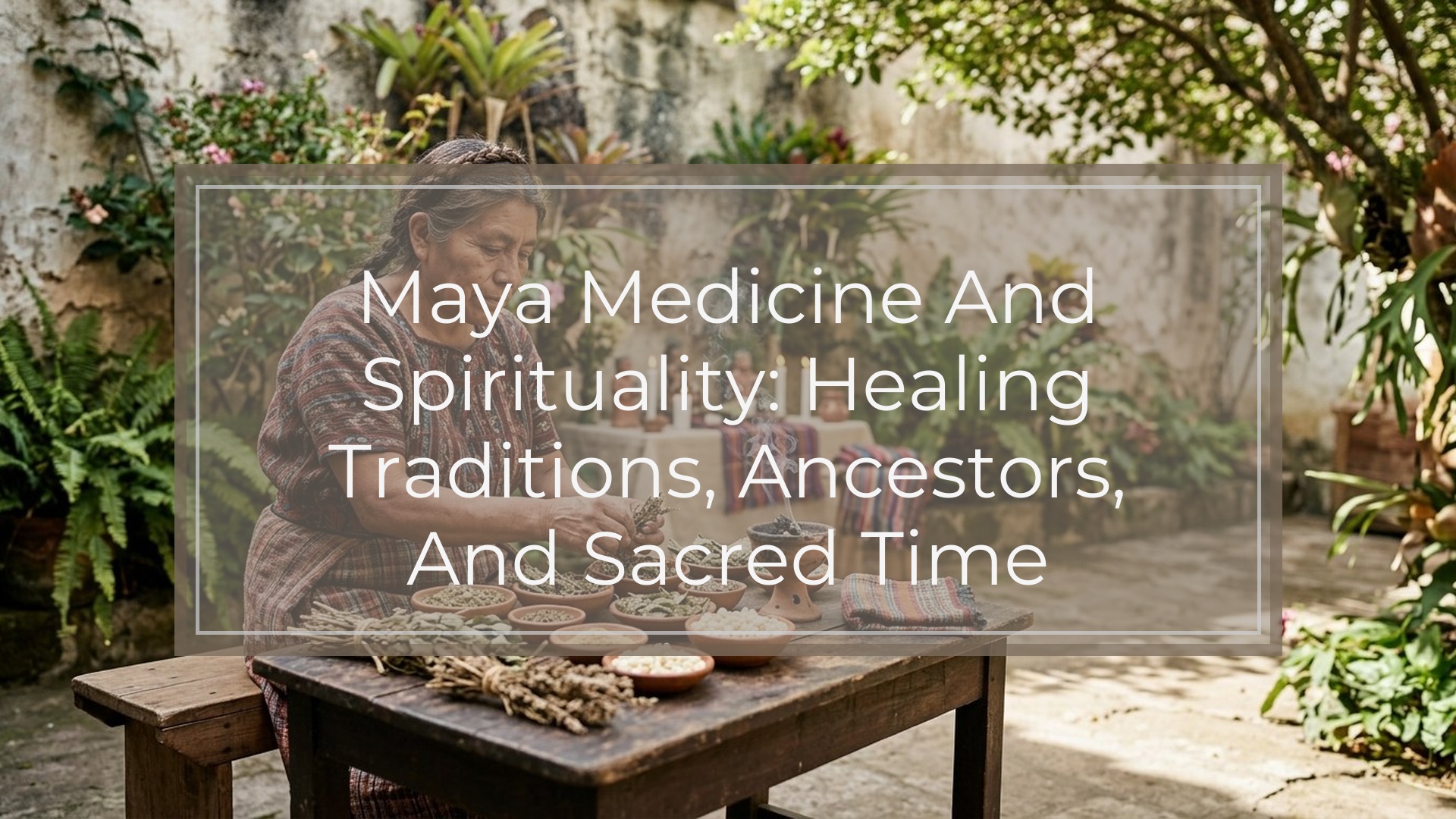
Maya medicine and spirituality are deeply connected ways of caring for life. In many Maya communities, healing is not understood as only a physical process. It can involve the body, spirit, family, ancestors, land, sacred time, prayer, plants, ritual specialists, and community responsibility. Illness may be approached through practical remedies and spiritual attention at the same time.
Because Maya peoples are diverse and living today, there is no single universal “Maya medicine.” Traditions vary across regions, languages, lineages, and families. Still, a common thread is right relationship: with the sacred, the natural world, the dead, the living, and one’s obligations.
What Maya Medicine and Spirituality Mean Together
Maya medicine and spirituality are best understood as a relational healing system. A person is not treated as separate from family, land, ancestors, community, or the unseen world. Health can mean balance among all these relationships.
This does not mean physical symptoms are ignored. Maya healing traditions may include plant medicine, massage, midwifery, cleansing, dietary care, prayer, divination, ceremony, and counsel. The spiritual and physical are not always divided in the way modern Western categories often divide them.
A healer may ask not only “What hurts?” but also “What has been disturbed?” Grief, envy, fright, broken obligations, disrespect toward sacred forces, or disconnection from ancestors may all be considered part of a larger healing picture.
A Respectful Note on Living Maya Traditions
Maya spirituality is not an extinct ancient system to be borrowed freely. Maya peoples live throughout Mexico, Guatemala, Belize, Honduras, El Salvador, and diaspora communities. Their languages, ceremonies, healing knowledge, and sacred calendars continue through living people and specific cultural lineages.
Some teachings are public. Others are family-held, community-held, or initiatory. Non-Maya readers should approach the topic with humility, avoiding imitation of ceremonies, titles, prayers, or sacred tools without permission. Learning respectfully means honoring sources, supporting Maya voices, and not turning living traditions into aesthetic or spiritual “content.”
Core Elements of Maya Healing Traditions
The following elements appear in many descriptions of Maya medicine and spirituality, though their meanings differ by community and lineage.
| Element | Role In Healing |
|---|---|
| Plant medicine | Herbs, resins, baths, teas, poultices, and smoke may support physical and spiritual cleansing. |
| Prayer and offering | Spoken words, candles, food, copal, or other offerings may restore respect and communication with sacred forces. |
| Ritual specialists | Healers, midwives, calendar keepers, bonesetters, and spiritual guides may hold specific responsibilities. |
| Cleansing | Limpias, baths, smoke, or egg cleansing may address spiritual heaviness, fright, or imbalance. |
| Divination and sacred time | Timing, signs, dreams, or calendar knowledge may help identify causes and guide action. |
| Community care | Healing often includes family support, obligations, reconciliation, and shared responsibility. |
A person might seek help for a stomach ailment and receive both an herbal preparation and prayer. A child affected by susto, often translated as fright or soul shock, might be treated through cleansing, soothing, family attention, and ritual speech. A pregnant person may receive care from a midwife whose role includes physical knowledge, spiritual protection, and ancestral continuity.
How Ancestors Shape Maya Spiritual Healing
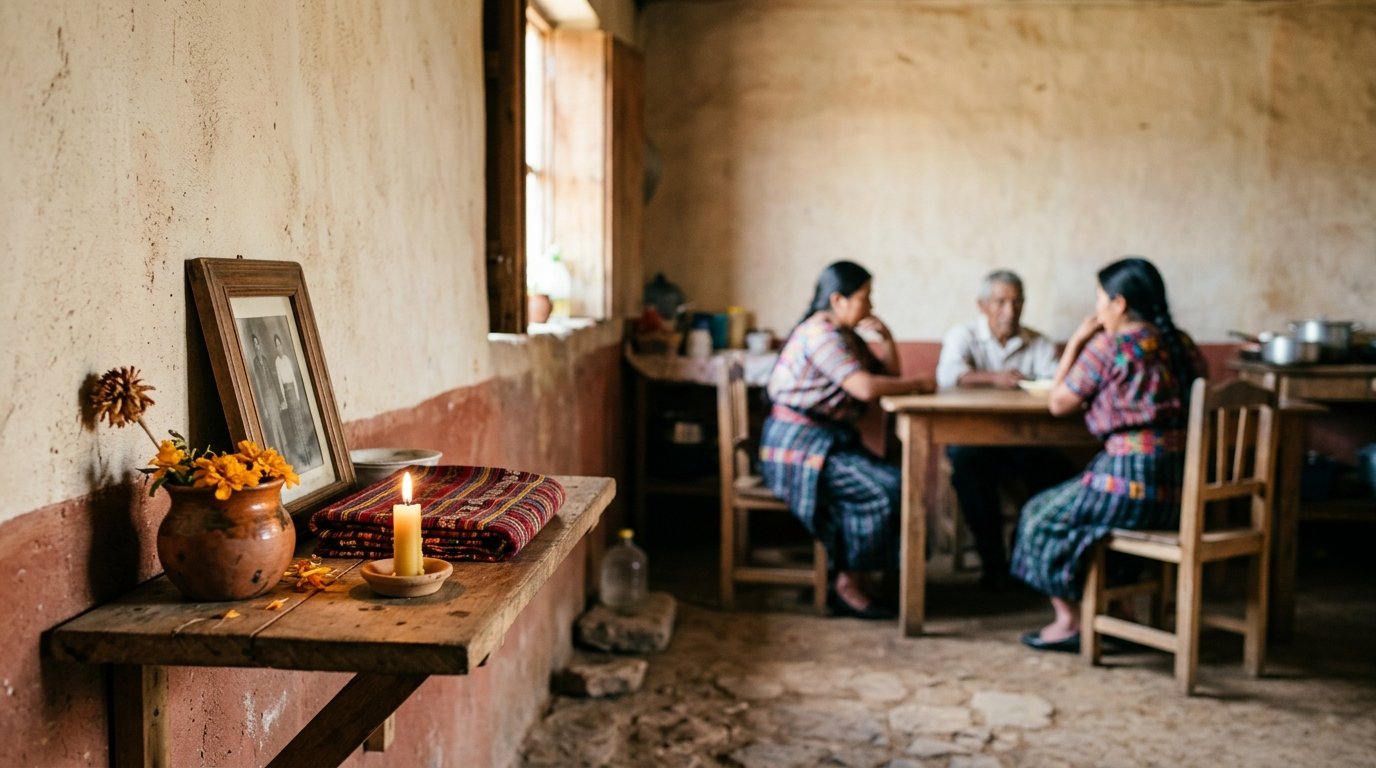
Ancestors are not simply remembered as historical figures. In many Maya spiritual frameworks, the dead remain connected to the living. They may be honored, consulted, prayed for, or asked to intercede. A family’s well-being can be understood as connected to the state of its ancestral relationships.
Ancestral presence may appear through dreams, inherited responsibilities, family stories, land ties, names, or ritual obligations. When a family neglects its dead, forgets offerings, or breaks continuity, some traditions may interpret misfortune or imbalance as a call to restore respect.
For Ancestor Altars readers, the important lesson is not to copy Maya rites, but to understand the principle: the living and dead remain in relationship. Remembering your own ancestors with sincerity, clean space, food, light, water, and prayer can be a way of tending that bond in your own lineage.
Sacred Time, Nature, and the Maya Worldview
Maya medicine and spirituality are also shaped by sacred time and the living presence of nature. Mountains, caves, springs, maize fields, animals, rain, wind, fire, and the directions can be spiritually significant. The world is not inert matter; it is alive with presence and relationship.
The Maya calendars are often described as systems for understanding time as meaningful rather than empty. Certain days may be favorable for ceremony, healing, planting, divination, or making offerings. Calendar keepers may read the quality of a day and advise action accordingly.
This worldview places healing inside a wider pattern. A person’s illness may be considered alongside timing, dreams, environmental imbalance, family history, and spiritual duties.
Common Healing Concerns in Maya Spiritual Frameworks
Maya spiritual healing may address many concerns that cross the boundary between body, emotion, and spirit. These can include fright, grief, soul loss, envy, spiritual contamination, broken taboos, family conflict, infertility, difficult pregnancy, repeated misfortune, nightmares, or lingering heaviness after death.
For example, a person who becomes ill after a shock may be treated for more than stress. The event may be understood as disturbing the person’s vital essence. Healing could involve prayer, cleansing, calling the spirit back, and family care.
Another example is grief after a death. The living may need support, but the dead may also need proper remembrance. Offerings, candles, prayers, and ritual attention can help restore order between worlds. This is why Maya medicine cannot be reduced to herbs alone. Plants matter, but so do words, timing, respect, and relationship.
What Non-maya Readers Can Learn Without Appropriating
Non-Maya readers can learn from broad principles without claiming Maya identity or performing ceremonies taken from specific communities. The most respectful lessons are ethical and relational.
You can ask: Am I in right relationship with my dead? Do I care for the land that sustains me? Do I treat food, water, plants, and fire as sacred gifts? Do I seek healing only as personal relief, or also as restored responsibility?
Practical, non-appropriative actions include tending your own ancestral altar, learning your family’s mourning customs, supporting Indigenous-led cultural preservation, buying from Maya artisans fairly, and reading Maya authors and scholars. Respect grows through humility, not possession.
A Simple Ancestor-centered Reflection Inspired by the Principle of Right Relationship
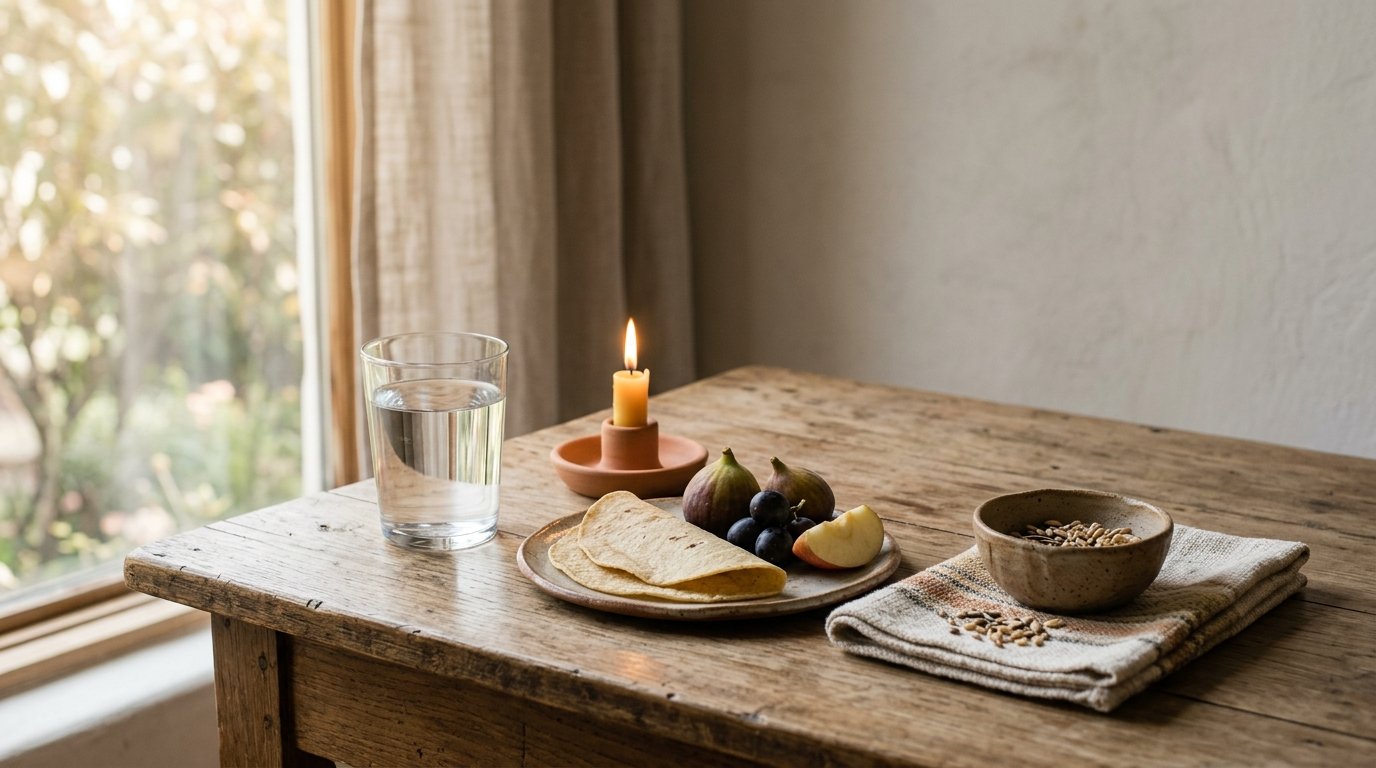
Place a glass of water, a candle or small light, and a simple food offering on your own ancestor altar. Sit quietly and breathe.
Say in your own words: “May I be in right relationship with those who came before me, with those living now, and with the earth that holds us.”
Ask: “What relationship needs repair?” Listen without forcing an answer. Close by thanking your ancestors and committing to one practical act: a phone call, an apology, a cleaned grave, a donation, or a meal shared in remembrance.
FAQ
Is Maya Medicine Only Herbal Medicine?
No. Plant medicine is important, but Maya healing traditions may also include prayer, cleansing, massage, midwifery, divination, offerings, dream attention, sacred time, and community care. Herbs are part of a larger spiritual and relational healing system, not the whole system.
Do Maya People Still Practice These Healing Traditions Today?
Yes. Maya peoples are living communities, and many healing traditions continue today in varied forms. Practices differ by region, language, family, religion, and local history. Some people combine Maya healing with Catholic, Evangelical, biomedical, or other forms of care.
Can I Practice Maya Spirituality If I Am Not Maya?
You should not claim Maya spiritual authority or imitate ceremonies without permission from legitimate community sources. Non-Maya people can study respectfully, support Maya teachers and communities, and apply broad ethical lessons such as honoring ancestors, caring for land, and practicing reciprocity in their own traditions.
What Role Do Ancestors Play in Maya Healing?
Ancestors may be understood as active presences connected to family well-being, memory, land, and spiritual continuity. Honoring them can help maintain balance between the living and the dead. The exact practices vary, and some ancestral rites are private or lineage-specific.
Is Maya Spiritual Healing a Substitute for Medical Care?
No. Spiritual healing should not be treated as a replacement for urgent or professional medical care. Many people use traditional healing and modern medicine together. If you have serious symptoms, seek qualified medical support while also honoring the spiritual practices appropriate to your community or lineage.