
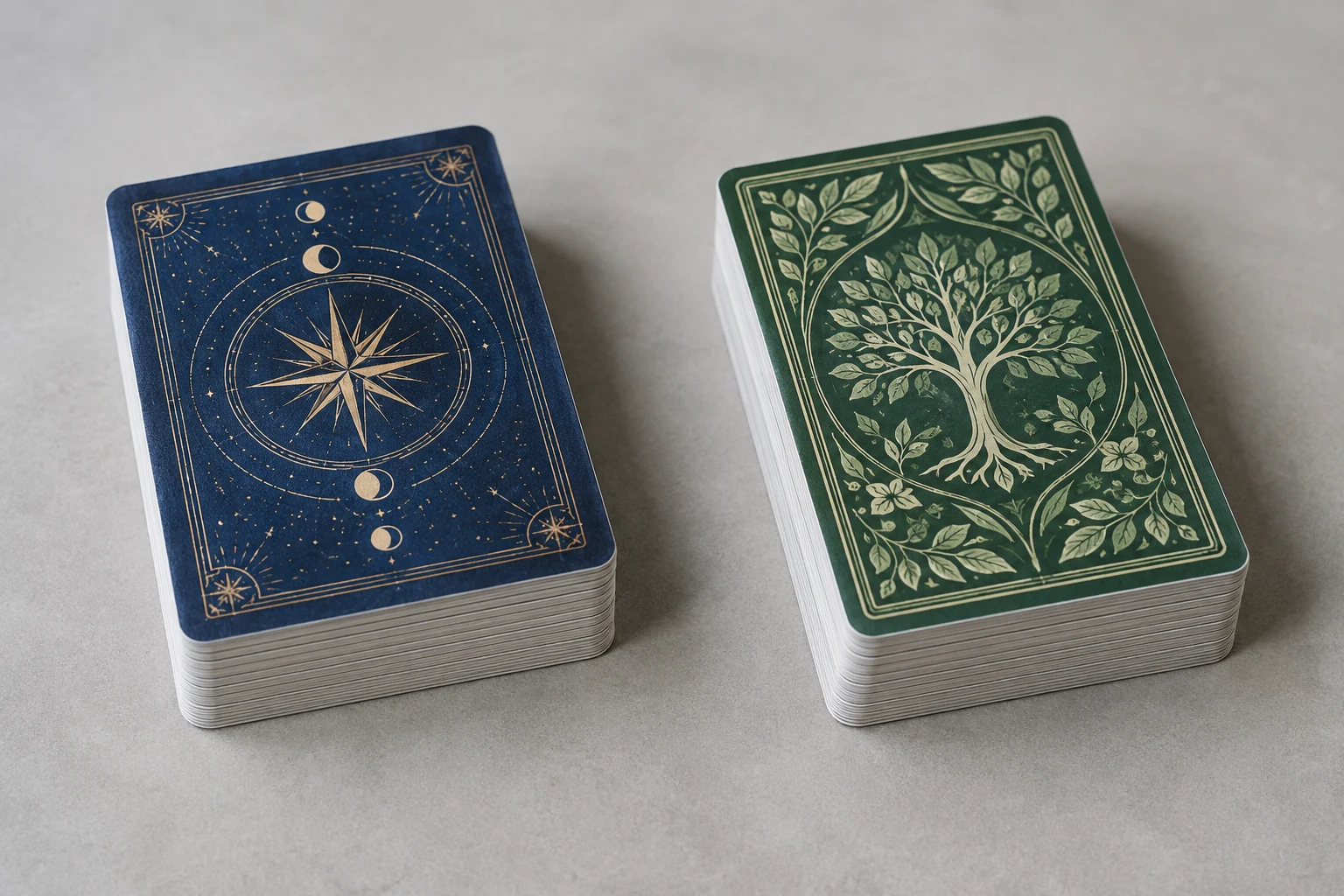
Tarot Vs. Oracle: the Short Answer
Choose by the kind of learning you want. A common Rider-Waite-style tarot deck offers a framework you can study across themed decks. An oracle deck offers a particular theme and its own approach to interpretation. Either can be an optional prompt for reflection, not a guaranteed prediction or a replacement for your judgment.
How the Deck Structures Differ
| Common Rider-Waite-style tarot | Oracle decks | |
|---|---|---|
| Structure | The publisher’s Rider-Waite deck has 78 cards: 22 Major Arcana cards and 56 Minor Arcana cards. The Minor Arcana has four suits, each with ten numbered and four court cards. | Oracle decks do not follow tarot’s structure. They may have a structure of their own or none. |
| Card count | The 78-card arrangement describes this common tarot framework, not every tarot deck. | There is no single oracle card count. Two sampled decks have 44 and 52 cards, respectively. |
The practical difference is what carries over when you change decks. Tarot’s familiar framework can help you approach a new themed tarot deck; with an oracle deck, you need to learn how that particular deck works.
What a Beginner Can Learn from Each Guidebook
The Rider-Waite booklet supplies card meanings you can consult as you learn its sections, suits, and individual cards. That gives you published interpretations to compare with what you notice in an image, rather than leaving you to guess how the deck is organized.
An oracle guidebook can explain a deck’s particular theme and meanings. For example, the guidebook for Goddesses, Gods and Guardians describes its figures and how to interpret their messages. Those publisher materials document deck design and suggested use; they do not establish that a card’s interpretation predicts what will happen.
Try One Card as a Reflection Prompt
If you’d like to try either deck, keep the exercise simple:

- Draw one card and notice its image or words.
- Read its guidebook entry, if provided. The Rider-Waite booklet includes card meanings, and the sampled themed oracle includes interpretation guidance.
- Ask, What does this bring to mind about my situation? Write down anything useful—or set the card aside if nothing fits.
You do not need to treat the card as an instruction. Make decisions using your circumstances, available information, and judgment.
Which Deck Should You Start with?
Start with tarot if you want to study a common framework that can carry across themed decks. Be prepared to learn its sections, suits, and card meanings.
Start with an oracle deck if a particular theme draws you in and you’re happy to learn that deck’s meanings, which may not carry over to another oracle deck. Before choosing either, check that its artwork and guidebook give you something you’d want to spend time with.