
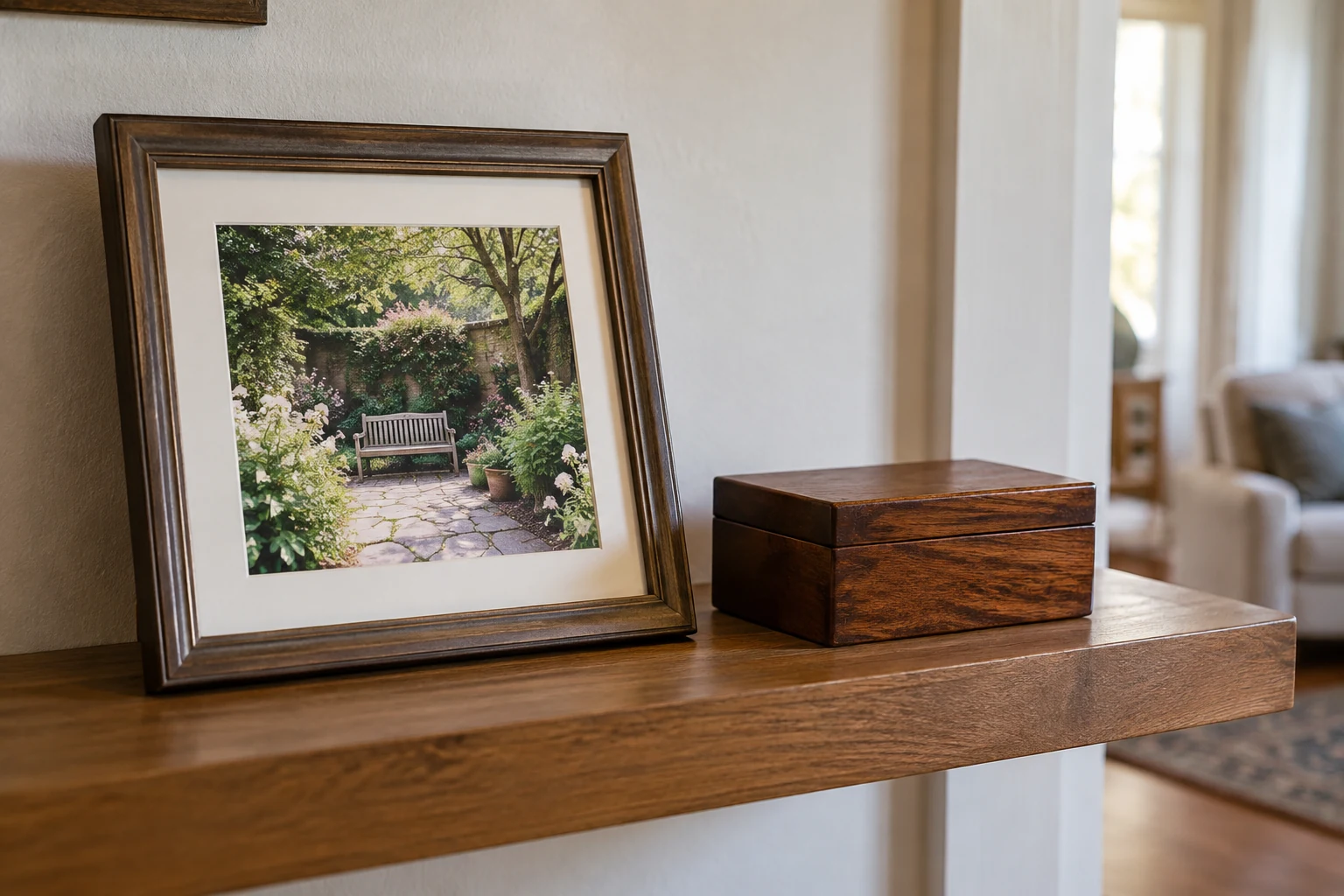
To rebuild a remembrance space after moving, first find a place that works in the new home, then choose a few objects whose stories you want close. Arrange them securely, keep a record of what matters about them, and make changes once you have lived with the space. You do not have to reproduce the old shelf exactly. A different room may call for a smaller display, a different order, or a protected place for an object that used to sit in view.
Choose a Place That Works in the New Home
Before unpacking every object, look at two or three possible locations. A shelf may have worked in the last house but be too shallow in this one; a table may offer more room but stand in the path of a frequently opened door. Ask whether the surface can support what you intend to put on it, whether you can reach the objects without knocking others aside, and whether people can still use the room comfortably. The best location is not necessarily the one that most resembles the old arrangement.
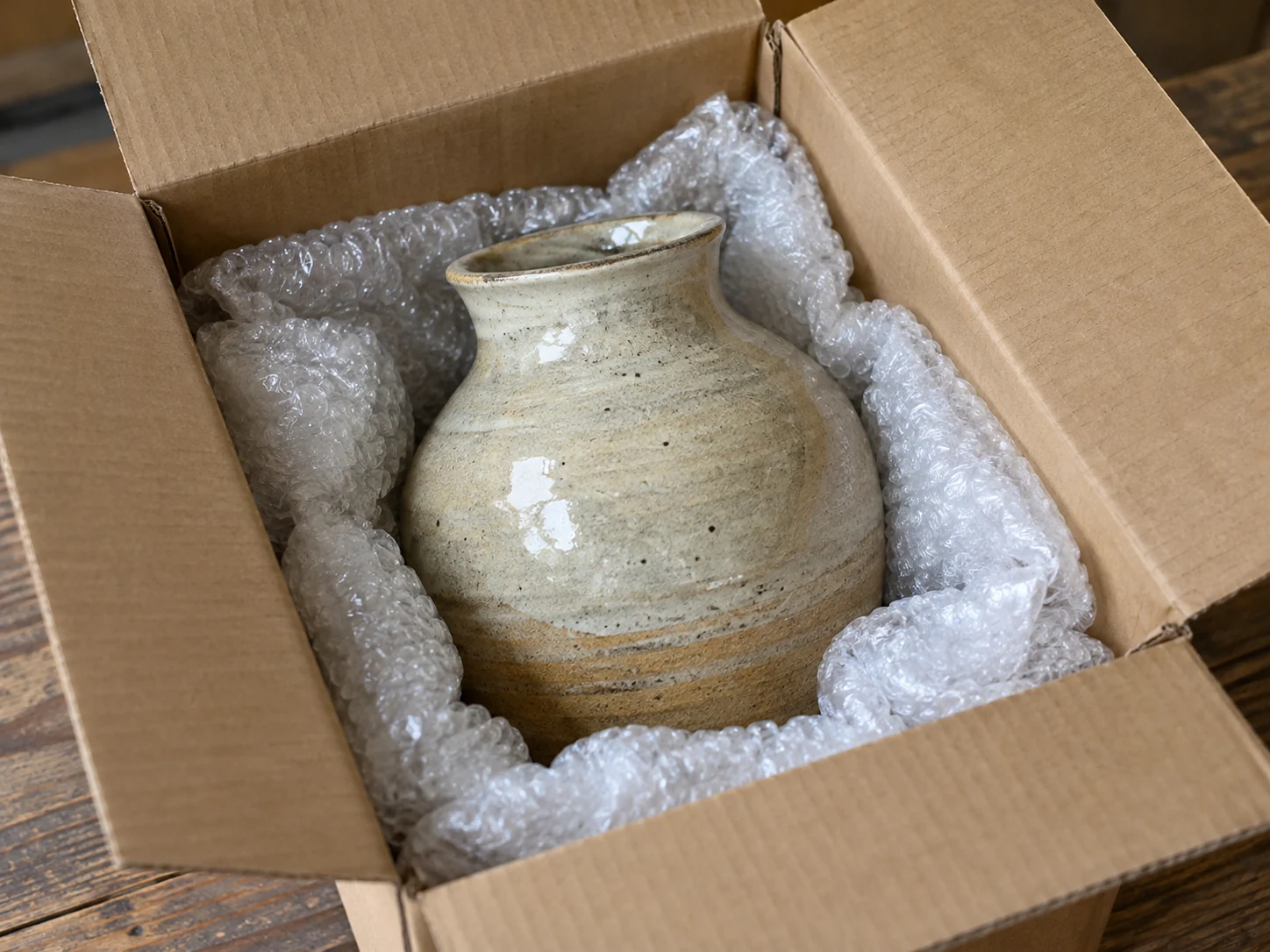
Check the destination before placing an object on it. The Canadian Conservation Institute advises preparing a new location so that it is clean, large enough for the object and padded if needed. For a home display, that means clearing the surface, checking that each object fits without balancing on an edge, and deciding whether a suitable pad or support is needed before setting it down. If the only available ledge leaves a frame overhanging, choose a different surface or display fewer things.
Give photographs a separate location check. The Library of Congress cautions against places close to vents, fireplaces and radiators, along exterior walls, or at high risk of condensation, leaks and extreme environmental fluctuations. Look at what is around a proposed spot, not just how it appears on an unpacking day. Is there a radiator beneath the shelf? Has a wall or window shown signs of dampness? An attractive bright windowsill may also be a poor choice for an old original print: choosing an interior spot, or displaying a copy instead, is a prudent decision for that object, not a light limit stated by the cited Library of Congress guidance. Its location advice concerns photographs; it should not be treated as a blanket rule for every material in the space.
Once you have a plausible place, unpack selectively. If boxes have labels or you made an inventory, use them to identify each object and its owner or story before deciding what to display. Check its condition as you lift it out: is a frame intact, is an item loose, or is there damage you do not remember? This is a chance to decide what is ready for display, not a demand to repair everything at once. Set a damaged object aside for appropriate care rather than gluing it together as an unpacking step. Keep its label or record with it so that postponing display does not separate the object from its meaning.
You can now make a practical first decision. If the location is suitable and the chosen objects are sound, begin there. If the surface is crowded, reduce the display; if the location puts objects at risk or disrupts household use, change it. If an object is damaged or its proposed place is unsuitable, keep it stored while you work out an appropriate way to care for or show it.
Build a Small Arrangement Around What Matters Now
This is a method for making a personal remembrance space, not a rule about how every family or religious tradition handles sacred objects. If particular objects have requirements in your family or tradition, follow those separately. Within those boundaries, you can choose an initial arrangement for the home you have now rather than automatically rebuilding the former one.
Start with the people or stories you want the space to bring to mind. Which object helps you remember someone clearly? Which one can you explain in a sentence, even if its significance would not be obvious to a visitor? Choose one or a few items on that basis, not because they occupied the centre of the old shelf. A small beginning lets you see whether the new location works and leaves you free to reconsider the rest without treating each packed item as an unfinished task.
For example, you might choose a photograph of a relative and a small keepsake associated with a particular visit. Those two objects can make a complete initial arrangement. Before setting them out, confirm that the surface is clean, roomy enough and appropriately supported for both. Then position them so neither has to lean against an unstable stack or crowd the edge. Perhaps the photograph stood behind the keepsake before, but the new shelf is narrower and works better with them side by side. Their order has changed; the people and stories they recall have not.
An original photograph calls for a choice of its own. If its condition or the available display location makes you reluctant to put it out, you could display a labeled copy and keep the original in a protected place. Labeling the copy helps distinguish it from the original when you or someone else revisits the collection later. This is an optional practical arrangement, not a claim that a copy carries the same significance for everyone. If only the original feels appropriate and there is no suitable place for it yet, it can remain stored.
Add a short note so an object’s story does not depend entirely on its position on a shelf. Child Bereavement UK describes how some people write a note about why each item matters when making memory boxes with bereaved children and young people. Applying that idea to a home remembrance space, you might record whose object it was, the memory you associate with it and why you selected it for this arrangement. Put the note with the object’s inventory entry, or otherwise link the two clearly. A note for the keepsake in the example might identify the relative, the visit it recalls and the reason you chose it now; it need not tell the whole story.
Do the same for items that stay packed if their identities might become hard to recall. A box label or inventory entry can connect a stored object to its story without requiring it to be on view. This matters when the shelf has limited space, an item needs care, or you simply do not want it displayed at present. You can make a deliberate arrangement with two objects while keeping ten others safely elsewhere. The first version is not a ranking of everyone you remember, and storage is not a verdict on an object’s importance.
Live with the Arrangement, Then Decide What to Add
Let ordinary use of the room show you what the first arrangement needs. When people open doors, set down everyday belongings and move around the space, do the objects stay stable? Can you reach them without shifting something precariously? Does the display occupy a surface the household needs for another purpose? If a concrete problem appears, change the footprint or position rather than trying to preserve the initial layout. A smaller grouping on another shelf may work better than a crowded display in the place you first chose.
When you consider an addition, return to the stored object’s note or inventory entry before taking it out. Reconnect it to its story, check its condition and ask whether the current space can accommodate it. If it fits securely and is suitable for display, add it. If an original photograph is not suited to the spot but a copy would serve your purpose, use a labeled copy and keep the original protected. If neither option works, leave the object stored with its record. These are different workable outcomes, not stages you must complete in order.
A shared room brings another decision: how much of it can this space occupy? Before expanding the display, agree with other household members on its footprint and on access to the surface or nearby storage. This is less about whether one more object physically fits than about how everyone will use the room. It may lead you to rotate items instead of adding them all, or to keep the arrangement small while storing the rest together with their notes.
There is no deadline for deciding. The space can change as you learn how the new home works and which objects you want near you. A gradual arrangement—or a meaningful object that remains stored—does not mean you have failed to remember anyone.