
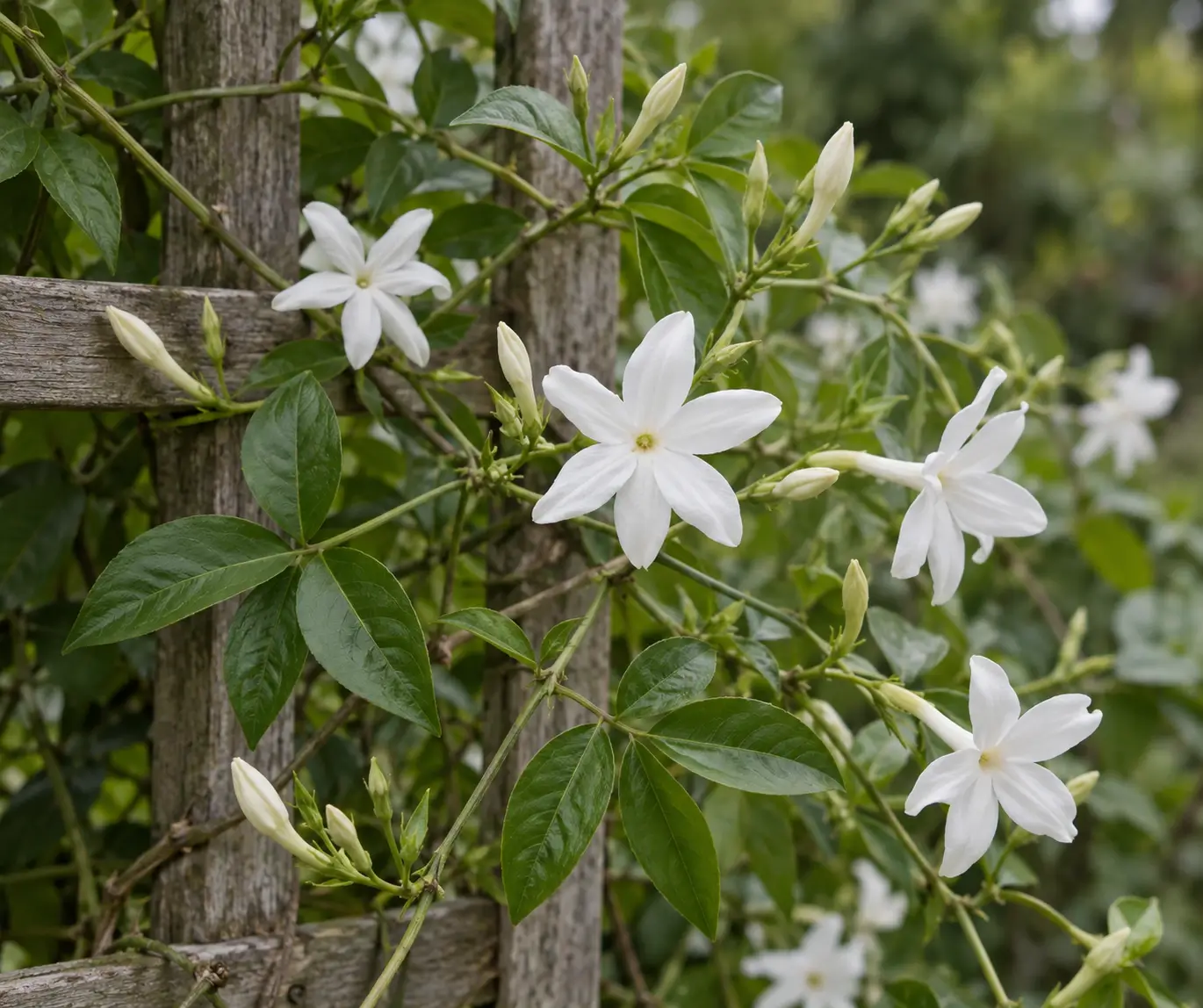
Jasmine might be a fresh flower on an altar, a dried keepsake, or a scent that prompts a moment of reflection. These materials do different things, and none has a fixed magickal meaning on its own. A useful starting question is: What do I have, and what practice gives it meaning? Documented religious offerings, contemporary practitioners’ accounts, and a personal symbolic choice call for different answers.
What Counts as Jasmine for This Purpose?
Even the plant name needs care. Plant Humanities Lab discusses common jasmine, Spanish jasmine, and Madurai or Arabian jasmine as distinct Jasminum species with different cultural histories. “Jasmine” alone is not a botanical identification. A common name or photograph cannot confirm the species of a flower someone has found, bought, or been given. A photograph also cannot tell you who used that flower or establish authority for a ritual claim.
For personal use, identify the form before choosing an intention. A fresh flower has a visible presence that changes as it fades. A dried flower can remain as a small reminder, although the Grove and Grotto author says dried jasmine petals retain little fragrance in that author’s experience. A jasmine-labelled fragrance offers scent rather than a flower. An image can be a visual prompt, but it supplies neither the plant nor evidence that a particular devotional practice took place. Each may support reflection, but one cannot stand in for another simply because all are called jasmine.
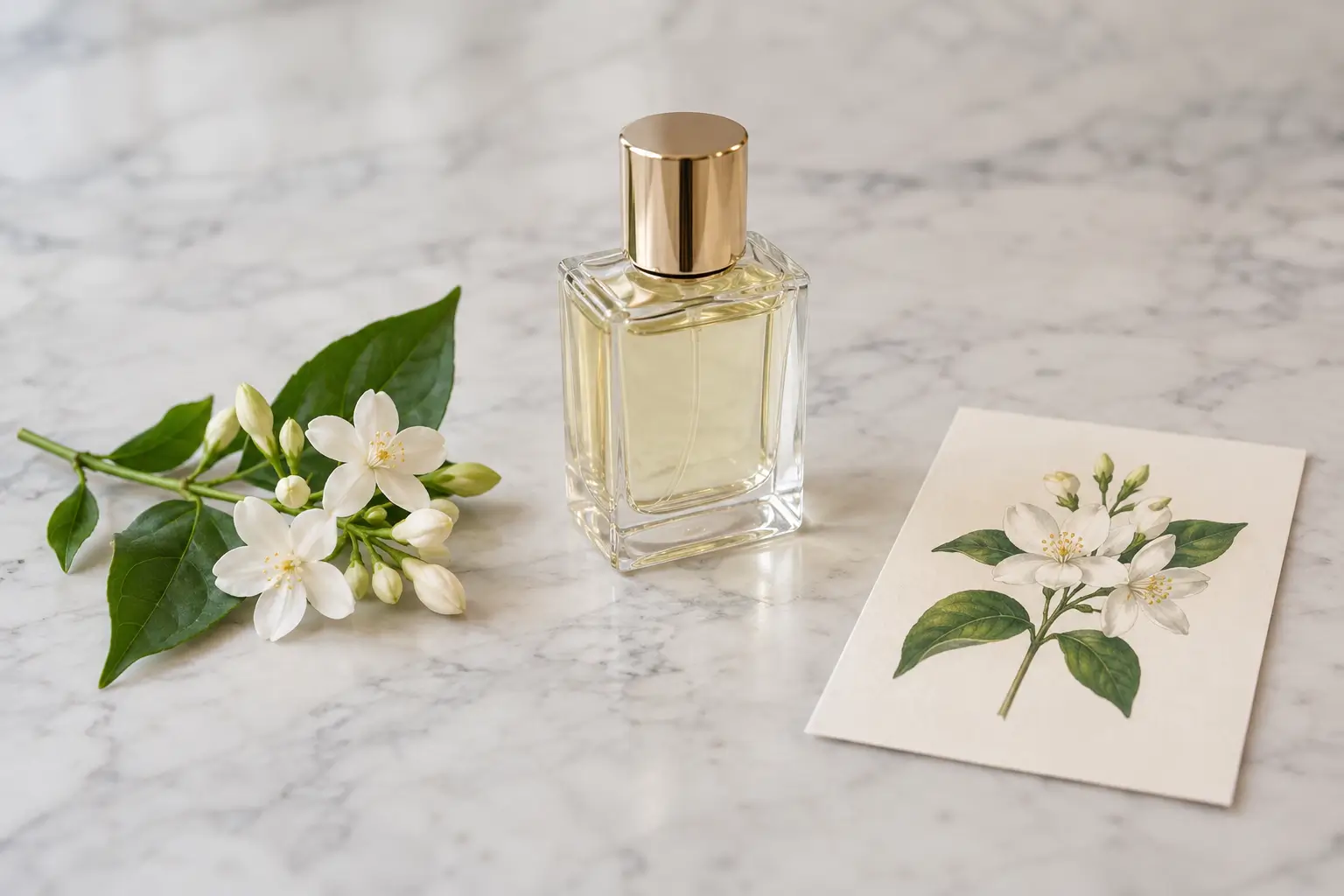
A scent label settles even less about plant identity. Poison Control warns that an essential-oil bottle may not disclose its plant species, active-ingredient concentration, or contaminants. Treat a fragrance as the particular labelled product in front of you, not as proof that it contains a named Jasminum species. Neither a product label nor an attractive flower picture grants ritual authority.
Jasmine Flowers in Distinct Devotional Settings
Jasmine appears in documented flower offerings, but those accounts do not describe one transferable “jasmine ritual.” Plant Humanities Lab reports that garlands containing jasmine are offered in Hindu puja, a devotional practice. In its account, the flowers’ sensory qualities help devotees attend to prayer. The garland belongs to an act of devotion; its role is not a free-standing promise that jasmine will bring about a desired outcome.
The Lab also recounts a Buddhist flower ceremony through a monk’s explanation. In that situated account, the flowers draw attention to life’s transience. A flower that is beautiful now will not stay that way. The monk’s explanation helps readers understand the ceremony he described, but it should not be treated as a definition of all Buddhist jasmine offerings—or recast as an instruction for a love working.
Separately, Plant Humanities Lab identifies the Pichcha Mal Pujawa as an annual Sri Lankan Buddhist jasmine offering at the Jaya Sri Maha Bodhi Tree. Its account says monks distribute jasmine offerings at the tree to honor the Buddha. This named annual event and the monk-recounted ceremony are distinct parts of the source account. The source does not establish that the monk gave his explanation at the Pichcha Mal Pujawa.
These settings matter because the flower is not the whole practice. A jasmine-containing garland offered in puja, the ceremony explained by a monk, and an annual offering at a named Buddhist shrine each has its own devotional context. Someone can appreciate what these accounts show about attention, transience, and offering without treating those purposes as interchangeable instructions. Placing a jasmine flower in a personal space may be meaningful, but it does not become one of these rites by borrowing its flower or its description.
A Fresh-flower Display in Personal Practice
A contemporary personal practice has a different kind of authority. Practitioner Annwyn Avalon includes jasmine among herbs harvested and distributed in flower form. She also describes using flowers generally to decorate altars and as offerings to spirits in her own practice. Her account shows one way a practitioner works with flowers; it does not prescribe a jasmine-specific ceremony for every reader.
Consider this author-created illustration, not an attested rite: someone displays a fresh jasmine flower in their personal space before a difficult conversation. They choose the intention “give the other person my full attention.” The flower is not being asked to reconcile anyone or change the other person’s mind. When they notice it, they ask themselves a question they can act on: Am I ready to listen, or am I only preparing my reply? They might then decide to make time for the conversation, listen more carefully, or accept that the other person does not want to talk.
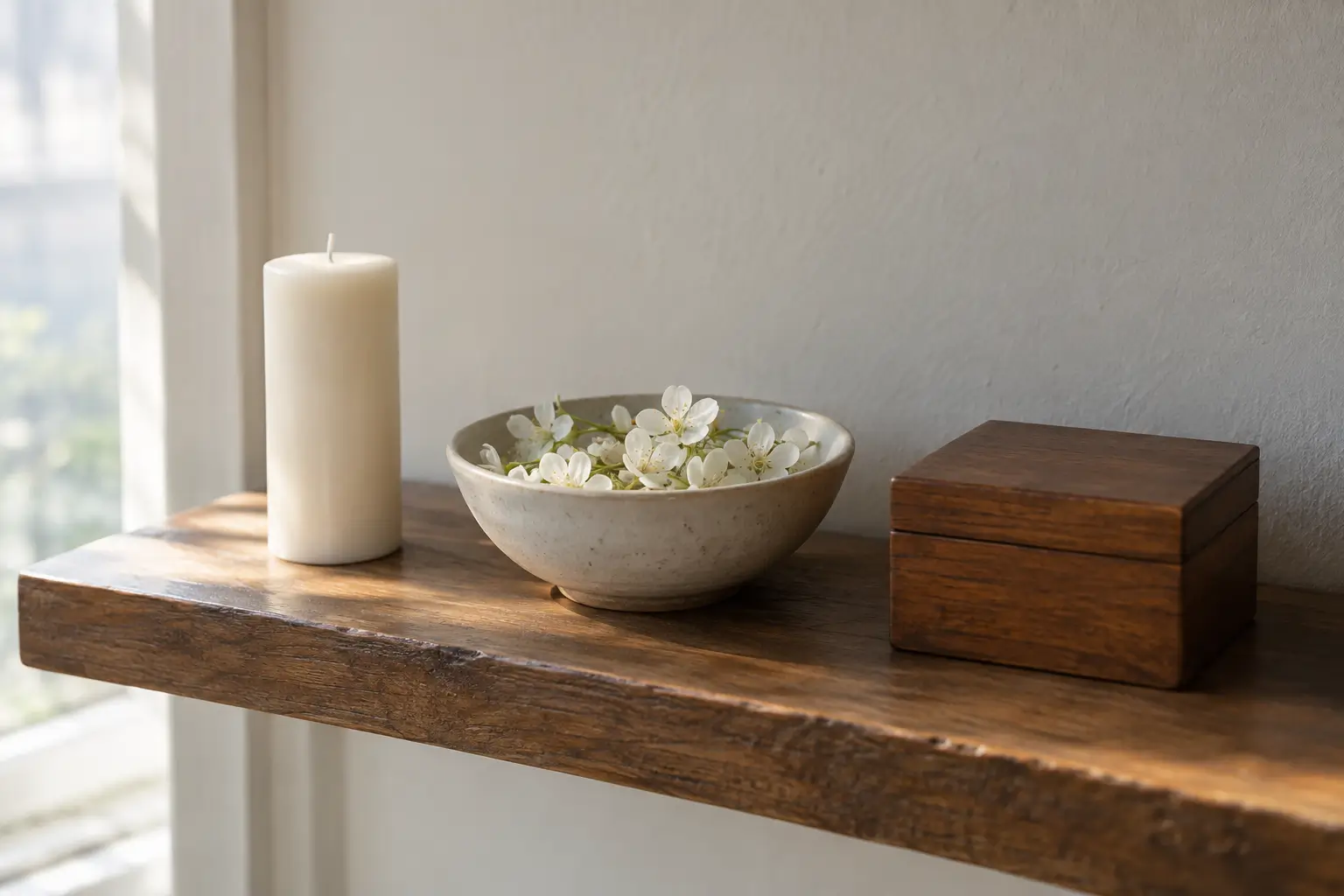
The fresh flower’s changing appearance can remain part of that modest choice. While it is present, it serves as a visible reminder; as it fades, the person can remove it and consider whether they still need a reminder. Its condition is not a prediction about the relationship. Removing a faded flower is simply part of maintaining the display, rather than a required conclusion to an inherited ceremony.
This example uses a fresh flower for its presence and change, not as a substitute for Hindu puja or a Sri Lankan Buddhist offering. The Grove and Grotto author’s sensory-psychological model suggests that a plant’s meaning depends partly on personal and cultural experience. For this person, “listen attentively” may be a more honest association than adopting a promise about love or luck. The flower marks a chosen intention; carrying it out remains the person’s responsibility.
Dried Jasmine, Dreams, and Love as Chosen Symbols
A dried flower serves a different purpose from a fresh display. The Grove and Grotto author suggests carrying a jasmine flower in a locket or sachet as a symbol associated, in that author’s account, with confidence and beauty. This is a portable keepsake: its continued presence matters more than a strong aroma, which the author says dried petals generally do not retain. It can remind its owner of an intention even after the occasion on which it was collected has passed.
The reminder is more useful if its identity and occasion do not become a mystery. Practitioner Laurel Reufner describes fully drying flowers before placing them in decorative bottles or bags; she labels the contents and the occasion. Someone keeping a flower might similarly record “jasmine flower—kept to remember a dream.” Later, that note tells them why they kept it. It does not certify a botanical species they never established, and fully drying and labelling the flower does not turn storage into a guaranteed magickal working.
The symbolic associations need the same clarity. The Grove and Grotto author links jasmine with lunar magic, dreaming, and attraction, and describes love spells and divination as prominent uses in that author’s system. These are practitioner correspondences: associations used to give an object meaning within a practice. They are not demonstrated effects or a universal tradition. The author explicitly disclaims guaranteed occult results. Someone may find a moon or dream association evocative without concluding that jasmine causes dreams, reveals the future, or changes another person’s feelings.
Here is a separate author-created dream example, not an attested rite. Someone wakes up already remembering a dream. They see one dried jasmine flower they have kept as a prompt to write down what they recall: perhaps an image, an emotion, and a detail they are unsure about. Later, they reread the note and ask whether any part of it connects with a concern they have been thinking about. They can leave uncertain details uncertain rather than treating every image as a message. The flower did not induce the dream or make it prophetic. Its possible value is that it reminds the person to record and reflect on an experience they already had. This is one bounded way to use a practitioner’s dream association without claiming divination.
A different author-created love-symbol example begins with the question of how to behave, not how to obtain someone’s affection. Someone assigns a dried flower the meaning “act with care.” When they notice it, they consider an action within their own control: asking whether a friend would welcome company, listening to a partner’s answer without pressing, or respecting a refusal. They may decide to reach out, or decide that giving space is the kinder choice. The flower does not make either response more likely from the other person. It gives its owner a pause in which to consider care and consent before acting.
The dream reminder asks, What do I remember, and what might I learn by reflecting on it? The love symbol asks, What caring action is mine to choose? Their possible value lies in attention and subsequent choices, not in a promised supernatural result. That distinction matters especially when a correspondence such as “attraction” might otherwise be mistaken for a claim of power over someone else.
Scent as a Personal Focus
If the available object is a jasmine-labelled fragrance, its relevant feature for this purpose is the scent, not the continuing presence of a flower. In the Grove and Grotto author’s sensory-psychological model, jasmine’s place in a love working can draw on the user’s sensual associations. More broadly, the author treats a plant’s meaning as shaped partly by personal and cultural experience. That explains how a practitioner might give a scent significance; it does not establish that everyone experiences it alike or that it produces an external result.
For an author-created, non-contact example, someone notices a jasmine-labelled fragrance during its ordinary, label-directed use and takes that moment as a cue to pause. They ask, What intention did I want to return to today? Perhaps the scent has a personal association that helps them remember; perhaps it does not. No particular emotional response is required. The choice is to pay attention to their own intention, not to make an oil preparation or apply a product to the body.
The association also says nothing certain about ingredients. A person can find a scent meaningful without claiming that its bottle contains a particular jasmine species. Poison Control cautions that an essential-oil bottle may leave species and concentration unclear; the personal focus depends on what the person notices, not on an unverified botanical identity.
Let the Material and Its Limits Guide the Choice
A fragrance product has safety considerations that symbolic meaning cannot settle. Follow the particular product’s label; do not assume that a jasmine-labelled product is safe to swallow or put on skin. Poison Control reports that some essential oils can cause rashes or poisoning through skin absorption or swallowing. It advises stopping use if a skin reaction occurs and keeping scented essential-oil products where children cannot find them. These cautions offer no basis for a therapeutic claim or an off-label use.
Choose a personal intention only after recognizing the material, its source context, and any product limits. An accountable symbolic use gives you something to notice, remember, or do yourself. It need not promise an effect that jasmine—or any flower or fragrance—can guarantee.