
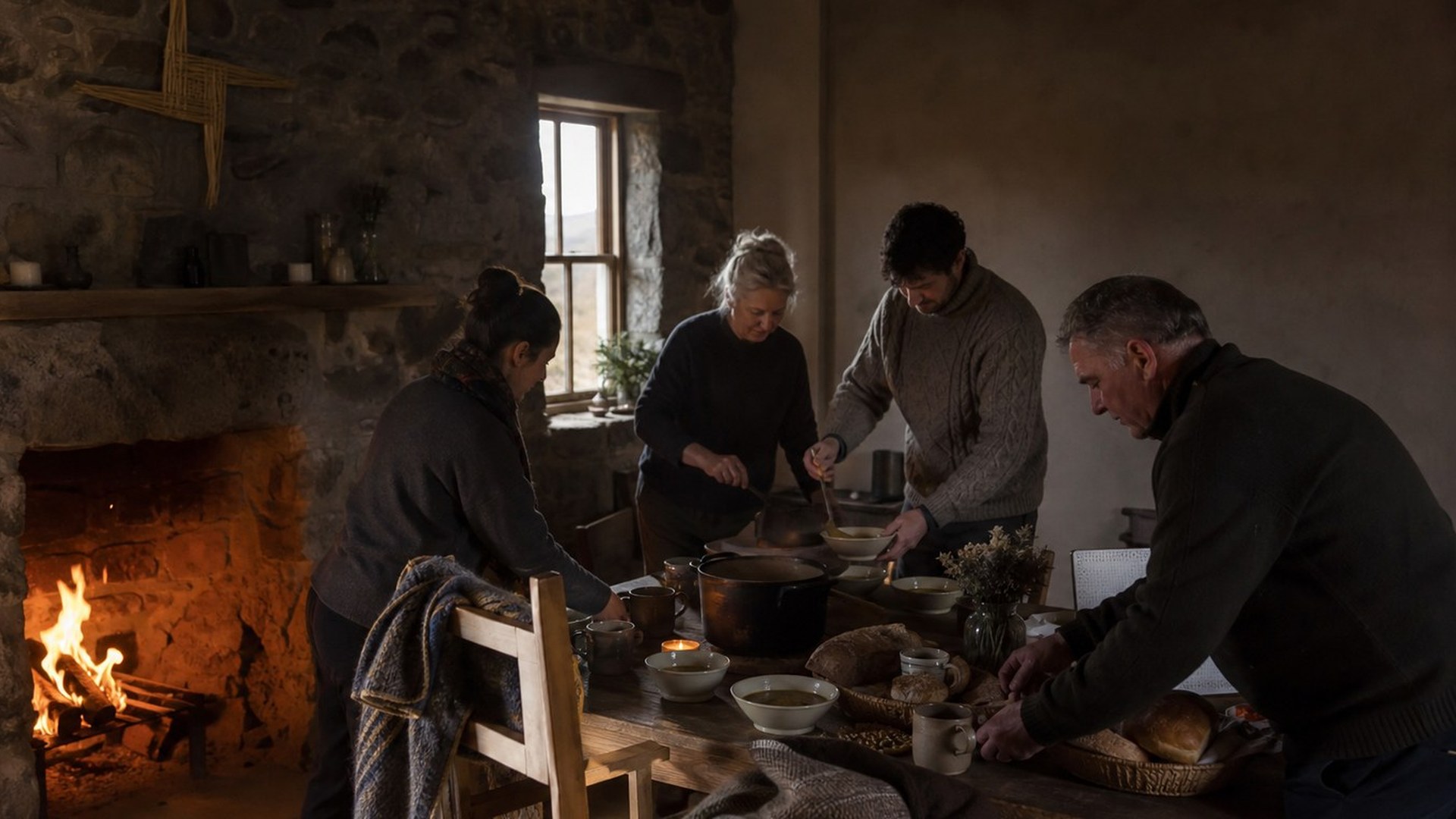
At Brigid’s hearth, sacred hospitality is more than welcoming guests. It is a devotional way of tending warmth, nourishment, protection, and care in the home and beyond it. For those who honor Brigid as saint, goddess, ancestor of spirit, or holy presence, the hearth becomes a living center: a place to light a candle, bless food, remember the vulnerable, and turn prayer into action. This practice can be simple, domestic, and deeply grounded in everyday kindness.
What It Means to Gather at Brigid’s Hearth
To gather at Brigid’s hearth is to treat the center of the home as spiritually meaningful. Historically, the hearth was where people cooked, warmed themselves, told stories, and survived winter. In devotional practice, it becomes a symbol of life sustained through care.
Brigid is often associated with flame, healing, poetry, craft, protection, and generosity. A Brigid hearth practice does not require a literal fireplace. A kitchen table, stove, candle shelf, ancestor altar, or quiet corner can become the “hearth” when it is tended with reverence.
The mental model is simple: the flame represents sacred presence; the food represents nourishment; the home represents shelter; the practitioner becomes a caretaker of warmth. Gathering there means asking, “How can this home become a place of blessing?”
Sacred Hospitality as a Devotional Practice
Sacred hospitality means receiving life with respect. It includes welcoming guests, but it also includes feeding your household, making space for grief, offering comfort, and protecting the dignity of others.
In Brigid-centered devotion, hospitality is not performance. It is not about having a perfect home, expensive tools, or elaborate rituals. It is the spiritual discipline of making warmth available. A cup of tea offered with attention, a candle lit for someone ill, a meal shared with a neighbor, or a prayer spoken before cooking can all be acts of sacred hospitality.
The key is intention joined with action. Prayer without care can become empty; care without spiritual attention may become exhausting. At Brigid’s hearth, the two are woven together: bless the bread, then share it; light the flame, then answer the need.
Preparing a Brigid Hearth Space
Choose a place that naturally relates to warmth, food, or gathering. This might be near the stove, on a kitchen shelf, beside a fireplace, or on a small devotional table. If you already maintain an ancestor altar, you may create a nearby Brigid space rather than crowding everything together.
Keep the setup simple and safe. You might include a candle or electric light, a small bowl for water, a clean cloth, a Brigid’s cross, a spoon, a small dish for offerings, or a written prayer. White, green, red, or flame-colored cloths are common choices, but use what feels reverent and available.
Before arranging objects, clean the area. Wipe the surface, remove clutter, and decide what the space is for: blessing food, praying for healing, honoring hospitality, or supporting community care. A clear purpose keeps the hearth from becoming decorative only. If using flame, place it away from fabric, pets, children, and drafts.
Simple Hearth Practices for Brigid Devotion
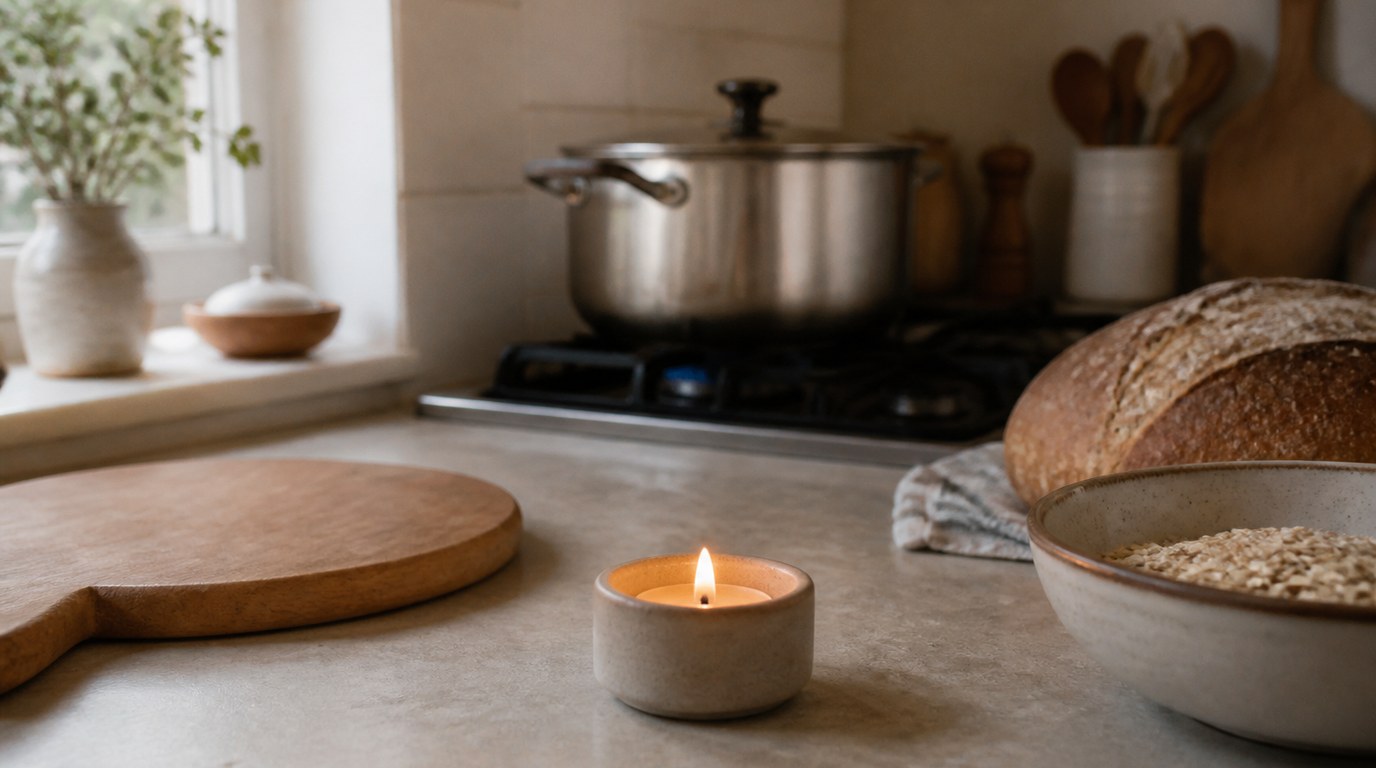
Begin with small practices that can be repeated. Consistency matters more than complexity.
Light a candle before cooking and say, “Brigid, bless this food and all who hunger.” If flame is not safe, turn on a small lamp or touch the stove before it heats. The point is to mark the moment with attention.
Offer the first sip of tea, coffee, or water. Place it in a small cup for a few minutes and dedicate it to Brigid’s blessing, healing work, and the well-being of the household. Dispose of offerings respectfully, such as pouring water outside or into a clean sink with thanks.
Bless practical tools. A wooden spoon, apron, kettle, recipe book, or mending basket can become part of hearth devotion. Hold the item and ask that it serve nourishment, skill, and care.
Keep a hearth list. Write the names of people who need support: the sick, grieving, lonely, displaced, or overburdened. Read the list aloud once a week, then choose one real action: send food, make a call, donate, volunteer, or rest so you can continue caring wisely.
Community Care at the Hearth
A Brigid hearth is not only inward-facing. It should strengthen the practitioner’s ability to serve the wider community. The home becomes a source of steadiness, not a hiding place from the world.
Community care can be modest and concrete. Cook extra soup for someone recovering from illness. Keep shelf-stable food for a local pantry. Offer childcare support when possible. Check on elders during storms. Share skills such as mending, budgeting, herbal knowledge, writing, or transportation.
Ritual can help prevent burnout by giving care a rhythm. Before helping, ask for blessing and clarity. After helping, wash your hands, breathe, and release what is not yours to carry. Sacred hospitality does not mean endless availability. A tended hearth needs boundaries, rest, and shared responsibility.
Including Ancestors in Brigid’s Hearth Practice
Ancestor veneration fits naturally with hearth devotion because many ancestors lived through the labor of feeding, sheltering, repairing, and protecting their households. Even when ancestral relationships are complicated, you can honor the well and wise dead: those who support healing, dignity, and life.
If you keep an ancestor altar, invite your beloved dead into the work of hospitality. Place a small portion of bread, tea, or water for them and say, “May the good ancestors stand with this household in warmth and care.” You can also ask them to guide your hands in cooking, mending, parenting, or peacemaking.
Keep boundaries clear. Brigid’s hearth space and the ancestor altar may be connected, but they do not have to be the same. Brigid may be honored as a holy power of the hearth, while ancestors are honored as kin and lineage. Let each relationship remain distinct and respectful.
A Short Brigid Hearth Ritual for Hospitality and Care
Prepare a candle or lamp, a cup of water, and a small piece of bread or other simple food. Stand or sit at your hearth space. Take three slow breaths.
Light the candle or lamp and say:
“Brigid of the hearth flame,
keeper of warmth, healing, and skill,
bless this home as a place of welcome and care.”
Touch the cup of water. Say:
“May all who thirst receive refreshment.
May all who grieve receive comfort.
May all who labor receive strength.”
Hold the bread or food. Say:
“May this household be nourished,
and may our nourishment teach us generosity.”
Name one person, family, group, or community concern in need of care. Speak one action you will take, however small: “I will call,” “I will cook,” “I will donate,” “I will rest,” or “I will ask for help.”
If you honor ancestors, add:
“Good ancestors, bless this work of warmth and protection.”
Close by giving thanks. Let the candle burn briefly under supervision, then extinguish it safely.
Common Mistakes to Avoid

Do not confuse sacred hospitality with self-erasure. Brigid’s hearth should support wise care, not exhaustion or resentment.
Do not leave candles unattended or place offerings where they create mess, pests, or danger. Safety is part of reverence.
Avoid treating hospitality as aesthetics. A beautiful altar means little if it never leads to patience, nourishment, repair, or generosity.
Finally, do not claim one exclusive interpretation of Brigid. Many people approach her through different devotional, cultural, and religious paths. Practice with humility.
FAQ
What Should a Beginner Know First About at Brigids Hearth Sacred Hospitality and Community Care?
Begin with the hearth as a symbol of warmth, nourishment, and protection. You do not need elaborate tools. A candle, a clean space, a simple prayer, and one concrete act of care are enough to start a meaningful Brigid hearth practice.
What Matters Most When Evaluating at Brigids Hearth Sacred Hospitality and Community Care?
Look for the balance between devotion and action. A strong practice honors Brigid with prayer, flame, offerings, or blessing, but also expresses that devotion through real hospitality: feeding, comforting, protecting, listening, and supporting others in practical ways.
What Mistakes Should Readers Avoid with at Brigids Hearth Sacred Hospitality and Community Care?
Avoid overcomplicating the practice, ignoring fire safety, or turning hospitality into obligation without boundaries. Also avoid reducing Brigid to decoration. The hearth practice should cultivate reverence, responsibility, and sustainable care, not spiritual performance or personal burnout.
What Is the Next Logical Step After Learning About at Brigids Hearth Sacred Hospitality and Community Care?
Choose one small weekly practice. Light a candle before a meal, bless water for the household, keep a care list, or make a food offering with thanks. Then pair the ritual with one practical act of hospitality or community support.