
Is Groundhog Day an Imbolc Tradition?
Not as a documented survival of an ancient Irish rite. Imbolc and St Brigid’s Day fall on February 1, an opening of spring in the Irish seasonal calendar. Candlemas, a Christian holiday associated with February weather sayings, falls on February 2, as does Groundhog Day. All three turn attention toward the end of winter, but nearby dates and a shared seasonal concern do not make them the same observance.
The more specific history of the American custom runs through Candlemas weather lore, a German belief about forecasting animals, and Pennsylvania German settlers’ substitution of a local groundhog. A proposed connection to older Celtic seasonal calendars belongs to a broader discussion of influence, not to a proven account of how the groundhog entered the tradition.
What Imbolc and St Brigid’s Day Mark
Imbolc is an Irish seasonal turning point. The National Museum of Ireland places St Brigid’s Day on February 1 at the opening of spring as a seasonal threshold. “Opening” is useful here: it names a change in the seasonal calendar without requiring winter weather to have ended. People could mark the approach of spring while still living with winter’s conditions.
The museum records St Brigid’s Day customs, including protective crosses, and identifies older goddess associations with the day. These details show that its history has layers. They do not mean that customs associated with St Brigid can automatically be assigned to the older goddess tradition, or that the saint and goddess traditions are interchangeable. A protective cross is evidence of a documented St Brigid’s Day custom; its existence alone does not establish what people did at an ancient Imbolc celebration.
That limit matters because, as the Library of Congress folklife discussion notes, details of ancient Imbolc celebrations are poorly known. Later customs can help readers understand the significance of February 1 in Irish seasonal life, but they cannot fill every gap in the ancient record. Recasting a surviving custom as an unchanged ancient ceremony would turn an association into a claim the evidence does not support. It is possible to recognize the day’s older seasonal significance without claiming to have recovered a complete rite.
This Irish context helps explain why Imbolc comes up in conversations about Groundhog Day: both direct attention to the transition toward spring. It does not, by itself, explain the animal or its shadow. Those features belong to a more traceable weather-lore story.
How Candlemas Became a Day for Weather Sayings
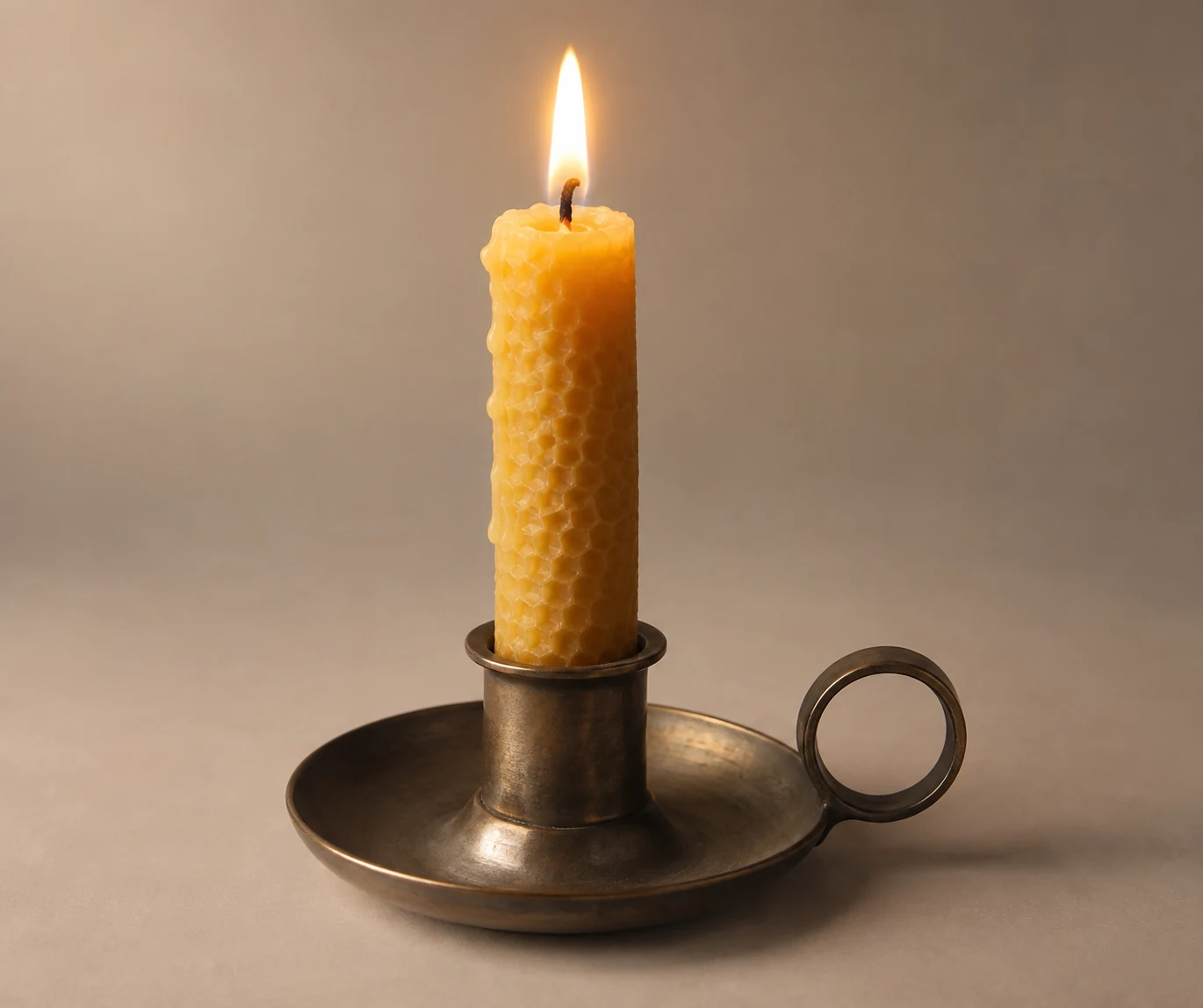
Candlemas is the Christian holiday associated with the February weather tradition behind Groundhog Day. On February 2, it provided an occasion for sayings about what the day’s weather might mean for the rest of winter. The Library of Congress documents an older Candlemas rhyme in which fair, bright weather foretells more winter, rather than an early spring. The rhyme is evidence of weather folklore, not evidence that the saying could predict the season.
That logic can initially seem backward. If someone longs for spring, why would sunshine be bad news? In the saying, the brightness of this particular day is read as a sign that winter has more to give. The later animal story turns that condition into a scene: sunshine lets an animal encounter its shadow, and its response becomes the sign of continuing winter. A cloudy day, by contrast, does not set up the same shadow encounter.
Candlemas thus helps explain when the forecast is made and why a bright day carries an unwelcome meaning. It does not, on its own, explain why Americans watch a groundhog. For that, the weather saying must be distinguished from the German animal lore that gave February sunshine a character and an action.
Why the Forecasting Animal Became a Groundhog
In German Candlemas lore quoted by the Library of Congress, a badger encounters sunshine and retreats. Rutgers describes the European forecasting belief as involving a badger or hedgehog. In either version, the animal is part of a familiar pattern: a bright February day prompts its response, which people read as a sign that winter will continue. The groundhog was not the original animal in this account.
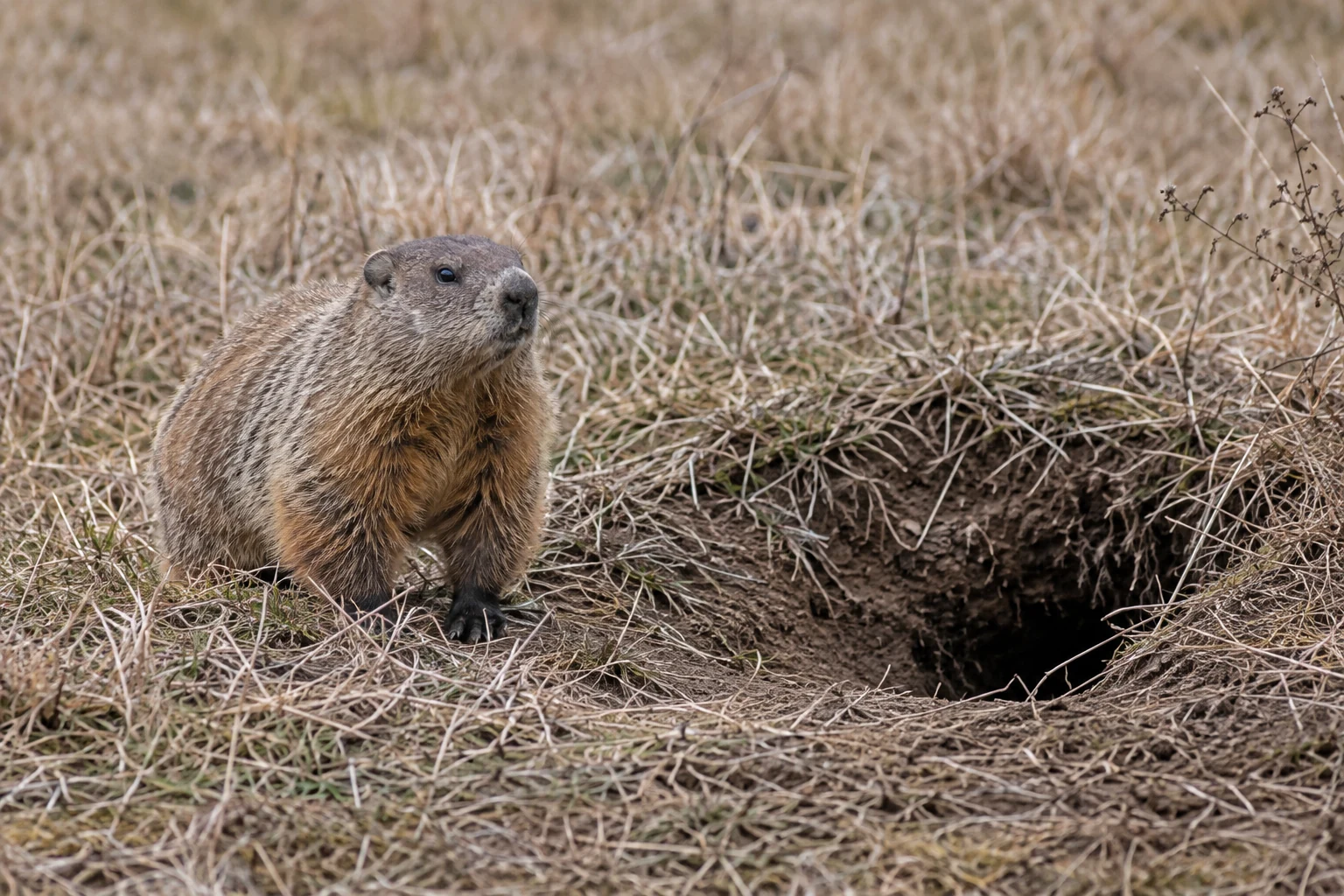
Pennsylvania German settlers brought the animal-weather belief to America. There, they substituted the locally familiar groundhog for the European forecasting animal. The creature changed, but the parts that made the story recognizable remained: February 2, sunshine or a shadow, and a reading about how much winter was left. Both Rutgers and the National Weather Service connect German migration and this local substitution to the American custom.
The substitution shows how a tradition can change without arriving as an entirely new invention or remaining an untouched copy. Settlers could continue telling a weather story they knew while giving its central role to an animal familiar in Pennsylvania. That is a more concrete explanation for the groundhog than imagining one in an ancient Irish observance. It accounts for both the continuity of the shadow belief and the difference between the European and American animals.
The animal’s action makes the forecast memorable, but its role is folkloric. A retreat in the story expresses what a bright day is taken to mean; it does not demonstrate that the animal has a special ability to judge the coming season.
What the Pennsylvania Dates Actually Document
A Pennsylvania diary entry from 1840 is the earliest mention linking a groundhog with February 2 found by the folklorist cited in the Library of Congress discussion. “Earliest found” is not “first ever.” The entry shows that the association had been recorded by 1840. It cannot establish that nobody observed, discussed, or recorded it elsewhere before then.
Rutgers dates the organized Punxsutawney event to 1887. These dates answer different questions. The diary entry provides an early written trace of the groundhog–February 2 association; the later date identifies an organized event. Calling 1887 the start of every Pennsylvania groundhog belief would overlook the earlier entry. Calling 1840 the first celebration would claim more than that entry proves.
Together, they document an American custom before its organized Punxsutawney form. Neither date traces it to an ancient Irish ceremony. The dates are useful precisely because they clarify what can be established about the Pennsylvania practice without turning a written mention or a public event into evidence of a much older origin.
What “Pagan Roots” Can—and Cannot—Mean
“Pagan roots” can refer to an interpretation of long-range seasonal influence. In the Library of Congress discussion, folklorist Don Yoder offers the view that Celtic seasonal turning points influenced later European calendars. Seen at that scale, Imbolc helps illuminate why the shift toward spring might have remained an important time to mark. This is a scholarly interpretation of deeper patterns, not a record of a particular Imbolc ceremony gradually becoming Groundhog Day.
The comparison has a clear basis. Imbolc marks an Irish seasonal turning point on February 1. On February 2, Candlemas sayings and the groundhog custom ask, in different forms, whether winter will last. The National Weather Service says Groundhog Day resembles Imbolc. “Resembles” allows readers to recognize the adjacent dates and seasonal themes without treating one observance as another under a new name.
A narrower question needs narrower evidence: How did a groundhog become the American forecasting animal? Here the accounts point to German Candlemas animal lore, Pennsylvania German migration, and substitution of a locally familiar creature. That sequence explains a feature the broad seasonal comparison cannot explain. Conversely, tracing the animal custom does not settle every question about influences on European seasonal calendars. The two accounts work at different scales.
The distinction also prevents a tempting shortcut. A shared concern with spring does not show that one community passed a specific rite to another, and adjacent dates do not supply the missing steps of that transmission. Details of ancient Imbolc celebrations are poorly known; the documented Pennsylvania story concerns a German-linked animal-weather belief. Yoder’s interpretation can be considered without turning it into proof of a one-step descent from ancient Ireland to Punxsutawney.
So Imbolc belongs in a discussion of Groundhog Day’s wider seasonal context, but “pagan roots” should not be used as a substitute for the particular history of the groundhog custom. Keeping those claims separate leaves room for the Irish seasonal observance, the Christian holiday, and the Pennsylvania tradition to retain their distinct histories.
Using the Connection Without Collapsing the Traditions
The shared attention to winter’s end can offer a reason to pause in early February without claiming to perform a recovered ancient rite. A reader might notice signs of seasonal change nearby, learn about documented St Brigid’s Day customs, or enjoy Groundhog Day as a weather story. If you mark both dates, name a February 1 reflection for the Irish seasonal occasion and a February 2 weather story for Candlemas or Groundhog Day. That simple distinction lets you participate without calling one observance a reenactment of another. Those choices can be adapted to one’s own tradition and circumstances while leaving each observance’s cultural identity intact.
The groundhog’s shadow is best treated in that spirit. Rutgers’ folklorist says groundhog predictions do not perform well as scientific forecasts. The story can still express the hope—and uncertainty—people feel near winter’s end; appreciating it does not require trusting its prediction.
Imbolc and St Brigid’s Day mark an Irish opening of spring, Candlemas carries February weather sayings, and Pennsylvania’s groundhog tradition gives an animal a role in that lore. Their connection is worth appreciating without calling them the same celebration.