
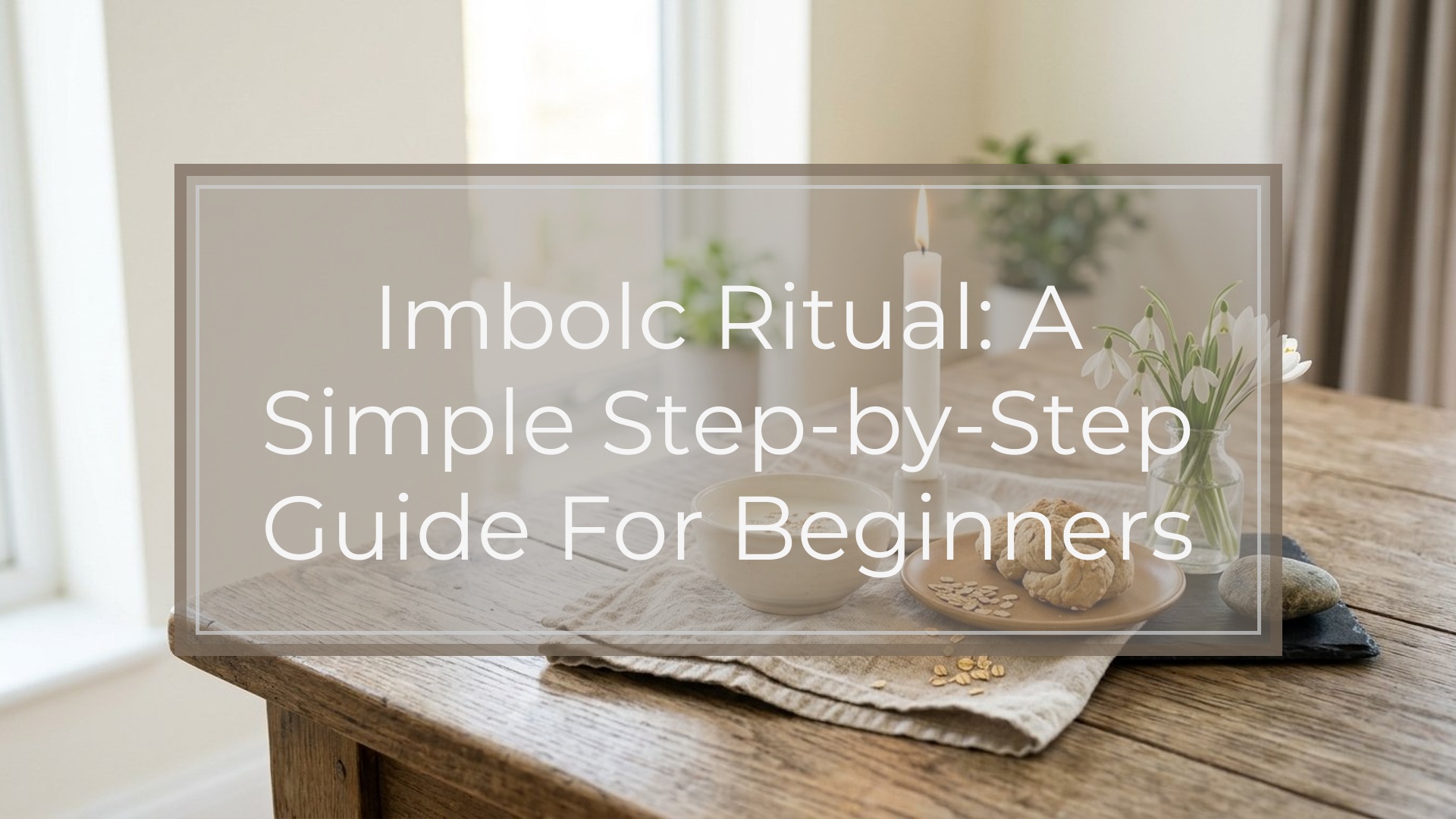
A simple Imbolc ritual can be done at home with a candle, a small bowl of water or milk, a clean surface, and a clear intention. Prepare your space, arrange a modest altar, light a candle to honor the returning light, make an offering, name what you are releasing and welcoming, perform a small cleansing or blessing, sit quietly, and close with gratitude. The ritual is complete when your space feels settled, your intention is clear, and your offerings have been respectfully handled.
Introduction: What This Imbolc Ritual Is for
Imbolc is often observed around February 1–2 in the Northern Hemisphere, at the midpoint between winter solstice and spring equinox. Spiritually, it is a threshold season: the cold may remain, but the light is returning.
This beginner-friendly Imbolc ritual is for renewal, cleansing, hope, and gentle recommitment. It can be practiced at a home altar, ancestor altar, kitchen table, windowsill, or bedside. You do not need elaborate tools or advanced experience. The focus is simple: clear space, offer thanks, welcome light, and choose what you are ready to nurture.
Before You Begin: Prerequisites and Safety
You will need:
- One candle, ideally white, cream, yellow, or any color you already have
- Matches or a lighter
- A small bowl or cup of water, milk, tea, or another simple offering
- A cloth, plate, or tray for your altar space
- Optional: bread, oats, seeds, early flowers, herbs, a written intention, or a photo of ancestors
Choose a time when you can be undisturbed for 15–30 minutes. Wash your hands, silence your phone, and decide whether this ritual is for personal renewal, household blessing, ancestral gratitude, or all three.
Use fire safely. Place the candle on a heatproof surface, keep it away from curtains and paper, and never leave it unattended. If candles are unsafe where you live, use an LED candle instead.
Step 1: Prepare the Ritual Space
Choose a small surface and clear it of clutter. This may be your regular altar, a shelf, a table, or a windowsill. Wipe it clean with a damp cloth.
As you clean, say quietly:
> “I clear this space for peace, renewal, and returning light.”
You may also open a window briefly, sweep the floor, or ring a bell if you use one. Keep the action simple. The goal is not perfection; it is to mark a shift from ordinary activity into ritual attention.
Step 2: Arrange Your Imbolc Altar Items

Place your cloth, plate, or tray down first. Set the candle near the center, with the bowl of water or milk beside it. If you are including ancestors, place a photo, name paper, or small ancestral object toward the back of the altar.
Add only what supports the ritual. Bread may represent nourishment. Seeds may represent beginnings. Fresh water may represent cleansing. A flower or sprig of greenery may represent life returning.
Leave enough room that nothing touches the candle flame. If your altar feels crowded, remove items rather than adding more.
Step 3: Light the Candle and Welcome the Returning Light
Stand or sit before the altar. Take three slow breaths. Light the candle carefully.
Say:
> “At Imbolc, I welcome the returning light.
> May warmth grow in this home.
> May clarity return to my heart.
> May what is ready to awaken begin gently.”
If you honor Brigid, a deity, saints, spirits, land, or ancestors, you may name them here with respect. If you do not work with specific beings, simply address the season, your home, or your own spirit.
Let the candle burn as the living center of the ritual.
Step 4: Offer Water, Milk, or a Simple Seasonal Gift
Lift the bowl or cup slightly with both hands. Speak plainly:
> “I offer this with gratitude.
> May this home be blessed with care, warmth, and protection.”
Place the offering back on the altar. If you are including ancestors, you can add:
> “To my well and loving ancestors, remembered and forgotten, I offer thanks.”
Use only food or drink that is safe to leave out briefly. If you have pets or children, keep offerings out of reach. Do not leave milk or perishable food on the altar for many hours. A short offering is enough.
Step 5: Name What You Are Releasing and What You Are Welcoming

Take a small piece of paper and write two short lines:
- “I release…”
- “I welcome…”
Be specific but gentle. For example:
- “I release the belief that I must rush my healing.”
- “I welcome steady energy and honest rest.”
Read the lines aloud. If speaking aloud is not possible, read them silently with full attention.
Hold the paper near your heart, not near the flame. Notice whether your body tightens, softens, or resists. You do not have to force a dramatic feeling. Naming the truth clearly is the ritual action.
Place the paper on the altar.
Step 6: Perform a Small Act of Cleansing or Blessing
Dip your fingers lightly into the water, or hold your hands over the bowl if touching it does not feel right. Touch a little water to your forehead, heart, or hands.
Say:
> “May my thoughts be clear.
> May my heart be steady.
> May my hands serve what is good.”
You can also bless the threshold of your home by touching a bit of water to the doorframe, or bless your workspace, kitchen, or altar tools. Use only a small amount of liquid, and avoid surfaces that may stain or warp.
This step makes the intention physical and practical.
Step 7: Sit in Silence and Listen
Sit quietly for three to seven minutes. Watch the candle flame, lower your gaze, or close your eyes.
Do not strain for a message. Simply notice what arises: a memory, a feeling, a body sensation, a practical idea, or nothing at all. Silence is still useful even when it feels ordinary.
If you receive a clear next action, such as resting, cleaning, calling someone, or beginning a project slowly, remember it. Imbolc often works through small beginnings rather than sudden transformation.
Step 8: Close the Ritual with Gratitude
When you feel complete, place your hands together or rest them on the altar.
Say:
> “Thank you for the light that returns.
> Thank you for this home, this body, this breath.
> May this ritual be complete.
> May its blessings unfold with care.”
Extinguish the candle safely. Do not blow it out if that feels disrespectful in your practice; use a snuffer or pinch it out with care. Otherwise, blowing it out is fine.
Dispose of offerings respectfully. Water can be poured at the base of a plant, outside on the earth, or down the sink with thanks. Food can be composted or placed outside only if safe for local animals.
How to Know Your Imbolc Ritual Worked
An Imbolc ritual has “worked” when it has helped you create a clear moment of renewal. Look for grounded signs rather than dramatic proof.
You may feel calmer, lighter, more focused, or emotionally honest. You may know one small next step. Your altar may feel settled, and your intention may feel easier to remember.
The result can also be subtle: a clean space, a named release, a respectful offering, and a completed closing. If you moved through the steps with sincerity and safety, the ritual was complete.
Common Imbolc Ritual Mistakes and Troubleshooting
One common mistake is trying to make the ritual too elaborate. If you become overwhelmed, remove extra items and return to candle, offering, intention, silence, and gratitude.
Another mistake is leaving candles or perishable offerings unattended. Set a timer if needed, and clean up promptly.
If you feel nothing, do not assume you failed. Some rituals feel quiet because they are grounding rather than emotional. Write down your intention and revisit it in a week.
If you feel uneasy, close the ritual immediately: thank the space, extinguish the candle, dispose of offerings, wash your hands, and do something ordinary like drinking water or eating.
If you cannot use fire, an LED candle still works.
FAQ
What Is the First Step Someone Should Take with Imbolc Ritual?
The first step is to prepare a clean, safe ritual space. Choose a small surface, remove clutter, wipe it down, and decide your purpose. Before lighting anything, make sure candles are stable, offerings are ready, and you have enough quiet time to finish.
What Can Go Wrong When Following Imbolc Ritual Advice?
The main problems are practical: unsafe candle placement, unattended flame, spoiled offerings, or trying to include too many tools. Emotionally, you may expect a dramatic experience and feel disappointed. Keep it simple, close respectfully, and treat quiet results as valid.
How Long Does It Usually Take to Work Through Imbolc Ritual?
Most beginners can complete this Imbolc ritual in 15–30 minutes. If you keep the altar simple and use a short silence period, it may take less. If you journal, clean more deeply, or include ancestor prayers, allow extra time.
How Can a Beginner Tell Whether Imbolc Ritual Worked?
A beginner can tell the ritual worked if the space feels complete, the candle and offerings were handled safely, and the intention is clear. You may feel peaceful, focused, or simply more honest. The clearest sign is knowing one small next step.