
To create an altar as a focal point for awakening your spiritual self, choose a quiet place, clear it physically and energetically, set a simple intention, and add meaningful objects such as a cloth, candle, natural elements, photos, symbols, or offerings. Arrange the altar so it draws your attention inward, then use it daily for prayer, meditation, reflection, gratitude, or ancestor connection.
Your altar does not need to be elaborate, expensive, or tied to one specific tradition. It needs to feel intentional, respectful, and easy to return to. Think of it as a dedicated place where your inner life is invited to speak more clearly.
Quick answer: To create an altar as a focal point for awakening your spiritual self, choose a quiet and respectful location, clean the space, set one clear intention, place a central object that represents your spiritual focus, and add a few supportive items such as light, water, earth elements, ancestor photos, written prayers, or offerings. Keep the arrangement simple, safe, and meaningful. Use the altar regularly for stillness, prayer, gratitude, journaling, or reflection.
Start With the Purpose of Your Spiritual Altar
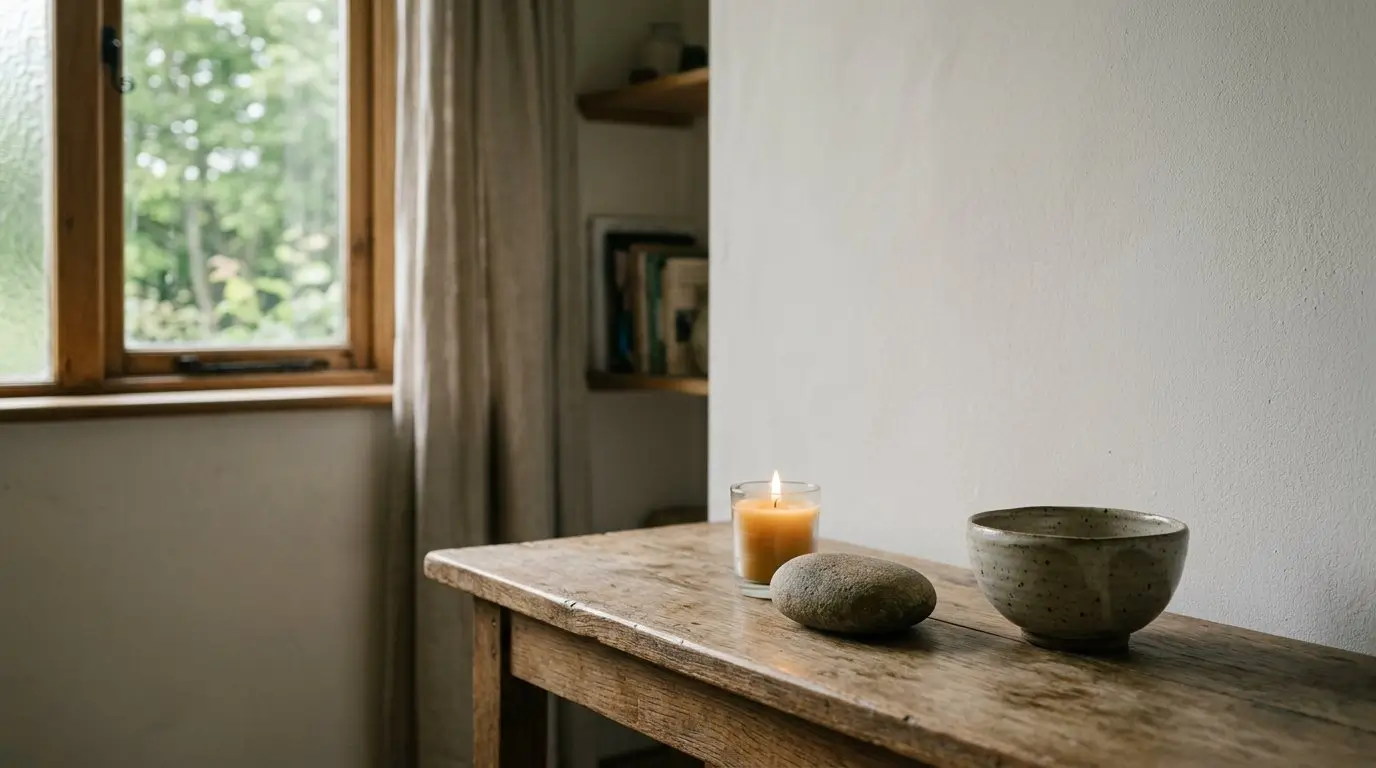
A spiritual altar is a dedicated focal point for attention. It gives your spiritual practice a visible home. When you sit, stand, or pause before it, your mind has somewhere to land and your heart has a place to open.
An altar is not a guarantee of awakening, transformation, or mystical experience. It is a supportive practice space. The repeated act of returning to it can help you become more present, more grounded, and more aware of what you are cultivating within yourself.
Your altar might support:
- Meditation or silent reflection
- Prayer or devotional practice
- Ancestor remembrance
- Gratitude and daily intention
- Emotional grounding
- Seasonal awareness
- Self-reflection and journaling
- Reconnection with your intuition
Before you choose objects, define the purpose of the altar in one sentence. This will help you avoid creating a space that looks beautiful but feels unclear.
For example:
- “This altar helps me listen to my inner guidance.”
- “This altar honors my ancestors and strengthens my roots.”
- “This altar reminds me to return to presence each morning.”
- “This altar supports gratitude, courage, and spiritual clarity.”
Use this prompt before you begin:
What quality of my spiritual self am I ready to listen to or cultivate?
Your answer might be peace, intuition, devotion, courage, compassion, ancestral connection, or truth. Let that quality guide every choice you make.
Gather Your Materials and Choose the Right Location
You can create a powerful altar with items you already own. Cost, size, and visual drama do not determine spiritual value. A single candle on a clean shelf can be more meaningful than a crowded arrangement of objects chosen only because they look “spiritual.”
Basic altar materials may include:
- A small table, shelf, tray, box, or windowsill
- A cloth, mat, scarf, or natural base
- A candle or flameless light
- A small bowl for water, stones, herbs, or offerings
- Incense, dried herbs, or essential oils, if appropriate for you
- A journal and pen
- Photos of ancestors, loved ones, teachers, or meaningful places
- Natural items such as stones, shells, flowers, leaves, or wood
- Sacred symbols from your own path or heritage
- Offerings such as water, flowers, fruit, tea, or written words
Choose a location that is quiet, clean, stable, accessible, and respectful. It should be somewhere you can approach without moving piles of clutter or worrying that it will be knocked over.
If you live with pets, children, roommates, or limited space, adapt the altar to your real life. A tray altar can be moved when needed. A drawer altar can be opened only during practice. A travel altar might fit inside a small pouch or box. A corner shelf or windowsill can work beautifully.
Avoid placing your altar where it will become an accidental storage area. If possible, keep it away from electronics, dirty laundry, trash, or heavy household traffic.
| Altar item | What it may represent | Practical notes |
|---|---|---|
| Cloth, mat, or tray | A defined sacred space | Choose something clean and easy to maintain |
| Candle or light | Presence, clarity, devotion, awakening | Never leave flames unattended; use flameless candles if needed |
| Bowl of water | Emotion, cleansing, flow, offering | Refresh regularly; keep away from electronics |
| Stone, crystal, or shell | Earth, stability, memory, nature | Choose items respectfully and avoid overloading the altar |
| Incense or herbs | Air, prayer, purification, atmosphere | Consider smoke sensitivity, pets, ventilation, and cultural respect |
| Ancestor photo | Lineage, remembrance, family connection | Use photos respectfully and according to your family practice |
| Journal or written prayer | Reflection, intention, spiritual listening | Keep nearby if writing is part of your practice |
| Flowers, fruit, tea, or food | Gratitude, beauty, offering | Remove spoiled offerings promptly |
| Statue or symbol | Devotion, guidance, spiritual focus | Use symbols you understand and can approach respectfully |
Step-by-Step: How to Create the Altar
1. Clear and clean the physical space
Begin by removing unrelated clutter. Wipe the surface, dust the area, and make the space feel cared for. This first step matters because it signals that the altar is not just decoration; it is a place of attention.
If you like, open a window, ring a bell, clap softly, or take a few deep breaths to mark the transition. Keep it simple. The most important action is care.
2. Set an intention in plain words
Before placing anything on the altar, speak or write your intention. Avoid making it complicated.
You might say:
“This space helps me return to presence and inner guidance.”
Or:
“This altar supports my spiritual awakening through honesty, gratitude, and stillness.”
If you are creating an ancestor altar, you might say:
“This space honors my loving and well ancestors and helps me remember where I come from.”
The intention becomes the inner center of the altar.
3. Lay a foundation
Place a cloth, tray, mat, wooden board, or natural base on the surface. This visually separates the altar from ordinary household space.
The foundation does not need to be ornate. Choose a color, fabric, or texture that supports your intention. White may feel clear and simple. Earth tones may feel grounding. A family cloth, scarf, or handmade textile may carry personal meaning.
4. Add one central focal object
Choose one main object that naturally draws your attention. This might be:
- A candle
- A stone
- A bowl
- A photo
- A small statue
- A written prayer
- A symbol of your spiritual path
- A natural object from a meaningful place
This object should represent spiritual awakening to you. It does not need to impress anyone else. When your eyes rest on it, it should help you remember why the altar exists.
5. Add supporting elements thoughtfully
Now add a few items that support the central intention. You might include elements such as earth, water, light, and air:
- Earth: stone, soil, wood, flowers, seeds
- Water: a small bowl or cup of fresh water
- Light: candle, lantern, or flameless light
- Air or scent: incense, herbs, breath, bell, or open window
You may also add ancestor photos, written prayers, affirmations, seasonal objects, or offerings. If you include ancestors, choose images or names that feel respectful and appropriate. Some people honor only deceased relatives; others include spiritual teachers, cultural elders, or loving guides. Follow your tradition, conscience, and family boundaries.
6. Arrange the altar with breathing room
Do not crowd the surface. A spiritual altar should feel focused, not visually noisy. Leave space between objects so each one can be seen and approached.
A simple arrangement might include one cloth, one candle, one bowl of water, one photo, and one natural object. That is enough.
If you are unsure, remove one item. Simplicity often strengthens the focal point.
7. Open the altar with a simple gesture
When the altar is arranged, mark the beginning of your relationship with it. You might:
- Light a candle
- Turn on a small lamp
- Place your hand over your heart
- Take three slow breaths
- Say a prayer
- Offer water or flowers
- Sit silently for one minute
The gesture does not have to be dramatic. It simply says, “I am here, and I am listening.”
8. Record your first reflection
Write your intention or first reflection in a journal. This anchors the altar in lived practice rather than appearance.
You might write:
- What am I ready to awaken within myself?
- What am I asking for guidance around?
- What do I want to remember each day?
- What does this altar invite me to practice?
This first entry begins your relationship with the space.
How to Use Your Altar as a Daily Focal Point
An altar becomes meaningful through repeated attention. It does not become powerful because every object is perfect. It becomes a focal point because you return to it with sincerity.
A simple five-minute practice can be enough:
- Arrive. Stand or sit before the altar.
- Breathe. Take three slow breaths.
- Look. Let your eyes rest on the central object.
- Speak or remember your intention.
- Listen. Sit quietly without forcing an answer.
- Give thanks.
- Close. Blow out the candle, bow, touch your heart, or simply step away.
You can adapt this practice to your spiritual style. Some people meditate in silence. Some pray to ancestors. Some pull a card, chant, journal, make a gratitude list, or offer fresh water. Others simply pause for one honest breath before beginning the day.
Consistency helps, but rigid rules are not required. Daily practice can be powerful, but weekly or seasonal practice can also be meaningful. The goal is to build a living relationship with the altar.
Refresh the altar when the intention changes, the season shifts, an offering has expired, or the space feels stagnant. You do not need to constantly rearrange it. Too much changing can become another form of distraction.
Mistakes, Cautions, and Respectful Practice
One common mistake is overcrowding the altar. When every meaningful object is placed there at once, the altar can become visual clutter rather than a focal point. If your eye has nowhere to rest, simplify.
Another mistake is copying spiritual practices from cultures, religions, or lineages without understanding, permission, or respect. It is natural to learn from many sources, but sacred objects and rituals are not just aesthetic choices. Use symbols connected to your own path, heritage, teachers, or sincere study. When in doubt, choose universal elements such as light, water, flowers, breath, gratitude, and silence.
A third mistake is expecting instant spiritual awakening. An altar is not a shortcut. It is a place to practice presence. Some days may feel deep; other days may feel ordinary. Both can be part of the process.
Keep safety in mind:
- Never leave candles or flames unattended.
- Use flameless candles if fire risk is high.
- Be careful with incense, smoke, asthma, allergies, and ventilation.
- Avoid toxic plants, herbs, or oils around pets and children.
- Keep water away from electronics.
- Remove spoiled food, wilted flowers, or stale offerings promptly.
Also consider consent and privacy. Avoid using another person’s photo, name, hair, belongings, or personal items in ritual without consent, unless it is appropriate within your family remembrance or ancestral practice.
A respectful altar is clean, intentional, and cared for.
Troubleshooting and How to Know Your Altar Is Working for You
If your altar feels flat, revisit the intention. Ask whether each object still belongs. Sometimes we add things because they seem spiritual, not because they are meaningful. Remove anything that feels performative, confusing, or obligatory.
If the altar feels distracting, simplify it to three things:
- One cloth or tray
- One candle or light
- One central focal object
Use that arrangement for a week before adding anything else.
If you forget to use the altar, move it somewhere more visible or connect the practice to an existing habit. For example, pause at the altar before morning tea, after brushing your teeth, before journaling, or before going to bed.
If the space feels heavy, clean it. Refresh the water, remove old offerings, dust the surface, open a window, or take a break. Then rebuild the altar with fewer objects and a clearer intention.
Your altar is working for you if it feels:
- Respectful
- Easy to approach
- Visually clear
- Aligned with your intention
- Supportive of quiet attention
- Simple enough to maintain
Success is not measured by dramatic visions, signs, or emotional intensity. It is measured by your consistency, presence, honesty, and relationship with the space. If the altar helps you return to yourself, listen more deeply, honor your roots, or practice gratitude, it is serving its purpose.
FAQ
What should be the main object on an altar for spiritual awakening?
Choose one object that naturally draws your attention inward. It could be a candle, stone, bowl, photo, statue, written prayer, or symbol. The best main object is one that clearly represents your intention and helps you return to presence.
Can I create a spiritual altar if I do not follow a specific religion?
Yes. A spiritual altar can be personal, interfaith, ancestral, nature-based, or completely nonreligious. Focus on intention, respect, stillness, and meaningful objects rather than trying to follow a tradition that is not yours.
How often should I use or refresh my altar?
Use it as often as feels sustainable. Daily practice is helpful, but weekly or seasonal practice can also be meaningful. Refresh offerings, water, flowers, and objects whenever they feel stale, expired, or no longer aligned with your intention.
Can an ancestor altar also be used for awakening my spiritual self?
Yes. An ancestor altar can support spiritual awakening by helping you remember your roots, reflect on inherited wisdom, and practice gratitude. Keep the space respectful, especially when using photos, names, offerings, or family objects.
What if I only have a small space for an altar?
Use a tray, shelf, windowsill, drawer, small box, or travel pouch. A small altar with one candle, one photo, and one meaningful object can be just as powerful as a larger space if it is intentional and cared for.