

Give each altar object a stable identifier and a linked entry that says what the object is, who owns it if known, whom it brings to mind, and where it is now. In that entry, keep known history separate from someone’s recollection and from what the object means to you today. A notebook, document or set of cards can all work; the useful record is the one you can find, understand and update. This is a personal organization method, not a requirement for a remembrance practice.
Give Each Object an Identity Without Marking It
Start with a few objects rather than trying to describe the whole display at once. Assign each one a short, unique ID, such as ALT-01, and put that ID at the top of its entry. Take a simple reference photo and give the image file the same ID. Someone looking at the photo and entry together should be able to identify the object without relying on its place on the display.
A useful description names features that distinguish the item: “small blue cup with a chipped handle” tells a future reader more than “cup.” Add its material and condition if you know them. If you do not know whether a piece is ceramic or another material, describe what you can see and leave the material unknown. The aim is recognition, not a confident-sounding guess.
Give look-alike objects separate IDs. If there are two matching cups, photograph each one and note any distinguishing feature or, if none is visible, which container holds each. Treat a copy separately from an original: a printed copy of a photograph and the photograph it reproduces are two physical items, even if they show the same image. An entry can link their IDs while making clear which item is on display.
Record the actual owner, if known, separately from the person remembered. An object borrowed from a relative might remind you of someone else; that connection does not establish that the remembered person owned it. If ownership is uncertain, write “owner unknown” or “possibly owned by [person], according to [source],” rather than turning an association into a fact. Also note the object’s current location in terms another person could use, such as “display shelf” or “box labeled winter items.”
The ID need not go on the object. Put it on a linked note, a container label or the reference photo instead, especially when a surface is fragile or you do not know how it would respond to marking. For photographs, the Library of Congress says it is preferable to mark the photograph’s housing materials. Label a sleeve or other housing rather than the image itself, and avoid adhesives on originals. A loose label that can be lost is helpful for finding an item, but the entry and reference photo should also identify it on their own.
Record the Story, Its Source and What the Object Means Now
An entry can be short and still preserve the distinctions that matter. Child Bereavement UK’s guidance on memory boxes encourages attaching a story or memory to each object and describes writing a note about why an item is important. That is a useful recordkeeping idea for a remembrance display, though the guidance is about memory boxes, not a rule for altars.
For each ID, use a repeatable set of plain-language fields:
- Object and location: What is it, who owns it if known, and where is it now?
- Remembered person: Who does it bring to mind? This may differ from its owner.
- Story or memory: What has been said about it, and who said it?
- Source and date: Who supplied or recorded the account, and when? Note whether it is a recollection, a written record or something you observed yourself.
- Known and unknown history: Which details can you establish, and which names, dates or connections remain uncertain?
- Present meaning: Why does the object matter to you now, in your own words?
- Privacy: May this entry be shared, kept within the household or held in a restricted record?
These fields do not require a long narrative. “According to Mira, recorded 6 May 2026” tells a later reader whose account they are reading. It does not prove that every event in the account happened exactly as remembered. A recollection may be deeply important without independently verifying a date, an ownership history or a place. If you have separate support for a detail, name it in the entry; otherwise, keep the attribution attached to the claim. Write “I associate this with our family’s welcome” for your interpretation, rather than presenting that feeling as the object’s established historical meaning.
Here is a hypothetical example, not an account of a real family:
> ALT-03 — small blue cup. Reference photo: ALT-03. Current location: display shelf. Actual owner: unknown. Remembered person: Relative A. According to Relative B, recorded 20 October 2026, the cup was brought out during family visits. The date it was made and whether Relative A owned it are unknown. My present association: it reminds me to make room for visitors. Privacy: household record; ask before sharing the recollection outside the household.
The example gives the cup an identity without claiming that Relative B’s memory establishes its ownership. It also lets a future reader see that “making room for visitors” is the writer’s present association, not a quotation from Relative B or a documented fact about the cup. You can be equally direct when very little is known: “I do not know who made this” is a meaningful part of the record.
Privacy can shape how much detail goes in the display copy. If a story includes sensitive family information, a brief entry can say that a fuller account is held in a restricted notebook or file, using the same object ID to connect them. If the display is shared, agree who may read or add to that fuller record. You do not need to make a private recollection public for the object’s meaning to be recorded.
Keep the Record Connected as the Display Changes
Keep the master entries and reference photos apart from fragile originals. Use the same ID in the entry, image filename and any container label so that one can lead you to the others. A paper notebook with printed photos may be enough; a digital document with image files may suit a display that changes often. Either way, make the entry understandable without assuming that its temporary label will always stay attached.
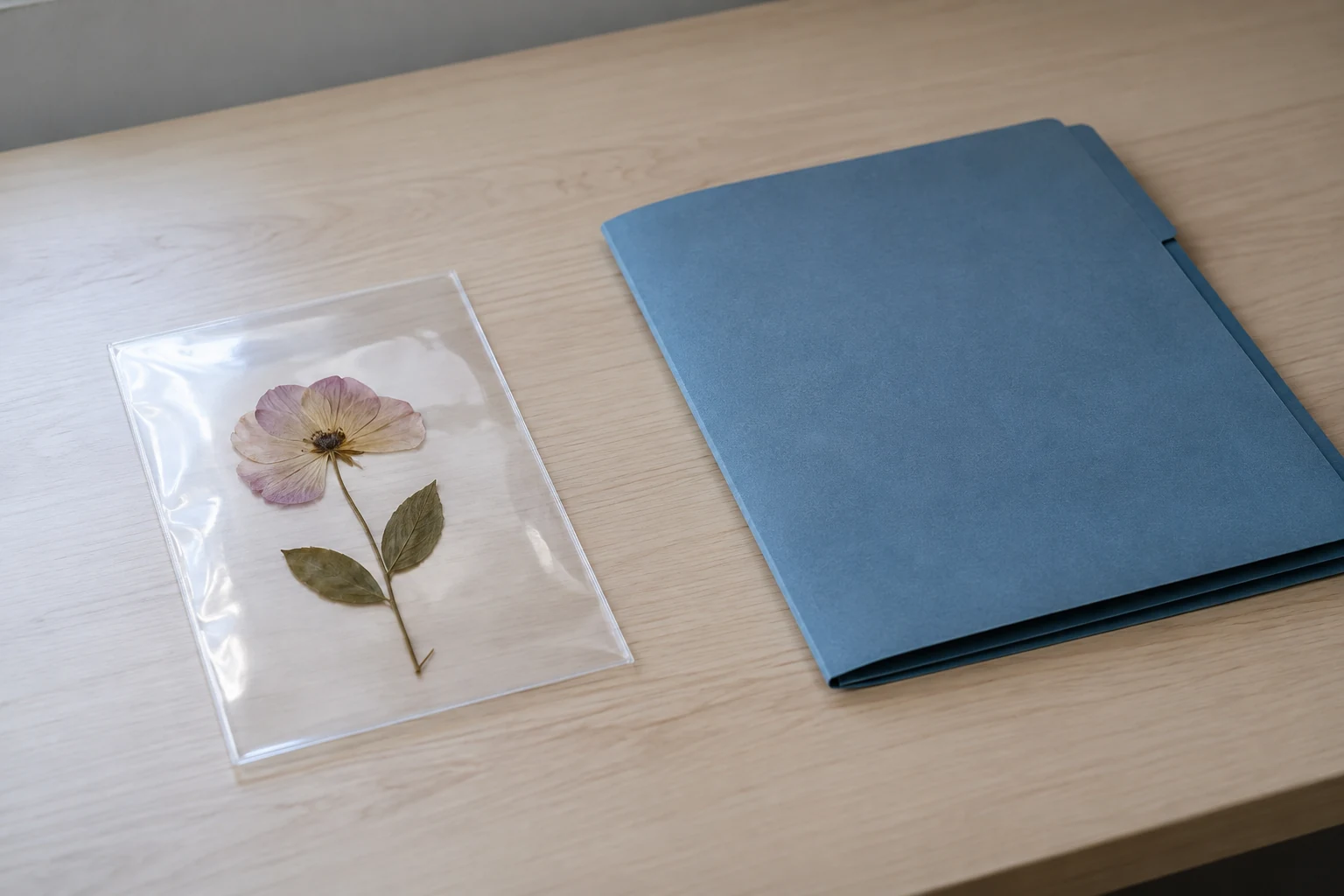
When you rotate or pack an object, update its location and date the move: “Moved from display shelf to blue storage box, 12 January 2027.” Keep its ID even if the object returns to the display later. If your sense of its meaning changes, add a dated note rather than erasing the earlier one. The two notes can show how a personal association developed without suggesting that the object’s history changed.
New information deserves the same care. Suppose a relative says that a cup attributed to one person actually belonged to someone else. Record who offered the correction, when they offered it and what they said. Preserve the earlier attribution as an earlier account, then mark the ownership “disputed” or “not yet verified” if you cannot resolve it. If you do establish the owner, state what supports the correction. This allows people sharing the display to improve the record without silently replacing someone else’s testimony.
Finally, retain a separate copy of the record—such as a backup file or a printed set of entries and reference photos—and update it as the display changes. A missing container label or inaccessible file should not erase the only link between an object and its story. Stable IDs, dated changes and clear attributions make it possible for someone else to understand both what is known about an object and why it matters to the people who keep it.