
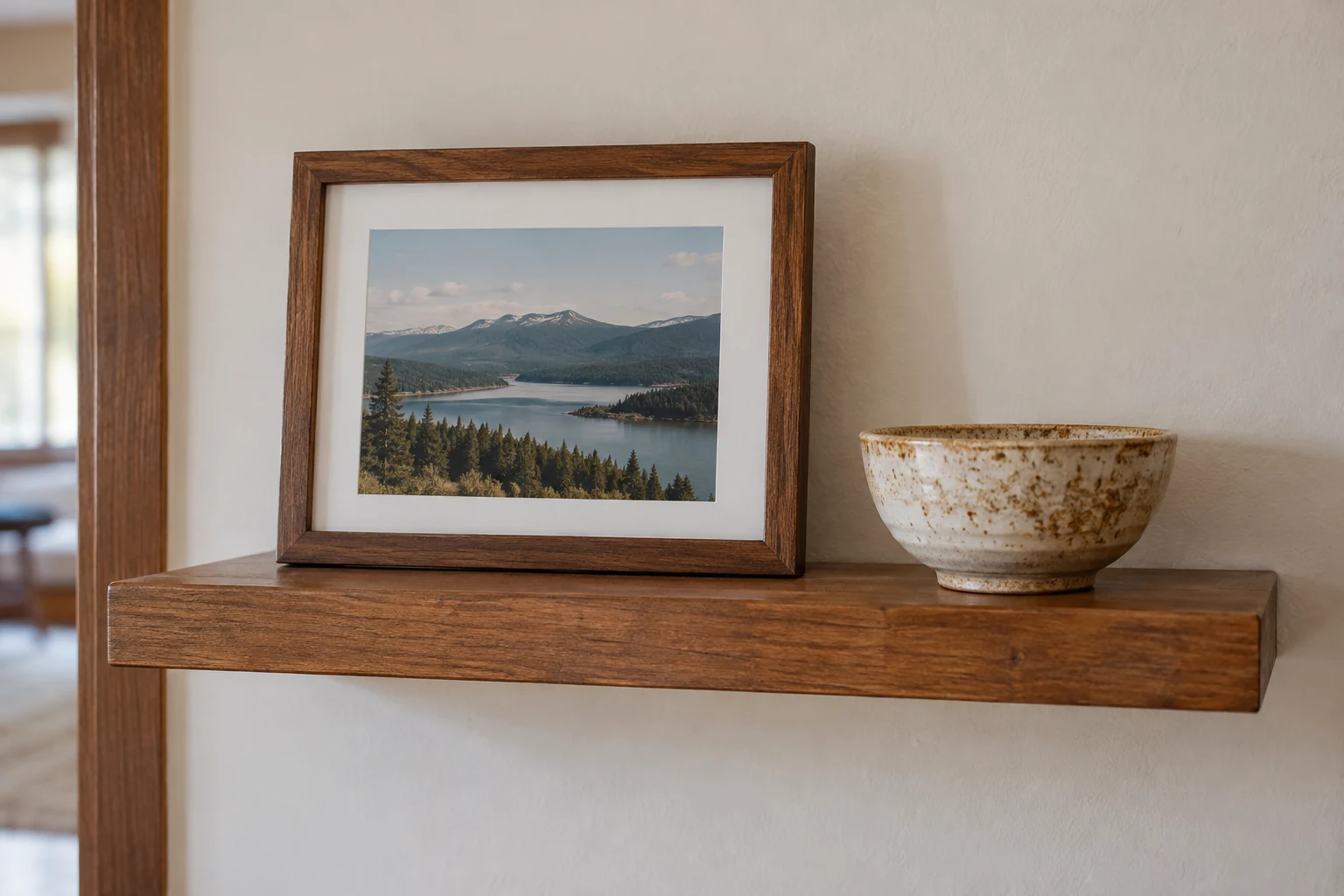
To rotate remembrance shelf objects without losing their stories, record each item’s identity, owner, memory, and location before changing the display. Then move only the objects you have permission to move and can handle safely, updating their locations as you go. A smaller shelf need not mean a smaller personal record: objects in storage can remain identifiable and connected to the people and memories they represent. Rotation is an option, not a schedule or a measure of how someone remembers.
Record What Each Object Means Before Moving It
Start with a photograph of the shelf as it stands. Take a second view if one object hides another, and photograph identifying details that might help you tell similar items apart. The picture preserves the arrangement you began with; it does not have to become the arrangement you keep.
Next, make an inventory of the actual objects, rather than broad entries such as “three photos.” Give each item a distinct identifier—M-01, M-02, and so on—and write a description precise enough to recognize it later. “Small blue cup, chipped at the base” is more useful than “cup.” For two similar framed photographs, note which image and frame belong to each identifier. A notebook, a document, or a simple spreadsheet will work, provided you can find it again.
For each entry, record:
- Identity: identifier, description, and any distinguishing marks.
- Ownership and source: who owns it, who supplied it for the shelf, and where it came from, if known.
- Memory: whose memory it carries, who told the story, and what that person recalls about this particular object.
- Certainty: which details are someone’s recollection, which have independent documentation, and which remain unknown.
- Starting location: its position in the shelf photograph, such as “upper shelf, left of framed portrait.”
Child Bereavement UK’s guidance on memory boxes for bereaved children and young people recommends connecting each object with a story or memory. It also describes people writing a note for an item about why it matters to them. The inventory here adapts that recordkeeping idea to a personal shelf; the organization method is not a shelf practice prescribed by the charity.
For example, an entry might read: “M-03: small blue cup; Mara’s property. Mara remembers her grandfather using it when she visited. Mara supplied this recollection. The cup’s purchase date and whether it was always his are unknown.” That preserves what Mara actually said without turning her memory into a verified account of the cup’s history. If someone later finds a dated photograph or another record, add that evidence separately rather than silently rewriting the original account.
Before deciding what will move, ask the relevant owner. If an item belongs to someone else or is shared, explain where you propose to put it and how its record will stay accessible. Ask family members whose agreement is needed rather than assuming that arranging the shelf gives you authority over everything on it. If agreement is absent, leave the item where it is and make your plan around it. Record an owner’s preference, including a wish to keep an object visible.
Choose a Smaller Display and Move Objects Safely
Decide what you want the shelf to hold now. You might leave enough space to see each item clearly or choose a few objects connected by a theme meaningful to their owner. Neither choice creates an obligation to change them later. Keeping the arrangement unchanged is valid; so is reducing the display once and never setting up a recurring rotation. If the people involved prefer no rotation, the inventory can still make the existing shelf easier to understand.
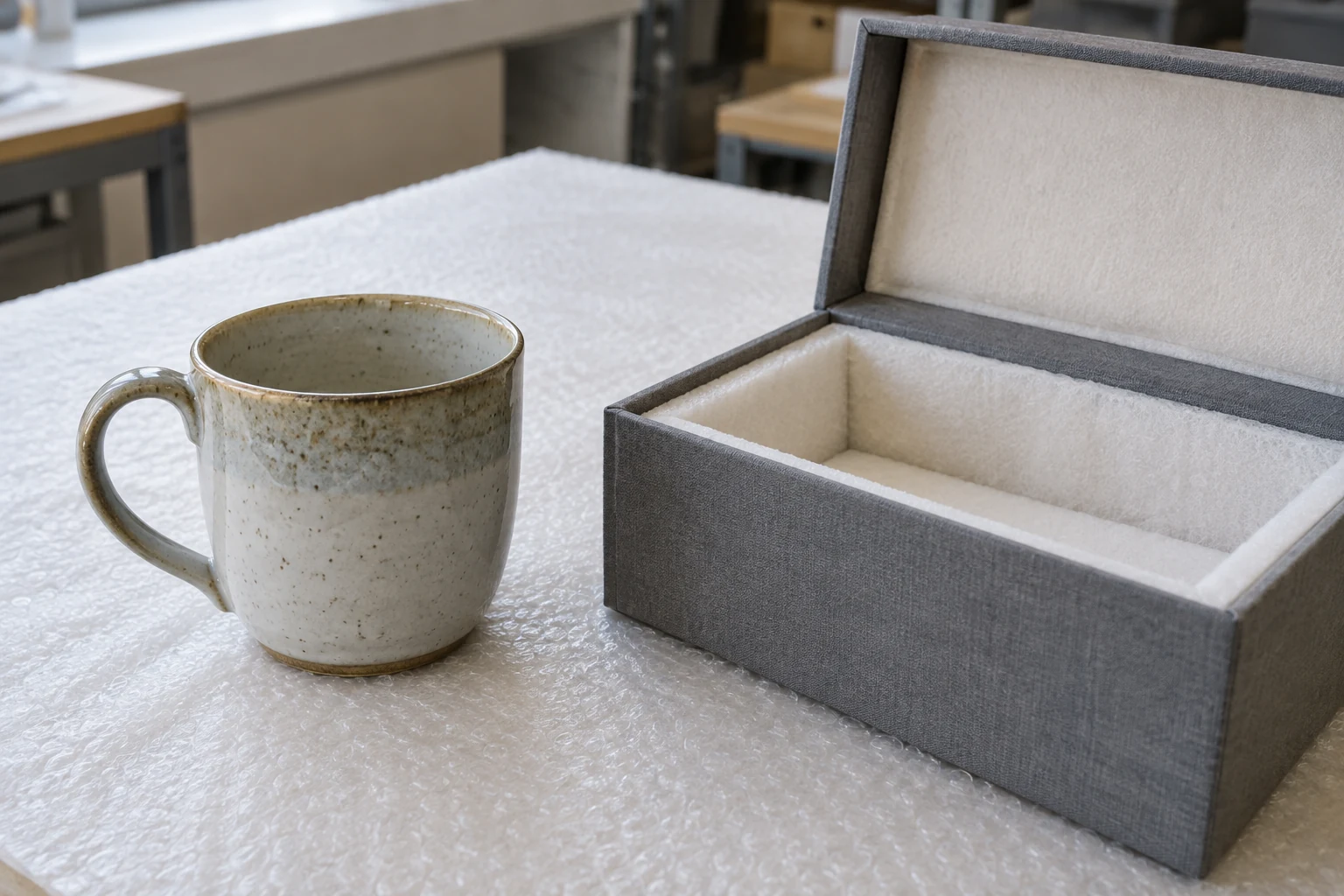
Make two lists: items that will remain visible and items proposed for storage. Check ownership and condition before treating either list as final. The Canadian Conservation Institute advises examining an object before handling it to identify its strong and weak areas. It also advises preparing the new location so it is clean, large enough, and padded if needed. Those checks may change your selection. If M-03’s cup has a fragile handle, for instance, do not lift it by the handle. If you cannot identify a way to support the cup securely, leave it in place and choose another item.
Prepare the destination before taking anything off the shelf. Clear a suitable space for each object, whether that is a new shelf position or a storage container. Choose support and padding according to what the particular item needs; do not place a vulnerable object where other things will press against it. Give photographs appropriate housing rather than leaving loose prints among heavier objects. Clear the route between the shelf and each destination so you are not trying to find space while holding something. These are practical choices for this rotation, not a claim that every remembrance object needs the same storage arrangement.
Move one object at a time. Check its identifier against the inventory, support the object at its sound areas, and set it down at the prepared destination. Keep the identifier linked through the record and container position; you do not need to fasten a label to a fragile surface. A note placed with a suitably housed object, or a clearly identified space in a container, can help you find it without making the object bear the label. After setting it down, record its new location before picking up the next item.
Suppose a shelf holds six inventoried objects and its owner wants room around three. M-03, the cup, stays because its handle needs care; two other agreed-upon objects stay for the owner’s chosen display. The remaining three move separately to prepared, identified spaces. One entry might say “M-04: photograph; photo housing in container B, second position,” while another names a different container and position. “In storage” is not enough to distinguish them. If you reach an object that seems too vulnerable to move safely, stop, leave it where it is, and revise the selection. A smaller display is not worth losing the ability to identify or protect an item.
Keep the Story and Location Current
Use the same identifier in three places: the object’s inventory entry, its identifying note or storage position, and the location record. For every move, write the date, the previous location, and the exact new one. A shelf location could be “upper shelf, right of M-03”; a storage location could be “container B, second position, inside photo housing.” Record the items that stayed, too, so the inventory describes the whole collection rather than only what went into storage. Whenever something moves again, update its current location instead of relying on the last photograph or your memory of a previous arrangement.
Keep the full account even when you want a shorter note beside a displayed object. For M-03, a display note might say, “Blue cup: Mara remembers her grandfather using it during visits.” The inventory can retain Mara’s fuller words, the uncertainty about where the cup came from, her ownership, and its current shelf position. A short note helps someone looking at the shelf; it should not replace the owner’s story or present a recollection as independently verified history.
If an object and its note become separated, pause before reuniting them. Compare the object with the original shelf photograph and the inventory’s identifying details. Ask the person who supplied the story whether the proposed match is right. If those checks do not settle it, mark the identification “uncertain” and keep the possible matches distinct. Guessing can attach the wrong person’s memory to the wrong thing, especially when objects look alike.
Revisit the arrangement when it is useful to you: when someone asks about an item, when a location changes, or when the owner wants a different display. You can also decide to leave it as it is. An object in storage remains part of the personal record when its identity, story, and location remain linked. How much stays visible is the owner’s choice, not a test of remembrance or a promise of emotional closure.