
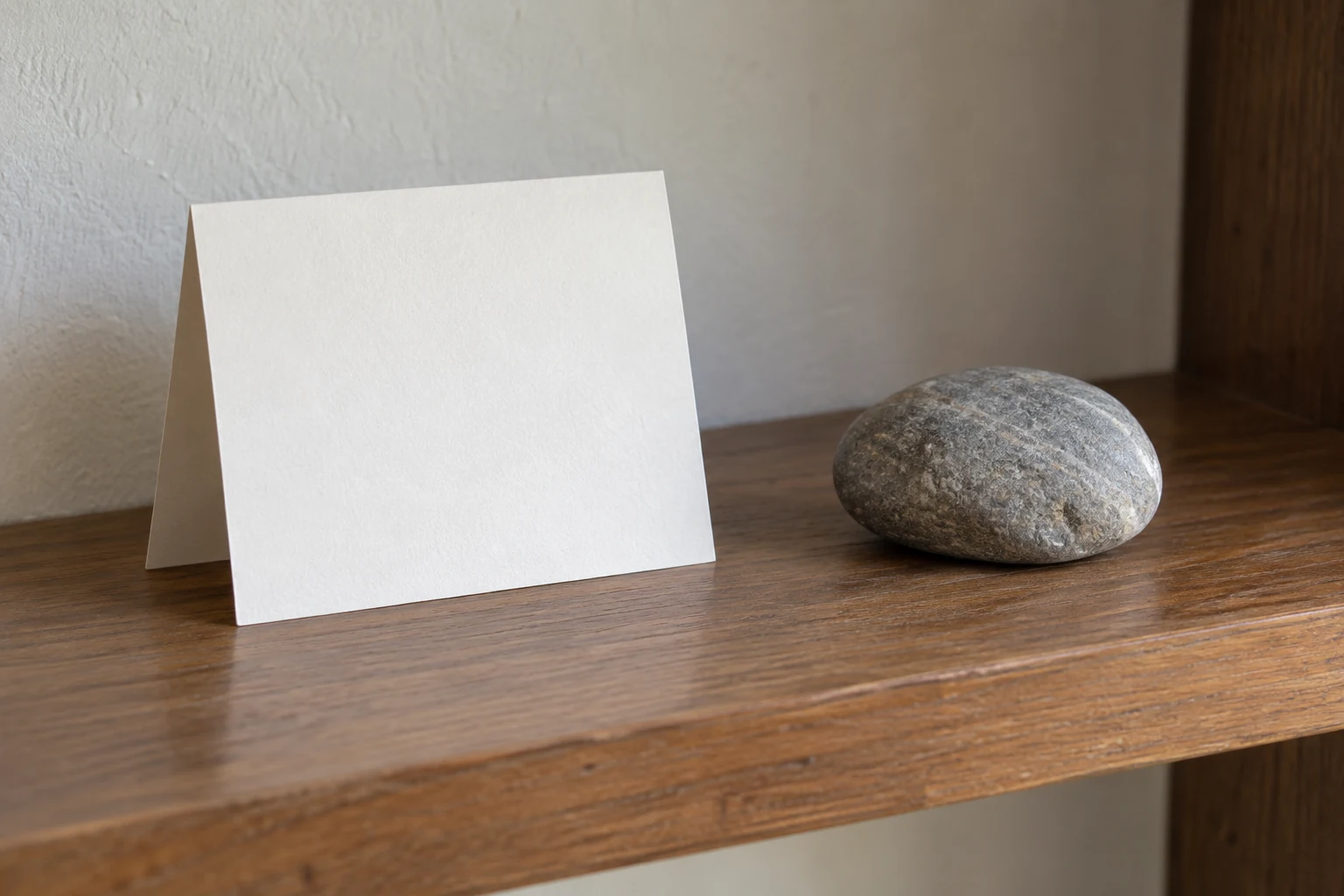
You can create an ancestor remembrance practice without heirlooms by choosing someone—or a family theme—you can describe honestly, making a new reminder only if you want one, and spending a moment remembering in a way that fits your life. An inherited object is not necessary. You might write a card, choose a song, set aside an ordinary object, or use nothing at all. The important distinction is between what you know about the past and what you are making or choosing now. This is your personal practice, not a rule about what remembrance must look like.
Choose What You Can Remember Honestly
Having no family possessions and having little family history are different gaps. You may know a person’s name and stories about them but have nothing they owned. Or you may have no objects and be unsure of names, relationships or events. Neither situation prevents you from choosing a truthful focus.
If you know someone you want to remember, start there. You might write their name and relationship to you, if both are known, then add one thing you personally recall: a conversation, a habit you witnessed or a time you spent together. You do not need a full biography. “I remember sitting with my grandmother after school” is enough for a focus if that is what you remember.
If you know very little, choose broader words that stay within what you know. “Family members whose names I do not know” makes room for remembrance without supplying names. If even a relationship is uncertain, avoid assigning one. You could instead write, “I’m thinking about the people who came before me in my family.” These words describe your intention; they do not claim knowledge of particular lives.
Before writing anything down, it can help to sort possible details into three categories:
- What I know: A detail you can state plainly, such as a name you are sure of or an experience you personally remember.
- What I was told: A family story you can attribute without presenting it as verified history. For example: “I was told that Mara liked to sing; I don’t know whether that story is accurate.”
- What I hope or wonder: Your own feeling, question or wish—not a fact about the person. For example: “I hope she had moments of rest.”
If a name or event is uncertain, the wording can carry that uncertainty: “I’ve heard that her name may have been Mara,” or “I don’t know who was there, but I want to remember that part of my family.” You can also leave the detail out. A blank is more honest than a confident-sounding guess.
Choose your boundaries at the same time as your focus. You may leave out a relationship that is painful, remember only what feels possible, or decide that today is not a day to do this. Remembrance does not require you to describe someone as kind if that was not your experience. It does not require reconciliation, an explanation to relatives or a public account of your family history. The focus only needs to be one you actually want to hold, in words you can stand behind.
Make a New Focus from Words, Music or an Ordinary Object
A new card or personally selected object can give you somewhere to direct your attention. Its value comes from what you choose to do with it now. It is not an inherited artifact, proof of an unknown family fact or something you must treat as containing an ancestor’s presence. If a physical reminder is unhelpful, you can skip this section’s options and keep the practice entirely in thought.
Make a card. On a piece of paper, write a known name or an accurate broad description. Add one fact or clearly qualified memory if you have one. Then date the card or write “Made by me” on the back so its origin remains clear. A card might say:
> For my grandfather Daniel. I remember his stories about the garden.
> Made by me, October 2026.
If you do not know a name, it could instead say:
> For family members whose names I don’t know. I’m taking a moment to remember that their lives came before mine.
> Written by me, October 2026.
Use only details that fit your own knowledge. The card is a record of your present intention, not a recovered family document. It can be kept in a drawer rather than displayed.
Write a short story or note. If you remember an event yourself, begin “I remember…” If the account came from someone else, begin “I was told…” and name the teller only if you want to. Those openings let a future reader—including your future self—see the difference. You could write two sentences side by side: “I remember hearing this story at the kitchen table. My aunt said Daniel planted beans every spring.” The first sentence describes your memory; the second attributes what you heard.
When there is no story to record, write about your choice instead: “I chose to remember these family members because I want to acknowledge a past I know little about.” That is meaningful without inventing a personality or biography.
Choose songs. If you genuinely know a person’s favorite songs, you can list them as such and, if useful, note how you know. Otherwise, title the list “Songs I chose for remembering” or “Songs that mean something to me.” A song that helps you think about someone is not evidence that they listened to it or would have liked it. You can make a list without owning recordings or making it into a display.
Select an ordinary object. A stone from a walk, a plain cup or a piece of paper can serve as a visual focus if you like having one. Choose it for a reason you can state: “I picked up this stone on a walk when I decided to begin remembering.” Do not label it as something passed down through the family. It is equally fine to put it away after one use or never choose an object.
Child Bereavement UK’s guidance on memory boxes offers a practical example of linking memories with items: it suggests possibilities including letters, postcards and a list of a person’s favorite songs. You can borrow the simple idea of a meaningful link without obtaining any of those items. That guidance is not a prescribed ancestor rite, and a newly written letter or chosen song in your practice should still be described for what it is.
Use the Practice Only When It Serves You
Once you have a focus, try one brief action rather than designing a schedule. You could pause and look at your card or selected object, write a single sentence, or listen to one chosen song. You do not need to do all three. For example, you might read your card quietly and think, “This is what I know, and this is why I chose to remember.” Then you can put it away. There is no required daily frequency or length of time.
If you keep a card, song list or object, consider making a separate note about what it means to you: “I chose this song because it reminds me of the afternoons I spent with Daniel.” Child Bereavement UK notes that some people like to add notes explaining why individual memory-box items matter to them. Here, that is simply an optional way to preserve your own meaning—not a requirement for remembrance. A separate note can also make it easier to tell your choice today from a fact about the past.
You can make the whole practice object-free and private. Think of the person silently for a moment, or write a sentence you never display or share. You owe no audience an account of whom you chose or why.
If you learn more later, revise your wording rather than trying to protect an old guess. A card saying “possibly Mara” can be changed if you confirm a different name; a story can keep “I was told” if it remains unverified. You can also change the focus because your feelings change. Put the materials away, reuse the paper or stop entirely whenever the practice no longer suits you. Stopping carries no claimed ritual penalty, just as continuing promises no particular outcome.
A workable practice is simply a truthful focus, a newly made or chosen link if you want one, and an action you remain free to change.