
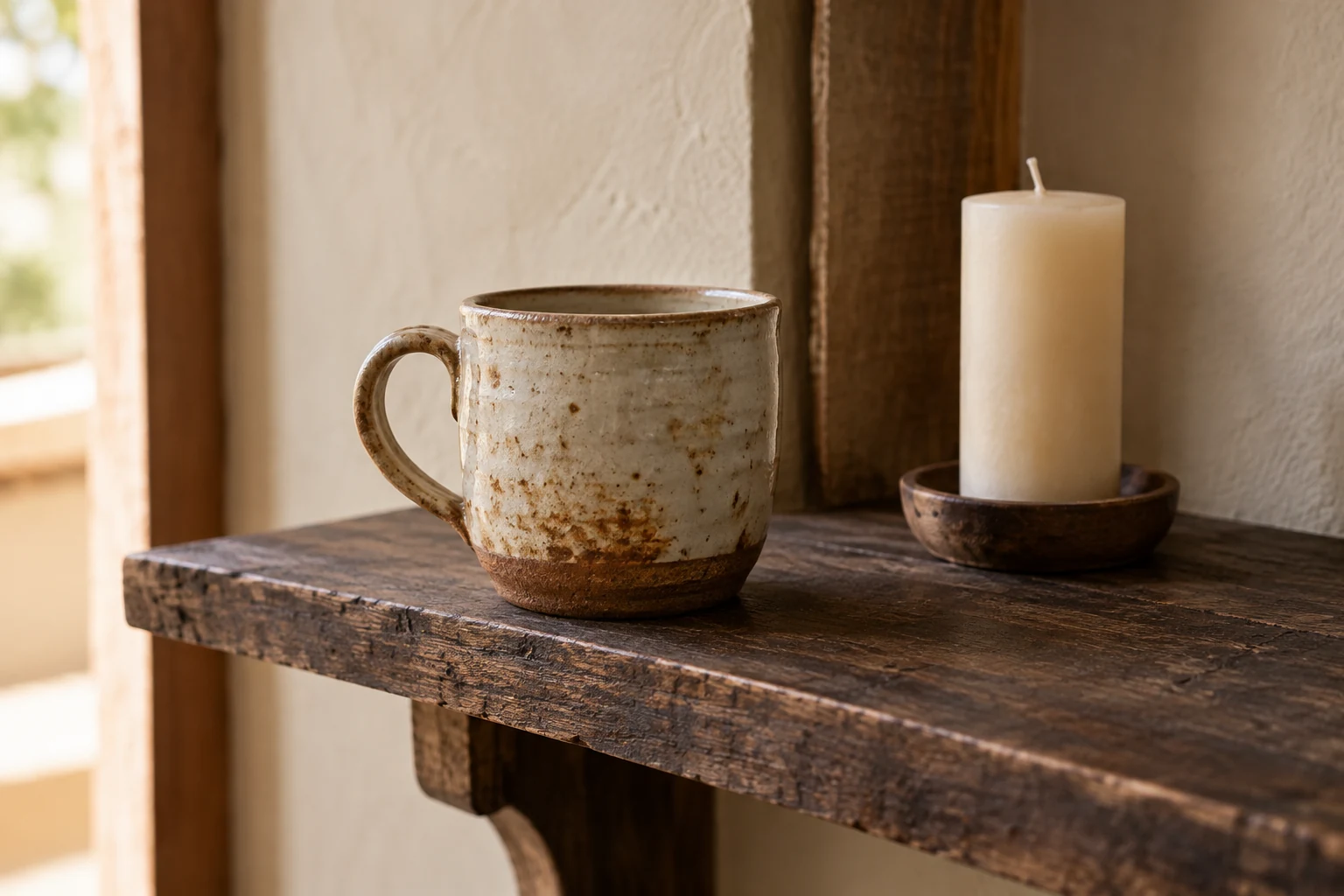
Before placing a remembrance object on a personal altar, identify someone who knows its story and ask what they are willing to share. Record their account, including what they remember firsthand, what they heard from others and what remains uncertain. Then agree on a short description that may sit beside the object, while keeping the fuller record separately. If no one is available or willing to speak, you can still document what you know without presenting it as someone else’s testimony.
Identify the Object and Ask Who Can Tell Its Story
Start with one object rather than trying to reconstruct an entire family history. Describe it plainly in a note: “small blue bowl,” “photograph in a brown frame” or “folded recipe card.” Add whose it was, if you know, and how it came to you. If either detail is uncertain, write that down too. A description you can recognize later is more useful than a confident-sounding name you cannot verify.
Next, think about who might know a particular part of its story. The person who owned an object, the person who gave it to you and the person who remembers seeing it used may each know different things. Ownership does not make someone a witness to every event associated with it. Write down what you hope to learn—perhaps where a bowl stood in a relative’s kitchen, who used it or why someone kept it—without treating those questions as facts.
You might explain your purpose this way: “I’m thinking of putting this bowl on my remembrance altar. Would you be comfortable telling me what you remember about it? I’d like to keep a private note, and I would ask you separately before putting any of your words beside it.” That gives the person a chance to understand both the conversation and its possible use.
Before taking notes or making audio, ask which, if either, is welcome. Ask separately whether you may quote their words and whether a description drawn from the conversation may be displayed. Those are different permissions: someone may welcome private notes but not audio, or allow a general label but not a quotation. Ask who might see the display, particularly if the altar is in a space visited by others. Let the speaker skip a question, set a subject aside or decline the conversation altogether. Do not treat an initial yes as permission for every later use.
These questions are a practical way to make your own record, not a formal archival interview procedure or advice about recording laws. If the person does not want to participate, leave their account unrecorded. You can instead write, “I remember this bowl on my aunt’s shelf,” or identify an existing note or photograph that supplies a detail. Mark it as your memory or as information from that source. An unanswered question can remain unanswered; an imagined interview cannot stand in for family testimony.
Capture One Remembered Moment Without Filling the Gaps
When someone is willing to talk, begin with open questions that leave room for an unexpected answer:
- “What do you remember about this object?”
- “Where did you see it, and how was it used?”
- “Who was there on an occasion you remember?”
- “Is there one moment with it that stays with you?”
- “What makes it important to you now?”
You do not need to ask every question. Follow the answer you receive: “What happened next?” or “Is that something you saw yourself, or something someone told you?” The aim is a usable account of one object and, if the speaker has one, one remembered moment—not a complete family history. If a question feels intrusive or the speaker does not want to continue, move on or stop.
As you take notes, distinguish three kinds of statements. A firsthand memory describes something the speaker recalls experiencing. A secondhand account is something they say they learned from another person. An interpretation is a meaning someone gives the object or story later. All three may be worth preserving, but they should not be written as though they have the same source.
For example, imagine a blue bowl that a relative, Mara, remembers from childhood. She says she watched her grandmother carry it to the table on Sunday afternoons. That is Mara’s reported memory. She also says her father told her the bowl had belonged to his aunt; that is a story Mara heard from her father, not something she witnessed. Looking at the bowl today, you may feel that it represents how people gathered in that home. That is your interpretation. A clear note would keep those statements separate rather than say, without qualification, that the aunt owned the bowl and it was always used for family gatherings.
Dates and names deserve the same care. Write “Mara thinks this was when she was in primary school,” “probably before the family moved, according to Mara” or “Mara cannot remember which aunt,” if those words reflect what she actually told you. Do not turn “around that time” into a calendar year or supply a name from a guess. You can leave yourself a question to pursue later without making it part of the account: “Which aunt did Mara’s father mean?” If you later find an answer, record where it came from.
Different relatives may also remember the same object differently. Suppose Mara recalls the bowl on Sunday afternoons, while another speaker remembers it being brought out only for birthdays. Keep both accounts with their speakers’ names and the dates you heard them. You can ask whether either person remembers a change in how it was used, but you do not need to settle the difference in order to preserve the stories. “Accounts differ” is more faithful than combining them into a single, unqualified tradition.
Sometimes the speaker remembers a fragment rather than an event. They may recall the weight of the bowl, a feeling of being welcome or the sound it made against the table, but not who was present. Record the fragment as they describe it and note that no particular occasion was identified. Avoid pushing for a scene to make the story feel complete. A small, attributable memory gives you more to work with than a polished account built out of guesses.
Write a Full Record and Agree on the Display Note
Soon after the conversation, turn your notes into a fuller record that you can understand later. Give the object an identifying name or number. Include the speaker’s name and relationship to the person or object if they wish to provide them, the conversation date, and whether you relied on notes, audio or a later recollection of the conversation. Write the account in enough detail to retain its particular moment. Mark which parts the speaker remembers, which they heard from someone else and which are your own thoughts. Add unanswered questions and a clear note of what the speaker permitted you to record, quote or display.
Use quotation marks only for words you captured accurately. If you noted the substance but not the exact wording, attribute a paraphrase instead: “Mara recalled seeing her grandmother bring out the bowl,” not a sentence presented as though Mara said it verbatim. If you have audio, check it before using a direct quotation. If the speaker asks that a detail stay private, mark that restriction where you will see it when preparing any display text.
Here is an illustrative example, not an account of a real family or a presumption that its speaker agreed to display it:
> Private record — BLUE-BOWL-01. Conversation with Mara, granddaughter, on 8 May; notes taken with her permission, no audio. Mara remembers her grandmother carrying the blue bowl to the table on Sunday afternoons when Mara was a child. Mara says her father told her it once belonged to an aunt, but she does not know which aunt. I associate the bowl with gathering at that table; this is my interpretation, not Mara’s stated reason for keeping it. Exact years and earlier ownership remain unknown. Proposed display wording has not yet been approved.
A possible short note to propose would be: “Blue bowl remembered by Mara from Sunday afternoons at her grandmother’s table.” It includes a specific memory and identifies whose it is. It leaves out the unverified ownership and your interpretation. Do not put the proposed note on display until Mara has seen and agreed to that wording and knows who may read it. If she would rather remain unnamed, ask whether a version such as “A bowl remembered from Sunday afternoons at a family table” is acceptable. If she wants no story displayed, keep the account private; a plain object description may be enough.
In its guidance on memory boxes, Child Bereavement UK recommends that each object have a story or memory attached and notes that some people write an individual note about why an item matters to them. That is useful inspiration for connecting an object to an account here, but the organization is discussing memory boxes, not prescribing labels for personal altars. Your fuller record can hold the context and uncertainty; the short display note needs only what is meaningful and agreed for its audience.
Keep the Account Linked to the Object as It Changes
Use the same identifier—such as BLUE-BOWL-01—on the private record and the approved display note. Keep a separate inventory entry that describes the object and points to the record, whether you use a notebook, a folder of files or both. A file named BLUE-BOWL-01-private-record and a separate file named BLUE-BOWL-01-display-note make their different purposes clear. Record where the object and any related materials are kept so the connection does not depend on your memory alone.
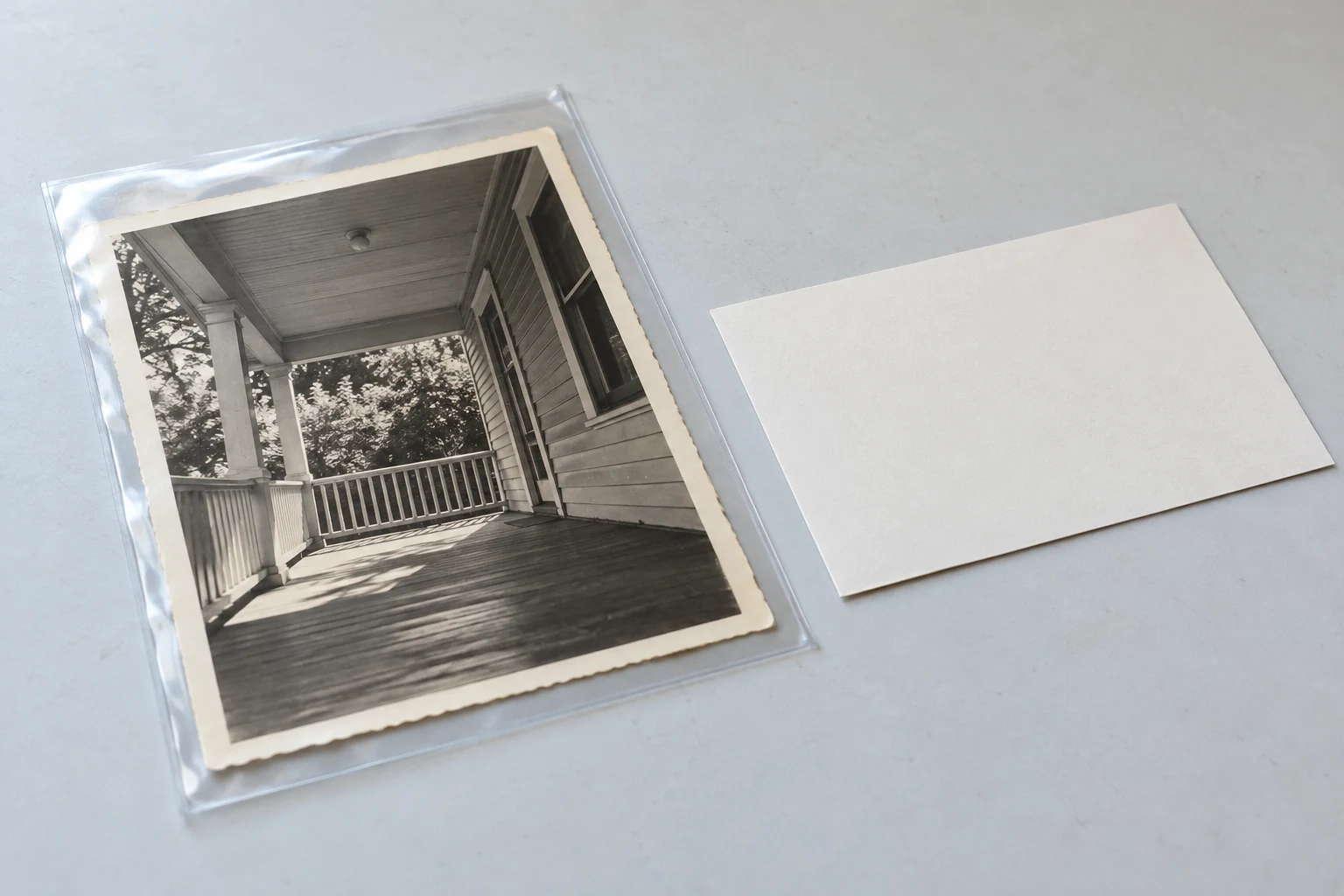
Do not write an identifier or label on an original photograph or fragile paper. Keep notes in separate housing or files, and link them through your inventory instead. If displaying an original would put it at risk through handling, use a suitable copy on the altar and keep the original protected elsewhere. The copy and its note can still point to the same private record.
If someone later supplies a name, corrects a date or remembers a different event, add a dated entry saying who provided the new information. Preserve the earlier recollection rather than silently replacing it. Review the display note if the new information changes what it says—or if the speaker changes what they are comfortable sharing—and agree on revised wording before using it.
The result can be modest: an object with a short, permitted story beside it, linked to a fuller private account. Its meaning does not depend on filling every gap or disclosing every family detail.