
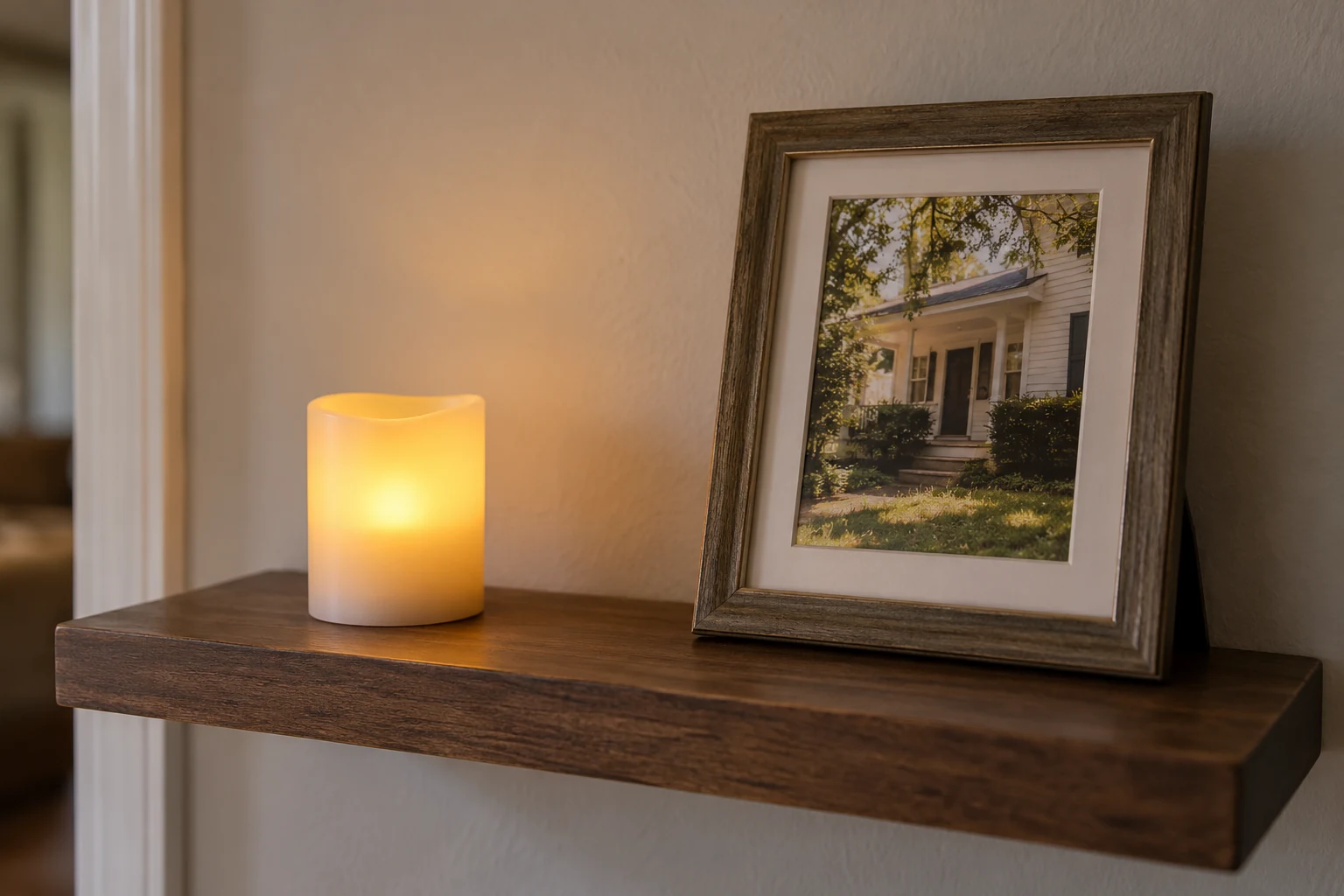
Choose a light that fits the shelf, gives the modest glow you want, and has power and controls your household can manage. Then check where that glow falls: a light may fit the space but sit too close to a fragile photograph. The U.S. Fire Administration suggests considering battery-operated flameless candles, so an open flame need not be part of the display. Removing the flame does not settle questions about batteries, placement, or use.
There is no single best model for every remembrance shelf. Use the choices below to narrow the type of light, then verify the details on the product you intend to buy.
Fit the Light to the Shelf and the Photographs
Start with the usable surface, not the shelf’s outside dimensions. Measure the space left after photographs, frames, and other objects are in place. Check the available height as well as the base area: a light might fit between objects but be too tall for the shelf above it. Leave room to set it down securely and operate its switch, remove it when needed, or reach a charging connection. Compare those measurements with the actual model’s dimensions rather than relying on a product photograph.
Decide what the light is meant to do. Is it a quiet accent visible when you stand near the shelf, or do you want to notice it from across the room? Brighter is not automatically better. As a placement choice, a modest light aimed away from a photograph may serve the first purpose better than a strong glow pointed at it. Check whether the model offers adjustable brightness, but do not assume a setting labeled “dim” will look the same on your shelf as it does in a listing.
Look at the photographs before choosing the light’s position. Which are fragile originals, and which are copies you could replace? The Library of Congress advises limiting photographs’ light exposure and identifies close proximity to vents, fireplaces, and radiators as a concern. A sensible application on a remembrance shelf is to avoid placing a light against an original or where it warms one. This is a precaution, not a promise that any particular distance will preserve a photograph.
On a narrow shelf with an original print at the back, consider a smaller glow you can place without shining directly onto the print. If the shelf cannot accommodate both the light and a suitable place for the original, display a copy there and keep the original elsewhere.
Finally, note who can reach the shelf. A switch convenient for an adult may also be accessible to a child; a high shelf may make battery changes awkward. Those observations help determine power and controls before you buy.
Choose a Power Source the Household Can Manage
Replaceable batteries, rechargeable power, and a cord each solve one problem while introducing another. Compare them by the upkeep they require in your space, not by an assumed runtime. Check the manufacturer’s battery type, charging requirements, and operating instructions for the specific model; this is a selection framework, not a tested product ranking.
A replaceable-battery light may be practical when there is no convenient outlet and you can reach the light for changes. Identify the required batteries and inspect how the compartment closes. If the product or its remote uses a replaceable button or coin battery, security matters more than a quick-opening cover. The U.S. Consumer Product Safety Commission’s consumer-product FAQ says such compartments must require a tool or at least two independent, simultaneous hand movements to open. Apply that check to the remote as well as the light. Do not accept a loose cover or missing screw; choose a different setup or obtain an appropriate remedy before use.
A rechargeable light may suit someone who would rather plan charging than keep replacement batteries for the light. Confirm how and where the model is to be charged, and whether you can move it there without disturbing the display. Do not assume a household charger is compatible or that one charge will cover an entire evening. Consult the product’s instructions.
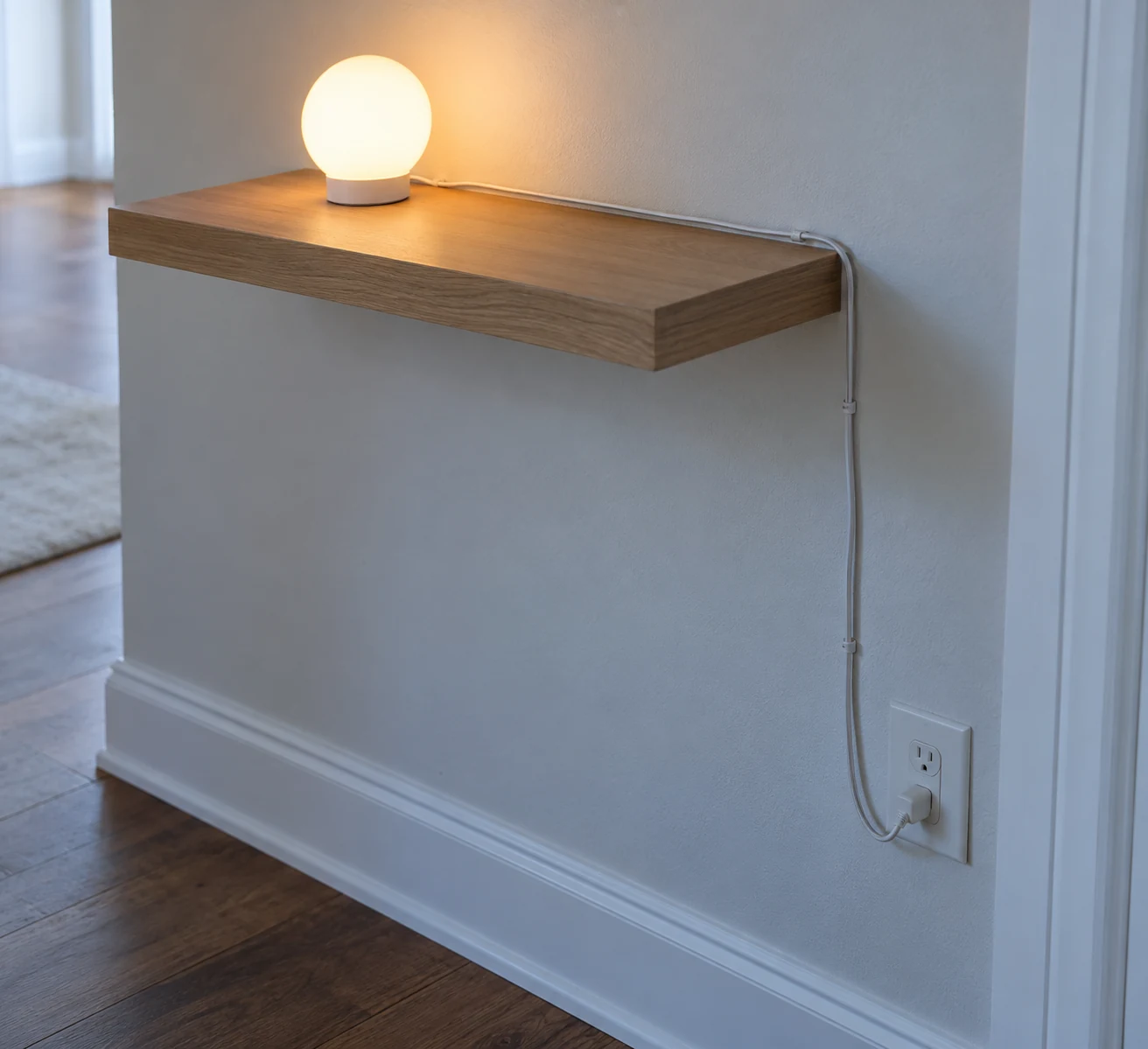
A corded light avoids routine battery changes in the light itself, but only makes sense if the cord can reach its power connection without crossing a place where people handle the shelf or move objects. Picture the complete route, including excess cable, before deciding that the base fits. Check the model’s intended use and power instructions.
Household access can change the verdict. Where children or pets can reach the display, a battery compartment, remote, or cable may be difficult to manage securely in that location. On a high shelf, a power arrangement you can service without rearranging photographs may be more workable. Pick the option whose upkeep fits your household.
Select Controls That Suit the Way You Will Use It
Imagine an ordinary week: when would you turn the light on, who would do it, and could they reach the control without brushing a frame or shifting the light?
A physical switch is a simple fit when it stays accessible in the light’s final position. Check where it is on the model. A switch underneath the base may be manageable on an open shelf but troublesome if you must lift the light every time. A side switch might be easier to reach, provided the light can sit securely with room around it.
A timer can suit a predictable display period, such as time you regularly spend near the shelf. Verify what the manufacturer says that model’s timer does: when it starts, whether it repeats, and how you change or stop it. Do not infer that a timer makes the light suitable for nightlong or unattended use. Follow the model’s indoor-use and operating instructions. If your display time varies, a fixed timer may be less useful than a reachable switch.
A remote may help when a shelf is high or the switch is difficult to access without moving a photograph. Its tradeoff is another object to keep track of and, if battery-powered, another battery compartment to inspect. It may be a poor bargain if it could be left within reach of a child or pet. Check the specific remote rather than assuming its battery arrangement matches the light’s.
Controls also affect photograph placement. If switching the light on requires reaching behind a fragile original, change the arrangement or control. If a timer would keep the light directed toward that original longer than you intend, adjust the position or display plan. The Library of Congress’s advice to limit light exposure is a reason to decide when and where the light shines, not a universal safe timer setting.
Check the Chosen Light in Its Actual Position
Read the model’s instructions before regular use. Confirm its power requirements, charging conditions if applicable, control behavior, and indoor-use directions. Check current recall information for the specific product as part of the purchase decision. A listing’s description is not a substitute for these checks.
Place the light on the measured shelf with other objects in their intended positions. Is its base stable? Can you operate it without pulling a frame forward or knocking another object? If it has a cable, does the route still work when the shelf is used normally? A layout that requires moving a photograph each evening is a reason to reconsider the light’s size, control, or position.
Observe the light there when it is on. Notice where it shines and whether it touches or warms a fragile original. The Library of Congress’s guidance on limiting light exposure and avoiding proximity to heat sources makes these separate checks worthwhile. If the original receives unwanted light or warmth, move or change the light. If ordinary shelf conditions still do not suit the original, use a display copy instead. Do not assume “flameless” means the light cannot affect what sits next to it.
Before use, inspect the light and any remote. Make sure their battery covers are present, intact, and secure, including any required screws. For a replaceable button or coin battery, reject a cover that does not provide the secured access described by the CPSC; convenience does not justify an insecure compartment. Keep spare and used batteries inaccessible to children and pets, and follow appropriate handling and disposal instructions. If battery ingestion is suspected, seek immediate appropriate professional help.
Follow the light’s directions for switching off, charging, and indoor use. No general battery-life estimate or permission to leave a light on overnight applies to every model. If charging means taking it off the shelf, plan where to do that without placing it against a photograph; if a timer does not suit your routine, choose a control you will use.
Choose a light that fits, provides the glow you want, has secure and manageable power and controls, and can sit without unwanted light or warmth reaching a fragile original. If one condition fails, change the light or its position—or display a copy of the photograph—rather than forcing a poor fit onto the shelf.