
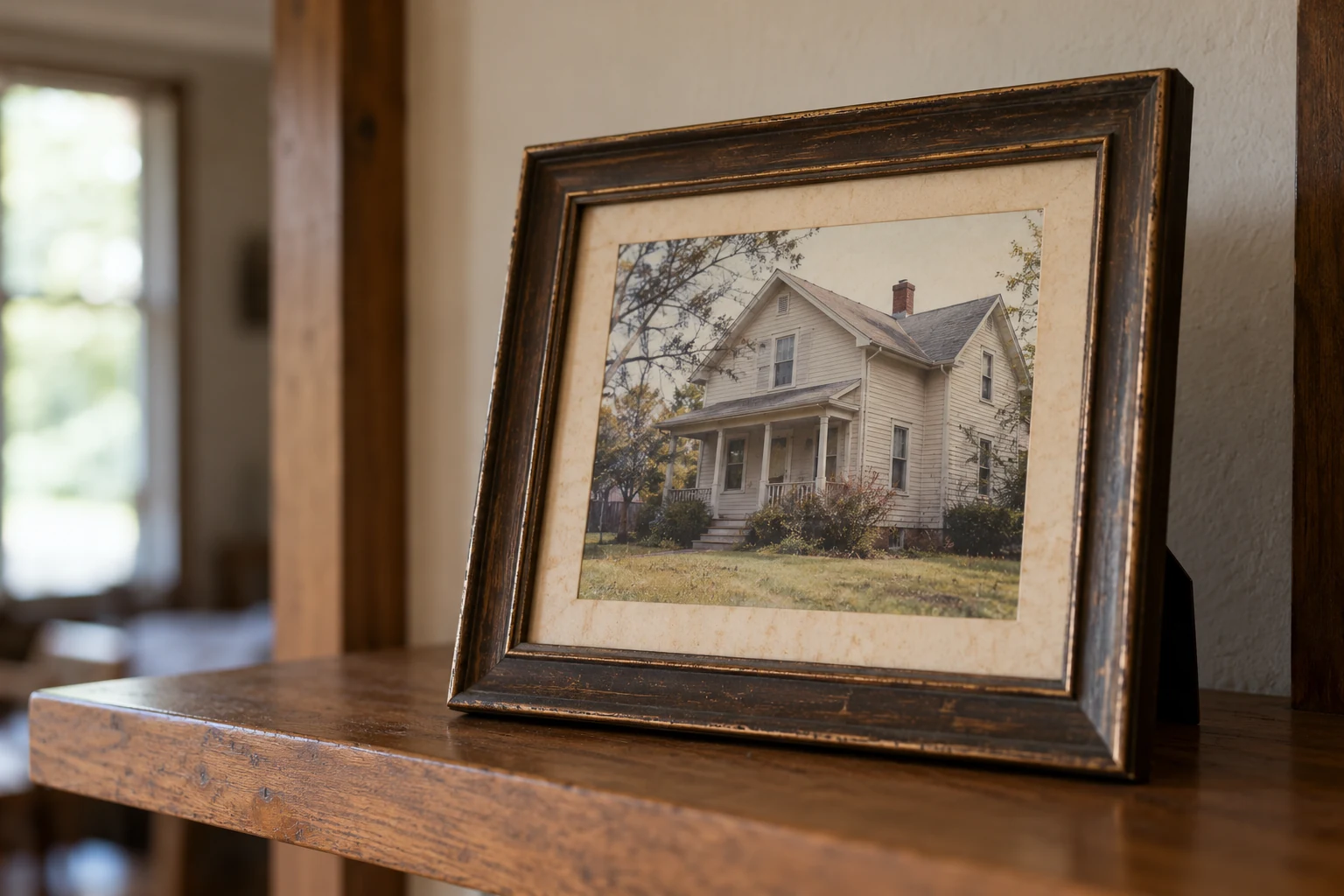
To protect altar photographs, first decide whether the image on your remembrance shelf is an original or a copy. Then move an original away from heat, water and strong light, and protect it from unnecessary handling. If the photograph is especially fragile or the shelf is difficult to keep dry and stable, display a clearly identified copy and store the original elsewhere. This is a practical way to apply the Library of Congress’s photograph-care guidance to a personal shelf—not a rule that every old photograph needs the same enclosure or treatment.
Assess the Photograph and Its Place on the Shelf
Start by identifying what is on display. Is it the family’s original photograph, a later print made from it, or a copy you can replace? If you do not know, treat it as an original while you decide what to do. A copy lets you keep the image visible without putting the original artifact in that position. It does not erase damage already present in the original.
Look at the photograph without taking it apart. Note whether its surface appears to be flaking, whether it is stuck to the glass of a frame, or whether moving it would disturb loose or damaged areas. You do not need to identify the photographic process to make a cautious display decision. If its condition is uncertain, that uncertainty is a reason to reduce handling, not to experiment with a repair.
Next, survey the particular shelf, including what happens around it during ordinary use. Does sunlight reach the photograph through a window? Is a lamp directed toward it or left on nearby? Is the shelf close to a vent, fireplace or radiator? Could a candle or another hot fixture be placed beside the frame? Look above and behind the shelf as well: a leak, condensation on a nearby surface or a position along an exterior wall may matter even if the photograph itself looks dry today.
Consider liquids as part of the arrangement, too. A cup, vase or other liquid container placed next to an original can spill or leave moisture nearby. If people regularly move objects across the shelf, the photograph may also be handled or knocked more often than its condition allows. The useful question is not simply whether a hazard exists in the room, but whether this photograph occupies the part of the shelf exposed to it.
The Library of Congress advises against storing photographs near vents, fireplaces and radiators, along exterior walls, or where condensation, leaks and extreme environmental changes are likely. It also advises limiting light exposure. Those are storage cautions; applying them to a remembrance shelf means choosing a display position that avoids the same obvious risks rather than assuming the shelf is safe because it is not a storage box.
Use the survey to make a first decision. If the original appears sound, can be protected without disturbing it, and has a shelf position away from heat and moisture with limited light, a protected display may be reasonable. If it is flaking or stuck to glass, or if the shelf’s light, heat, liquids or dampness cannot be controlled, choose a copy for everyday display instead. You can make that choice without settling every question about the original’s age or materials.
Set up a Safer Display—or Use a Copy
Arrange the shelf around the photograph’s needs rather than trying to fit the photograph into a risky gap. Choose a place away from vents and hot fixtures, and do not put liquid containers beside or above an original. Limit the light that reaches it. For example, if a window lights one end of the shelf and a vase normally stands next to the frame, the safer arrangement may be to move the original to a less exposed position and put the vase elsewhere. There is no single distance or number of display hours that makes every photograph safe; use the risks you actually found to guide the arrangement. The Library of Congress’s advice to limit light and avoid heat- and moisture-prone storage locations supports that cautious choice.
Before moving or rehousing a photograph, plan where it will go so that you do not have to handle it repeatedly. Where possible, hold it by its edges or by its existing housing, with appropriately clean hands or gloves, and avoid touching the image area. The Library of Congress specifically recommends handling photographs by their edges or housing when possible. Do not put tape, sticky notes, glue or other adhesives on the photograph, even to hold it in place or identify someone pictured. The Library of Congress explicitly cautions against those attachments.
A suitable protective enclosure can reduce exposure to dust, light and handling; the Library of Congress recommends protective primary enclosures such as folders or sleeves for those purposes. For a displayed original, the aim is similarly to keep it supported and protected rather than leaving it loose where it must be picked up to move nearby objects. A frame may help separate the photograph from routine shelf activity, but do not assume that placing a fragile print in any available frame solves its condition problems. In particular, a print already stuck to glass should not be pulled free to change its display.
Choose housing with the particular photograph in mind. Ask for materials verified as photo-safe for that photographic material rather than relying on an “acid-free” label or assuming a generic plastic sleeve is suitable for every old image. If you cannot establish what housing is appropriate, leave an uncertain or vulnerable original undisturbed while you seek advice. Avoid making the choice of a sleeve into an at-home test of the photograph’s surface.
A display copy is the better everyday choice when the original is especially fragile, when its condition or housing needs are uncertain, or when you cannot keep its shelf position away from light, heat and moisture. It is also useful if the shelf is regularly rearranged or holds liquids that you want to keep there. Put the copy in that active space and retain the original in more stable conditions. The copy preserves your opportunity to see and share the image; it is not the original object, and making one does not repair existing damage or make the original safe to handle.
Identify the copy plainly so its status will remain clear to others. A small label beside its frame might read, “Display copy of the family photograph; original stored separately.” A note on the copy’s own housing is another option. Keep labels and adhesive materials off the original photograph itself. That distinction lets you maintain an intentional remembrance display while making an honest, protective choice about what is actually on the shelf.
If the original is sound enough for protected display, keep the same principle in view: place it where it need not be shifted to light a lamp, tend a candle or move a container. Reconsider the display if the shelf’s use changes. A spot that works while the shelf holds only dry objects may no longer be suitable once a vase or heat source is added.
Store the Original and Check Its Condition
If you remove the original from display, give it a protected place rather than leaving it loose in a drawer or beside the shelf. Use a photo-safe primary enclosure appropriate to the photograph, then a protective box. The Library of Congress recommends primary folders or sleeves to protect photographs from dust, light and handling. Because photographic materials differ, do not assume one sleeve is right for every unidentified print. If the original is attached to, or stuck against, another material, do not force it into new housing.
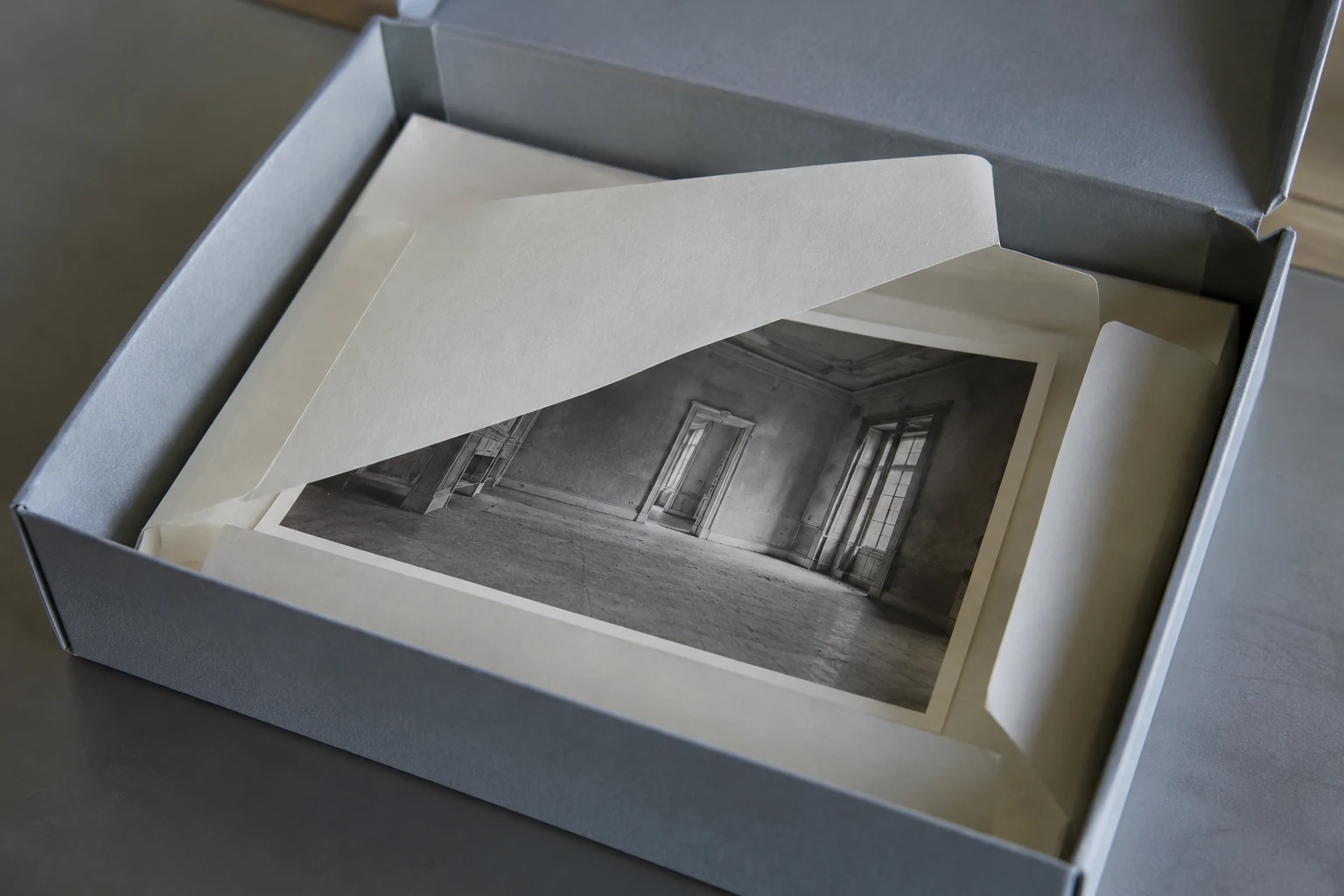
Choose a cool, relatively dry, stable storage place. Avoid attics and basements, vents, fireplaces, radiators, exterior walls, and areas at risk of condensation, leaks or extreme fluctuations—the locations the Library of Congress warns against for photograph storage. That guidance does not mean every old family photograph belongs in a home refrigerator. The immediate task is to find an appropriate, stable place in your circumstances and protect the original from the risks you identified on the shelf.
Identify the photograph on its enclosure or in an accompanying record, not on the image with a sticky note or adhesive. Record enough to connect it with the display copy, such as whose image it is and where the original is stored. Then check its condition occasionally without taking it out more than necessary. Look for a change from what you noted initially—newly visible flaking, for instance—rather than repeatedly handling it to see whether it is “all right.”
Do not peel a print stuck to glass, wet-clean it or use adhesive to flatten flakes. If sticking, flaking or another serious condition problem remains unresolved, consult a photograph conservator instead of attempting home restoration. Keeping the photograph still and protected is a useful action while you seek help.
The image can remain part of your remembrance shelf as a suitably protected original or a clearly identified copy. Either choice works best when you also keep the original away from avoidable heat, moisture and handling, in conditions you can continue to check.