
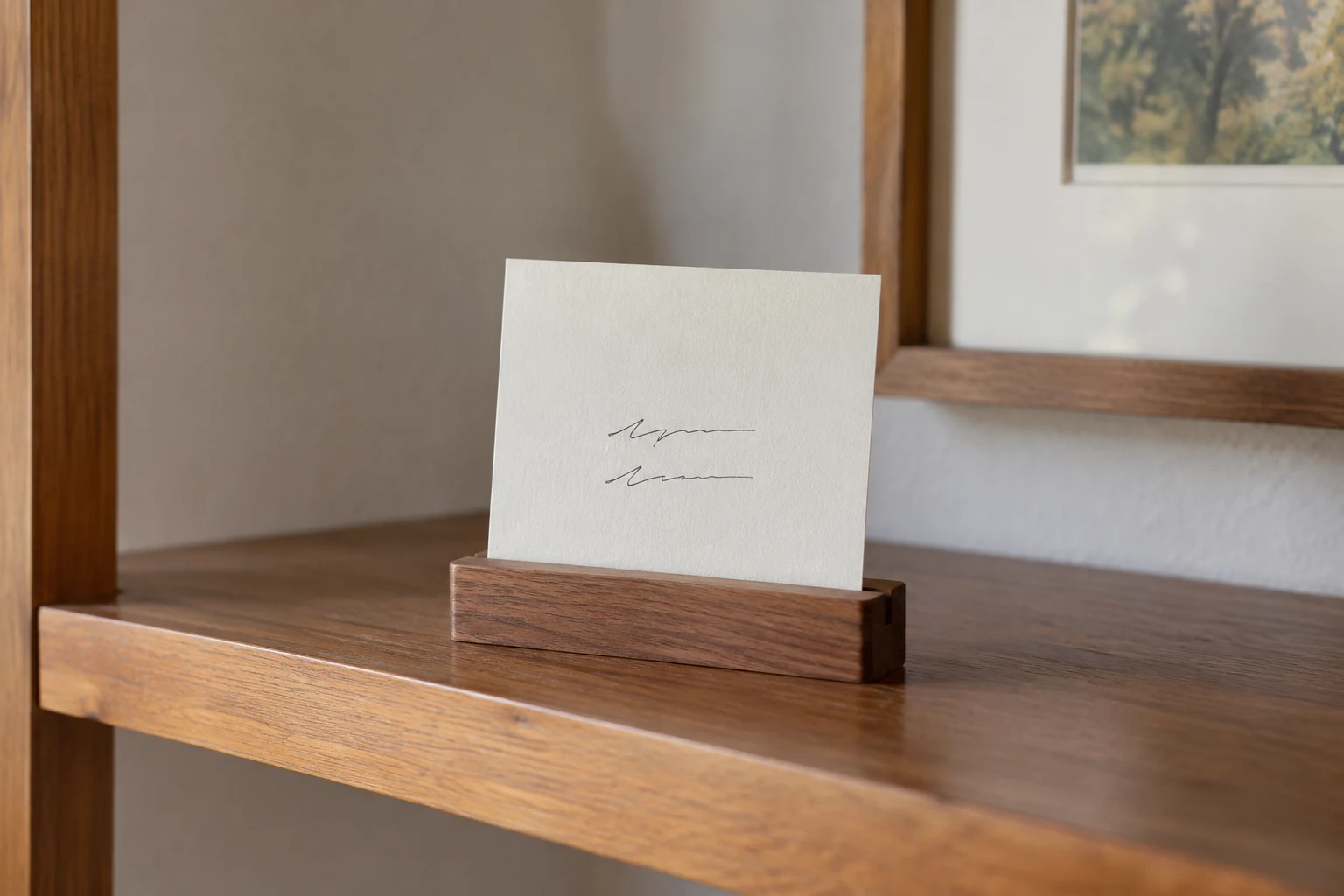
Write only the name, relationship, or remembered label you can honestly account for. If you know no names, the card can say that plainly. A personal ancestor name card does not need dates, a complete family tree, or a claim about who the person was. Start with one clear line of identification; add a sentence of remembrance only if you want one. Keep uncertain details in a separate note so the card remains easy to correct if reliable information appears later.
Choose the Most Specific Identity You Actually Know
The useful question is not “How much can I fit on the card?” but “What does each word lead a reader to believe?” A name you have verified, a nickname a relative remembers, a relationship you know, and a person whose identity is unknown call for different wording. Choose the most specific line you can use without turning someone’s recollection—or your own guess—into an established fact.
If you have verified a person’s name, a simple line may be enough:
> Remembering Elena Rivera
Use the name as verified. You do not need to add a birth date, death date, place, or relationship to make the card feel complete. If you know the name but are uncertain about a detail, leave that detail off rather than making the whole line sound more certain than it is.
A name remembered by a relative is different from a verified name. If, for example, the only information you have is what Aunt May called someone, you could write:
> Remembering the person Aunt May called “Nana Rose”
That line tells the reader whose recollection the label comes from. It does not claim that “Nana Rose” was the person’s full name or establish where she belongs in your family tree. Replace Aunt May and the nickname with your own details only if those are the details you actually have. If even the remembered label feels too uncertain for the card, use a simpler line and record the recollection in a private note instead.
If you know a relationship but have not verified a name, say the relationship directly:
> Remembering my grandmother, whose full name I have not verified
Use “my grandmother” only if you know that relationship. If what you know is “my father’s aunt,” write that instead; do not choose a closer or more familiar relationship because it sounds better on a card. You can also omit the qualification from the visible card—“Remembering my grandmother”—and keep the unresolved name in your note. Either choice is more honest than supplying a plausible full name.
You can make a card even when you cannot identify a particular person:
> Remembering family members whose names I do not yet know
This is a complete line, not a placeholder you must fill before the card counts. It expresses whom you intend to remember while leaving individual identities open. If you know only that there are gaps in your family history, you need not assign anyone a generation, birthplace, or branch of the family.
These examples are original wording for a personal remembrance card. They are not traditional ancestor-tablet language or genealogical findings. Avoid adding an unverified spelling, date, lineage, or cultural title simply because it seems plausible or would make the layout look finished. Blank space can be intentional. The card’s job is to express remembrance at a level of detail you can stand behind, not to make limited information look complete.
Write a Short Line of Remembrance
First, write the name or relationship line you chose. Read it on its own. If it says enough, you can stop there. If you want the card to express something more personal, add one short sentence about your act of remembrance or feeling, rather than a sentence that speaks for the person.
For instance, this is a complete two-line card for someone who does not know the family members’ names:
> Remembering family members whose names I do not yet know
> I keep space to remember you.
A one-line card is equally valid:
> Remembering family members whose names I do not yet know
Other possible second lines include “I am taking time to remember you” and “I hold a place for this part of my family story.” Choose words you mean. You do not need to say that an ancestor watches over you, approves of you, shares your beliefs, or would have wanted this card. Those statements claim knowledge the card cannot supply. A sentence about what you are doing can still be warm and meaningful.
Child Bereavement UK notes, in its guidance on memory boxes, that some people write a note explaining why an item matters to them. That offers a limited analogy: a personal sentence can explain why making this card matters to you. It is not a rule for ancestor cards or a required format.
Remembrance also does not require praise. You may know little about a person, or what you know may include harm. In either case, a neutral identity line is sufficient. You can write “Remembering my grandfather” if that relationship is known and leave it there. You do not have to call the person loving, admired, or missed to justify the card. If a direct address such as “you” feels uncomfortable, use a sentence focused on your own reflection—or no second sentence at all.
Before finishing, read both lines together. Ask whether any word quietly adds a biography, belief, or family connection you cannot support. If it does, remove it or move the uncertain detail to your notes. Brevity is useful here: it gives the words you do know room to stand without asking them to prove more.
Keep Uncertainty and Later Corrections Outside the Card
Use a separate, dated private note for details you may want to revisit: possible spellings, dates, relationships, and the person who recalled each one. Record what remains unverified. For example, you might note that Aunt May used the label “Nana Rose,” while you do not yet know whether Rose was a given name, a nickname, or part of a different name. The point is to preserve the recollection without silently turning it into a documented fact.
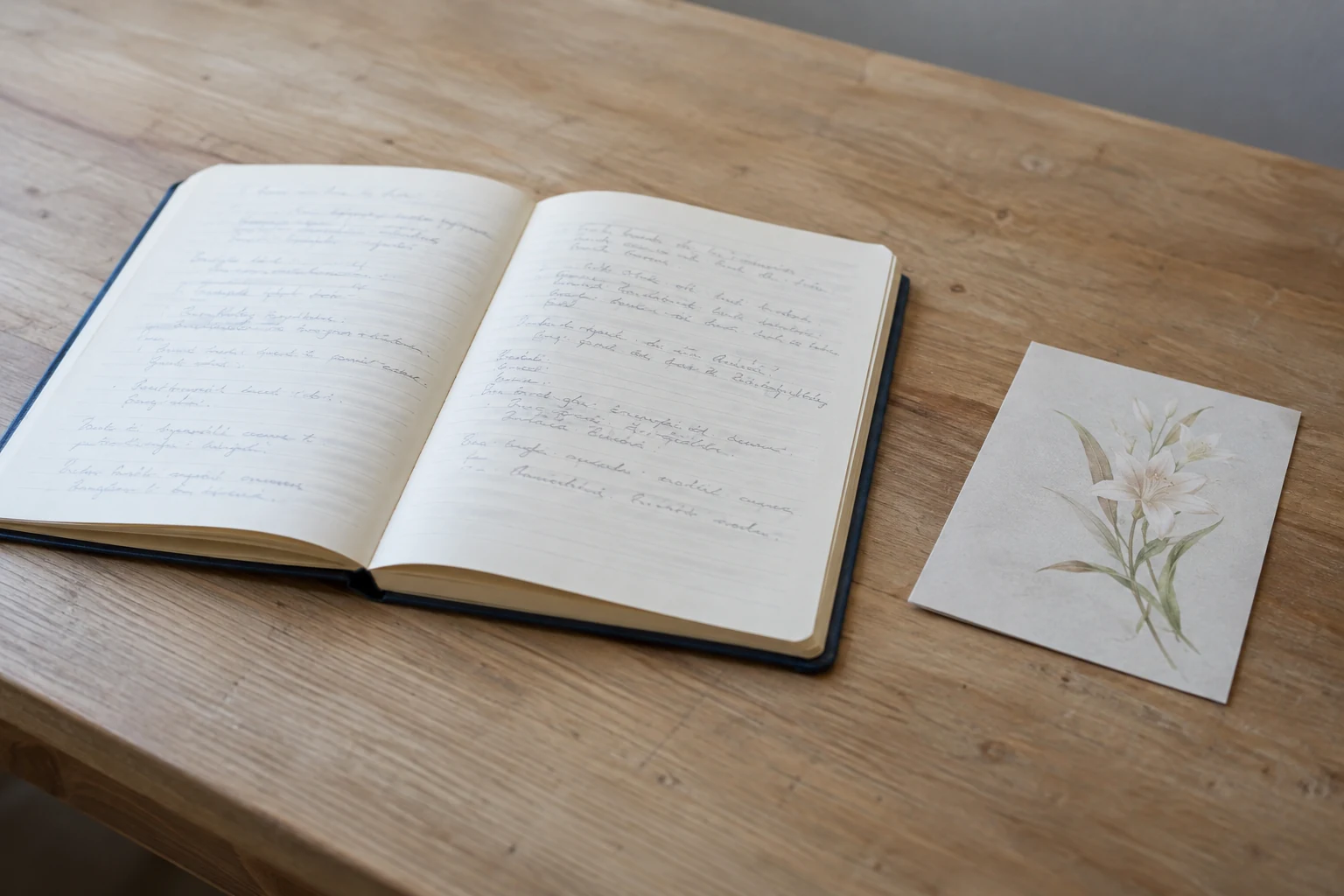
Keep that note separate from the card’s visible wording. You can then choose an attributed line for the card, or a simpler relationship line, without losing track of why you made the choice. A relative’s memory can matter deeply to you even when you cannot confirm the detail it contains.
If reliable information later confirms a spelling, make a new card with the corrected name. Keep the earlier dated note and add what prompted the change, so you can see how your understanding developed. If new information conflicts with the recollection—or does not settle it—there is no need to pick a winner for the card. Keep the attributed wording or return to a simpler line until you can say more with confidence.
A personal remembrance card is not a genealogical certificate. Revising it is allowed, and revising one detail does not obligate you to fill every remaining gap. The first version can be complete as a remembrance while still being open to correction.
Keep the Card Safely and Decide Whether to Share It
Make the wording legible to you, and keep the card separate from fragile original documents and photographs. If you store paper items together, use a supportive protective enclosure rather than fastening the card to an original. The Library of Congress lists supportive protective enclosures among its paper-care recommendations and advises against rubber bands, self-adhesive tape, and glue on paper. Those limited precautions are enough reason not to attach a new card directly to a family document.
The card may remain private. You do not have to share it, the note behind it, or a relative’s recollection—particularly if family members prefer privacy. You can decide separately whether to show anyone the card and whether to tell its associated story.
What makes the card usable is its honesty: write what you know, qualify or set aside what you do not, and leave yourself free to correct the wording when better information becomes available.