
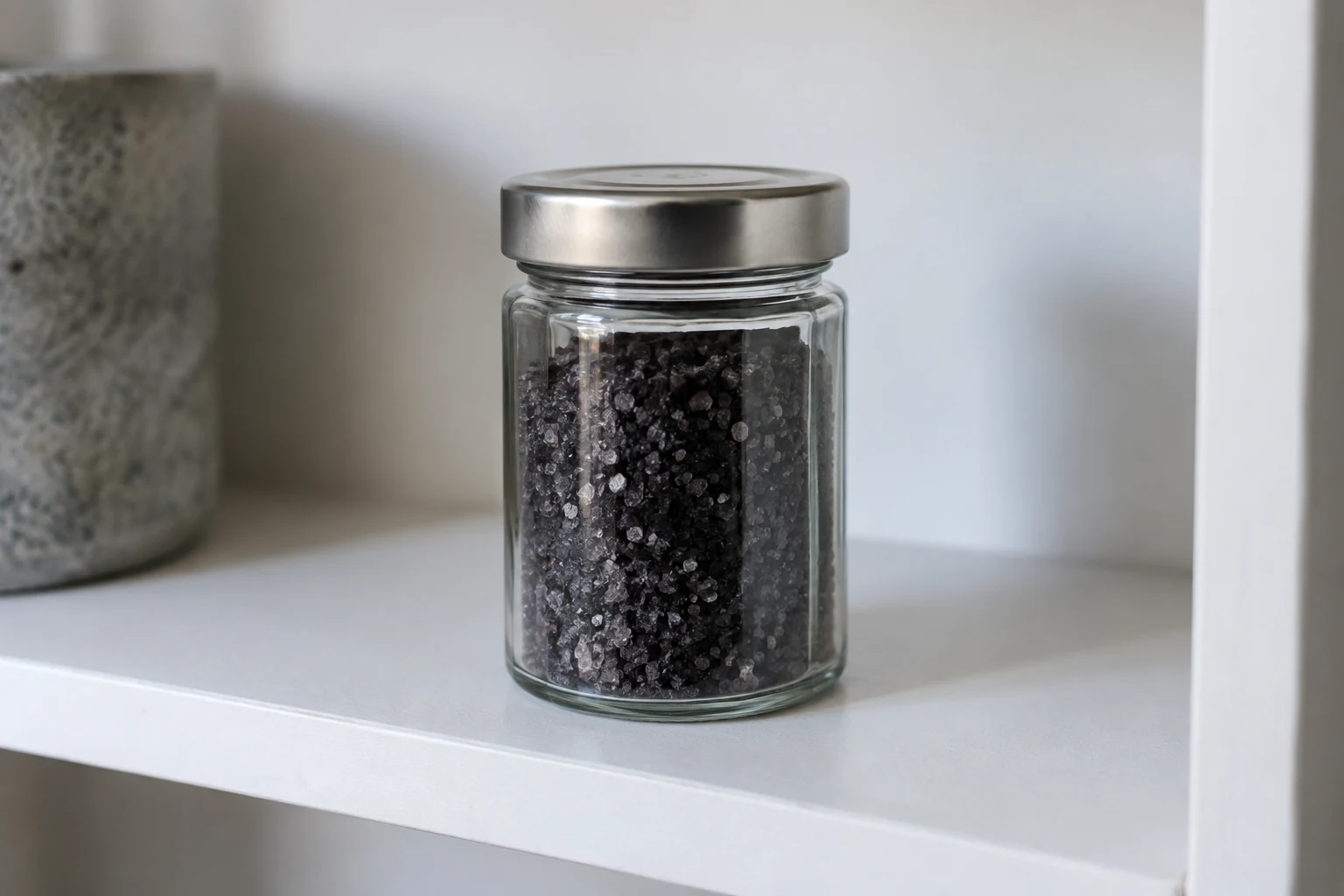
Black ritual salt can serve as a symbol for a boundary, a release, or a return of attention to the present. Before choosing any, find out what the product contains and how its seller says to handle it. This guide offers one small, dry, contained practice at home—not a test of a blend’s safety or a claim that a ritual provides protection.
Know Which Black Salt You Are Choosing
“Black salt” can mean culinary salt or a non-food mixture sold for ritual use. The shared name does not make the two interchangeable. For the practice described here, look for a clearly identified ritual product whose directions permit dry, contained handling, rather than choosing a culinary product because it happens to be called black salt. A practitioner guide distinguishes these categories and describes ritual black salt as non-food-grade.
Dark color is not an ingredient list or a safety test. Ritual mixtures vary, and their color may come from charcoal or dyes. A photograph of dark granules—even beside an open jar—cannot establish a product’s contents or directions, or show that a finished arrangement will stay closed. Use information for the particular product you are considering. The arrangement below gives a known blend a symbolic role; it does not establish what an unidentified mixture contains or what any mixture can do outside your practice.
Check the Product Before You Buy or Open It
Before selecting a product, check the actual seller’s ingredient information, intended use, handling directions, storage guidance, and disposal instructions. Can you identify the blend, and do its directions permit the dry, contained use you intend? If information is missing, ask the seller before buying or opening it. Neither a product name nor its appearance can fill in an absent direction.
One seller, for example, designates its black salt for ritual use and describes it as a contained dry blend. Its directions specify closed formats and a tray, as well as closed, dry storage and restrictions concerning household exposure, surfaces, and disposal. Those instructions belong to that product. The displayed listing calls it a black granular blend but does not show a full ingredient list. It is an example of handling limits, not a recommendation to purchase: ask the seller what it contains, and pass if you cannot get a clear answer. Another blend may have different contents or directions, so use its own label rather than borrowing the example seller’s rules.
If the contents or handling directions remain unclear, leave the product unopened and choose something else. You can complete a symbolic practice without salt: write a sentence about a boundary you want to honor, something you want to release, or a return of attention to the present. Place the paper in a container you can close, close it, and put it in a suitable place at home. Revisit the sentence if you wish; when the practice feels complete, remove and retire the paper. This lets you keep the intention without experimenting with an unidentified blend.
Choose What the Symbol Will Mean
Practitioners commonly associate black ritual salt with warding, banishing, and grounding. In this practice, warding means marking a symbolic boundary; banishing means marking a release; and grounding means marking a return of attention to the present. These are ways to frame an action, not effects guaranteed by the salt.
Choose one meaning before assembling the jar. A boundary intention might be: “This closed jar reminds me to pause before agreeing to demands on my time.” For release, you could name something you are ready to set down; for grounding, you could name the moment to which you want to return. Use wording that suits your circumstances and tradition rather than treating any phrase as required.
The arrangement can be a deliberate reminder, but it cannot guarantee protection or change. A ritual does not replace locks, emergency help, medical care, or practical boundaries with other people. The cited seller likewise describes ritual associations as variable rather than guaranteed.
Prepare a Place for Contained, Dry Work
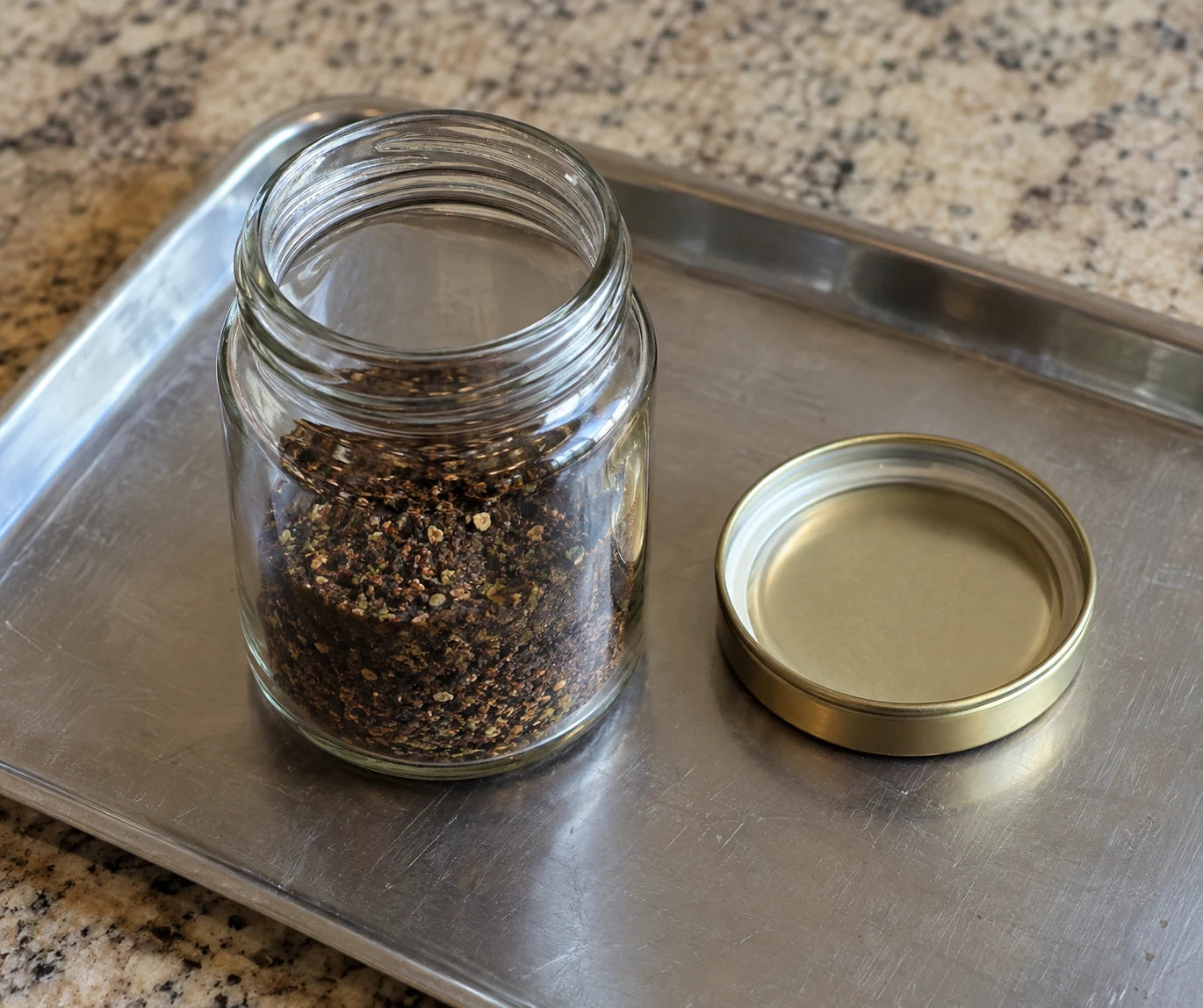
Before opening the product, gather a small jar with a securely closing lid and a tray that can catch stray granules. Decide where the finished jar will go. Check the empty jar and lid: if they will not stay closed, do not put loose material inside.
Set the tray on a stable work area away from food and beyond the reach of children and pets. Make sure you can move the finished jar to its chosen place without leaving it where it may be knocked over. Avoid delicate or easily marked surfaces. The practitioner guide warns that colored salt can stain, while the example seller warns of surface damage and advises using a tray. The tray helps contain stray material; it does not make every surface suitable.
If you cannot keep the work area or finished arrangement contained, postpone the transfer. Use the closed-paper alternative instead of improvising a loose placement.
Make and Close a Small Jar Arrangement
Immediately before opening, check your own product’s directions again. Proceed only if they permit this dry, contained use and you can follow the label’s handling restrictions. If not, keep the product closed and use the written intention instead.
- Place the empty, open jar on the tray. Keep the product and jar over the tray during transfer.
- Transfer a small amount into the jar without scattering it. You need an amount that can represent your intention, not a full jar.
- Set or speak the intention you chose. For example: “This is my reminder to pause before I commit my time.”
- Close the jar securely. Check that the lid is seated and the material stays inside when you handle the jar normally. If it will not close reliably, leave it on the tray rather than treating it as a finished arrangement.
- Check the tray and work area for stray material. If any escaped, follow your product’s cleanup directions before putting the tray away.
The finished symbol is the closed jar. Its significance lies in the intention you chose and an object you can revisit—not in exposing the salt or claiming that it will prevent an event or change someone else’s behavior.
Decide Whether Another Closed Format Fits
A sachet or altar container may suit the same dry, contained practice only if your product’s directions permit that format. The cited seller lists closed formats, and a practitioner guide mentions jars and bags; neither establishes that every sachet will retain every blend.
Before transferring material, check the container you plan to use. Can it close securely and hold its contents during ordinary handling and storage? If so, and your label permits it, make the dry transfer over a tray and close the container before moving it. If a sachet has gaps or might leak, choose a suitable closable jar instead, provided the label permits that choice. If no available format is clearly compatible, do not transfer the product. A closed paper intention remains an option.
Store and Revisit the Arrangement
Follow your product’s storage directions. The example seller specifies closed, dry storage for its blend; check your own label rather than assuming every product has the same requirements. Keep the arrangement closed and away from food and access by children or pets. If its location stops being suitable, move the closed container or plan to retire the arrangement.
You can revisit your intention by looking at the container or recalling your words without reopening it. You might decide to keep the symbol until a particular decision is made, or check later whether it remains a useful reminder. When you no longer want it, choose an endpoint rather than leaving it indefinitely. Your choice sets the timing; the product’s directions govern how you handle the material.
Respond If Material Spills
If material escapes during transfer, storage, or retirement, consult your product’s cleanup directions. Collect loose residue promptly so it does not spread through the household, and keep what you collect contained while you check the disposal instructions. A spill is not another ritual placement.
The cited seller says not to use water unless the surface is compatible and warns of possible surface damage. That is its product instruction, not a cleanup method for every blend or surface. Check your label and the affected surface rather than assuming water is appropriate.
Then check why the material escaped. If a lid came loose or a sachet leaked, do not return the arrangement to storage unchanged. Move the material to a secure, label-compatible closed container, or keep it contained while you ask the seller how to proceed.
Retire the Material Without Scattering It
When your chosen endpoint arrives, keep the spent material contained and follow your product’s disposal instructions. Outdoor release is not a required final step. If the instructions do not explain disposal, ask the seller rather than opening the container and guessing.
The cited product specifically excludes disposal in soil and water; that restriction belongs to its label. Keep your material out of soil and waterways rather than scattering it. EPA describes harm from excess environmental salt, which supports caution about scattering salt outdoors. It does not establish the environmental effects or safety of any particular ritual blend.
Choosing a product you can identify, giving it an intentional closed use, and following its directions for cleanup and retirement make this a manageable household practice. The symbol can mark a boundary, release, or return of attention without claiming real-world protection.