
What Makes an Ordinary Object a Tool?
In personal witchcraft or Wiccan-inspired practice, an ordinary object can serve a chosen purpose without coming from a ritual kit. Paper might hold a written intention; a bowl might hold water in a space set aside for reflection. What matters here is the job you give each object, not whether you own all nine.
These are optional tools for personal practice, not a complete traditional ritual kit. Coven guidance describes devotional altars as personal and flexible, with no single right layout; a specific Wiccan initiatory group may set different requirements. Practitioner accounts explain symbolic uses, not independently verified supernatural effects. Writing an intention or tying a reminder can be meaningful without a claim that it cures illness, changes someone else, or guarantees protection.
Writing and Intention: Paper, Pen, and String

These three objects do related but separate jobs: one holds words, one makes the marks, and one offers a reminder you can recognize later.
1. Reused paper — a place to draft or keep a record. The usable side of a sheet already at home can hold a sentence, a question for reflection, or notes you want to revisit. A practitioner account identifies repurposed paper as an option for writing in personal practice; a fresh notebook is not necessary.
For example, you might write, “Make time to rest this week,” and keep the sheet where you can return to it. The paper preserves your wording, including any changes you decide to make later. Choose a sheet you have permission to use and that does not contain information someone else needs. Its color, age, and appearance need not give the words a special property.
2. An existing pen — the implement that makes the record. Coven altar guidance lists pen and paper among possible ritual items. They count separately here because the pen makes the marks while the paper keeps them. A working pen from a desk, drawer, or your usual stationery is enough to write a brief, legible note.
You can set the pen beside what you wrote if that helps define your temporary arrangement, or put it away and use it for ordinary tasks. There is no need for a pen sold for ritual use. If you have no pen available, that limits this particular writing example; it does not make a specialty purchase a prerequisite for personal practice.
3. Spare string or ribbon — a knot as a reminder. A practitioner describes knot tying with ordinary household string or ribbon. If you have an offcut, decide what you want to remember and tie one knot for it. A knot tied while thinking about patience, for instance, can prompt you to pause when you notice it again.
The reminder asks something of you; it is not evidence that the knot will make another person patient or cause an outside event. Use a spare length only if one is convenient and safe to leave in your space. You do not need a new spool or decorative ribbon, and a written note can carry the same intention if no string is available.
Simple Symbols and Materials: Salt, Water, and Stone
These objects have different roles even when placed together. Salt can stand for Earth, water can be displayed as a material in its own right, and a stone can serve as a chosen symbol.
4. Ordinary table salt — an Earth symbol or ritual-wash ingredient. A Wiccan FAQ identifies salt as a symbol of Earth, while a practitioner account says ordinary table salt suffices. If some is already available for your use, a small amount can mark that symbolism in a personal arrangement. Expensive specialty salt adds nothing necessary to this role.
The practitioner also describes a salt-and-water ritual wash—a symbolic use of the mixture. That description is not a claim that the mixture sanitizes objects, treats illness, protects anyone, or is suitable for skin. Salt is optional: if you cannot spare any, you can leave this symbol out rather than treating it as a missing ingredient you must buy.
5. Tap water — a material to display or combine. A practitioner names tap water as an accessible option, and coven altar examples include water in a bowl. Water counts separately from both salt and its container. You might display a small amount on its own or choose to combine it with salt; either way, it is the liquid you are using, not a special kind of bottled water.
Choose an amount you can spare and dispose of appropriately afterward. Combining it with salt does not make protection or cleansing an assured result. Nor does “tap water” mean every reader has the same access or can set water aside at no cost. If it is unavailable or impractical, an arrangement need not include it.
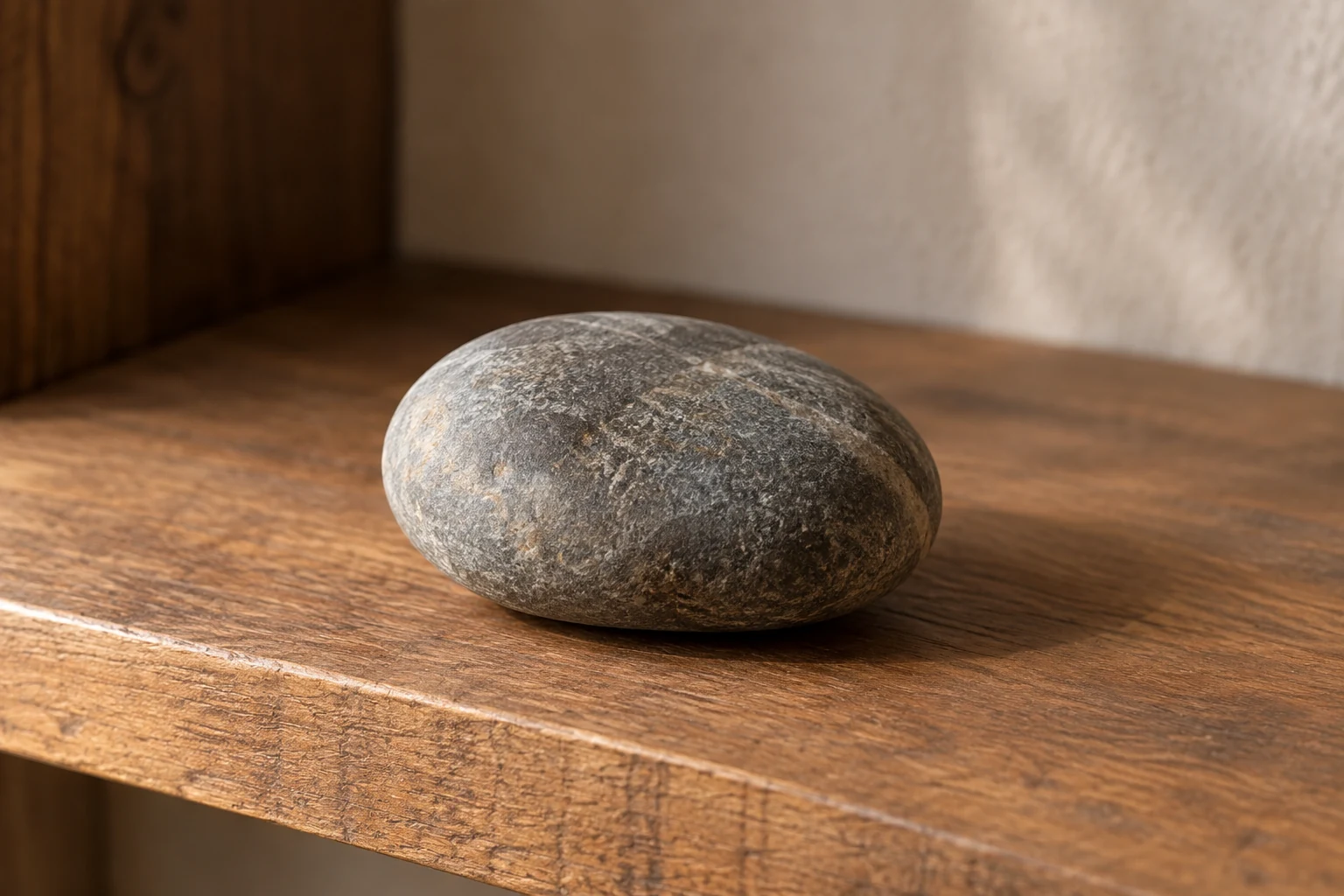
6. An already-owned stone or permitted pebble — a chosen symbol. Coven altar guidance allows stones as symbols of divinity, and a practitioner suggests ordinary stones rather than a particular mineral. A stone you already own could sit beside a written intention as a visible point of focus. That use depends on what you choose it to represent; it does not require mineral identification or a certified ritual object.
If you consider picking up a pebble from a home garden or private land, do so only with permission and where taking it is appropriate. In parks and protected places, leave rocks and plants where they are: the National Park Service tells visitors to leave both. A photo or sketch can represent a natural item you should not take. An ordinary stone pictured alongside this article would likewise be an illustration, not evidence of its mineral identity.
Altar Setup: Cloth, Bowl, and Flower
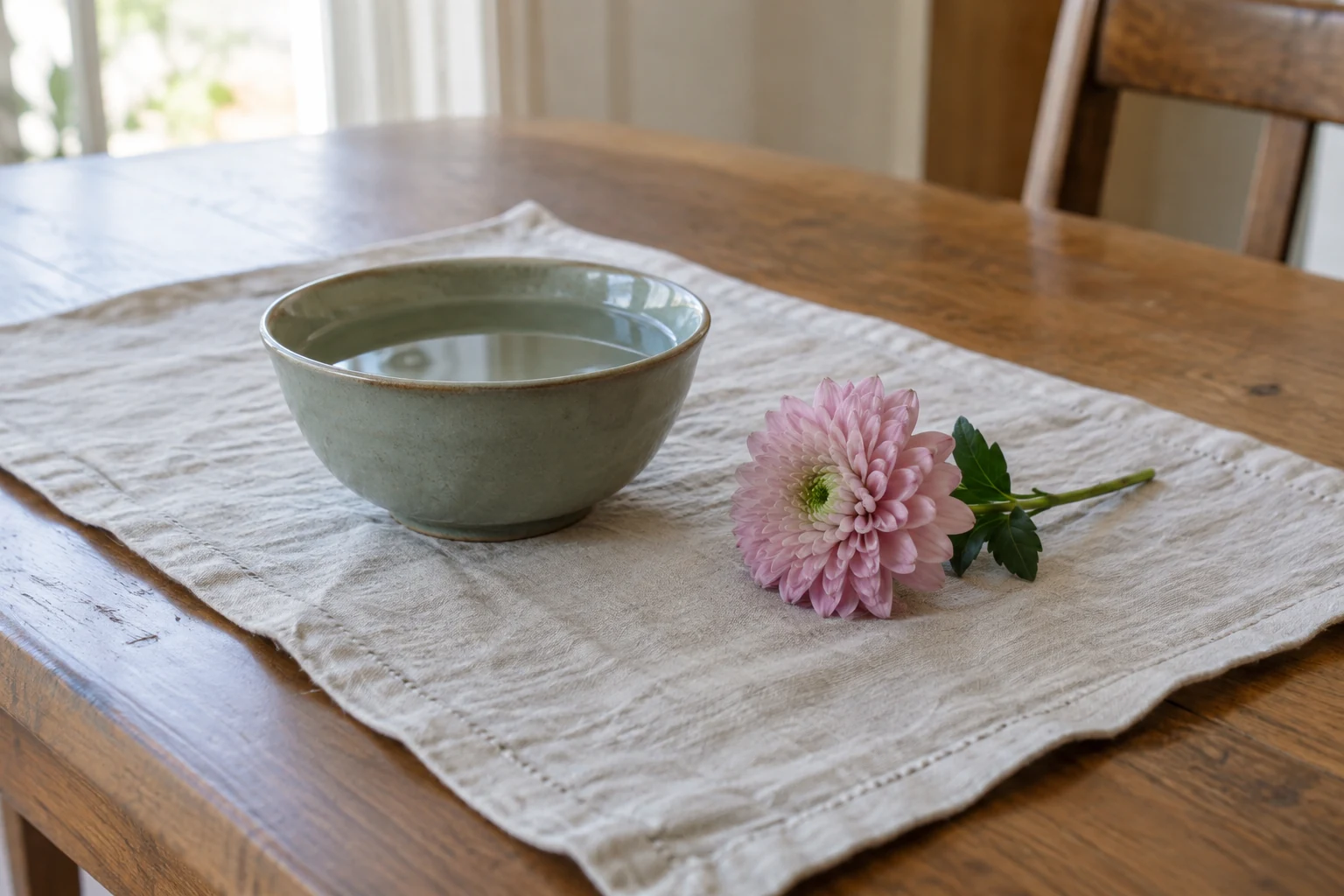
An altar here means a space set aside for personal attention or devotion, not necessarily permanent furniture. Coven guidance illustrates one on a cloth-covered coffee table. That is an example of a possible setup, not a prescribed layout.
7. Spare cloth — a temporary surface boundary. A cloth already available for your use can visually separate one part of a table from everyday activity. Place it down while you use the space, then put it away when you finish. The coffee-table example supports this modest role without requiring a particular fabric, color, pattern, or permanent altar.
Choose a cloth suitable for the surface underneath it and for whatever you plan to place on it. A spare household cloth works; it need not have been made for ritual use. If you have no spare cloth, you can use an unclothed surface. The cloth helps mark a boundary, but it does not authorize or complete the practice.
8. A household bowl — a container, distinct from its contents. Coven altar examples include a bowl of water and a bowl of salt water. In either example, the bowl’s job is to hold a material in one place. Counting it separately helps you choose deliberately: having a bowl does not mean you must fill it, and choosing water does not require buying a new container.
Use a household bowl you are free to set aside briefly. If it normally touches food, clean it before returning it to food use, especially after it has held ritual materials. Do not eat or drink those materials. The bowl’s reuse is a practical choice, not evidence that a ritual wash has made its contents safe for consumption.
9. A home-grown or already-cut flower — an optional offering. A Wiccan FAQ lists flowers among optional offerings. In a personal arrangement, a flower grown at home or one already cut and available to you could express attention or appreciation. Unlike the bowl, it is not there to hold something else; the flower itself is what you choose to place.
Use only a flower you have permission to use. If the plant you notice should remain where it is, a photo or sketch can serve as your reminder instead. An offering is optional, so leaving the flower out is also a complete choice. Neither this example nor the cloth-covered table establishes a layout that every personal altar must follow.
Choose a Small, No-flame Arrangement
Suppose you have reused paper, an existing pen, and a household bowl. Write one sentence you want to revisit on the paper. Set the pen beside it as the implement you used, and place the empty bowl nearby to give the small arrangement a defined center. Each object has a job, and none requires a flame. Pen, paper, and bowls appear among possible items in the cited altar guidance, which also allows room for personal layout.
If the bowl is unavailable, use a spare cloth as the third object to mark the space beneath the note and pen. If neither bowl nor cloth is available, keep the written note on its own. The decision is which available objects help you do what you intend—not how to assemble or display a nine-piece kit.
What “Free or Nearly Free” Does—and Does Not—Promise
“Free or nearly free” depends on reuse and existing access. None of these nine objects is guaranteed to be available to everyone, and no expensive specialty version is needed for the roles described. Clean food-contact items before returning them to ordinary use; do not consume ritual materials or treat them as food or skin preparations.
Images of writing objects or an arrangement of water, bowl, flower, and cloth can illustrate those items together. They do not establish efficacy, edibility, or a tradition-specific rite. An affordable personal practice rests on using what is appropriate and available—not obtaining every object or taking rocks and plants from places where they should remain.