
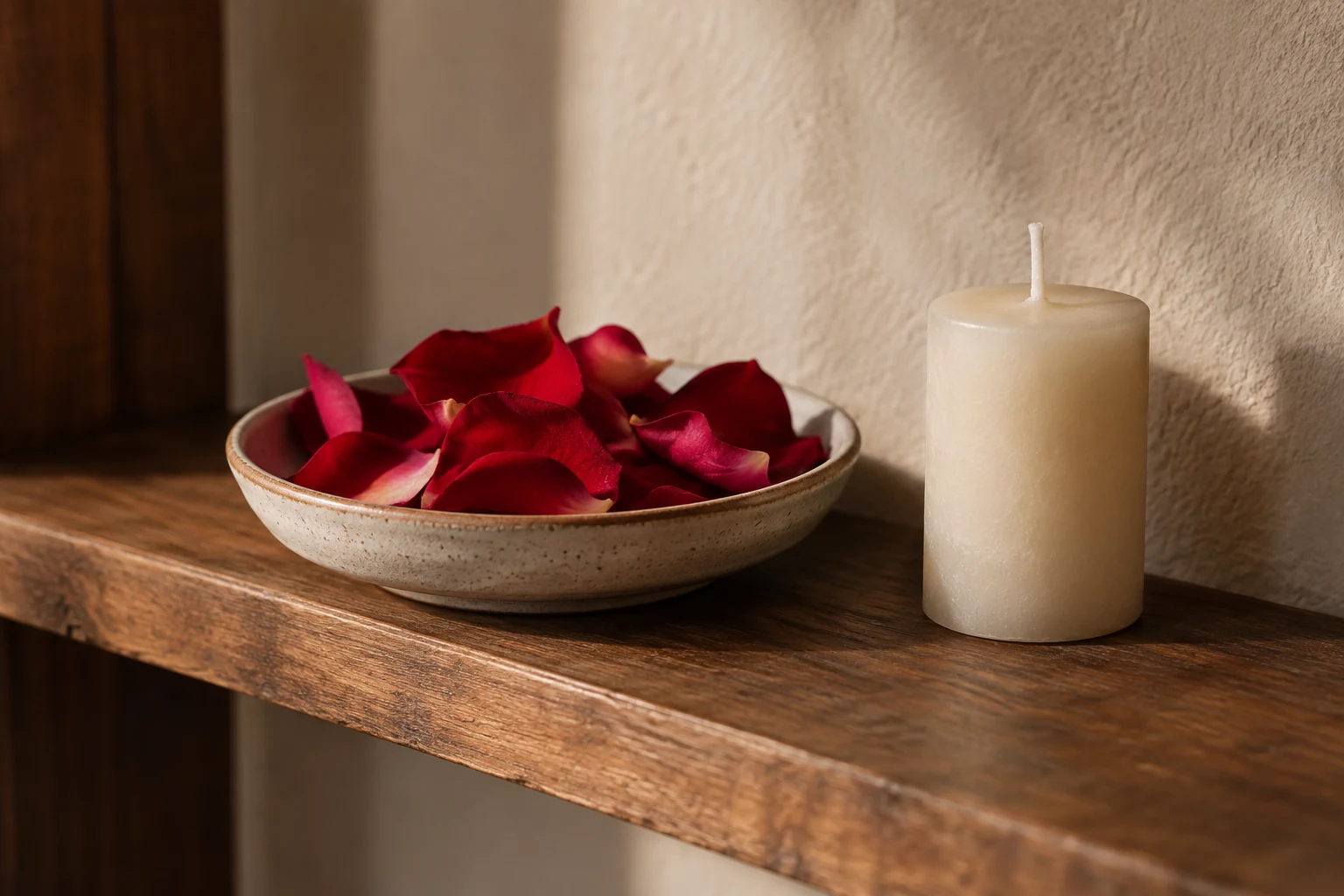
Start with the Petals You Have
Rose petals can mark a moment of remembrance, make a decorative or fragrant display, or become an ingredient. Start by sorting the petals you have: Are they fresh or dried? Do you know where they came from and how they were treated?
Fresh petals suit a brief display or a personal altar gesture. Petals dried completely can be kept for crafts and loose displays. If the source or treatment history is unknown—as it may be with florist or other decorative petals—keep them out of food and drink. Food use calls for a correctly identified rose and a source you can establish as suitable. Keep those two questions separate: a petal can be ready for display without being eligible for the kitchen.
Drying changes how petals can be stored and displayed. It does not make an unidentified or unsuitable supply edible. You need not resolve every question about a decorative supply to make a thoughtful use of it: a symbolic gesture or display may be the right choice.
Use Petals for a Personal Remembrance
Roses are associated with love, but their meaning in a remembrance can be personal. A practitioner’s glossary presents rose meanings as suggestions, not rules; you can draw on an association that fits the person you miss or leave rose symbolism aside. This is a possible personal gesture, not a rite shared by every tradition.
On an ancestor altar—a space you use to remember or honor those who came before you—place a few fresh or dried petals while thinking of a loved one. You might say their name, recall something they taught you, or spend a quiet moment with a photograph. Choose a placement that suits your own tradition and the way you use the space. The petals give the moment a deliberate form; they do not guarantee a spiritual result. If rose symbolism does not fit the person or your practice, the placement can simply mark the time you have set aside to remember them.
Give the gesture an ending. Acknowledge the person, then remove the petals when the remembrance feels complete. If you leave fresh petals on the altar for a while, remove them when they no longer suit the display. The gesture can be complete without keeping the petals there indefinitely.
Display Fresh Petals While They Last
If you want color for an occasion rather than a craft to keep, arrange a few fresh petals in a bowl or on a display surface. Treat the arrangement as temporary and let the petals’ condition—not a promised number of days—tell you when it is time to take it down. This option works when seeing the fresh petals now matters more to you than keeping them for another occasion.
The source author advises using harvested petals promptly. If you already have a purpose for them, make the display while they are fresh. If you would rather use them in a later decorative project, begin drying them instead of leaving a fresh arrangement to fade.
Dry Petals Fully for Crafts
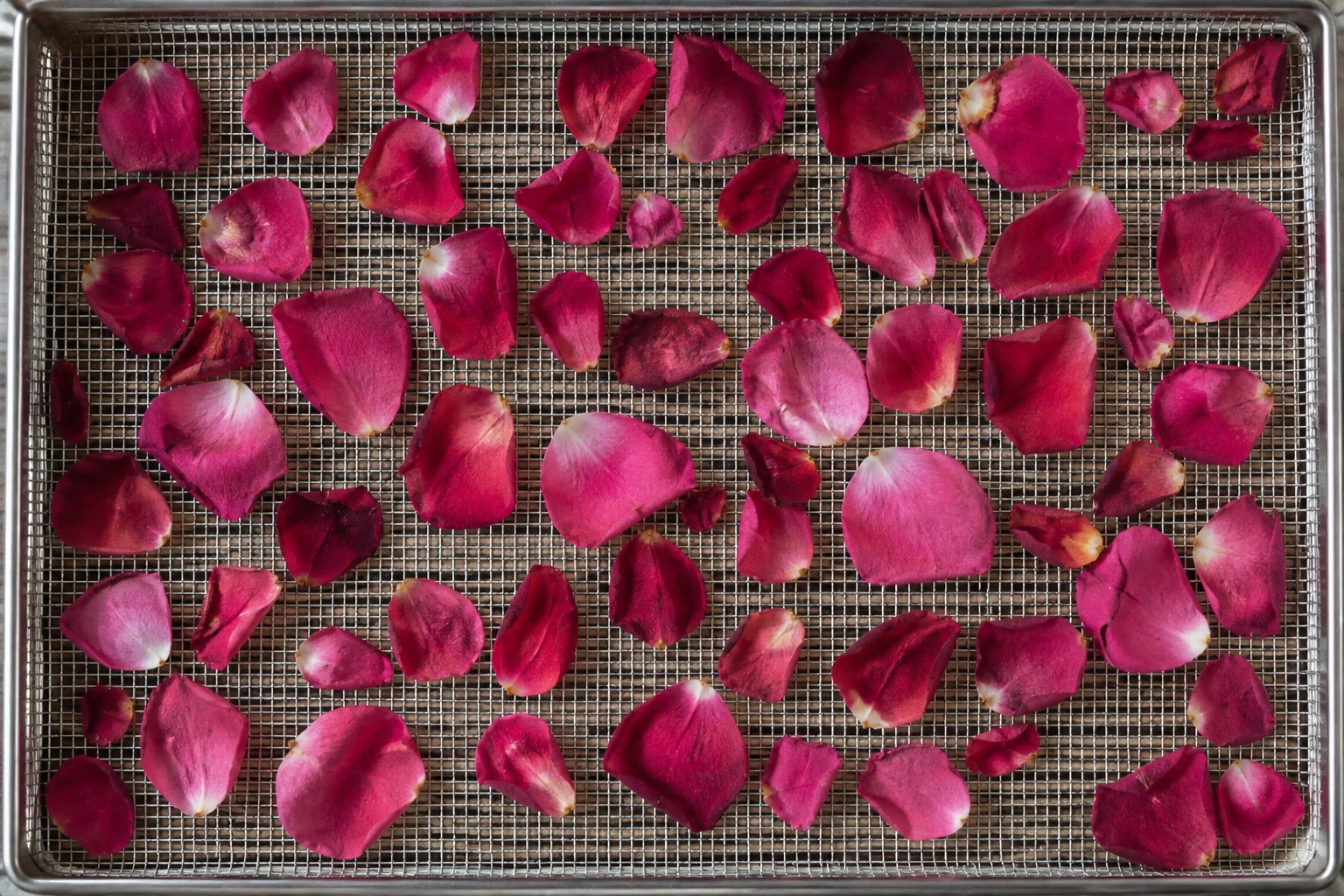
For a craft or display you plan to assemble later, spread the petals in a single layer rather than leaving them in a pile. Space them so air can circulate around them as they dry. Extension guidance specifies single-layer drying for potpourri materials, and ventilation helps prevent mold. Keeping petals spread out also lets you check them individually instead of judging the condition of a pile from its surface.
A mesh surface can provide space and airflow, but no particular surface proves that the petals are ready. Check their condition as they dry. A petal may look dry at an edge while dampness remains elsewhere; if any still feel damp, leave them to dry longer. Wait until they are completely dry before putting them into a container or sachet, as the potpourri guidance requires.
Do not substitute a heat shortcut for this drying process; the drying guide cautions against it. Nor should petals go into storage with the expectation that lingering dampness will disappear there. Complete dryness is the point at which you can move from drying to making the craft. If you are unsure whether every petal has reached that point, continue drying rather than closing them into a finished project.
Choose a Bowl, Open Jar, or Fabric Sachet
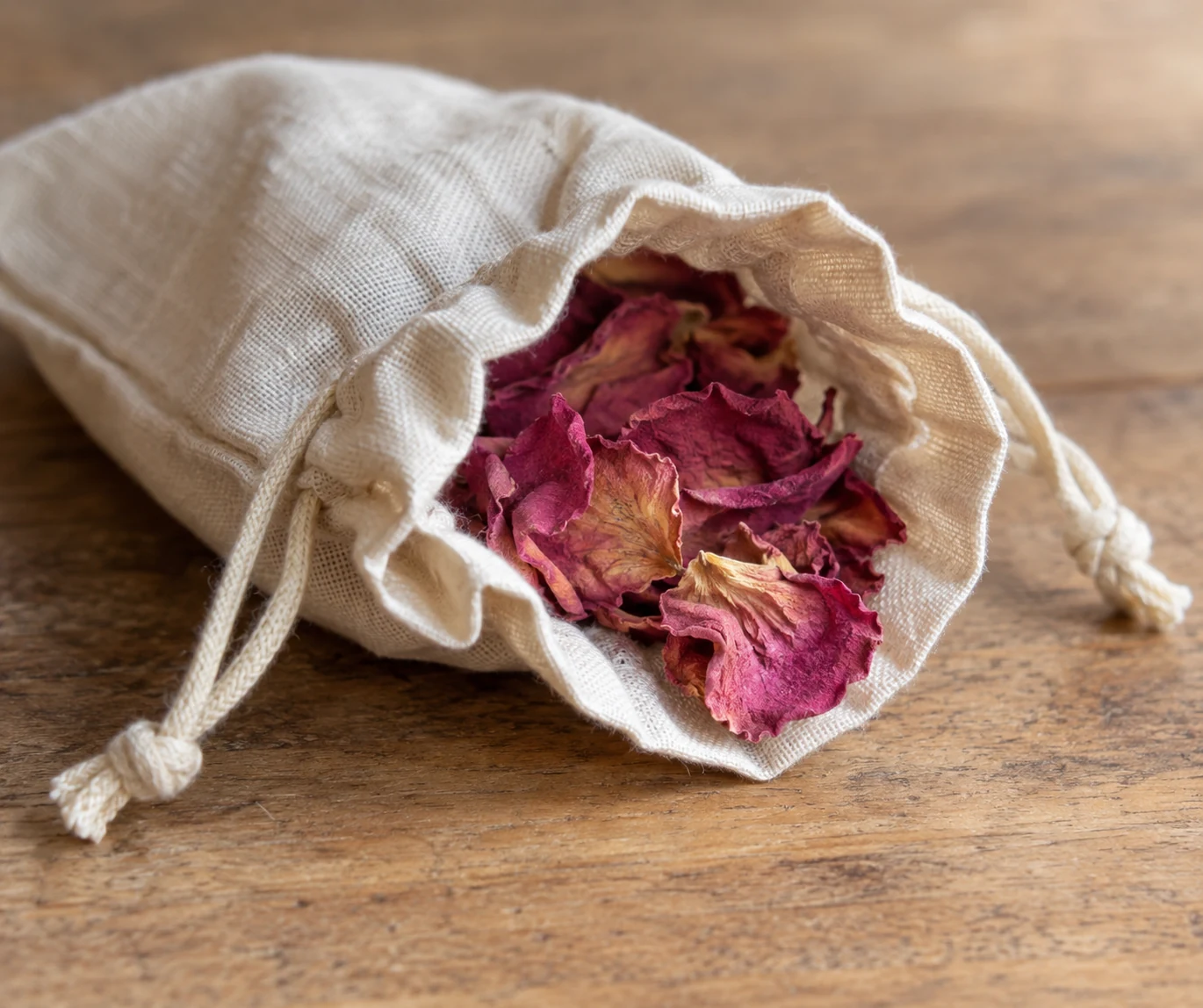
With completely dried petals, choose whether you want to see them loose or keep them contained. Rose petals are among the dried materials named in extension guidance on potpourri.
For a loose display, place the petals in a bowl or open jar. Their color and shape become part of the arrangement, and you can enjoy whatever fragrance they retain. You can use the petals alone; there is no need to add other ingredients simply to call the display potpourri. Choose this format if you like seeing the individual petals and have a place where a loose arrangement suits the room. The bowl and open jar serve the same basic purpose here: neither encloses the petals in a pouch. It is a decorative choice, not a promise of a particular scent strength or duration.
A fabric sachet is a separate, contained format. Put the dried petals inside a fabric pouch and close it so they stay together. Choose it when you would rather keep petals in one small object than leave them loose in a bowl. The distinction is practical as well as visual: in a sachet, the fabric holds the petals together, while an open display leaves them visible as individual pieces. A picture of petals in an open sachet can suggest the arrangement, but it cannot establish that the petals are completely dry or predict their fragrance.
Check Whether Petals Are Suitable for Food
Before preparing petals for food or drink, distinguish rose petals from rose hips. Petals are parts of the flower; hips are the rose’s fruit. The petal examples below are not directions for using hips.
Next, establish what plant and supply you have. Food use requires a correctly identified rose and a known source and treatment history. Appearance, scent, and drying cannot establish those facts. If you cannot verify whether florist or other decorative petals are suitable to eat, keep them out of food; the source author specifically rejects florist roses for eating.
Alaska Extension’s food examples concern wild roses from an uncontaminated source. If you gather petals from a garden or the wild, establish that the plant is correctly identified, that its treatment history is suitable, and that its site is uncontaminated before treating its petals as an ingredient. Do not assume that a familiar-looking rose or an appealing gathering spot satisfies those conditions.
Once petals pass those checks, follow the extension’s food-cleaning guidance and wash them before use. Washing prepares an eligible supply; it does not make petals with an unknown treatment history or a contaminated source eligible. If you cannot complete the checks, choose a nonfood use instead.
Try the Documented Petal Food Uses
After washing suitable petals, drain them or gently pat them dry where extra wash water would be unwanted. This is useful before adding petals to a food that will be assembled or served as it is. Draining belongs after washing and before adding the petals; it does not replace the checks that made them suitable for food.
Alaska Extension lists petals with a salad, sandwich spread, or omelet. You could use them as part of a salad, include them in a sandwich spread, or add them to an omelet. The extension also names tea and jelly as petal uses. These examples offer different directions to explore: the first three put petals into a meal, while tea and jelly call for their own preparations. They are not a single recipe or permission to use decorative petals that happen to look similar.
Choose the use that appeals to you only after the petals themselves qualify. For a preparation such as tea or jelly, use guidance appropriate to making it rather than guessing quantities from this list of possibilities.
Consider Rosewater, Syrup, or Candied Petals
The source author names three further culinary possibilities: rosewater, syrup, and candied petals. Rosewater is a rose-flavored liquid, while syrup is a sweet liquid preparation. Candied petals are a sweet preparation that keeps the petals themselves recognizable. The choice is partly whether you want a liquid to use later or petals that remain a visible part of a sweet. Rosewater and syrup are therefore not interchangeable names for candied petals, even though all three are possibilities mentioned by the source author.
These are options for petals that have passed the preceding food checks, not ways to make florist roses suitable for eating. Their names describe possibilities rather than tested recipes. If one interests you, find a recipe for that particular preparation and begin with eligible petals.
Make the Choice That Fits Your Petals
Choose remembrance for a bounded personal gesture, a fully dried display for decoration, or food when you can establish that your particular petals are suitable and prepare them accordingly.
A petal can be meaningful without being edible. An edible petal needs no promised spiritual or health effect to be worth using.