
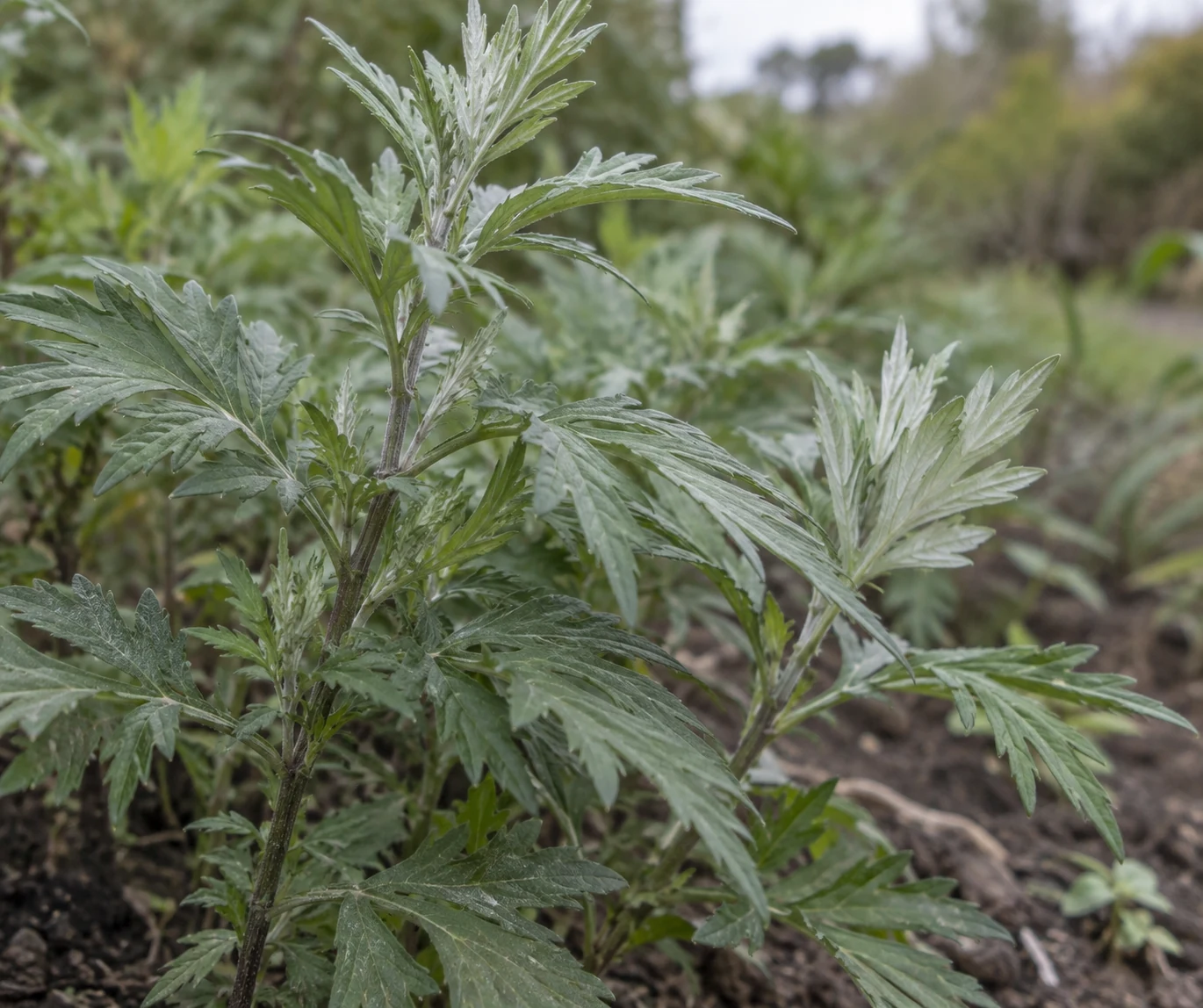
Common mugwort, Artemisia vulgaris, is associated in the cited practitioner accounts with dreams, divination, intuition, thresholds, travel, and protection. Grove and Grotto identifies this species as the subject of its mugwort profile, A Green Witch names the same species in its practice guide, and the National Center for Complementary and Integrative Health (NCCIH) lists Artemisia vulgaris as mugwort’s Latin name. The meanings discussed here belong to common mugwort, not automatically to every Artemisia plant or to sage.
These are ways practitioners interpret a plant, not effects a person should expect from it. Grove and Grotto places mugwort’s visionary reputation in modern witchcraft; A Green Witch likewise describes it as familiar in many modern magical practices. Their associations can give someone a theme for an ancestor altar or a question for a dream journal without making a dream prophetic or a plant protective in a physical sense.
You may also encounter Moon, Venus, and Earth in a mugwort profile. In Grove and Grotto’s account, Moon and the occasional alternative Venus are planetary correspondences, while Earth is an elemental one. They are different kinds of symbolic labels, not three competing names for the plant. None requires you to keep physical mugwort: a written plant name or botanical image can carry the association in a personal practice.
Dreams, Intuition, and Divination as Symbolic Meanings
Grove and Grotto calls mugwort a visionary herb in modern witchcraft and associates it with dreams and divination. A Green Witch includes dreams, intuition, and divination among its themes. In this context, visionary describes a practitioner’s symbolic focus: paying attention to images, impressions, and questions that might otherwise pass unnoticed. Divination means seeking or reflecting on meaning through a chosen practice; using that word does not establish that a dream predicts an event.
For a beginner, the useful distinction is between an invitation to reflect and a promise of an experience. A dream journal can be a place to record what you remember, including mundane fragments, without sorting entries into “messages” and “failures.” Someone who works with mugwort’s dream association might ask what a dream brings to mind in their own life. Someone else might simply use the plant’s name as a reminder to make time for reflection. Both are interpretations of a symbol, rather than claims about what the plant did.
Personal-interpretation example: Suppose you record an ordinary dream about searching for a doorway. You notice that doors have appeared in several entries. You might ask, “What changes or decisions have been on my mind?” The recurring image can be meaningful to you even if it turns out to be no more than an image you remember clearly. You do not need to call it a warning, a prediction, or a communication from an ancestor. This example illustrates one way to use the association; it is not a documented mugwort rite.
That limit matters when descriptions turn to “prophetic dreams” or psychic ability. Such phrases express beliefs or interpretations within spiritual practice, not established outcomes for the reader. A Green Witch explicitly says mugwort is neither a shortcut to prophecy nor a guarantee of vivid dreams. Do not treat the visionary label as a reliable way to produce vivid or lucid dreams, predictions, or psychic abilities. A quiet entry with no memorable dream is still a valid journal entry.
Thresholds, Travel, and Protective Folklore
A threshold is a point of passage: a doorway in a literal sense, or the point between one phase of life and another. Liminal means “at a threshold.” A Green Witch lists thresholds, travel, protection, and liminal spaces alongside mugwort’s dream-related meanings. Read symbolically, those themes can direct attention to leaving, arriving, remembering, or living with change. That is an interpretation of the guide’s list, not a claim that the plant causes a transition to go well.
Protection appears in a more specific account at Grove and Grotto. It reports that European folklore attributed to mugwort protection against fatigue, injury, and poisons, and gives the example of mugwort wreaths worn to repel evil spirits. Those are reported folklore claims. The account does not make a wreath—or an altar symbol—a dependable safeguard against injury, illness, or harm.
Here is an author-designed ancestor-altar interpretation, not a historical rite: place the written name Artemisia vulgaris beside a remembrance you already keep on your altar. Let “threshold” stand for the change between a loved one’s presence in daily life and the ways you remember them now. You could use the same image to reflect on a move or another life transition. Its role is to mark attention and intention; it is not a barrier that physically protects your home. If your own tradition gives protection or remembrance a different form, the mugwort association need not displace it.
Why Moon, Venus, and Earth Appear Together
A correspondence is a symbolic association a practitioner assigns to a plant, object, or theme. Correspondence lists can look like fixed specifications, but their labels serve interpretive purposes. A planetary correspondence links a subject to a named celestial body within a practitioner’s symbolic scheme. An elemental correspondence places it under an element such as Earth. These categories answer different questions, so a planetary label and an elemental label can appear together without competing for one slot.
Grove and Grotto connects mugwort’s dreams and divination with the Moon. It also acknowledges that someone may argue for Venus, and assigns the plant to Earth as an element; its summary presents Moon/Venus and Earth together. The source does not supply a reason here for preferring Venus, so there is no need to invent one or to resolve it into a single “correct” chart. If the Moon association helps you frame dream reflection, you can use it. If a different correspondence belongs to your practice, this profile is not a rule that overrides it.
A Green Witch offers a modest way to work with lunar imagery: the moon can give dreamwork a rhythm. For example, you might choose a recurring point in a lunar cycle to reread a few journal entries. The timing supplies a reminder to review what you wrote; it does not cause a particular dream, make an entry more accurate, or turn a remembered image into a prediction. You could choose a different recurring time and keep the same reflective purpose.
For an ancestor altar, Earth can likewise be read as a prompt to think about place, continuity, or what feels grounding to you. That is a possible personal interpretation of Grove and Grotto’s elemental assignment, not an additional meaning established by the source. The helpful question is less “Which list must I obey?” than “Which association makes my purpose clearer without asking me to believe it will produce a result?”
When a Physical Herb Is the Wrong Choice
A symbolic use does not require physical exposure to mugwort. NCCIH says there is not enough evidence to know whether taking mugwort orally or using it topically is safe. Separately, it states that mugwort should not be used during pregnancy. Those are the health boundaries to keep in view; a spiritual association is not a reason to set them aside.
A Green Witch also advises caution for people with allergies to ragweed, daisies, chamomile, sunflowers, or other Asteraceae plants. Where pregnancy or a relevant allergy makes exposure a concern, choose no physical mugwort: write Artemisia vulgaris on a journal page or use a botanical image instead. The association remains available without bringing the herb into your space.
The options below are deliberately contained and non-ingested. They do not call for smoke, skin contact, oils, or loose herbs in bedding. Nor is this practice medical sleep support or mental health treatment; A Green Witch draws that boundary explicitly. If what you need is help with sleep or mental health, a symbolic journal practice should not be treated as a substitute.
Choose a Symbol for an Altar or Dream Journal
If physical mugwort is appropriate in your circumstances, one option is a clearly labeled, closed jar of common mugwort kept near a dream journal. A Green Witch suggests a labeled jar and placing mugwort near a journal used for dreams and intuitive impressions. The jar makes the plant present as a symbol without requiring you to handle it during reflection. Keep it closed and away from children and pets.
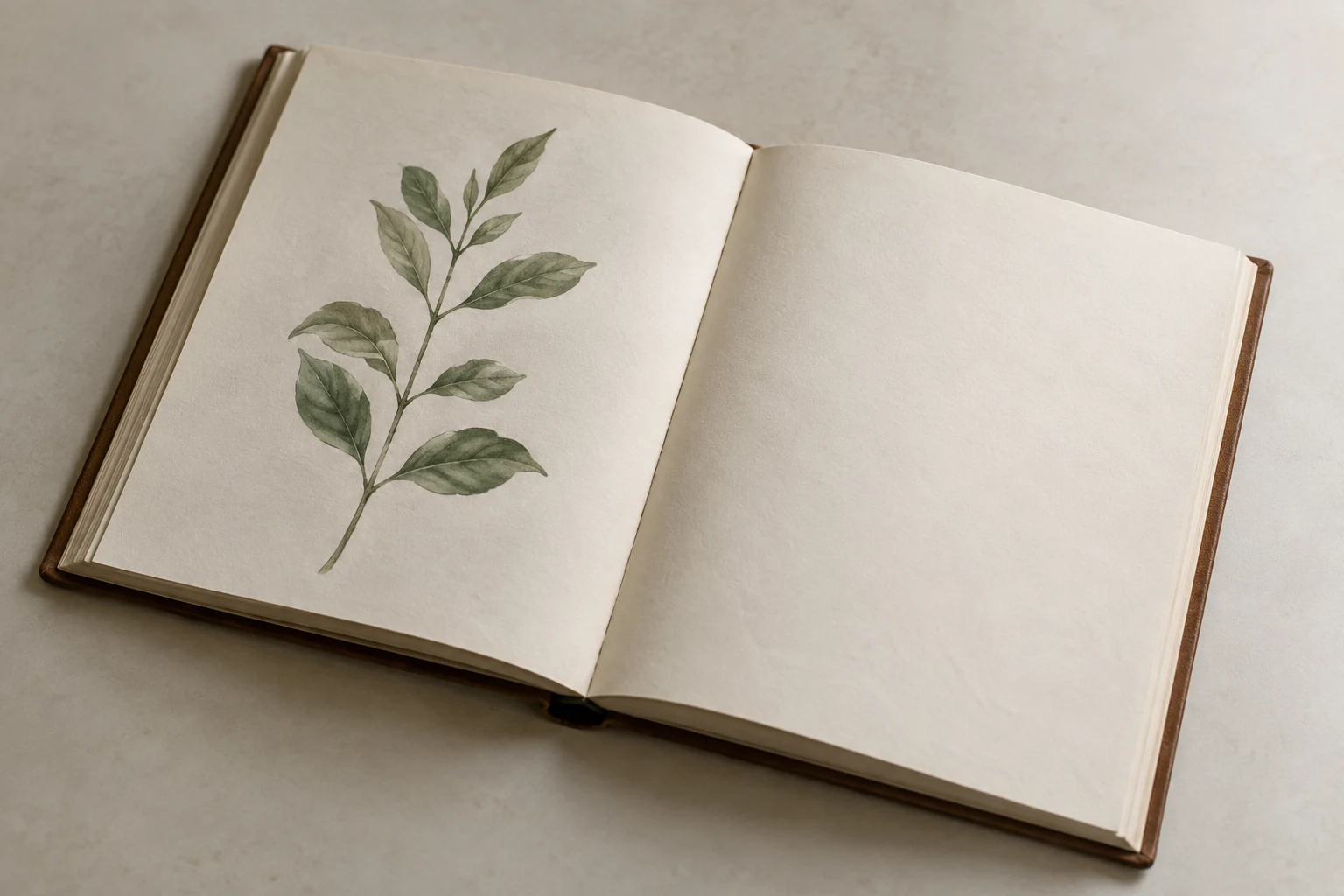
A second option is a sealed sachet outside the bedding, also kept away from children and pets. A Green Witch describes a sealed sachet near a dream journal as a meaningful alternative to loose herbs in bed and other higher-contact uses. Like the jar, it lets you associate the plant with your journaling without making physical contact part of the practice. Neither option is necessary if pregnancy or allergies make exposure a concern.
The simplest option is only the written name Artemisia vulgaris or a botanical image on an altar or journal page. This is a proposed symbolic alternative, not an herb-use instruction attributed to either guide. It preserves the specific plant association while requiring no physical mugwort at all. It may also suit someone whose practice is primarily about remembrance rather than dreams.
If you would like a way to bring the symbol and its meaning together, try this author-designed reflection, rather than treating it as a traditional rite:
- Choose one theme—perhaps remembrance, a life transition, or attention to dreams.
- Place the jar, sealed sachet, written name, or image where you keep your altar or journal. Use the non-physical option if exposure is a concern.
- Write one open-ended question, such as “What does this transition bring to mind?” or “What would I like to remember?”
- Record any dream you happen to remember, without trying to force one or decide immediately what it means. If you remember none, you can still write about the question.
- Revisit the notes later. Look for meaning in your own reflections without requiring an image to be prophetic.
The choice is between forms of attention, not levels of magical strength. A contained jar or sachet gives the plant a physical presence; a name or image gives you the association without the herb. For an altar or journal, a meaningful correspondence is enough. No unusual dream, prediction, or psychic result is required.