
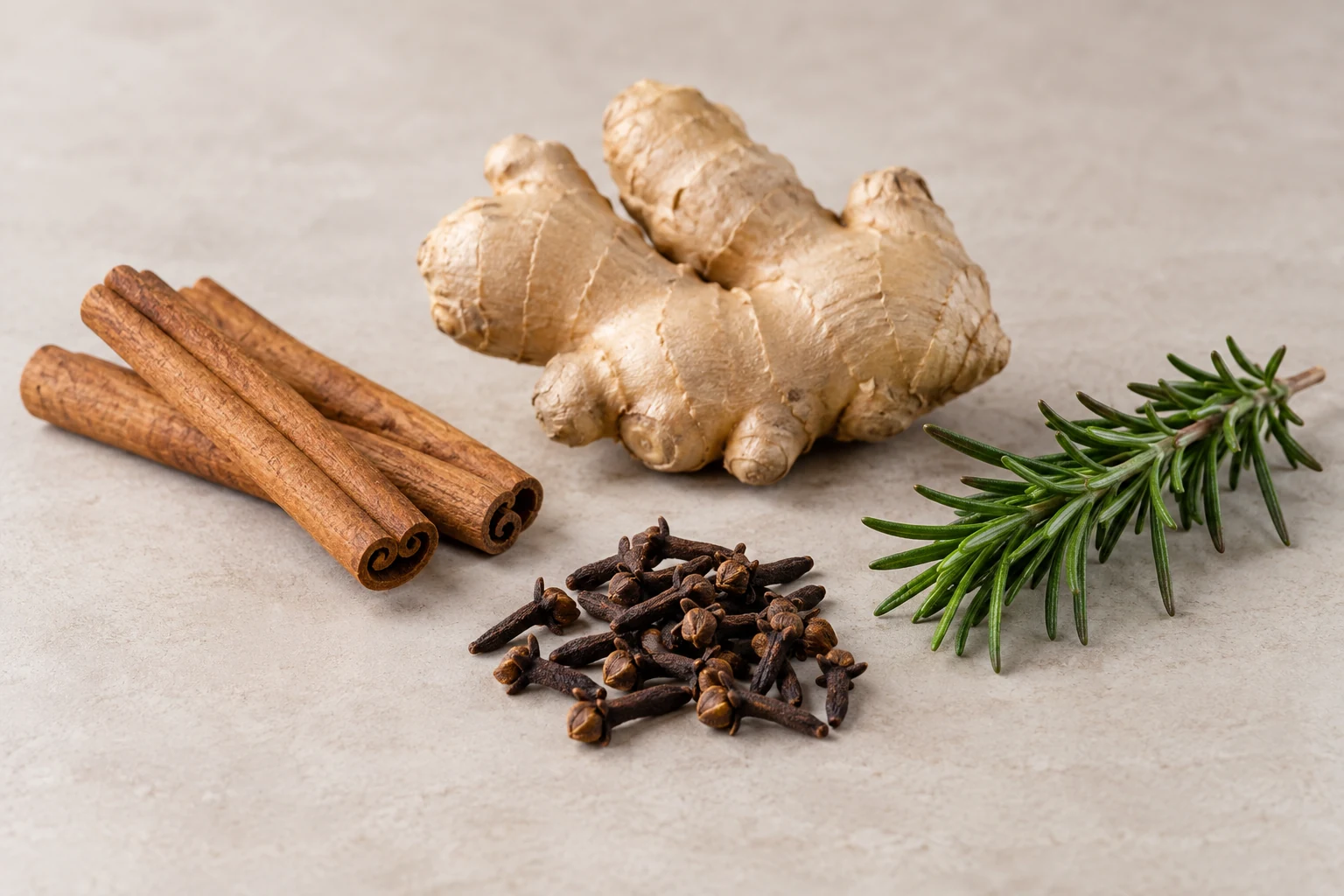
Cinnamon, ginger, cloves and rosemary are among the plants that modern Fire-correspondence guides name. Grove and Grotto also includes sunflower among plants associated with summer or full sunlight, and marigold among those whose appearance suggests fire or the sun. A Green Witch lists cinnamon, ginger, clove and rosemary as Fire herbs. These are symbolic attributions, not a botanical family or a rule every practitioner must follow. The lists draw on different cues—scent, perceived spiciness, sunlight or appearance—so they will not always match. For a Fire-themed home altar, the useful question is not whether a plant is really Fire, but which attributed association expresses what you intend. A plant’s name or image can do that work without a real plant or a literal flame.
What a Fire Correspondence Means
A correspondence is an association an author makes between a plant and an idea such as Fire. In A Green Witch’s account, Fire represents themes including willpower, courage, personal drive and inspiration. Those are meanings within that guide’s spiritual framework; they are not qualities botanically present in a leaf, flower or spice.
Grove and Grotto approaches Fire plants through several kinds of association. Its examples include a spicy or strong-smelling group containing cinnamon, cloves and ginger; a summertime or full-sun group containing rosemary and sunflower; and a group whose appearance resembles fire or the sun, containing marigold. A Green Witch separately names cinnamon, ginger, clove and rosemary in its Fire-herb descriptions. These examples orient you to the lists, rather than forming a complete inventory or a single agreed classification.
It helps to keep three things apart: the plant, the feature an author notices, and the meaning assigned to it. Ginger is the plant; its place in Grove and Grotto’s spicy or strong-smelling group is one cue; A Green Witch’s association of ginger with action is an interpretation. You can understand that interpretation without treating the cue as proof of an effect. The same distinction becomes especially useful when another author notices a different feature of the same plant.
Why Cinnamon, Ginger, Cloves and Basil Appear
Grove and Grotto groups cinnamon, cloves and ginger with plants it describes as spicy or strong-smelling. That grouping explains one route into a Fire list: an author connects a noticeable sensory impression with the idea of Fire. It does not mean all three plants have identical meanings, or that every Fire plant must be spicy.
A Green Witch gives the three more specific descriptions. It calls cinnamon a hot, fast-acting magical amplifier; it associates ginger with power and action; and it describes clove as protective and energetically sharp. Read those as that guide’s symbolic interpretations, not as promised results. Someone looking for a symbol of initiative might therefore find the guide’s ginger association more relevant than its clove association, even though Grove and Grotto places both in the same broad sensory group.
Cinnamon shows how a short label can contain two different ideas. “Hot” belongs to A Green Witch’s magical description of cinnamon, while Grove and Grotto’s category points readers toward spice or strong smell. Neither statement establishes that cinnamon will cause a change in someone’s life. Likewise, ginger’s association with action names a theme a person might wish to express; it is not evidence that the plant produces action. Clove’s protective description is a spiritual attribution, not a guarantee of protection.
Basil illustrates a different route. Grove and Grotto places it with herbs it calls protective and holy, rather than in the spicy or strong-smelling examples quoted above. A Green Witch, meanwhile, names basil alongside cinnamon and rosemary as a solar herb. A beginner comparing these lists need not decide which label is the “real” one: the authors are pointing to different associations. Basil also makes clear why a list headed Fire cannot be decoded simply as “the plants that feel pungent.”
These cues explain why an author may make an attribution, not how a plant should be used physically. Perceived heat, scent and spiritual descriptions establish nothing here about handling safety, ingestion, medical treatment or effectiveness. For an altar symbol, understanding the association is enough; there is no need to test it through contact or consumption.
Sunlight, Flowers and the Appearance of Fire
Grove and Grotto includes a correspondence to Mars or the Sun among its Fire-plant cues. This is a symbolic association listed by that author, not a statement that every plant in the article has both planetary connections. Its other groups show why the distinction matters: an author can point to sunlight in one example and to visual resemblance in another.
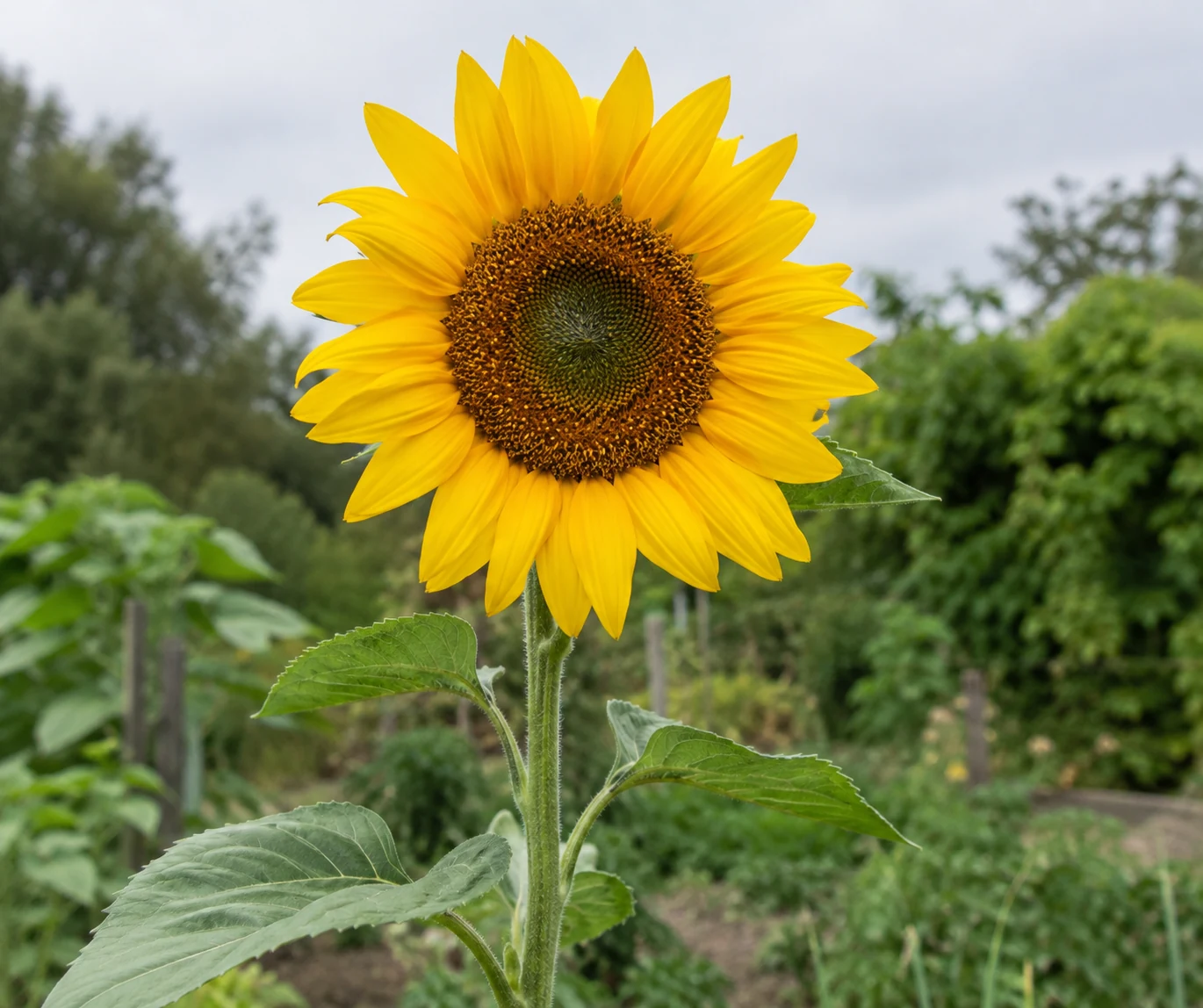
In Grove and Grotto’s summertime or full-sun group, rosemary appears alongside sunflower. Sunflower is therefore a straightforward example to remember when you want to understand that guide’s sunlight route to Fire. This is a statement about its placement in a correspondence list, not a way to infer where every plant will grow or what conditions it can tolerate. Rosemary belongs in that group too, although its associations do not stop there.
The guide’s resemblance group takes a different approach. It includes marigold and calendula among plants said to resemble fire or the sun. Here, appearance—not membership in the guide’s sunlight group—is the stated cue. A marigold image can accordingly communicate a visual Fire association for someone who finds that resemblance meaningful. Reading a flower’s color as part of that impression would be a personal explanatory reading, not a botanical rule or a claim that every flower on the list has a particular color.
Keeping the groups separate prevents a subtle mix-up. Sunflower is useful here as an example drawn from the summertime or full-sun group; marigold is useful as an example drawn from the resemblance group. You do not have to show that the sunflower looks like flame, or that the marigold meets a particular sunlight condition, to explain why Grove and Grotto includes each. A correspondence list can gather different reasons under one elemental heading.
That gives a beginner two distinct ways to choose a symbol. If the Sun association is what you want to express, Grove and Grotto’s sunflower example offers a reason you can name. If a visual suggestion of fire or the sun feels clearer, its marigold example offers another. Neither choice requires treating appearance or sunlight as evidence of a plant’s physical effects.
When One Plant Belongs on More Than One List
Differences between lists are not necessarily mistakes. Grove and Grotto explicitly says that correspondences are open to debate and that plants can have more than one elemental influence. The author’s point makes room both for disagreement between writers and for multiple readings of a single plant.
Rosemary provides a precise example. In a separate Grove and Grotto discussion of rosemary, the author prefers to assign the whole plant to Fire and its brisk, stimulating fragrance to Air. That does not require splitting a real plant into botanical elements. It identifies which aspect of rosemary each symbolic assignment describes. A person saying “rosemary is Fire” may be attending to the whole-plant interpretation, while a person saying “rosemary has an Air association” may be attending to its fragrance. Those readings can coexist on the author’s own terms.
This also helps explain why rosemary can appear in Grove and Grotto’s summertime or full-sun Fire group and in A Green Witch’s Fire-herb list without either placement exhausting its possible meanings. Listing a plant under Fire answers a question about one chosen association; it does not certify that Fire is the only association anyone may use.
Grove and Grotto offers a second caution with cactus: it says water-rich succulents such as cactus can be attributed to Water as well. In the context of a Fire list that includes a sunlight cue, this is a useful counterexample to the idea that sunlight would establish exclusive Fire membership. The lesson is about how correspondence lists work, not a new classification of cacti. One writer may notice a sun-related cue while another attribution attends to water-richness; neither observation turns an element into a botanical category.
When two sources seem to disagree, ask what each is actually assigning. Is it the whole plant, a fragrance, an appearance or another stated association? Rosemary shows that a more exact question often reveals overlap rather than a contradiction that must be settled before you can choose a symbol.
Choosing a Plant Symbol Without a Flame
A Green Witch makes a useful distinction for a home altar: Fire is not limited to physical flame. In separate guidance, it says familiar herbs can be used symbolically, and gives an example of a sprig resting beside a photograph on an ancestor altar. That example involves the plant simply being present. The guide also cautions against assuming that swallowing, burning or concentrating something makes an act more meaningful. Together, those statements support a modest reading: a Fire association can be represented without changing or consuming a plant.
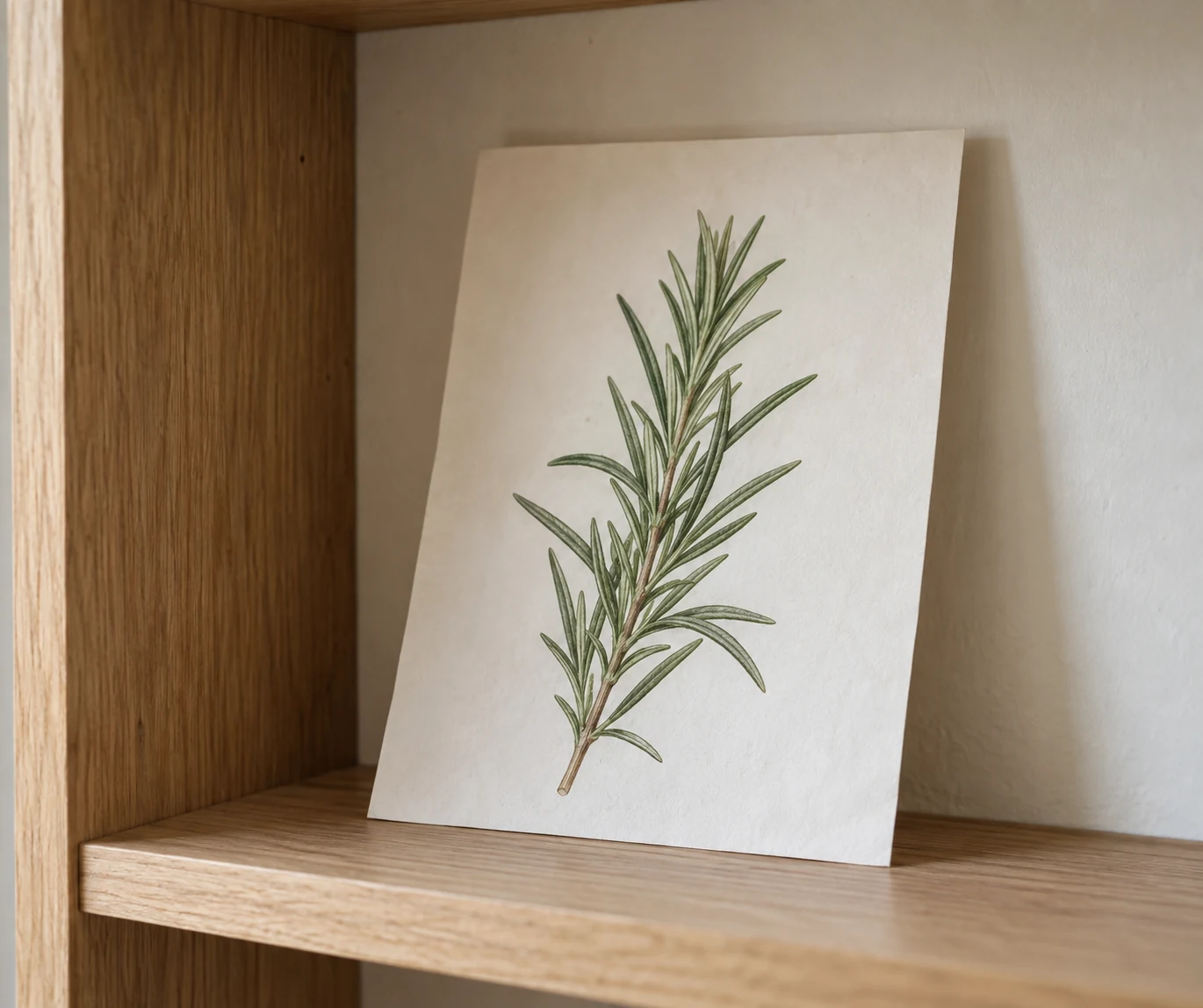
For example, as a personal choice: suppose A Green Witch’s ginger-and-action association expresses a quality you want your altar to recall. You could write ginger on a card or use a drawing of it. The card is a representation of the association, not a claim that the word or the plant will bring about action. If Grove and Grotto’s solar route speaks to you instead, a sunflower image can represent the sunlight association the guide gives that plant. These are illustrative choices based on the cited meanings, not procedures with promised outcomes.
An already-owned culinary spice could also stand as a symbol if you want a physical plant example, but it is optional. You need not acquire a plant to make the correspondence legible: a written name or drawing alone is a no-plant choice. The important part is that you can say what it represents—for instance, “ginger for the action association in A Green Witch,” or “sunflower for the sunlight association in Grove and Grotto.”
If what you want to represent is Fire more generally rather than a particular herb, A Green Witch suggests an LED candle or visualization as low-risk alternatives to a flame. Neither is a requirement, and neither changes what makes ginger or sunflower relevant to the examples above. They simply underscore the difference between representing an element and introducing literal fire.
This keeps the choice proportionate to the purpose. An altar symbol can be something you look at, name or understand; it does not have to demonstrate a plant’s power. Selecting a familiar association you can explain leaves room for your own practice without turning the plant into a test of supernatural efficacy.
How to Read the Next Fire-plant List
When you encounter another list, start with its author. Then ask what feature or association the author gives for each plant, and what Fire is meant to express in that account. A spicy or strong-smelling grouping answers a different question from a resemblance grouping; a description of courage or action supplies a meaning rather than a botanical trait. Grove and Grotto’s groups and A Green Witch’s descriptions show why those distinctions are worth making.
If two lists differ, compare their stated cues before choosing between them. Rosemary’s Fire and Air readings show that different aspects of one plant may support different attributions; Grove and Grotto’s cactus example shows why even a sunlight association need not be exclusive.
For your altar, choose an attributed plant—or its name or image—for a reason you can explain. Cinnamon, ginger, clove and rosemary offer familiar Fire-list examples; sunflower and marigold offer distinct solar and visual routes. You need neither exclusive elemental membership nor a literal flame to make that symbolic choice.