
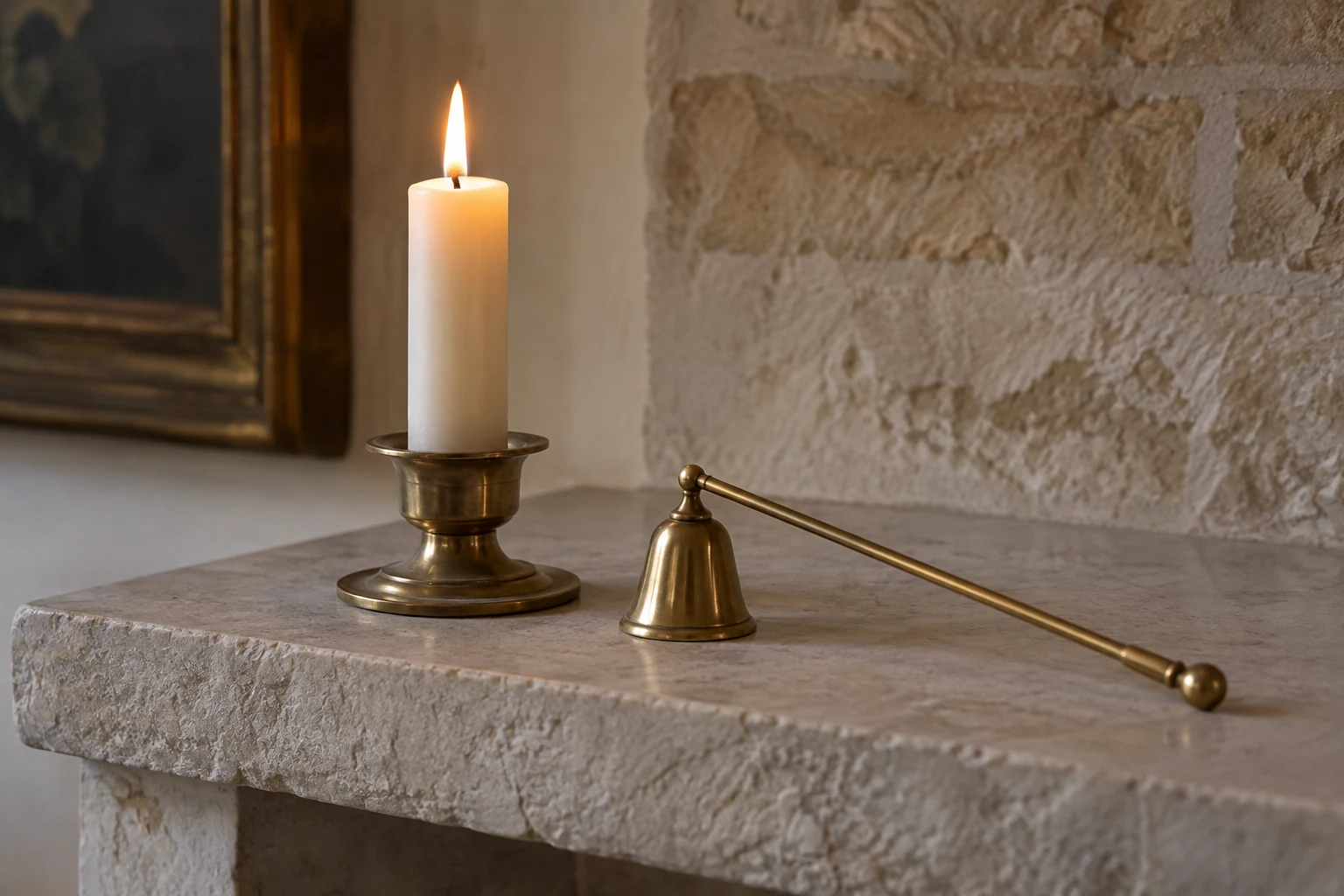
A candle snuffer lets you put out an altar candle without blowing on it. With a bell-shaped tool, the practical questions are whether it can reach the flame while staying above the wax, whether the wick is truly out afterward, and how to care for the snuffer once it has cooled.
What a Candle Snuffer Does—and What It Does Not
A modern bell snuffer extinguishes a candle by covering and smothering its flame. You position the bell over the lit wick; you do not need to dip it into the wax.
Snuffing can limit wax splashes and smoke, but it cannot guarantee a smokeless result or remove the risks of a lit candle. Putting out the visible flame is not the end of the task: you still need to check the wick before leaving.
Do not use water to extinguish a candle. It can make hot wax splatter or cause a glass container to break. If a bell snuffer does not suit your candle, follow the candle maker’s extinguishing directions rather than substituting water.
Recognize the Tool You Have
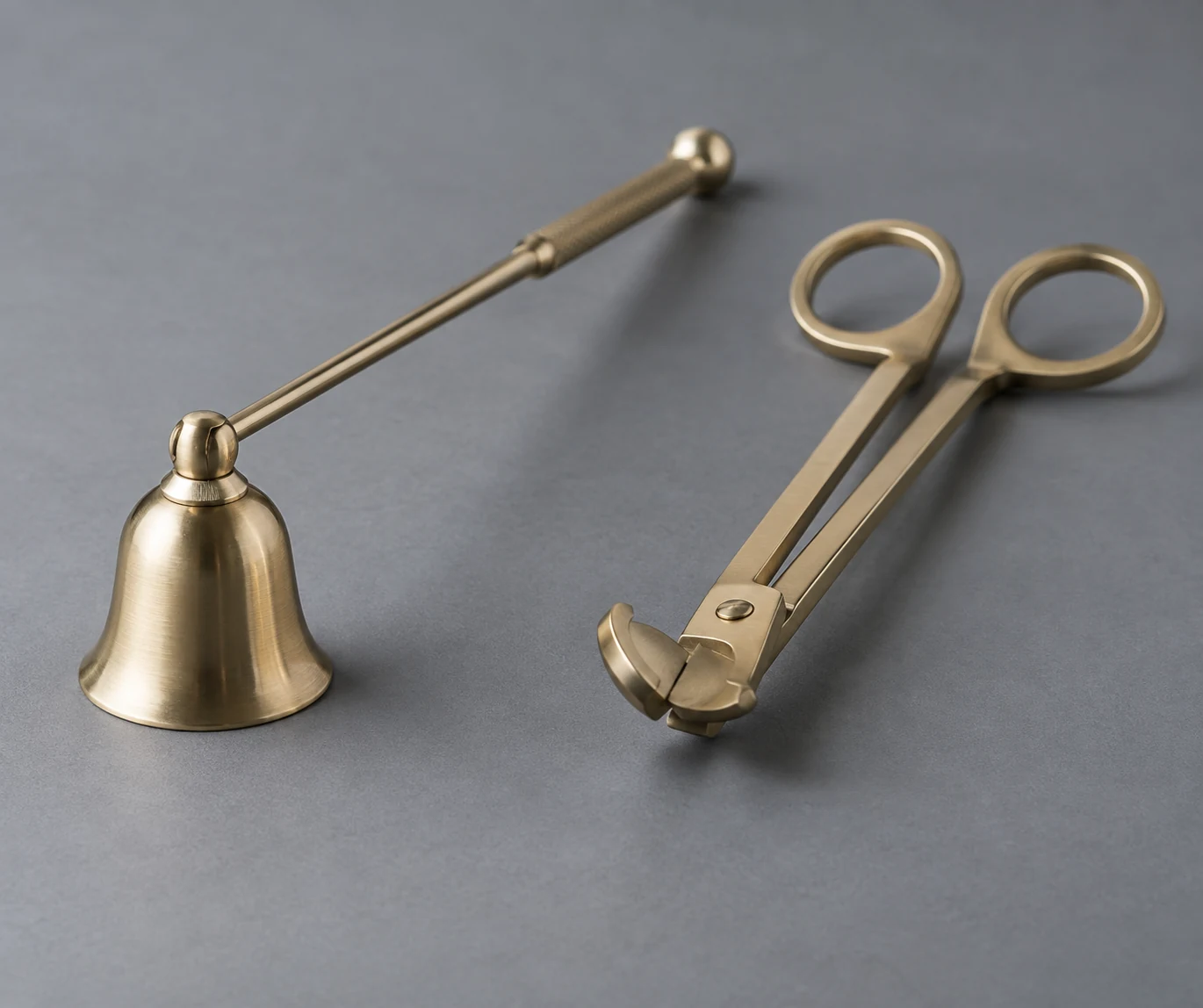
The modern snuffer covered in this guide has a handle ending in a bell or cone. You hold the handle and place the bell over a lit flame to put it out. A wick trimmer has a different job: it cuts the wick before the candle is relit. It is not the tool used in the extinguishing steps below.
The word snuffer can also describe an older tool with a different shape and action. London Museum records a scissor snuffer dated to about 1650–1660 that pinched a wick to extinguish its flame. That is one documented historical example, not a claim that every historical snuffer worked this way. It also is not an instruction for using a modern bell.
Identify the tool you have before bringing it near the candle. The method in this guide is for a bell or cone designed to go over the exposed flame while remaining above the wax; consult the directions for your actual tool.
Prepare the Candle and Its Surroundings
Before reaching toward the flame, check that the candle is stable on a heat-resistant setting. Keep children and pets clear of both the candle and your path to it, so you can approach without jostling it. Leave at least a foot between the lit candle and anything combustible, including items arranged around an altar.
Stay with the candle while it is lit. If you are about to leave the room or go to bed, extinguish it first and allow time to verify the wick is out. A snuffer helps put out the flame; it does not replace the attention and clearance the candle needs while burning.
On an altar, cards, cloth and dried flowers are still burnable objects. Move them out of the candle’s clearance before lighting, while there is no flame to reach around. Keep your path to the wick free of those objects so the snuffer handle can move over the candle without brushing them. If those objects cannot be moved, reposition the unlit candle instead; the snuffer cannot make a crowded altar safe.
Check Whether the Bell Can Reach the Flame
Immediately before extinguishing, check the fit: does the handle let you position the bell over the exposed flame while it hovers above the wax? Makers describe placing a bell or cone over the flame without submerging it or contacting hot wax. Reach and wax clearance are therefore useful checks, rather than a universal rule about bell diameter.
For an open pillar candle, check whether the bell can center over the exposed wick. For a candle recessed in a holder or jar, make the same check at the wick’s actual position: the bell must clear the opening and stop above the wax. A long handle alone does not solve a bell that cannot pass through the opening. This is a fit decision about the candle and tool in front of you, not a universal label for all jar candles.
If the bell cannot reach the flame while staying above the wax, do not force it through the opening. Follow the actual candle and snuffer makers’ directions for an appropriate extinguishing method.
Extinguish the Flame with the Bell
Once you know the bell can reach the flame while staying above the wax, work steadily:
- Hold the handle. Keep your hand on the part intended for holding, not on the bell that will be near the flame.
- Lower the bell over the exposed flame. Cover it without submerging the bell in hot wax or letting the bell contact the wax.
- Hold the bell in place until the flame goes out. Watch the flame rather than relying on a fixed number of seconds. The bell works by smothering it.
- Lift by the handle. Do not touch the bell after it has been near the flame; it may be hot.
If the flame remains, make another careful attempt only if you can still position the bell without wax contact. Do not press it deeper into a vessel or into the wax. If it cannot be positioned as directed, stay with the candle and follow the candle maker’s extinguishing directions instead.
Confirm the Candle Is Out Before Leaving
After lifting the bell, check the wick rather than judging only by the missing flame. A visible flame means the candle is still burning; a glowing wick means it is not fully extinguished. If the flame remains, repeat the bell step only while it can hover above the wax. If that is impossible, stay with the candle and follow its maker’s extinguishing directions.
Only leave after the wick no longer glows. Even then, wait until the candle has cooled completely before touching or moving it.
Cool, Clean, and Store the Snuffer
Let the snuffer cool completely before handling it for cleaning or putting it away. If it has contacted wax, wait until it is fully cool before attempting to clean it. LOEWE gives that instruction for its ceramic cone snuffer and directs users to rest the hot tool on a heat-resistant surface without touching it. Los Poblanos likewise says its metal snuffer should cool fully before handling or storage.
Cleaning depends on the instructions for your tool’s material and finish. Diptyque specifies warm water and soap for its ceramic Basile snuffer. Los Poblanos specifies a dry or slightly damp cloth for its hand-wrought metal snuffer. These are directions for those particular products, not interchangeable methods for every ceramic or metal snuffer.
Once your tool is completely cool, clean it if needed and store it as its maker directs.
Make the Closing Moment Your Own
Extinguishing an altar candle may carry personal meaning, or it may simply mark the end of the time you set aside. No particular words or gesture are needed to use a snuffer. What matters in practice is that the tool suits the candle, the wick is confirmed out, and both candle and snuffer are allowed to cool.