

A Boundary Can Be Practical and Sacred to You
To set sacred boundaries, choose one specific limit, communicate it, and follow through with an action you control. The limit might concern your altar, ritual time, or belongings. Knowing what you are willing and unwilling to do makes it easier to state clearly and uphold consistently.
What makes that limit sacred is yours to decide. You can speak about its importance without expecting someone else to share its meaning. A boundary can guide your choices, but it cannot guarantee that interruptions will stop.
Choose One Limit You Can Name
Start with one moment of discomfort. What happens? Where or when does it happen? What are you willing—or unwilling—to do? Those answers are more useful than a broad wish such as “I want people to respect my practice.”
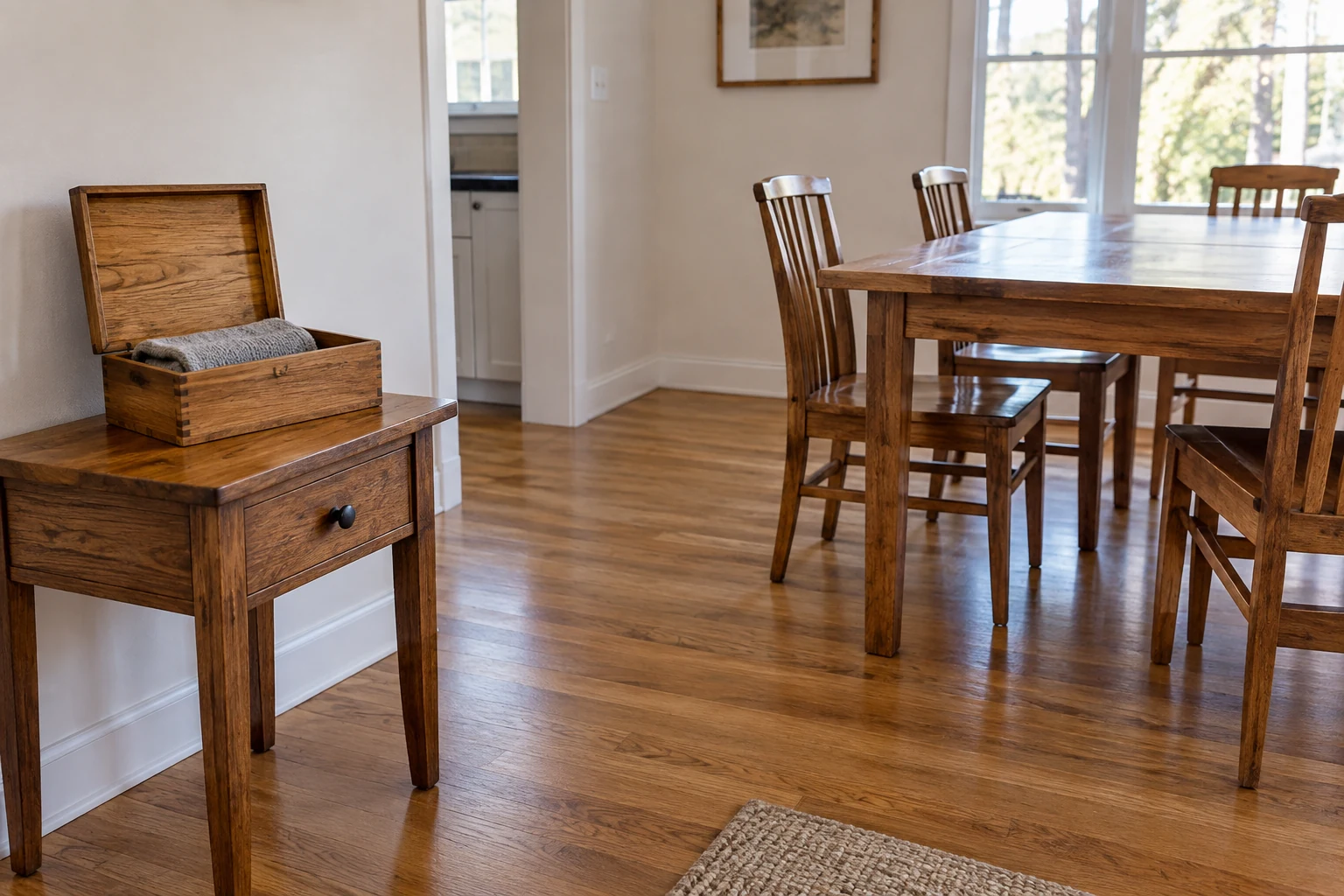
Suppose you keep altar items on a table in a shared living room, and someone sometimes moves them to use the table. You might identify your limit as: “I don’t want my altar items handled without my permission.” You can ask housemates to leave the items alone, while recognizing that they may need the shared table. You can also decide to move your own belongings before the table is needed.
Keep the distinction clear: a request about shared space needs an answer from the people who share it. What you do with your own belongings or time is yours to choose.
Say It Plainly and Respectfully
Bring up the limit when the table is not already in use. First-person wording explains what matters to you without assigning blame. Make the request clear, and include what you are prepared to do yourself.
You could say: “These items are important to my practice, and I don’t want them moved without my permission. Would you be willing to leave them alone when the table is free? If you need the table, please let me know so I can move them.”
That gives your housemate a request they can answer. It also makes clear that you will move your own items rather than assume the shared table is reserved for your practice.
The same approach works for ritual time: “I’d like some quiet time on Saturday mornings. Would that work for you? If not, I’ll choose another time or place.” When a plan affects shared space or asks someone to participate, ask rather than assume they agree.
Make Room for a Different Answer
A housemate may need the table kept clear or may decline to participate in a ritual. Their answer is not a failure to understand you. Discussions about boundaries can include disagreement or refusal, and participation in spiritual practice should remain a choice.
If your housemate wants the table clear, you might say: “Okay, I hear that you need the table available. I’ll keep my altar items in my room and bring them out only when the table is free.” You have acknowledged their answer and chosen what to do with your belongings.
Consistency means following through on your own stated limit. It does not mean repeating a request until someone agrees or asking them to take part in a practice they have declined.
Use a Personal Ritual If It Helps You Follow Through
If a small ritual helps you remember your decision, you can keep it private. Before putting your items away, pause, take a breath, and recall: “I will care for these belongings and ask before using shared space.” Then do what you chose to do.
Adapt the pause to your tradition and circumstances, or skip the ritual entirely. No one else needs to join, watch, or affirm it. Its value may be the meaning it holds for you or the reminder it provides—not a guarantee that an arrangement will work or that interruptions will stop.
Keep the Limit Yours to Uphold
A modest, specific limit can matter even when someone else does not share its sacred meaning. In a shared home, you can honor your practice and respect another person’s consent by keeping your commitment grounded in what is yours to do.